About this artwork
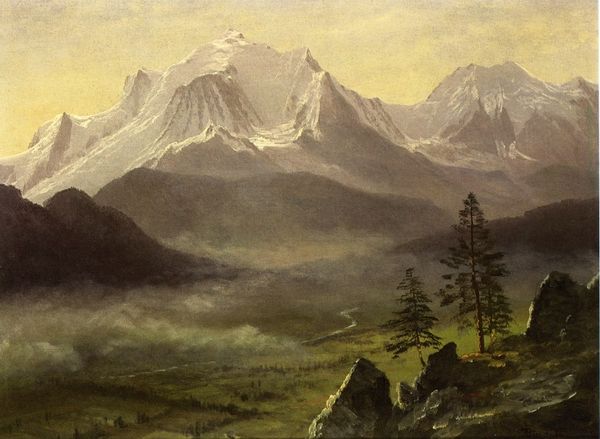
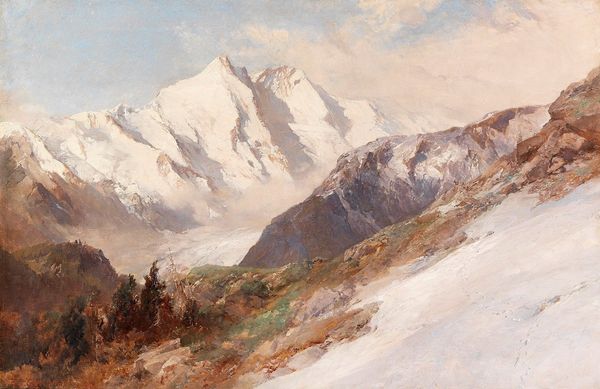
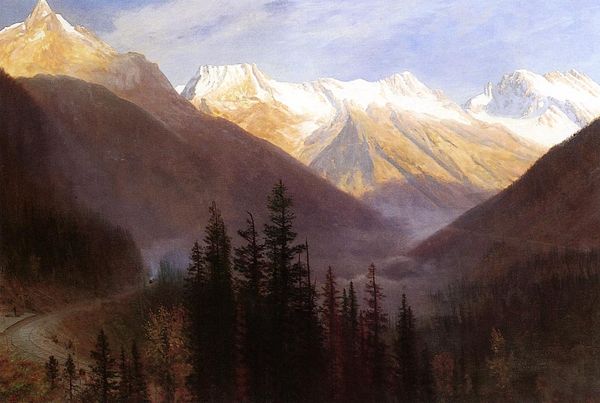
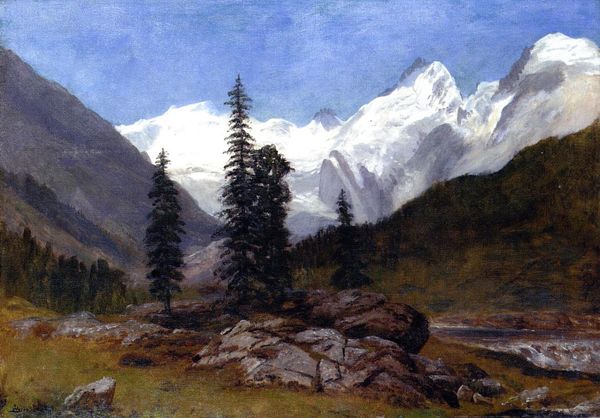
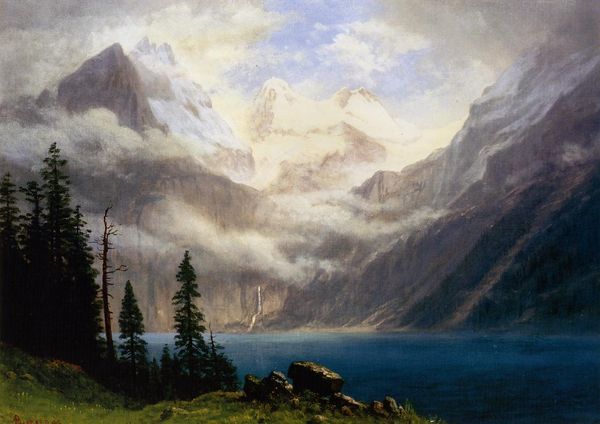
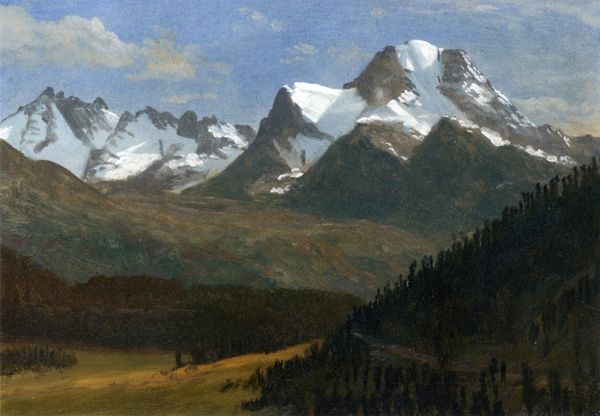
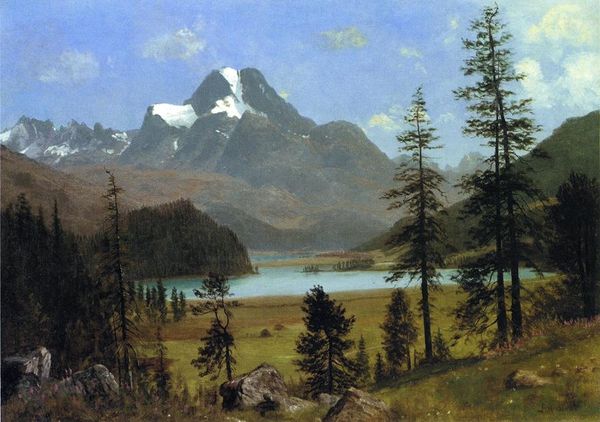
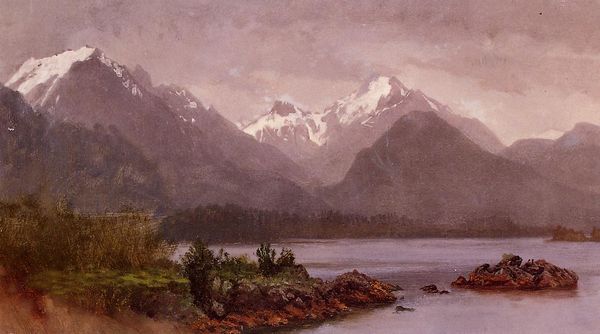
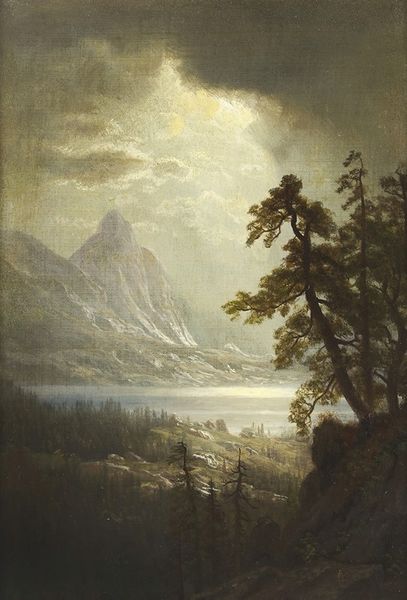
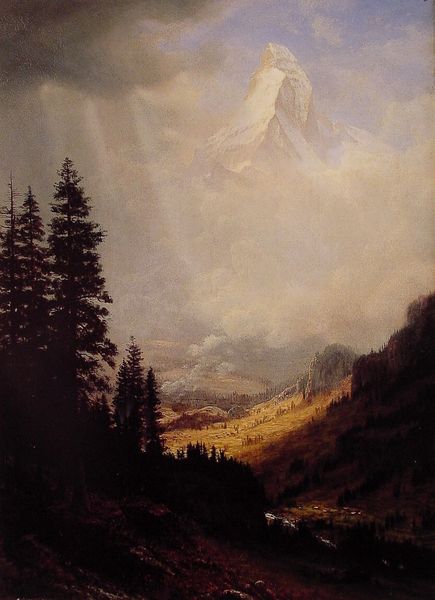
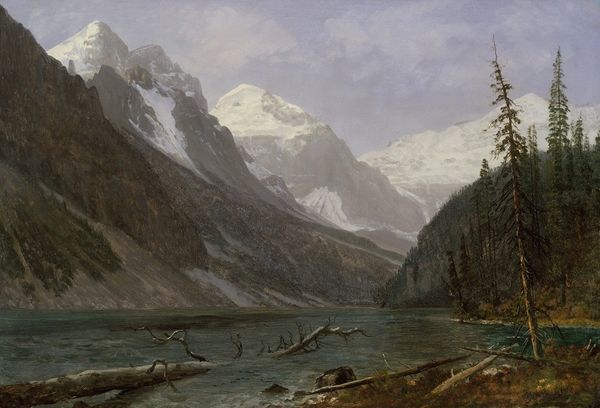
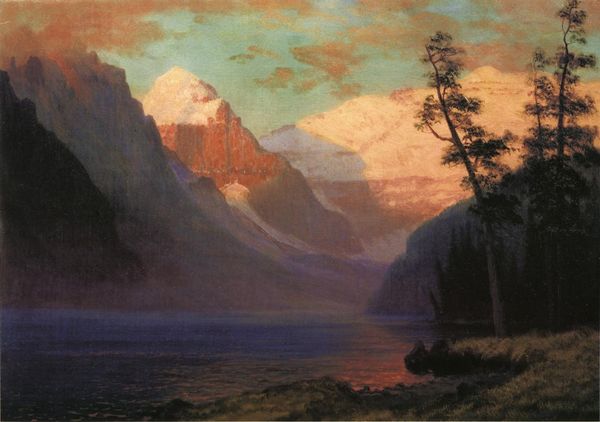
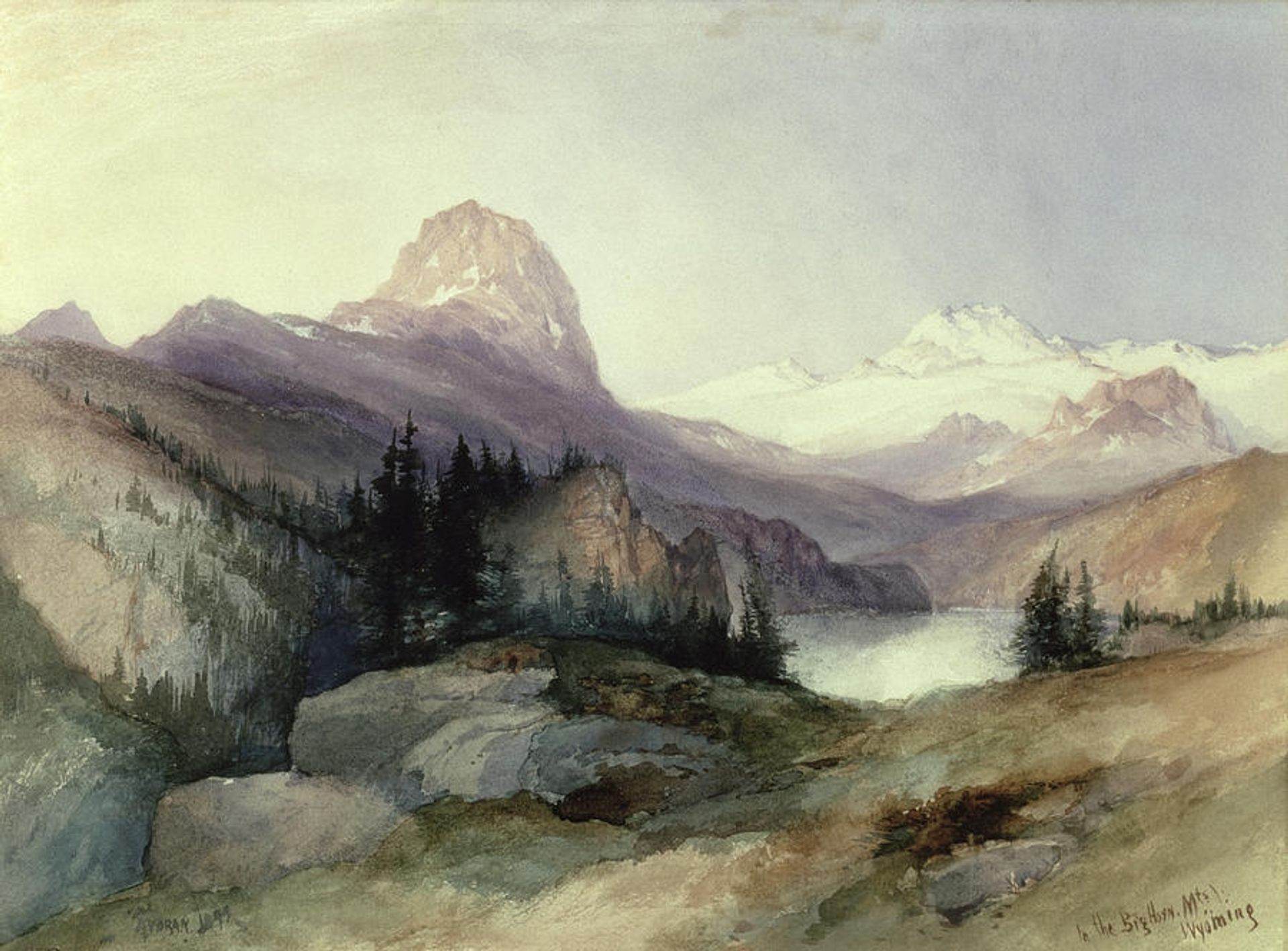
Editor: Here we have "In the Bighorn Mountains" by Thomas Moran, a watercolor piece. The vastness of the landscape is striking, but there’s also this undeniable sense of stillness. What’s your interpretation of this work? Curator: The “stillness” you mention is loaded, isn’t it? The romantic portrayal of the American West, so evident here, served a specific purpose: to justify westward expansion and often masked the violent displacement of Indigenous populations. How do you see this romanticism functioning as a tool of colonialism? Editor: That’s… something I hadn't considered. I was mainly focused on the beauty, the composition. Curator: Beauty is powerful. Moran’s skillful rendering invites us into a landscape seemingly untouched, pristine. But this “untouched” wilderness was, of course, inhabited and managed for centuries. Consider the visual tropes – the sublime, the untouched vista – and how they might obscure this reality. Where are the people? Editor: Hidden in plain sight, maybe? By focusing solely on the landscape's grandeur, it subtly erases the Indigenous presence. Curator: Exactly. Think about the Hudson River School, of which Moran was a key figure. Their art coincided with and helped fuel the idea of Manifest Destiny, presenting a visual justification for expansion and control over land already inhabited. Editor: So, the beauty is almost… deceptive? A way of selling a particular narrative. Curator: Precisely. It reminds us to always question whose story is being told and who is being silenced. What seemed like a tranquil landscape, reveals a more complex and problematic history. Editor: That's given me so much to think about. I’ll never see landscapes in the same way again! Curator: Excellent. Art history, when viewed critically, allows us to excavate these layered meanings and to have productive, uncomfortable, and necessary conversations.

Artwork details
- Medium
- watercolor
- Copyright
- Public domain
Tags
landscape
watercolor
romanticism
hudson-river-school
watercolor
Comments
No comments
About this artwork
Editor: Here we have "In the Bighorn Mountains" by Thomas Moran, a watercolor piece. The vastness of the landscape is striking, but there’s also this undeniable sense of stillness. What’s your interpretation of this work? Curator: The “stillness” you mention is loaded, isn’t it? The romantic portrayal of the American West, so evident here, served a specific purpose: to justify westward expansion and often masked the violent displacement of Indigenous populations. How do you see this romanticism functioning as a tool of colonialism? Editor: That’s… something I hadn't considered. I was mainly focused on the beauty, the composition. Curator: Beauty is powerful. Moran’s skillful rendering invites us into a landscape seemingly untouched, pristine. But this “untouched” wilderness was, of course, inhabited and managed for centuries. Consider the visual tropes – the sublime, the untouched vista – and how they might obscure this reality. Where are the people? Editor: Hidden in plain sight, maybe? By focusing solely on the landscape's grandeur, it subtly erases the Indigenous presence. Curator: Exactly. Think about the Hudson River School, of which Moran was a key figure. Their art coincided with and helped fuel the idea of Manifest Destiny, presenting a visual justification for expansion and control over land already inhabited. Editor: So, the beauty is almost… deceptive? A way of selling a particular narrative. Curator: Precisely. It reminds us to always question whose story is being told and who is being silenced. What seemed like a tranquil landscape, reveals a more complex and problematic history. Editor: That's given me so much to think about. I’ll never see landscapes in the same way again! Curator: Excellent. Art history, when viewed critically, allows us to excavate these layered meanings and to have productive, uncomfortable, and necessary conversations.
Comments
No comments