About this artwork
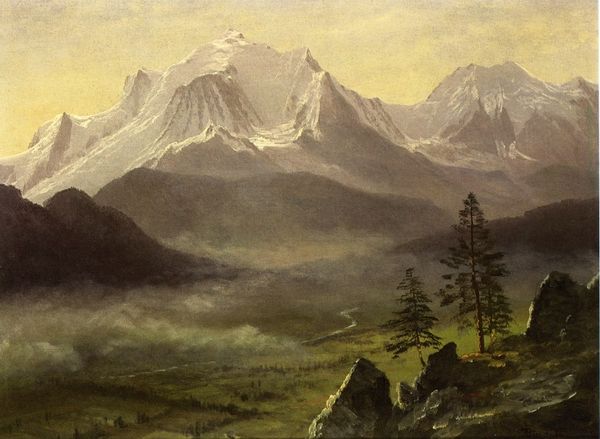
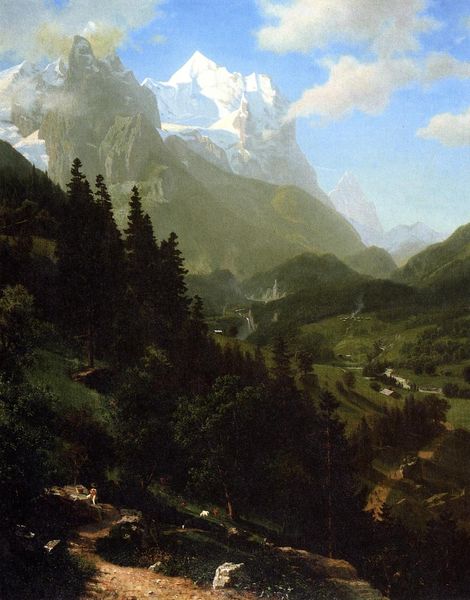
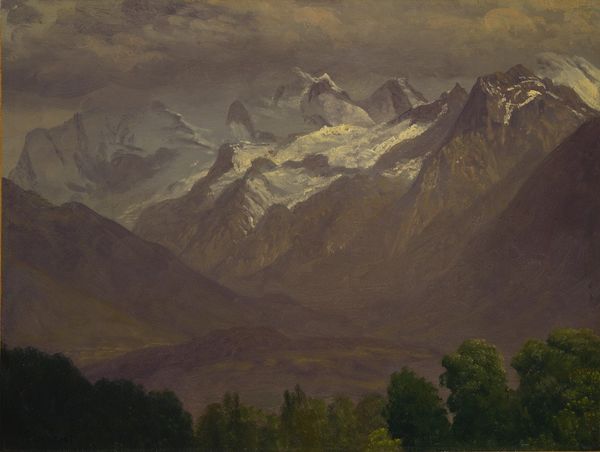
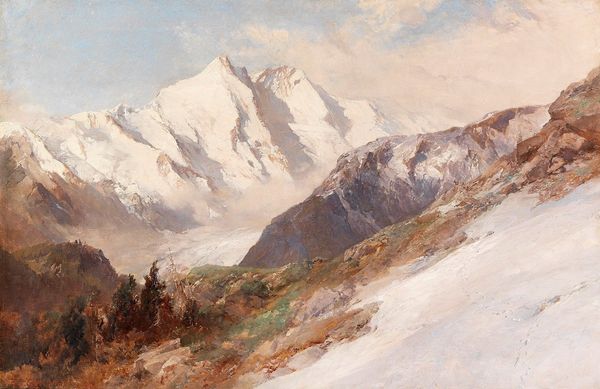
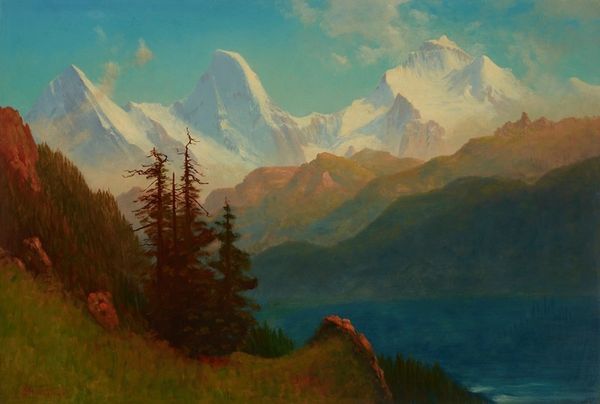
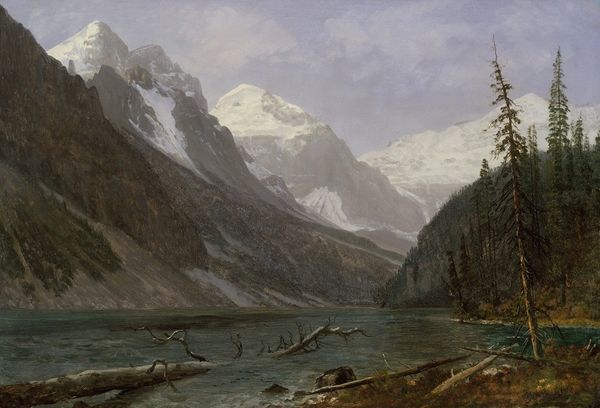
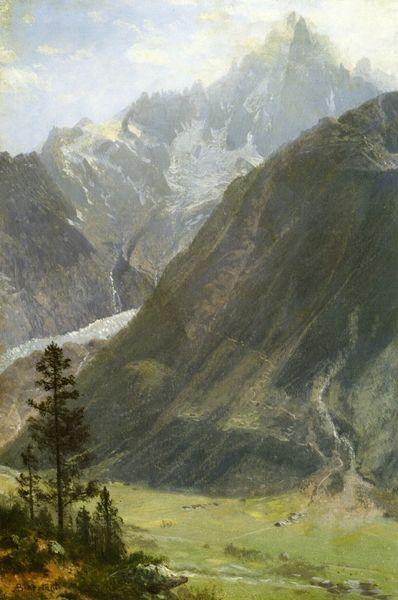
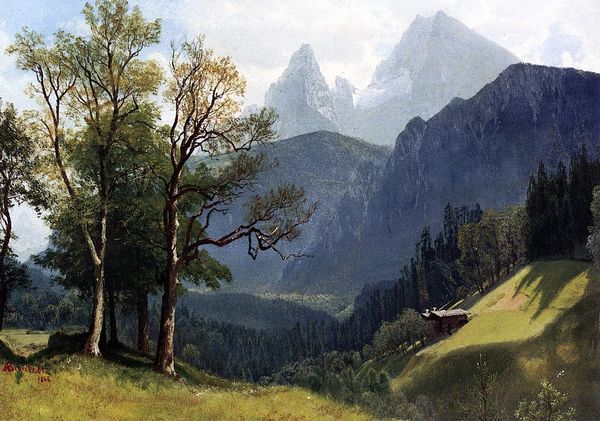
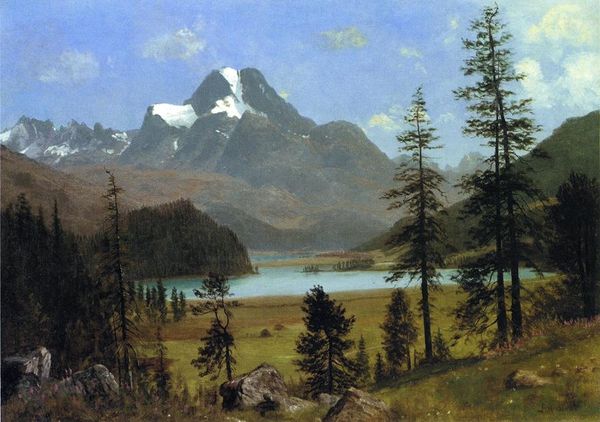
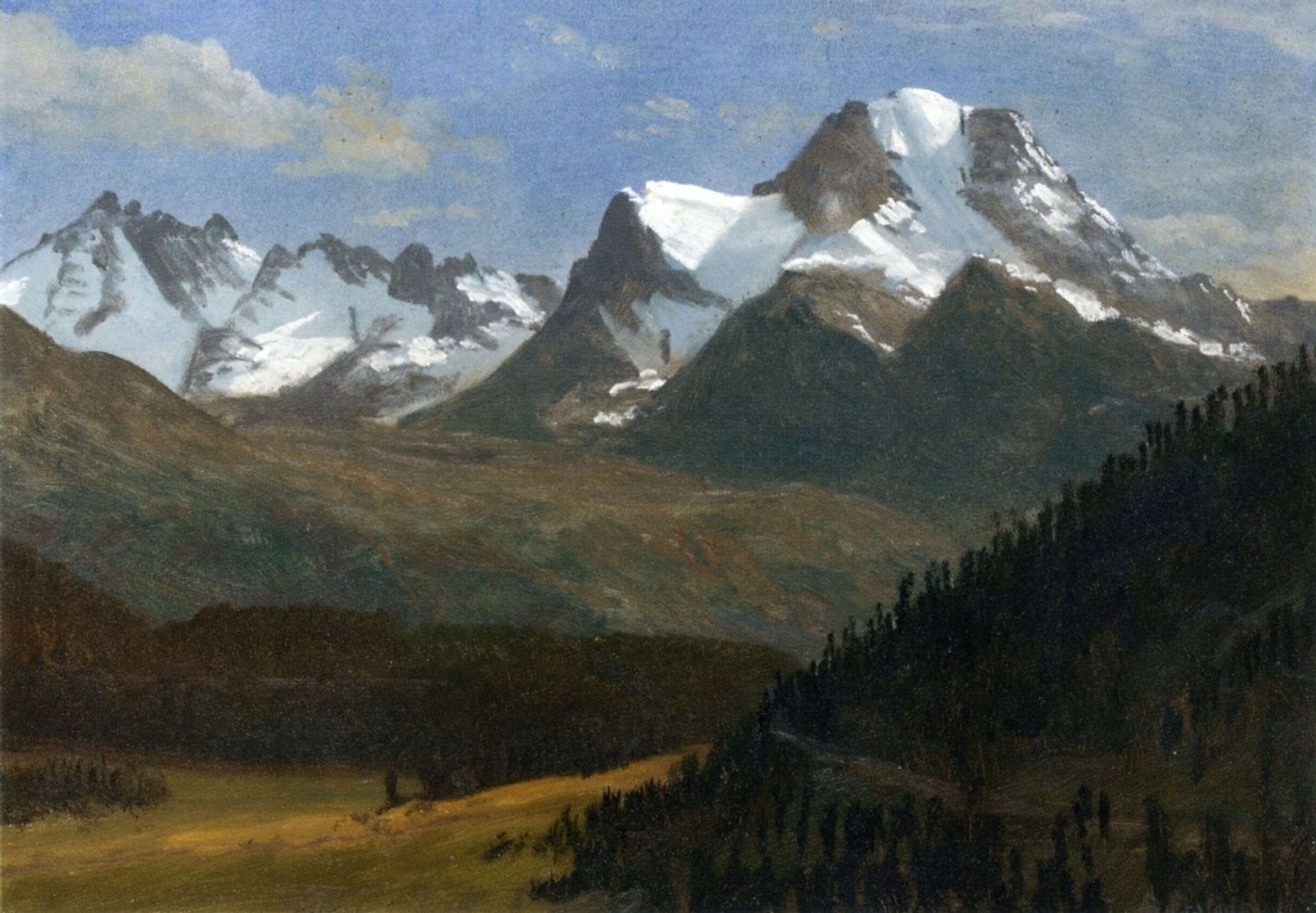
Curator: This painting is simply breathtaking. The majestic mountains evoke such a profound sense of awe. Editor: It's very…calm. There’s a serenity that radiates from the snow-capped peaks to the tranquil valley below. But something feels…staged, almost theatrical. Curator: That feeling might stem from the artist's intention. This oil painting, known as “Mountain Landscape” by Albert Bierstadt, aligns with the Romanticism movement and its dramatic, idealized view of nature. We do not know exactly when this was painted. Editor: Ah, yes, the grand narrative of the American West! Bierstadt was certainly tapping into the desire to establish a national identity. The mountains become a symbol of untouched potential and manifest destiny. Do we know where this view originates? Curator: It resides within a private collection and it's likely representative of the artist’s larger body of work in depicting mountainous scenes that served a commercialized interest in the era of naturalism. Editor: Interesting, I am curious as to how this imagery has changed over the years, given our current view of mountain ranges being more at-risk and the political tensions involved with access. Do you think we still ascribe that earlier meaning of destiny to views like these? Curator: Absolutely. The towering peaks are visual metaphors that extend into modern understandings. Mountains can stand in as a symbol of human challenges, and a certain power. Their timeless presence and the inherent grandeur represent something primal in the cultural imagination. I think people forget just how powerful the Hudson River School’s impact on the collective psyche truly was. Editor: You’re right. Bierstadt presents more than just a picturesque scene, it encapsulates an ongoing psychological allure. His legacy demonstrates how powerful artists are to influence politics of image. Well, I think I better understand both the aesthetic and political weight this piece holds. Curator: Indeed. And hopefully, our audience feels inspired to continue contemplating how nature reflects back our deepest hopes, dreams, and sometimes, fears.

Artwork details
- Medium
- painting, oil-paint
- Dimensions
- 34.29 x 48.26 cm
- Location
- Private Collection
- Copyright
- Public domain
Tags
Comments
Share your thoughts
About this artwork
Curator: This painting is simply breathtaking. The majestic mountains evoke such a profound sense of awe. Editor: It's very…calm. There’s a serenity that radiates from the snow-capped peaks to the tranquil valley below. But something feels…staged, almost theatrical. Curator: That feeling might stem from the artist's intention. This oil painting, known as “Mountain Landscape” by Albert Bierstadt, aligns with the Romanticism movement and its dramatic, idealized view of nature. We do not know exactly when this was painted. Editor: Ah, yes, the grand narrative of the American West! Bierstadt was certainly tapping into the desire to establish a national identity. The mountains become a symbol of untouched potential and manifest destiny. Do we know where this view originates? Curator: It resides within a private collection and it's likely representative of the artist’s larger body of work in depicting mountainous scenes that served a commercialized interest in the era of naturalism. Editor: Interesting, I am curious as to how this imagery has changed over the years, given our current view of mountain ranges being more at-risk and the political tensions involved with access. Do you think we still ascribe that earlier meaning of destiny to views like these? Curator: Absolutely. The towering peaks are visual metaphors that extend into modern understandings. Mountains can stand in as a symbol of human challenges, and a certain power. Their timeless presence and the inherent grandeur represent something primal in the cultural imagination. I think people forget just how powerful the Hudson River School’s impact on the collective psyche truly was. Editor: You’re right. Bierstadt presents more than just a picturesque scene, it encapsulates an ongoing psychological allure. His legacy demonstrates how powerful artists are to influence politics of image. Well, I think I better understand both the aesthetic and political weight this piece holds. Curator: Indeed. And hopefully, our audience feels inspired to continue contemplating how nature reflects back our deepest hopes, dreams, and sometimes, fears.
Comments
Share your thoughts