drawing, print, architecture
#
drawing
# print
#
form
#
11_renaissance
#
geometric
#
line
#
northern-renaissance
#
architecture
Dimensions: sheet: 4 1/4 x 3 3/4 in. (10.8 x 9.5 cm)
Copyright: Public Domain
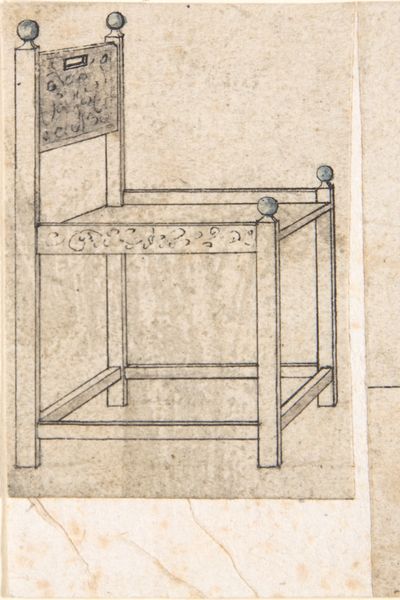
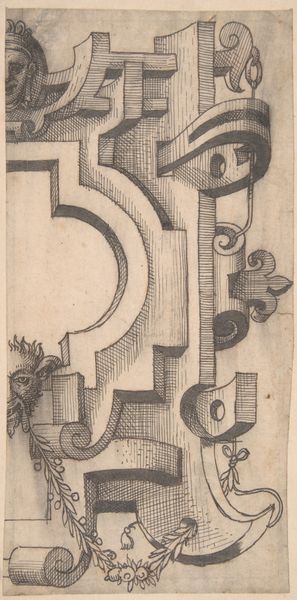
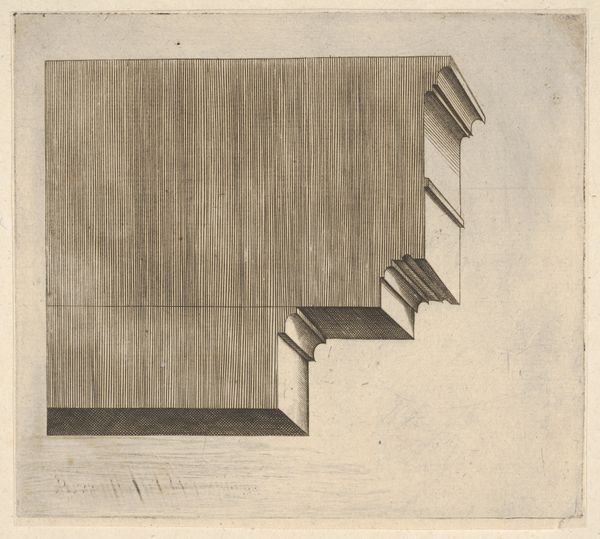
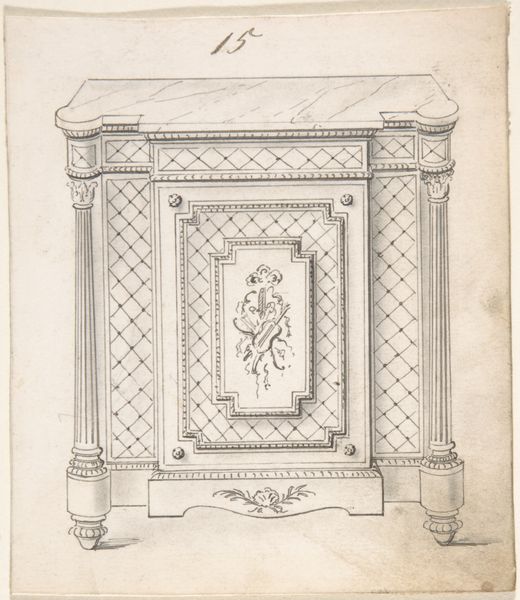
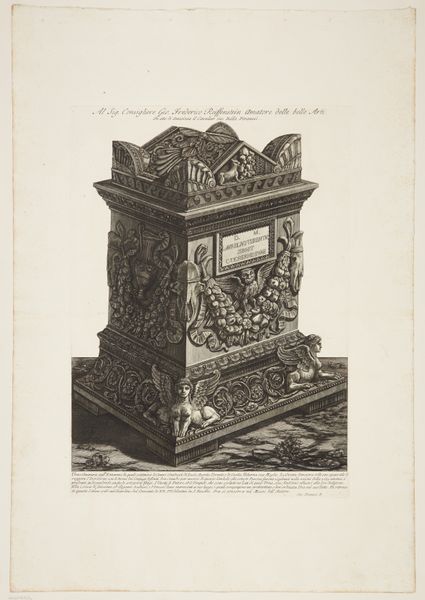
Curator: Here we have Peter Flötner's "Perspectival Drawing of a Column Base with Cube" from 1528. It's currently held at the Metropolitan Museum of Art, and offers a glimpse into the artistic fascinations of the Northern Renaissance. Editor: My first impression is one of geometric restraint, oddly juxtaposed with those intricate floral patterns. It's like a celebration of order trying to contain something wild. Curator: Precisely! Flötner was working during a time when Renaissance ideals were spreading northward. Architectural drawings, especially those dealing with perspective, were increasingly popular and widely disseminated as prints. This reflects a growing interest in classical forms. Editor: The cube dominating the column feels weighty, doesn’t it? But what's compelling is that both cube and the lower structure feature ornamental carvings which resemble acanthus leaves and flourishes, alluding to rebirth and growth. Do you think there’s perhaps an implied narrative about intellectual or creative confinement being challenged by burgeoning inspiration? Curator: It is plausible. Remember that the decorative arts at the time—engraving, carving, metalwork—were governed by rigid workshop systems that controlled design and expression. The inclusion of the 1528 date right on the cube surface calls attention to the creative constraints placed upon design, in general, at this historical juncture. Editor: It almost reads as a symbolic argument between discipline and free expression. Look at the top block. It looks like it has an empty mortise. Perhaps a challenge for us to fill that space metaphorically with our interpretations. Curator: A fruitful metaphor, certainly. The work serves as a visual prompt for debates about art's role in shaping cultural memory and institutional values, just as much now as it did then. Editor: It's striking how a simple drawing like this, rendered with just a few lines, can spark so much dialogue about the tension between form and feeling. Curator: Indeed. The visual tension between rigid design and fluid ornamentation encapsulates some fascinating contradictions within Renaissance culture. Thank you for walking with me!
Comments
No comments
Be the first to comment and join the conversation on the ultimate creative platform.
 Collect
 React
React Comment
More like this