About this artwork
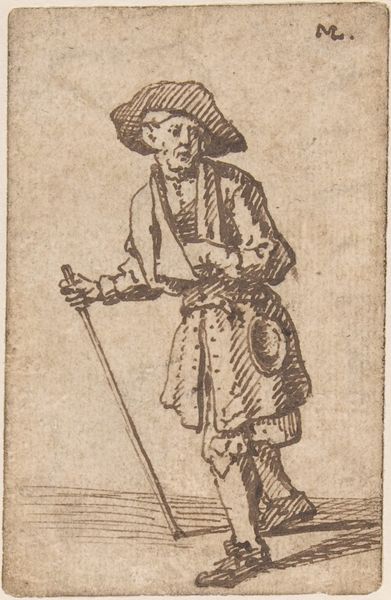
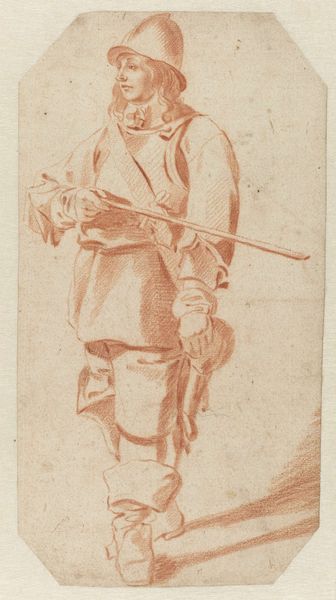
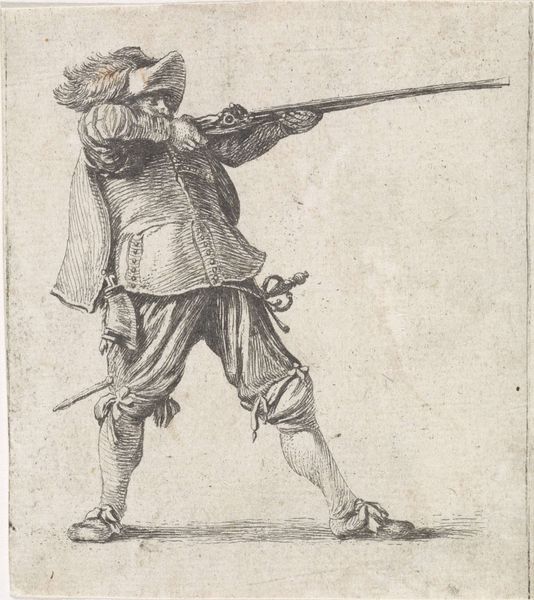
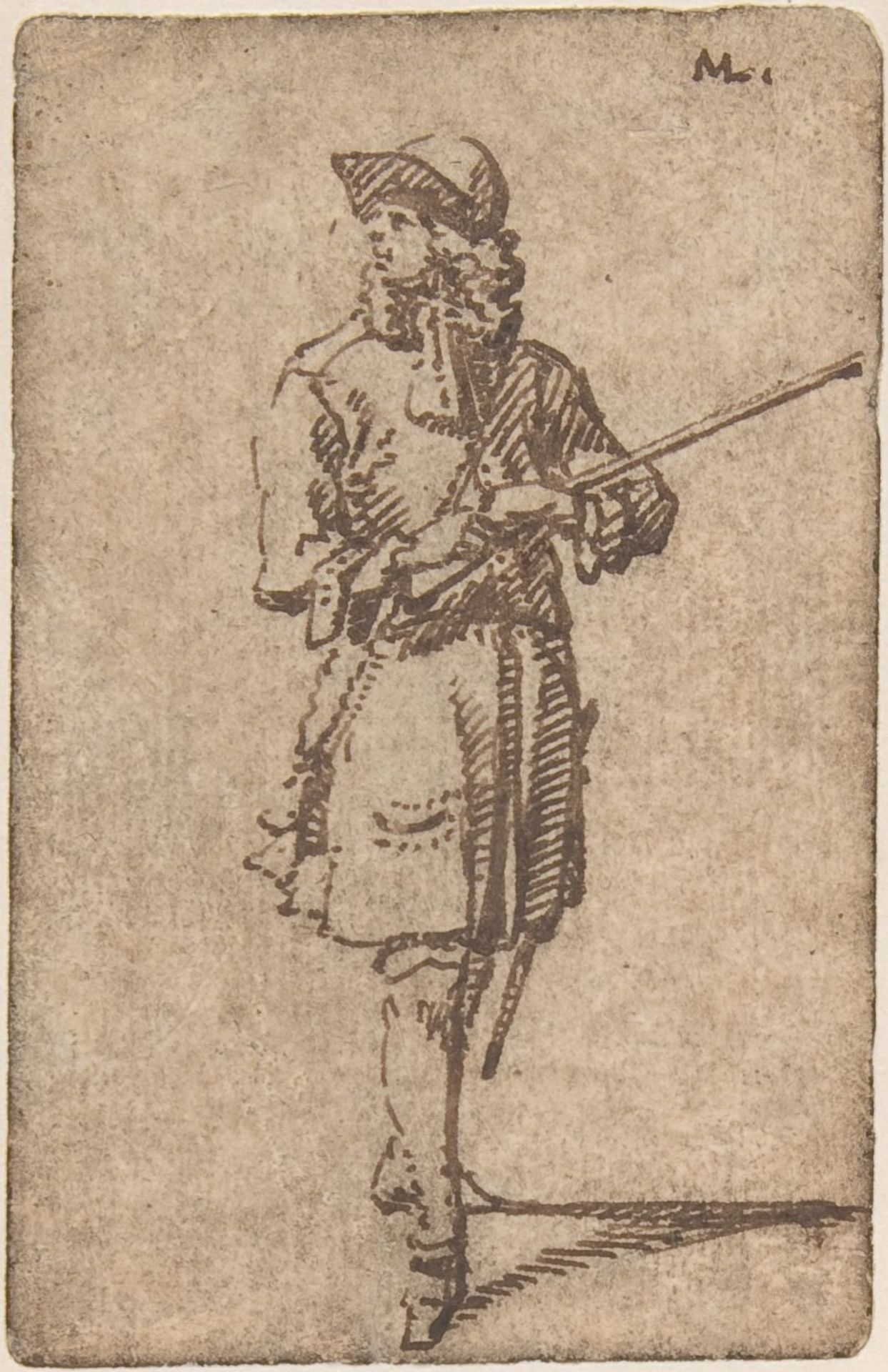
This drawing, A Sportsman with a Gun, is by Marcellus Laroon the Elder and is currently held at the Metropolitan Museum of Art. Created with pen and brown ink, this small work is dominated by the figure of a man, meticulously rendered with fine, closely spaced lines. These lines not only define his form but also create a sense of texture and depth. The composition, though simple, directs our gaze along the diagonal of the gun, creating a dynamic tension within the frame. The hatching technique adds volume to the man's clothing, contrasting the detailed treatment of the figure against the plainness of the background. Laroon’s choice of medium allows for a high degree of control and precision, reflecting a broader interest in the period in naturalism and observation. This work serves not merely as a portrait but as a study in form and texture, inviting us to consider how line and tone can construct a complete visual experience.
A Sportsman with a Gun
1670 - 1702

Marcellus Laroon the Elder
1653 - 1702
The Metropolitan Museum of Art
Metropolitan Museum of Art, New York, NYArtwork details
- Medium
- drawing, print
- Dimensions
- sheet: 3 3/8 x 2 3/16 in. (8.5 x 5.5 cm)
- Location
- Metropolitan Museum of Art, New York, NY
- Copyright
- Public Domain
Tags
Comments
Share your thoughts
About this artwork
This drawing, A Sportsman with a Gun, is by Marcellus Laroon the Elder and is currently held at the Metropolitan Museum of Art. Created with pen and brown ink, this small work is dominated by the figure of a man, meticulously rendered with fine, closely spaced lines. These lines not only define his form but also create a sense of texture and depth. The composition, though simple, directs our gaze along the diagonal of the gun, creating a dynamic tension within the frame. The hatching technique adds volume to the man's clothing, contrasting the detailed treatment of the figure against the plainness of the background. Laroon’s choice of medium allows for a high degree of control and precision, reflecting a broader interest in the period in naturalism and observation. This work serves not merely as a portrait but as a study in form and texture, inviting us to consider how line and tone can construct a complete visual experience.
Comments
Share your thoughts