About this artwork
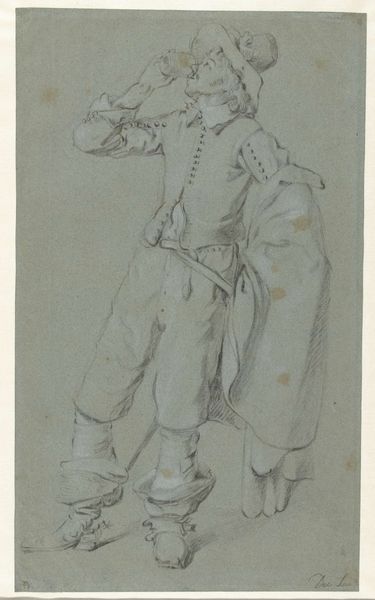
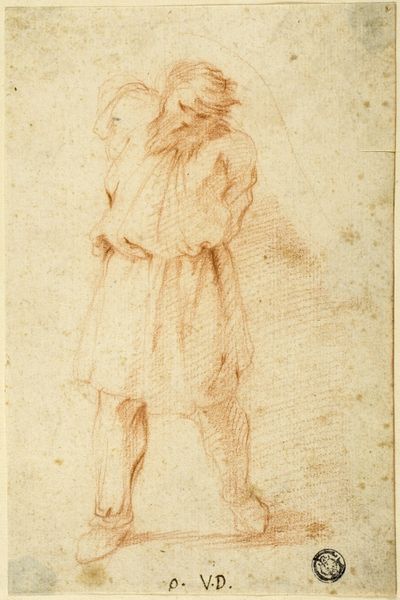
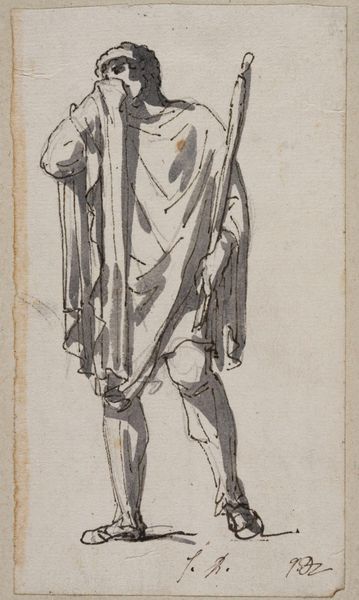
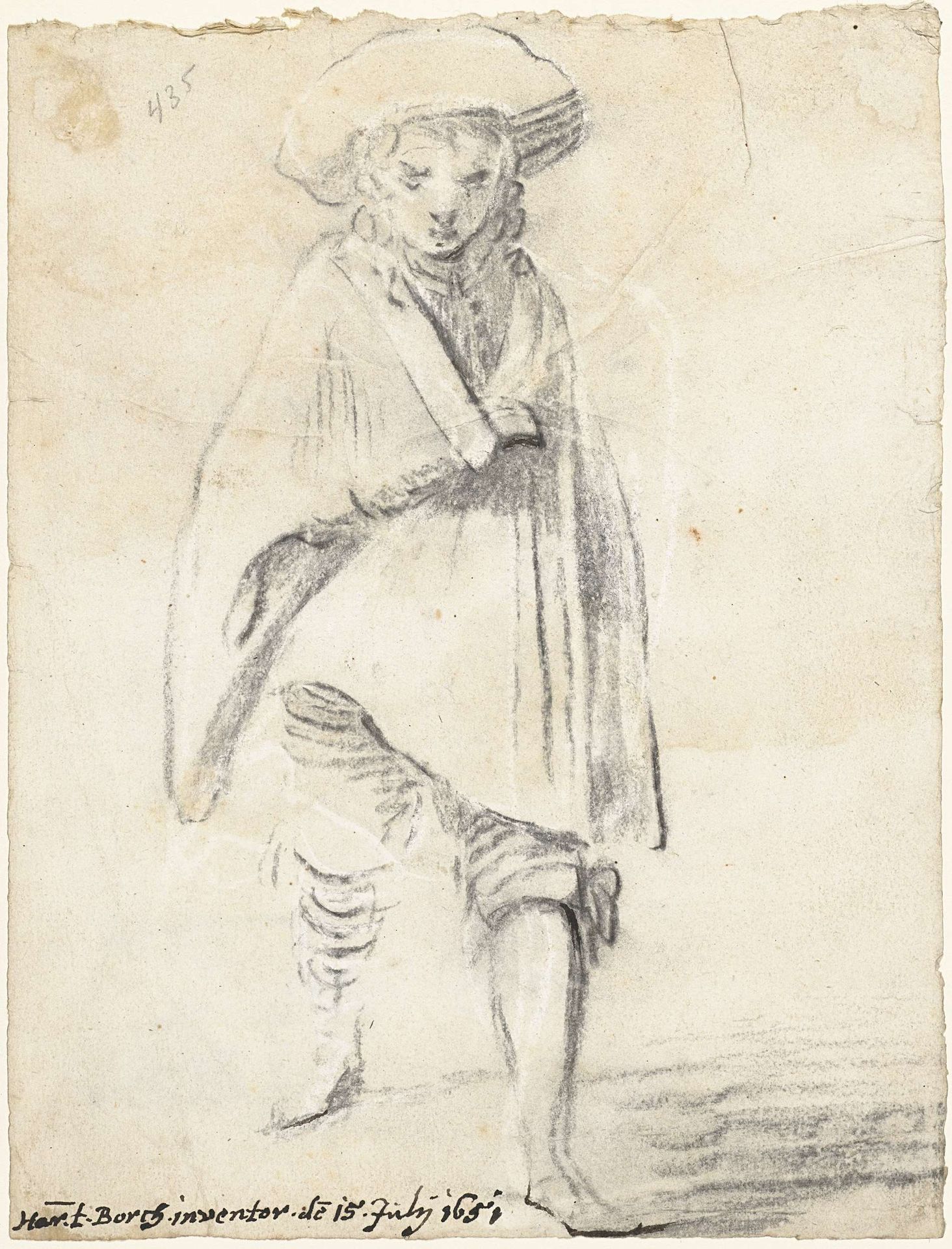
Harmen ter Borch sketched this standing figure of a young man with a cloak in the mid-17th century. The figure's draped cloak and hat are symbols of status, reminiscent of classical attire. The way the cloak is worn, draped over one shoulder, echoes the ancient Roman toga. The toga, originally a practical garment, evolved into a symbol of citizenship and authority. We see echoes of this in Renaissance portraiture, where draped fabrics signified learning and refinement. Consider, too, the slouching figure, a motif of melancholy that reminds us of classical depictions of mourning figures from antiquity. This recurring theme links Ter Borch's youth to a larger, timeless expression of human emotions. It's a powerful connection, engaging viewers on a subconscious level.
Staande figuur van een jongeman met een mantel om zich heen geslagen
Possibly 1651 - 1657

Harmen ter Borch
1638 - 1677Location
RijksmuseumArtwork details
- Medium
- drawing, pencil
- Dimensions
- height 215 mm, width 165 mm
- Location
- Rijksmuseum
- Copyright
- Rijks Museum: Open Domain
Tags
Comments
Share your thoughts
About this artwork
Harmen ter Borch sketched this standing figure of a young man with a cloak in the mid-17th century. The figure's draped cloak and hat are symbols of status, reminiscent of classical attire. The way the cloak is worn, draped over one shoulder, echoes the ancient Roman toga. The toga, originally a practical garment, evolved into a symbol of citizenship and authority. We see echoes of this in Renaissance portraiture, where draped fabrics signified learning and refinement. Consider, too, the slouching figure, a motif of melancholy that reminds us of classical depictions of mourning figures from antiquity. This recurring theme links Ter Borch's youth to a larger, timeless expression of human emotions. It's a powerful connection, engaging viewers on a subconscious level.
Comments
Share your thoughts