About this artwork
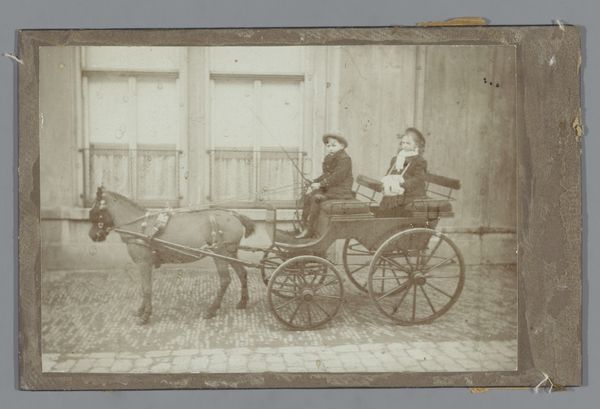
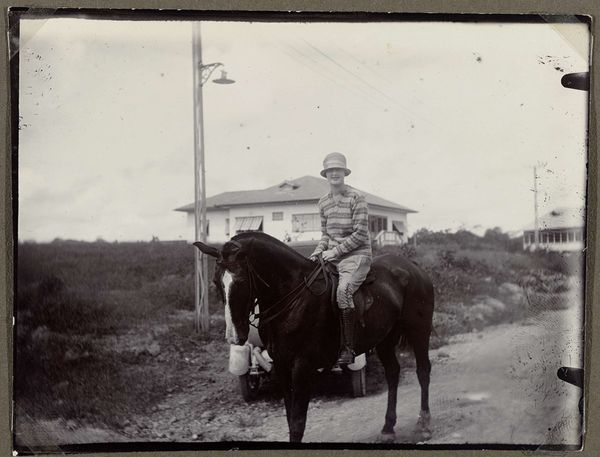
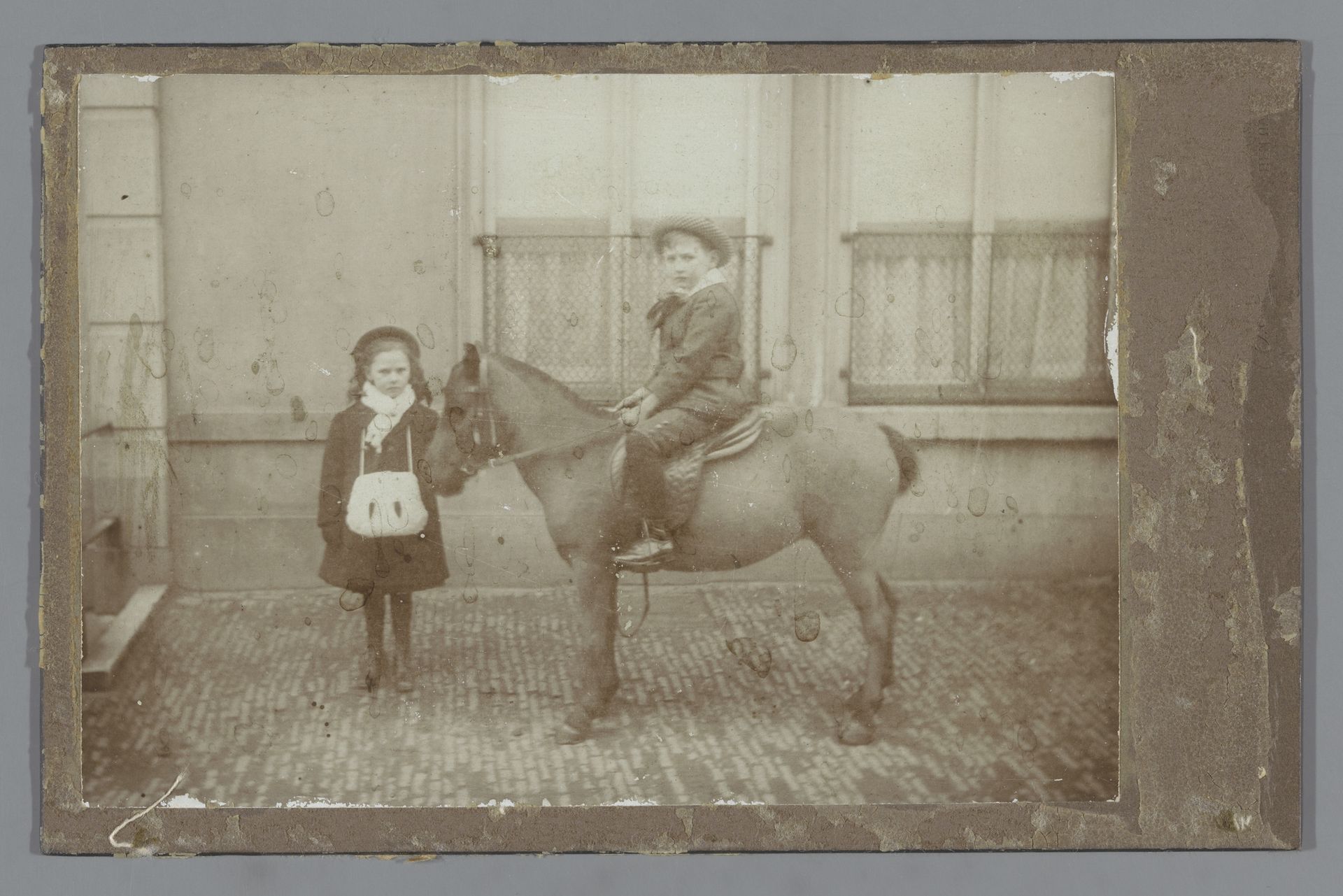
Wilhelm Frederick Antonius Delboy possibly made this photograph in The Hague, capturing a girl and a boy on horseback in front of a house. The class dynamics on display are palpable. The children’s attire signals a certain level of affluence, further highlighted by the presence of the pony, a luxury of the time. The photograph’s composition, with the children posed formally, reflects the conventions of bourgeois portraiture, where the subjects' social standing was carefully constructed through visual cues. The children appear frozen in time. The young boy’s confident posture on the pony contrasts with the girl’s reserved stance, reflecting the gendered expectations of the era. The act of staging such a photograph speaks volumes about how families wished to be perceived, carefully curating their image for posterity. Ultimately, this photograph invites us to consider how identity is performed and preserved through visual representation. It’s a poignant reminder of the stories we tell about ourselves, and the values we choose to uphold.
Meisje en een jongen op een paard voor een huis (vermoedelijk) te Den Haag
c. 1890 - 1910

Artwork details
- Medium
- photography, pencil
- Dimensions
- height 96 mm, width 133 mm
- Copyright
- Rijks Museum: Open Domain
Tags
Comments
Share your thoughts
About this artwork
Wilhelm Frederick Antonius Delboy possibly made this photograph in The Hague, capturing a girl and a boy on horseback in front of a house. The class dynamics on display are palpable. The children’s attire signals a certain level of affluence, further highlighted by the presence of the pony, a luxury of the time. The photograph’s composition, with the children posed formally, reflects the conventions of bourgeois portraiture, where the subjects' social standing was carefully constructed through visual cues. The children appear frozen in time. The young boy’s confident posture on the pony contrasts with the girl’s reserved stance, reflecting the gendered expectations of the era. The act of staging such a photograph speaks volumes about how families wished to be perceived, carefully curating their image for posterity. Ultimately, this photograph invites us to consider how identity is performed and preserved through visual representation. It’s a poignant reminder of the stories we tell about ourselves, and the values we choose to uphold.
Comments
Share your thoughts