1757
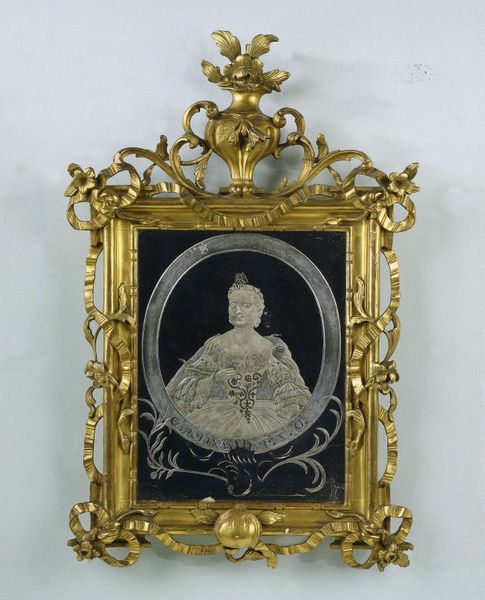
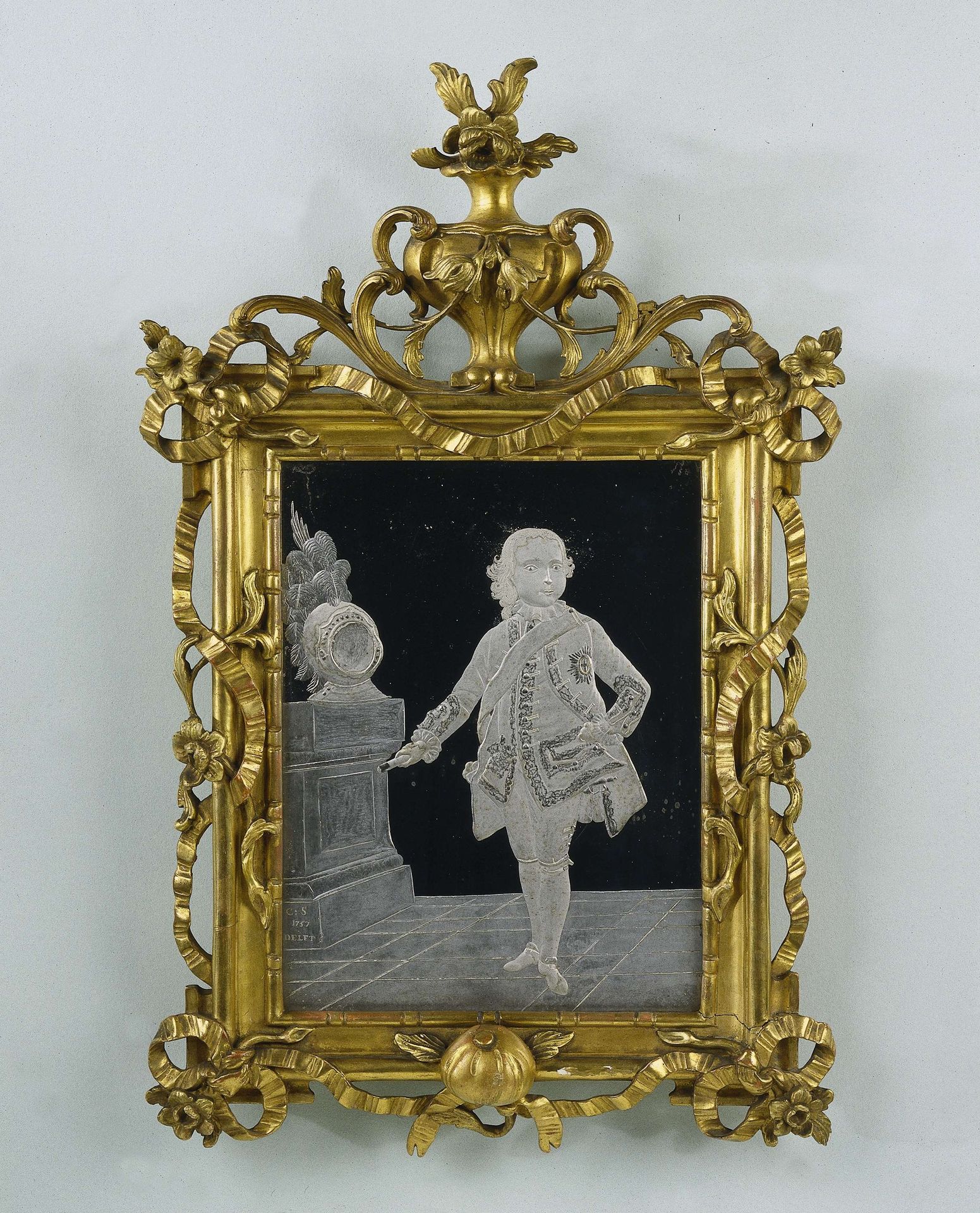
Spiegel met een portret van Willem V

Listen to curator's interpretation
Curatorial notes
Editor: So this is “Mirror with a portrait of Willem V,” created by Christiaan Schröder in 1757. It’s a sculpture, although that's not immediately clear. I’m struck by how it functions simultaneously as portraiture and decorative art. How do you interpret the role this object played in its time? Curator: It's interesting you note its dual nature. Looking at it through a historical lens, this wasn't just about capturing Willem V's likeness. It's deeply tied to the display of power and social status. The Baroque style of the frame, the elaborate details – these aren't accidents. They tell us about the societal function of art. Do you notice anything specific about the setting depicted within the mirror itself? Editor: I see the statue, implying a grand space, like a palace or garden, and that lends an air of importance and authority to Willem V. It almost feels like he is being presented to the viewer as a ruler, a leader, larger than life almost. Curator: Exactly! The intentional construction of imagery was incredibly important then. The placement of Willem V within that imagined, yet explicitly designed, landscape emphasizes his dominion. This wasn't just art; it was a carefully crafted message. The use of decorative art objects as political statements, the mirror itself becoming a symbol of curated self-image. Do you see how the museum shapes its perception today versus in the past? Editor: Absolutely, its meaning has shifted over time, being moved from, possibly, a royal space to a display inside a public museum, allowing everyone to learn the role and impact of powerful political images. Now, I can see how even something that seemed purely ornamental, like a decorative mirror, played an important part in power. Curator: And that is the key: to consider the power structures influencing both the creation and the reception of the art object, yesterday and today.