About this artwork
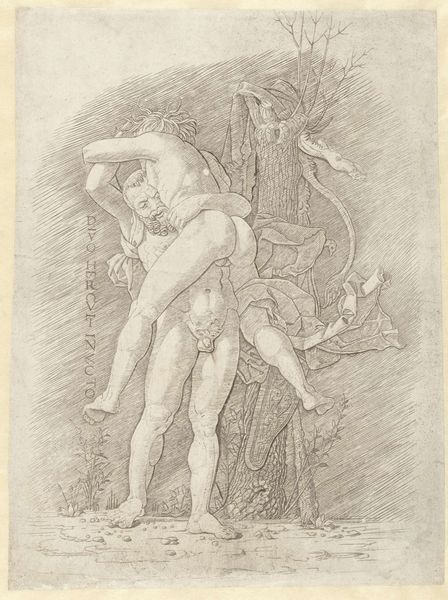
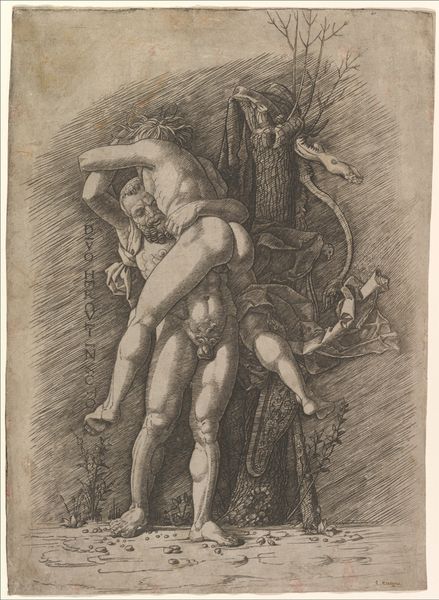
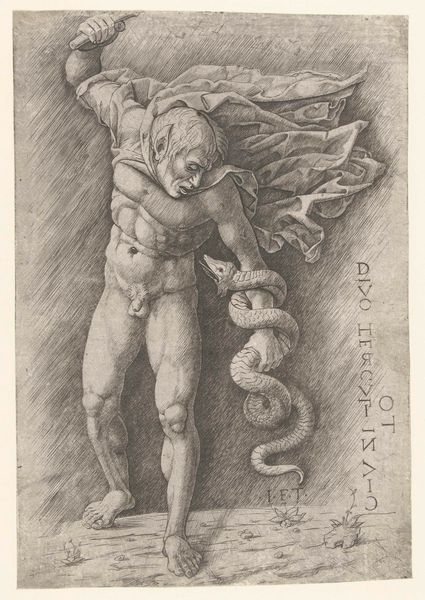
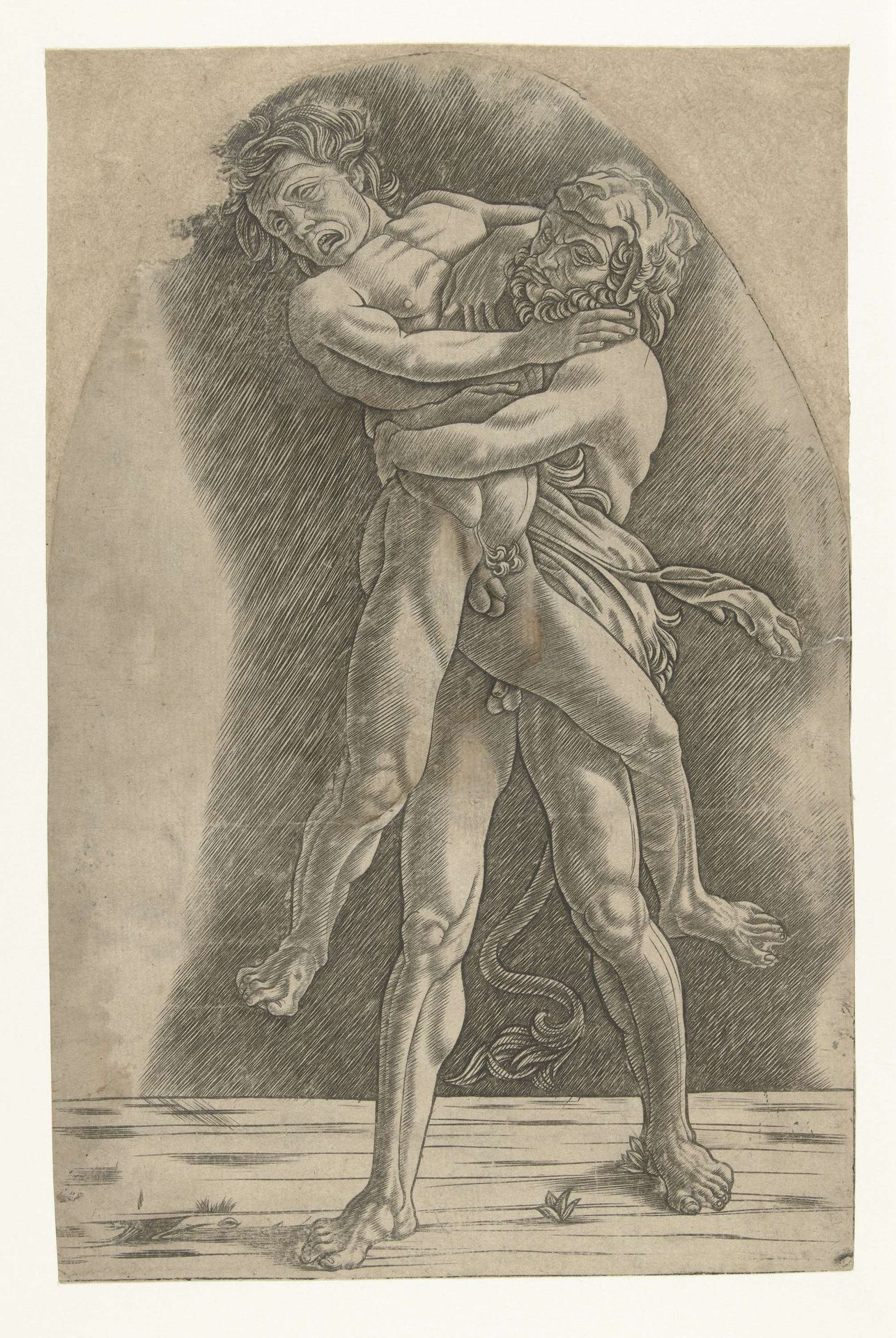
Andrea Mantegna created this print, Hercules Wrestling with Antaeus, in the fifteenth century using the exacting process of engraving. With a tool called a burin, Mantegna would have slowly and painstakingly carved lines into a copper plate. The plate would then be inked, and the surface wiped clean, leaving ink only in the incised lines. Finally, damp paper was laid on the plate, and run through a press, transferring the image. It’s a process that demands both physical strength and enormous control. Look closely, and you can see how Mantegna used the technique to its full potential, varying the density and direction of the lines to create a sense of volume and drama. The stark contrast between light and shadow, so characteristic of the engraving process, heightens the drama of this ancient mythological scene. Engraving was an expensive process, but it allowed for the relatively easy reproduction of images. In Mantegna’s time, that meant greater access to classical subjects like this one, fueling the Renaissance.

Artwork details
- Medium
- print, engraving
- Dimensions
- height 252 mm, width 163 mm
- Location
- Rijksmuseum
- Copyright
- Rijks Museum: Open Domain
Tags
narrative-art
figuration
line
history-painting
italian-renaissance
engraving
Comments
No comments
About this artwork
Andrea Mantegna created this print, Hercules Wrestling with Antaeus, in the fifteenth century using the exacting process of engraving. With a tool called a burin, Mantegna would have slowly and painstakingly carved lines into a copper plate. The plate would then be inked, and the surface wiped clean, leaving ink only in the incised lines. Finally, damp paper was laid on the plate, and run through a press, transferring the image. It’s a process that demands both physical strength and enormous control. Look closely, and you can see how Mantegna used the technique to its full potential, varying the density and direction of the lines to create a sense of volume and drama. The stark contrast between light and shadow, so characteristic of the engraving process, heightens the drama of this ancient mythological scene. Engraving was an expensive process, but it allowed for the relatively easy reproduction of images. In Mantegna’s time, that meant greater access to classical subjects like this one, fueling the Renaissance.
Comments
No comments