About this artwork
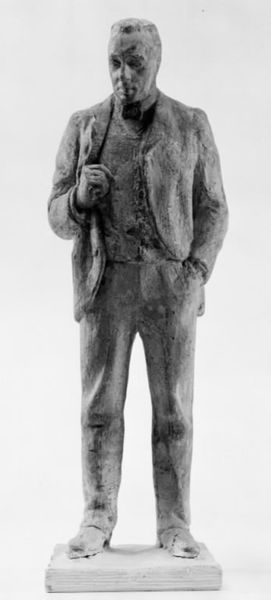
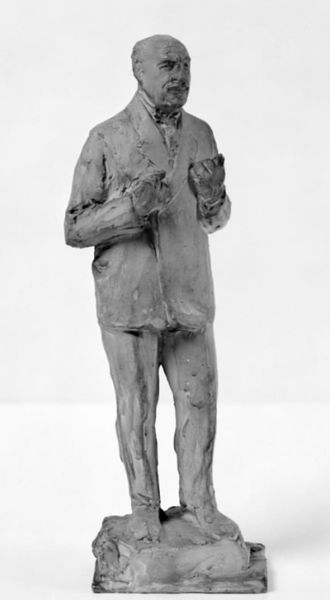
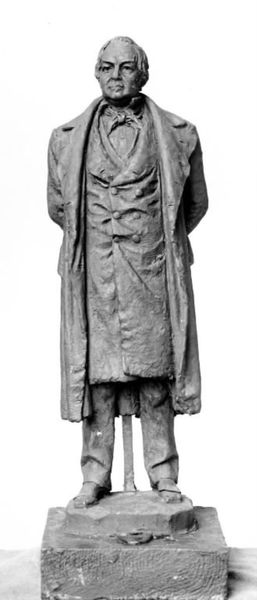
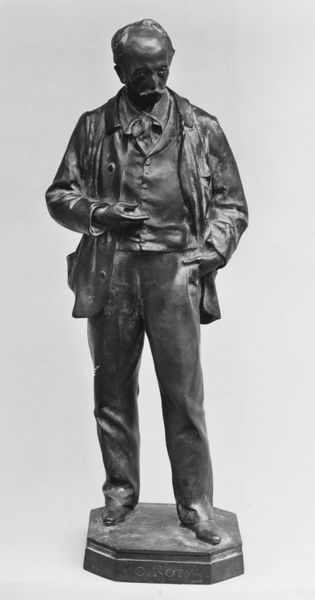
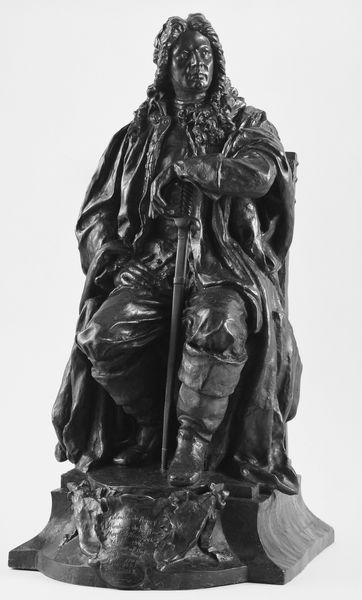
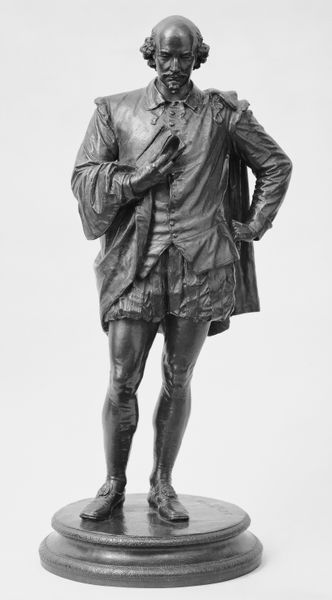
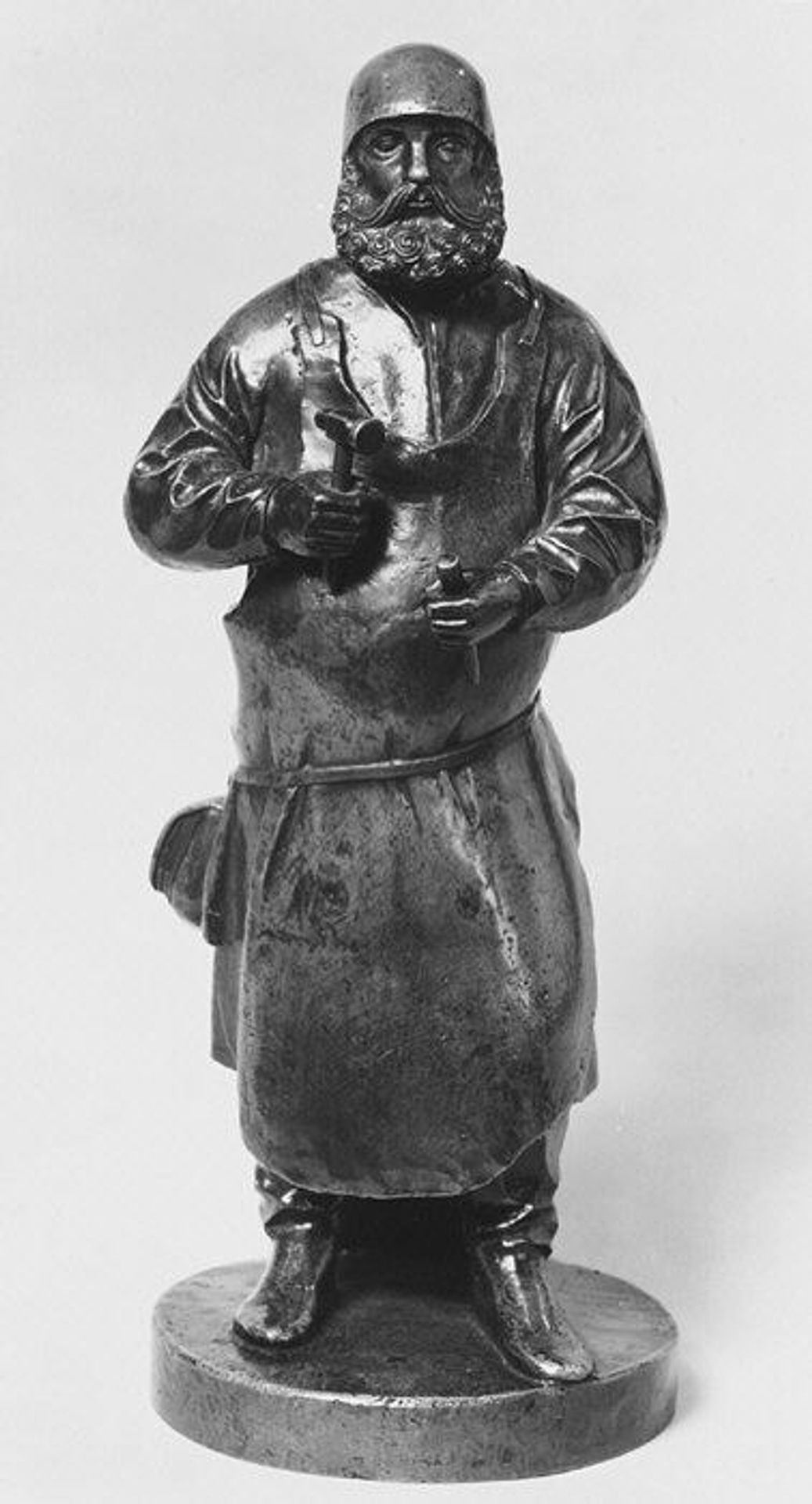
Editor: This bronze sculpture, "Peter Vischer the Elder," likely created in the 19th century, stands in the Metropolitan Museum of Art. Its smooth, metallic surface and carefully crafted form give it an air of solidity and presence. I am curious about its classical realism, how would you interpret this work through its form and material? Curator: Its value rests in the refined application of Classical Realism, evidenced by the precision and meticulous details. Semiotically, what does the medium of bronze contribute? Editor: It suggests permanence and importance, wouldn’t you say? The color adds depth and dimension to the piece. Curator: Precisely. Consider how the artist has used this potential. The articulation of form, the lines defining the face and clothing, how do they shape our understanding of this figure? Notice the balanced composition, the subtle contrapposto in the figure's stance, contributing to its inherent value, regardless of subject. How might you define that balance and poise through a philosophical lens? Editor: Perhaps an idealized version of labour? Through the use of form, balance and careful execution, there’s this air of dignity even in the man's workwear. Curator: Exactly. The surface and its light play add another layer. Can you discern how the treatment of the bronze adds meaning beyond just representation? Editor: I think it makes it imposing, gives it depth beyond a mere representational function. That makes me appreciate how every element contributes to a unified whole. Curator: Indeed. Through analysing such structures, a deeper aesthetic emerges that transcends pure historical content. Editor: That's been very insightful! I definitely see the value in focusing on just the object's components and how they relate to one another.
Peter Vischer the Elder
19th century

Peter Vischer the Younger
1487 - 1528
The Metropolitan Museum of Art
Metropolitan Museum of Art, New York, NYArtwork details
- Medium
- bronze, sculpture
- Dimensions
- Height: 15 in. (38.1 cm)
- Location
- Metropolitan Museum of Art, New York, NY
- Copyright
- Public Domain
Tags
Comments
Share your thoughts
About this artwork
Editor: This bronze sculpture, "Peter Vischer the Elder," likely created in the 19th century, stands in the Metropolitan Museum of Art. Its smooth, metallic surface and carefully crafted form give it an air of solidity and presence. I am curious about its classical realism, how would you interpret this work through its form and material? Curator: Its value rests in the refined application of Classical Realism, evidenced by the precision and meticulous details. Semiotically, what does the medium of bronze contribute? Editor: It suggests permanence and importance, wouldn’t you say? The color adds depth and dimension to the piece. Curator: Precisely. Consider how the artist has used this potential. The articulation of form, the lines defining the face and clothing, how do they shape our understanding of this figure? Notice the balanced composition, the subtle contrapposto in the figure's stance, contributing to its inherent value, regardless of subject. How might you define that balance and poise through a philosophical lens? Editor: Perhaps an idealized version of labour? Through the use of form, balance and careful execution, there’s this air of dignity even in the man's workwear. Curator: Exactly. The surface and its light play add another layer. Can you discern how the treatment of the bronze adds meaning beyond just representation? Editor: I think it makes it imposing, gives it depth beyond a mere representational function. That makes me appreciate how every element contributes to a unified whole. Curator: Indeed. Through analysing such structures, a deeper aesthetic emerges that transcends pure historical content. Editor: That's been very insightful! I definitely see the value in focusing on just the object's components and how they relate to one another.
Comments
Share your thoughts