About this artwork
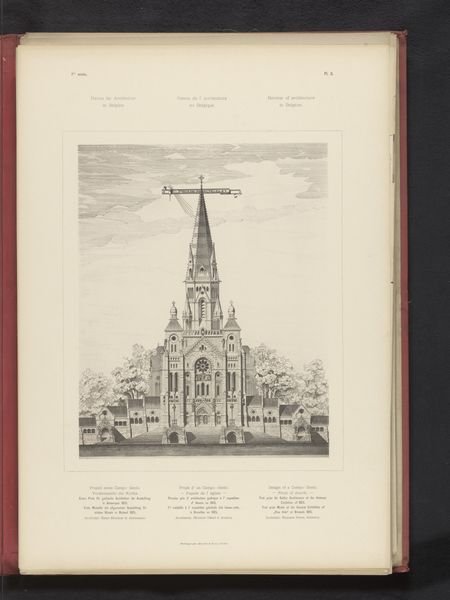
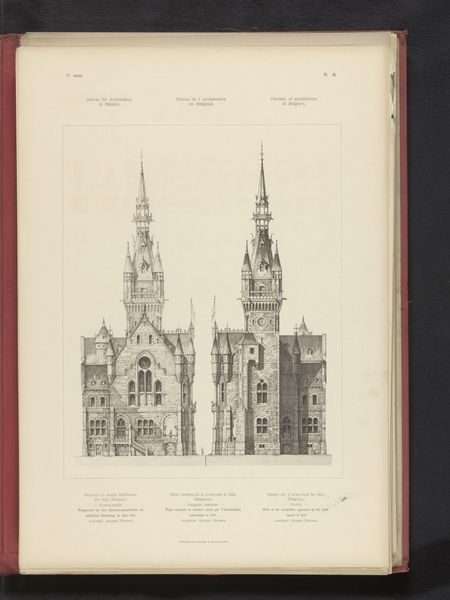
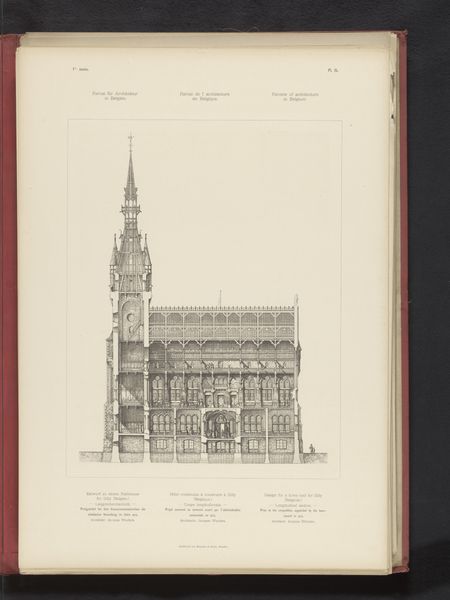
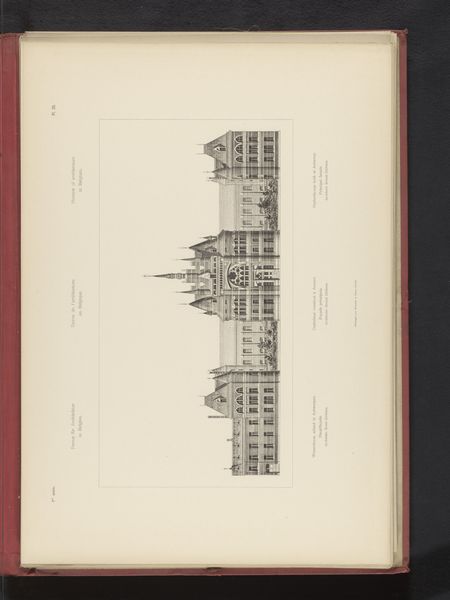
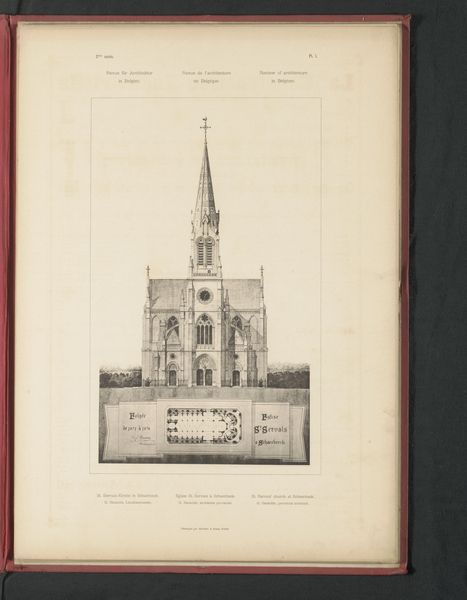
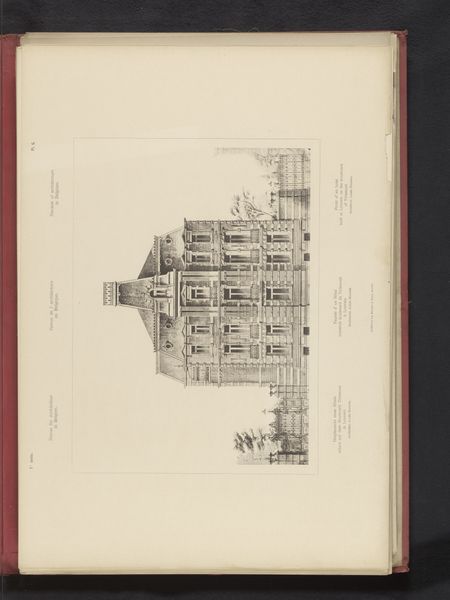
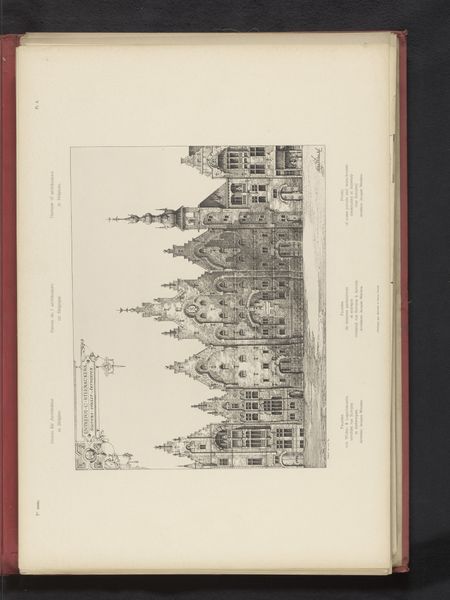
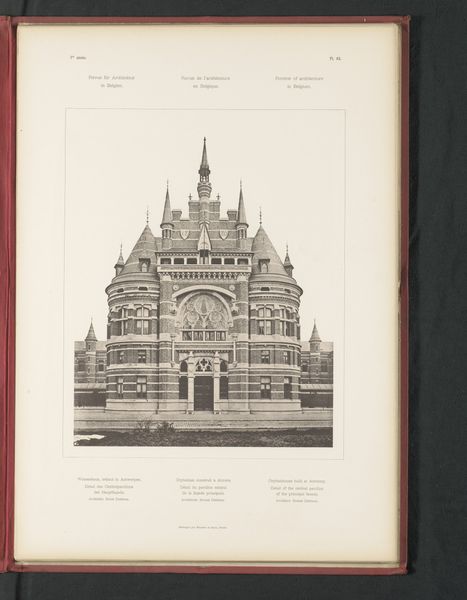
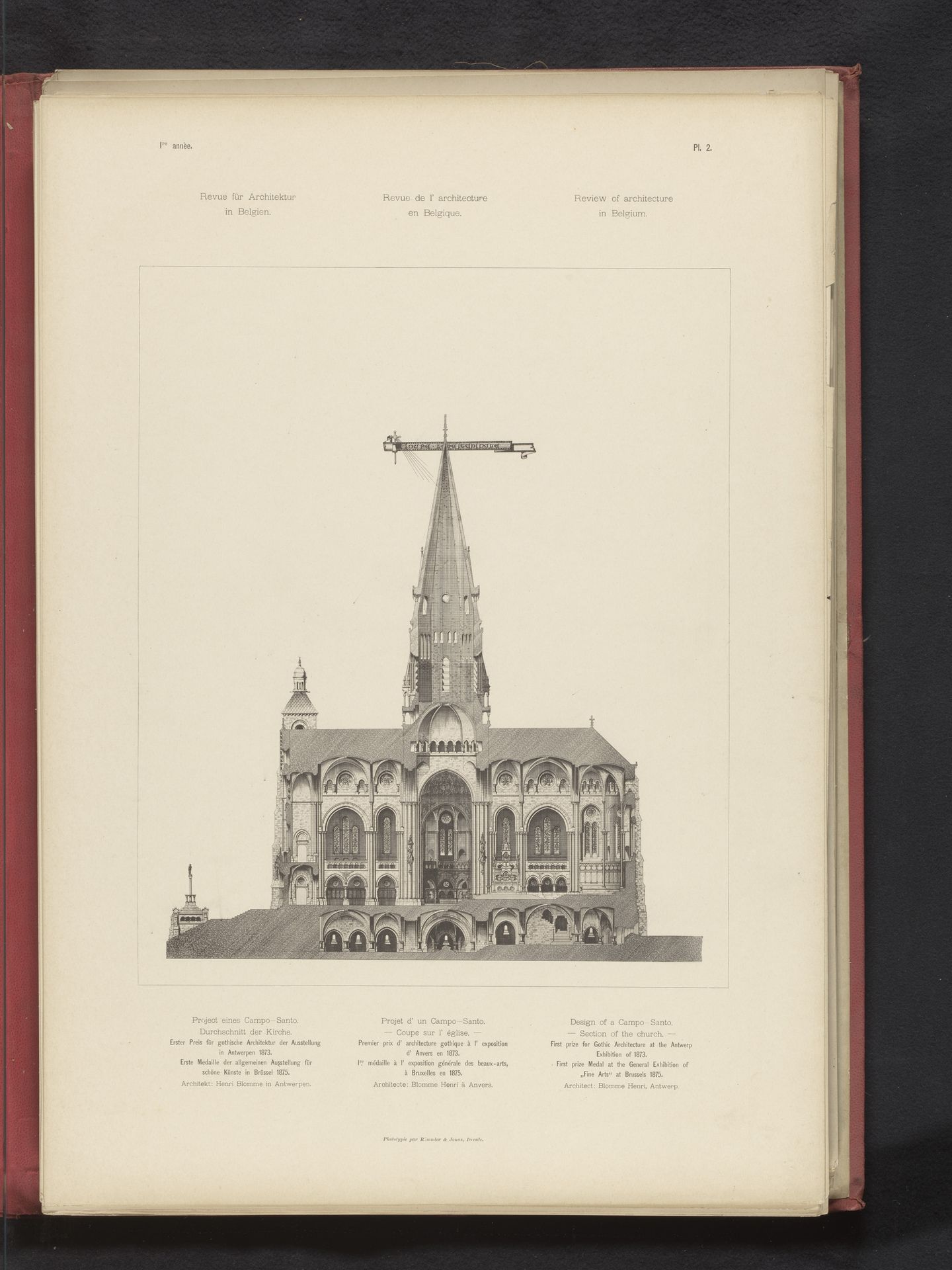
This is a reproduction of a Campo Santo design by Henri Blomme, created by Römmler & Jonas, using a method of graphic reproduction. Here, the detailed lines and shading were achieved through engraving or lithography. The precision required suggests a division of labor: one artist perhaps created the initial design, and skilled printmakers translated it onto the plate. This method allowed for the widespread dissemination of architectural ideas. Consider the cultural context: such prints educated aspiring architects and promoted specific styles. The design itself speaks to its time, referencing historical motifs blended with contemporary aesthetics. The print makes the design accessible to a broad audience, influencing architectural tastes and building practices far beyond its origin. Prints like this were crucial in shaping the built environment, underscoring how reproductive techniques democratize design, and making the creative process collaborative.
Reproductie van een ontwerp van een Campo Santo door Henri Blomme before 1893

Artwork details
- Medium
- drawing, paper, ink, architecture
- Dimensions
- height 326 mm, width 268 mm
- Copyright
- Rijks Museum: Open Domain
Tags
drawing
perspective
paper
ink
geometric
line
academic-art
architecture
Comments
No comments
About this artwork
This is a reproduction of a Campo Santo design by Henri Blomme, created by Römmler & Jonas, using a method of graphic reproduction. Here, the detailed lines and shading were achieved through engraving or lithography. The precision required suggests a division of labor: one artist perhaps created the initial design, and skilled printmakers translated it onto the plate. This method allowed for the widespread dissemination of architectural ideas. Consider the cultural context: such prints educated aspiring architects and promoted specific styles. The design itself speaks to its time, referencing historical motifs blended with contemporary aesthetics. The print makes the design accessible to a broad audience, influencing architectural tastes and building practices far beyond its origin. Prints like this were crucial in shaping the built environment, underscoring how reproductive techniques democratize design, and making the creative process collaborative.
Comments
No comments