About this artwork
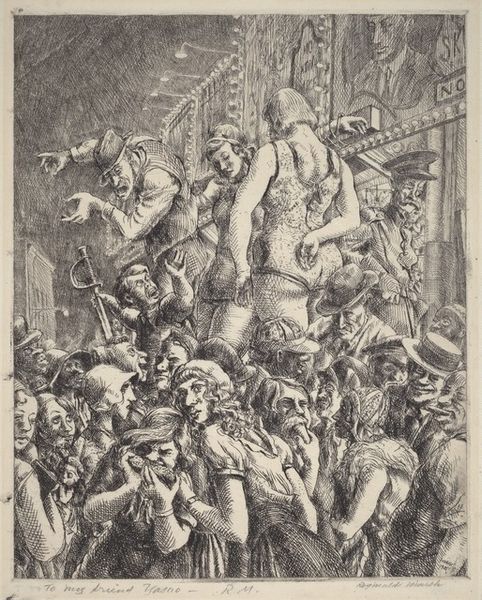
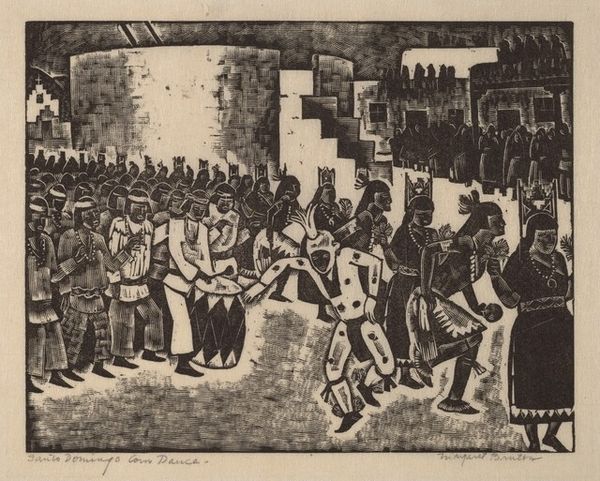
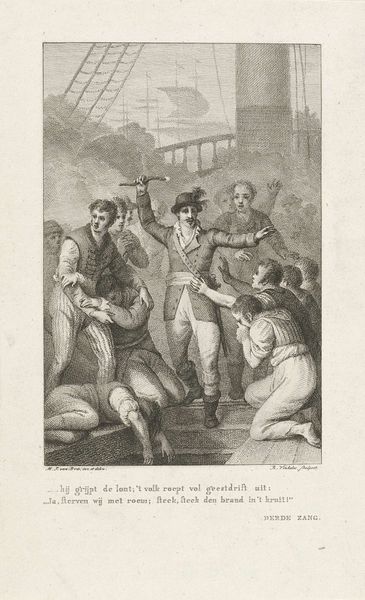
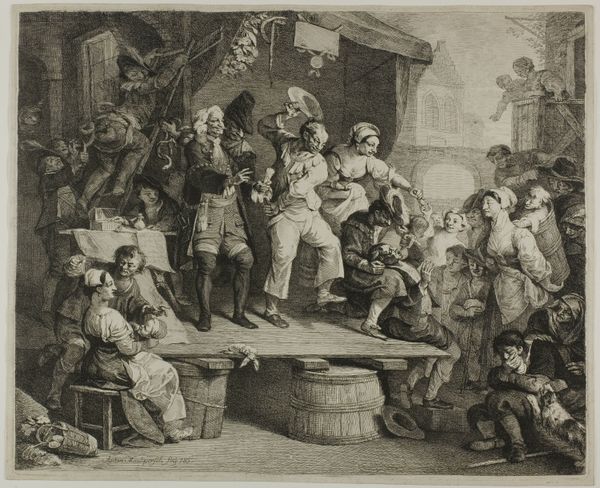
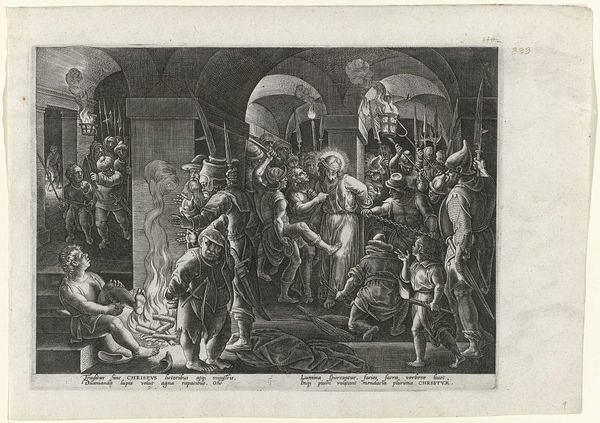
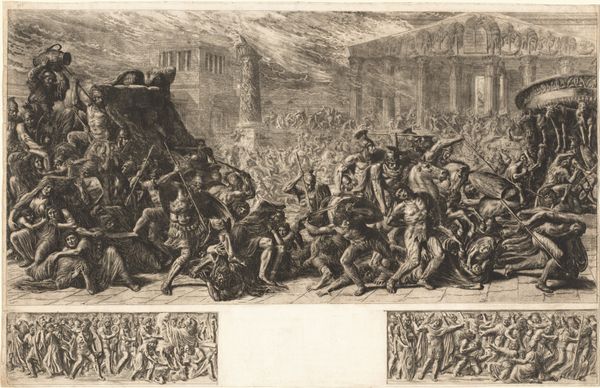
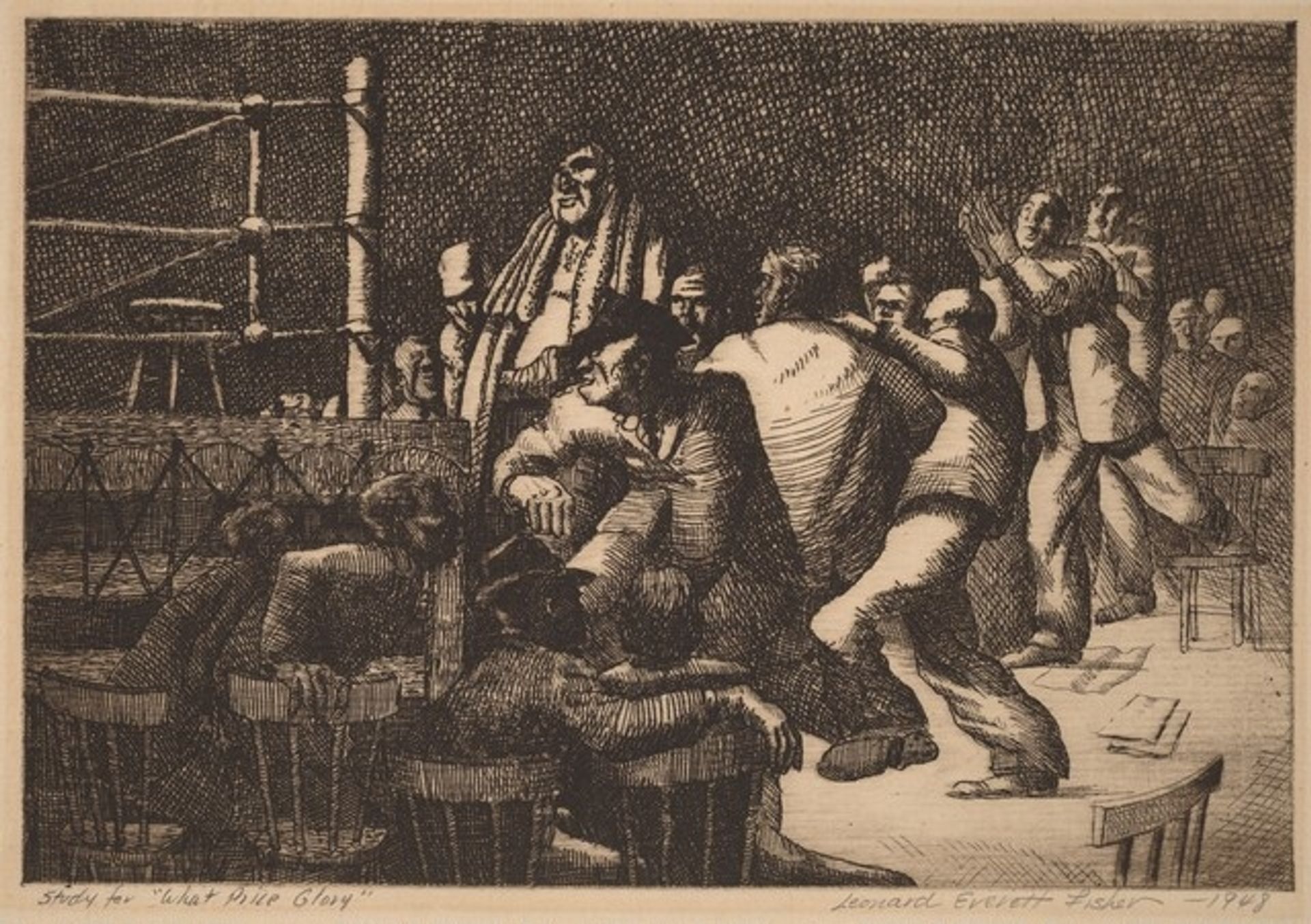
Leonard Everett Fisher created this study for "What Price Glory" using ink on paper. The composition is a dense aggregation of figures within a confined space, evoking a feeling of claustrophobia and tension. Dark, intricate lines define the characters and environment, emphasizing a gritty realism. The artist employs stark contrasts between light and shadow to direct the viewer's eye, creating a sense of drama. The figures, tightly packed and rendered with coarse strokes, suggest a narrative steeped in conflict and social commentary. This approach serves not only to depict a scene, but to question the values and costs associated with ambition and success, or what Fisher may see as ‘glory.’ Fisher’s manipulation of line and form effectively conveys a critical perspective on societal ideals. It’s a composition that invites ongoing interpretation, challenging us to consider the underlying structures of power and representation within its visual framework.
Study for "What Price Glory"
1948


Artwork details
- Medium
- drawing, print, etching, graphite
- Dimensions
- Image: 150 x 220 mm Sheet: 215 x 285 mm
- Copyright
- National Gallery of Art: CC0 1.0
Tags
drawing
etching
figuration
pencil drawing
graphite
genre-painting
modernism
realism
Comments
Be the first to share your thoughts about this work.
About this artwork
Leonard Everett Fisher created this study for "What Price Glory" using ink on paper. The composition is a dense aggregation of figures within a confined space, evoking a feeling of claustrophobia and tension. Dark, intricate lines define the characters and environment, emphasizing a gritty realism. The artist employs stark contrasts between light and shadow to direct the viewer's eye, creating a sense of drama. The figures, tightly packed and rendered with coarse strokes, suggest a narrative steeped in conflict and social commentary. This approach serves not only to depict a scene, but to question the values and costs associated with ambition and success, or what Fisher may see as ‘glory.’ Fisher’s manipulation of line and form effectively conveys a critical perspective on societal ideals. It’s a composition that invites ongoing interpretation, challenging us to consider the underlying structures of power and representation within its visual framework.
Comments
Be the first to share your thoughts about this work.