About this artwork
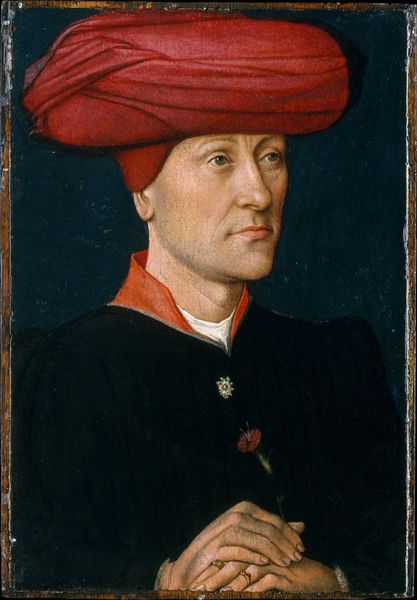
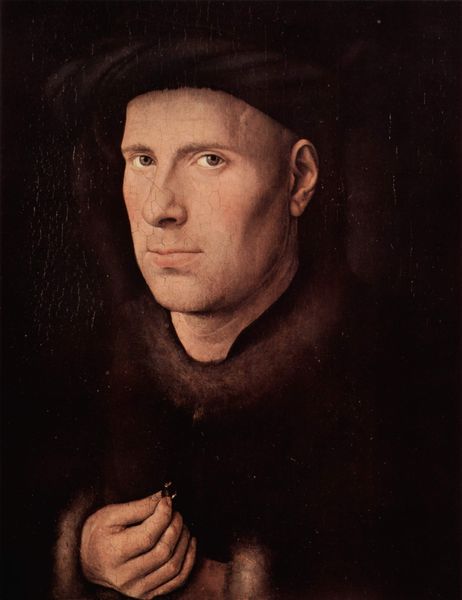
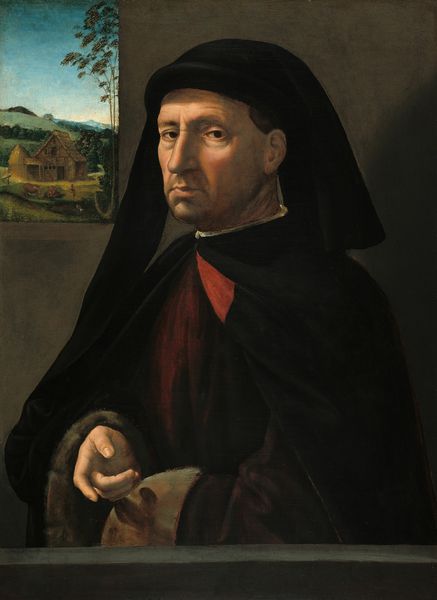
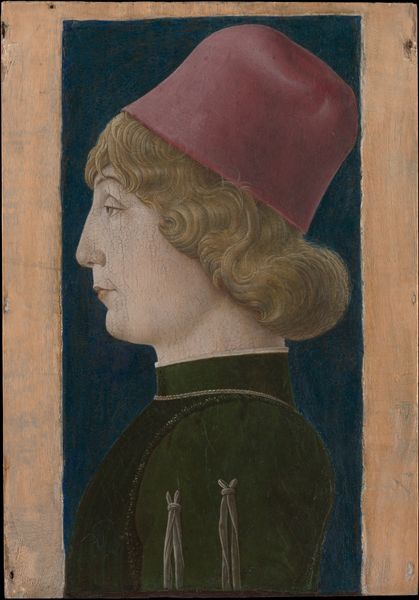
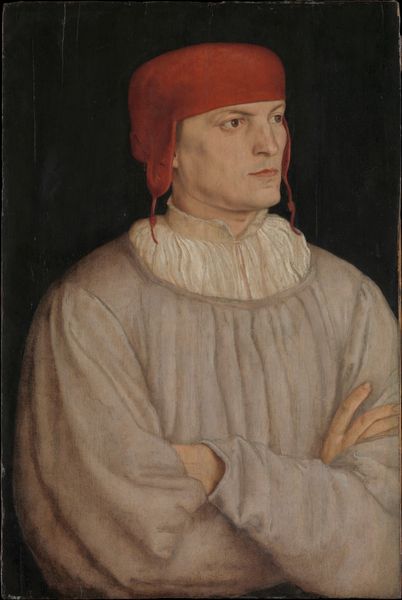
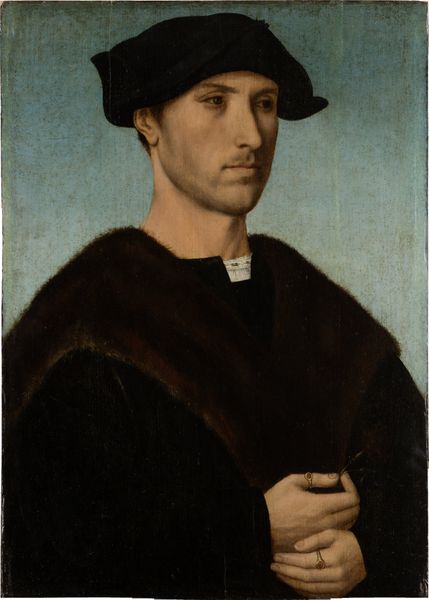
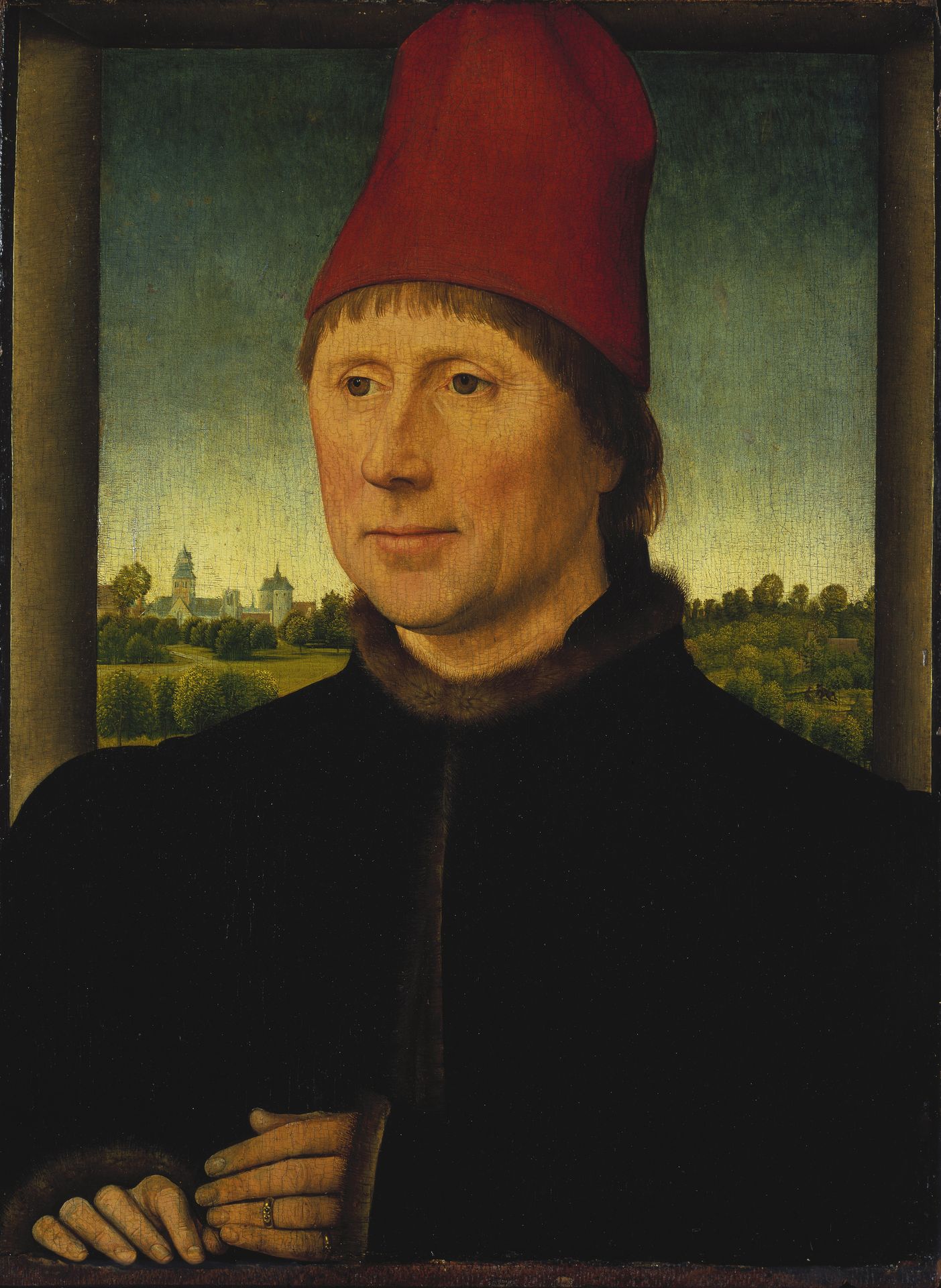
This is Hans Memling's "Portrait of a Man Wearing a High Red Cap," painted in oil on wood. Here, the composition is strikingly simple: the subject dominates the frame, his figure cut off just below the hands. The dark, almost monolithic block of his robe is punctuated only by the fur trim at his neck and the glint of rings on his fingers. This austerity throws the viewer's attention to the face, capped by the vibrant red hat. Memling balances realism with formal constraints. The atmospheric perspective is subtly rendered in the distant landscape, yet the man's gaze is fixed, his expression detached. This interplay between detail and abstraction invites us to consider how the portrait functions, not merely as a likeness, but as a construction of identity. The portrait creates a powerful statement through the controlled use of colour and form. Meaning is crafted through a delicate interplay of presence and absence.
Portrait of a Man Wearing a High Red Cap
c. 1470 - 1475


Artwork details
- Medium
- panel, painting, oil-paint
- Dimensions
- 41.8 x 30.6 x min. 1.1 cm
- Location
- Städel Museum
- Copyright
- Public Domain
Tags
Comments
Share your thoughts
About this artwork
This is Hans Memling's "Portrait of a Man Wearing a High Red Cap," painted in oil on wood. Here, the composition is strikingly simple: the subject dominates the frame, his figure cut off just below the hands. The dark, almost monolithic block of his robe is punctuated only by the fur trim at his neck and the glint of rings on his fingers. This austerity throws the viewer's attention to the face, capped by the vibrant red hat. Memling balances realism with formal constraints. The atmospheric perspective is subtly rendered in the distant landscape, yet the man's gaze is fixed, his expression detached. This interplay between detail and abstraction invites us to consider how the portrait functions, not merely as a likeness, but as a construction of identity. The portrait creates a powerful statement through the controlled use of colour and form. Meaning is crafted through a delicate interplay of presence and absence.
Comments
Share your thoughts