About this artwork
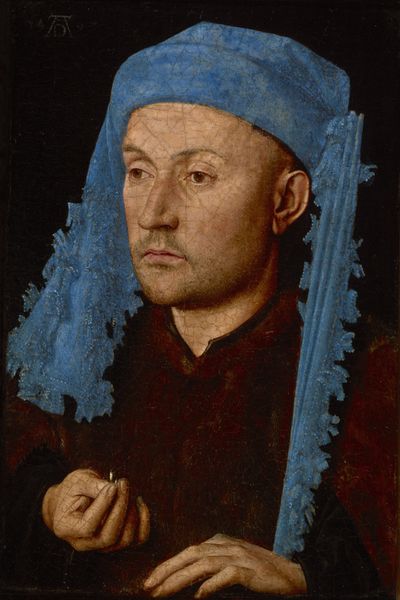
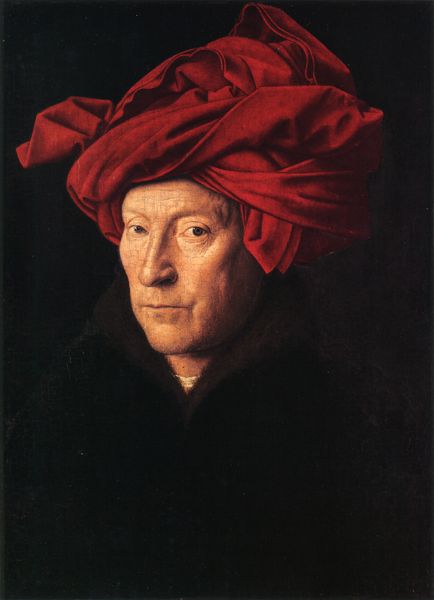
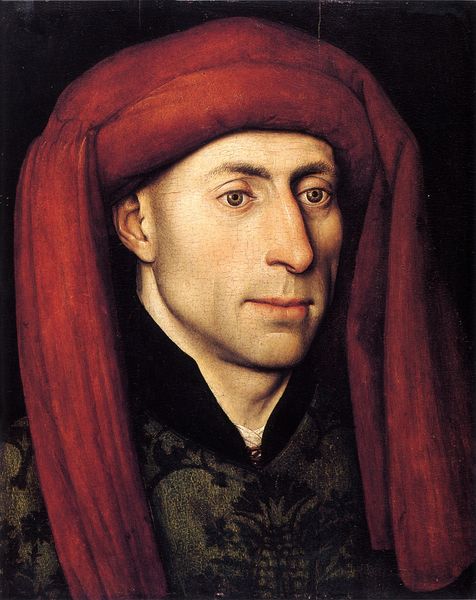
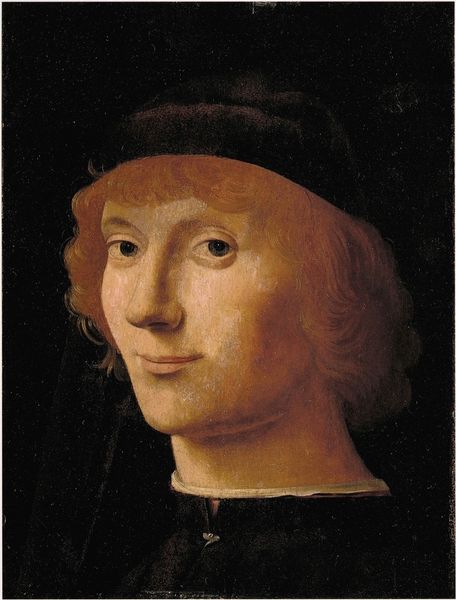
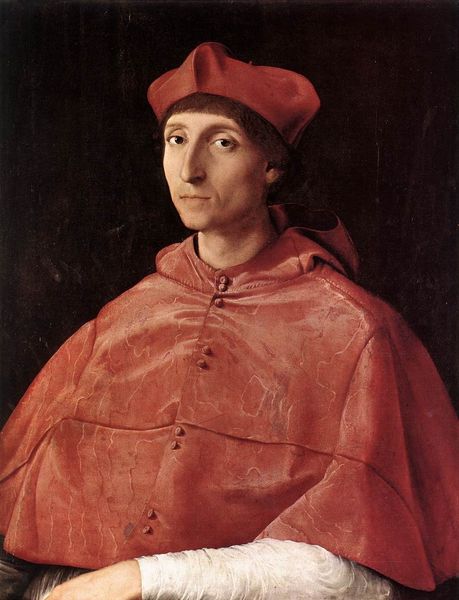
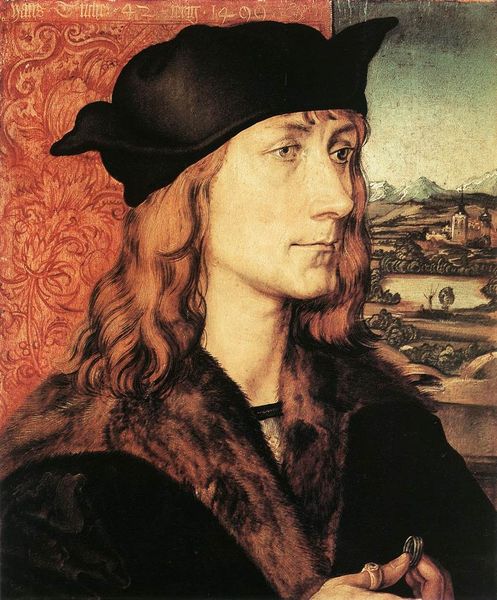
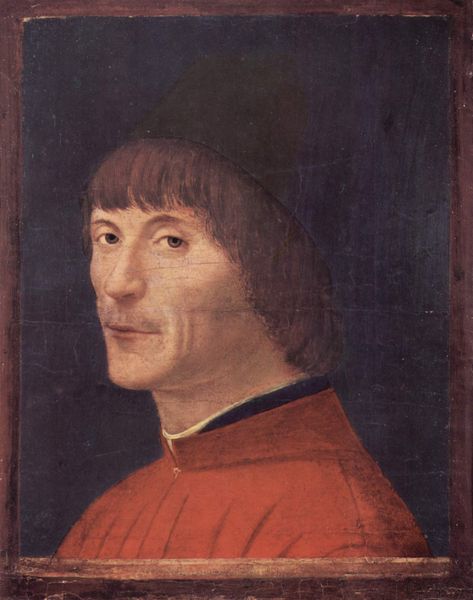
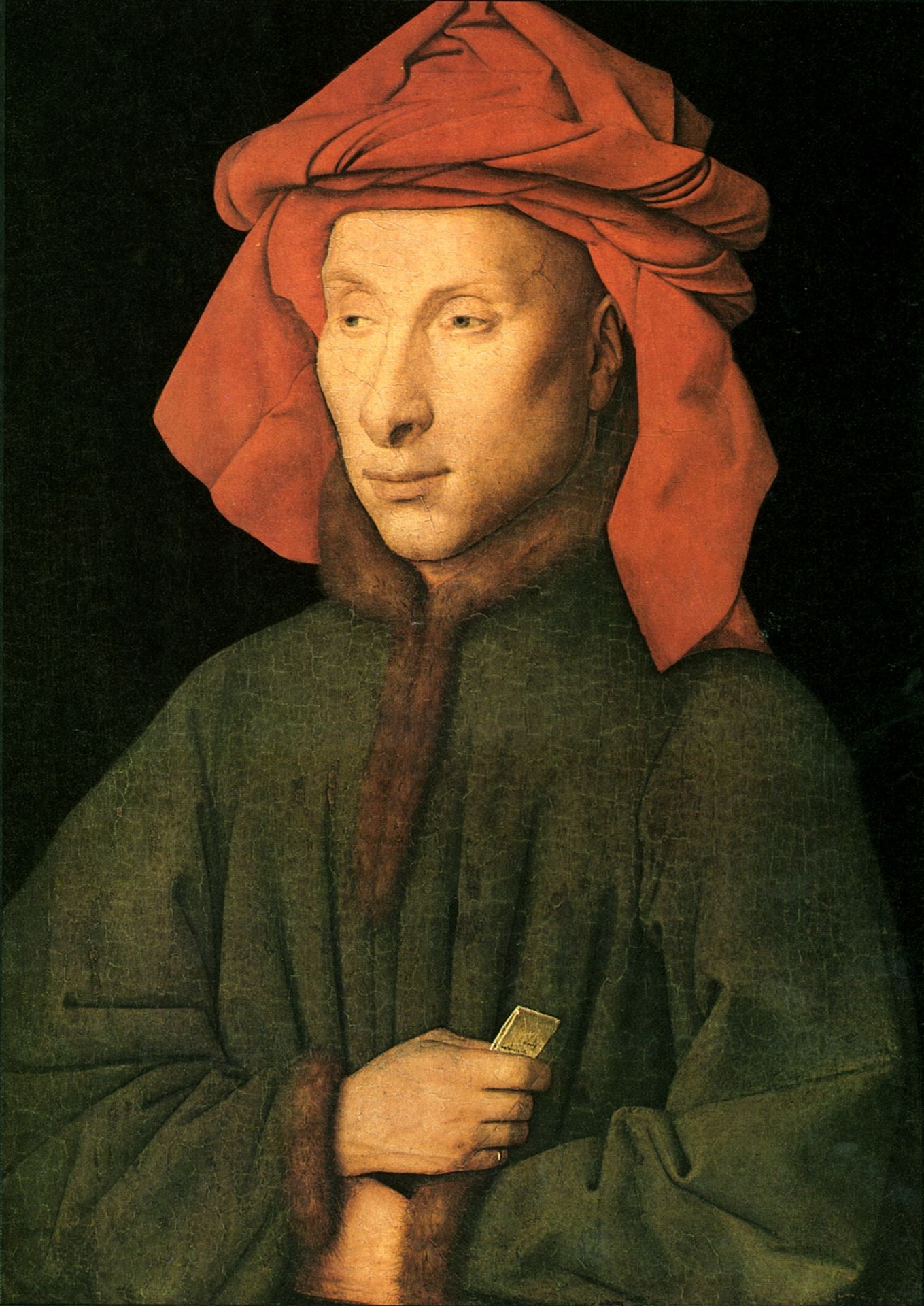
Jan van Eyck created this portrait of Giovanni Arnolfini with oil on wood around the 15th century. The composition centers on Arnolfini, whose gaze directs us to the solemnity of the moment, set against a stark, dark background. Van Eyck's meticulous handling of oil paint allows a precise rendering of textures and forms that elevate the subject beyond simple likeness. His use of linear perspective, though subtle, creates a sense of depth that draws us into Arnolfini's private world. Note the careful distribution of light. It gently models Arnolfini's face, drawing attention to his introspective expression. The texture of his cloak, rendered with exquisite detail, contrasts with the smooth, almost porcelain quality of his skin. This contrast serves to highlight the material reality of Arnolfini's world, while also pointing to the ways in which identity is constructed through external appearance. The painting suggests that true understanding comes from a careful examination of both surface and structure.
Portrait of Giovanni Arnolfini
1435


Artwork details
- Medium
- painting, oil-paint
- Dimensions
- 29 x 20 cm
- Location
- Gemäldegalerie, Berlin, Germany
- Copyright
- Public domain
Tags
Comments
Share your thoughts
About this artwork
Jan van Eyck created this portrait of Giovanni Arnolfini with oil on wood around the 15th century. The composition centers on Arnolfini, whose gaze directs us to the solemnity of the moment, set against a stark, dark background. Van Eyck's meticulous handling of oil paint allows a precise rendering of textures and forms that elevate the subject beyond simple likeness. His use of linear perspective, though subtle, creates a sense of depth that draws us into Arnolfini's private world. Note the careful distribution of light. It gently models Arnolfini's face, drawing attention to his introspective expression. The texture of his cloak, rendered with exquisite detail, contrasts with the smooth, almost porcelain quality of his skin. This contrast serves to highlight the material reality of Arnolfini's world, while also pointing to the ways in which identity is constructed through external appearance. The painting suggests that true understanding comes from a careful examination of both surface and structure.
Comments
Share your thoughts