About this artwork
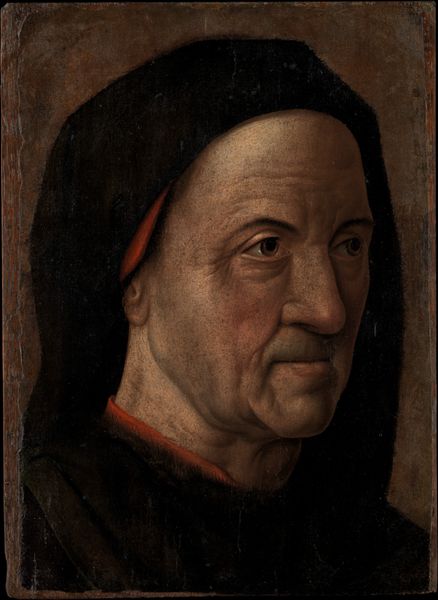
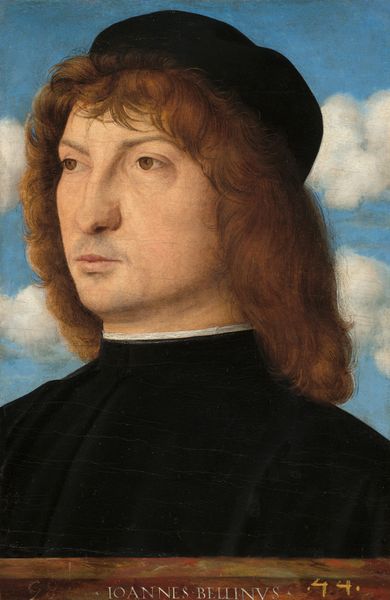
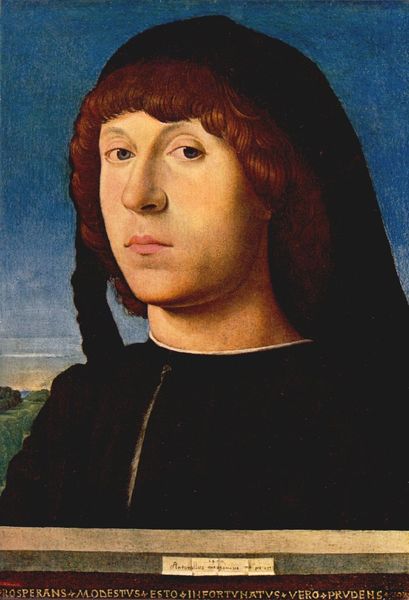
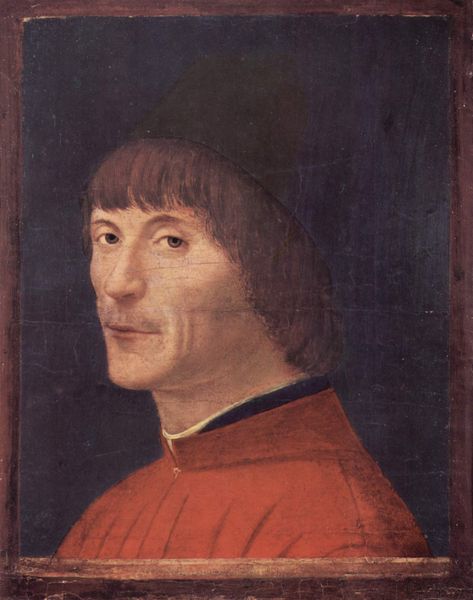
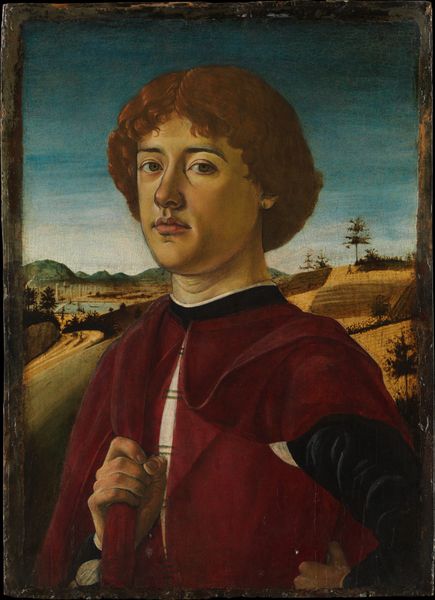
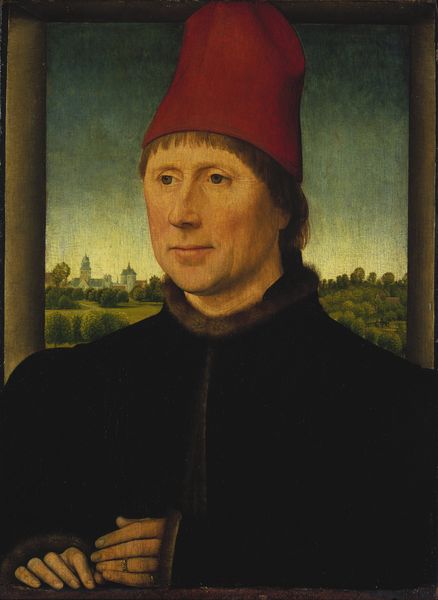
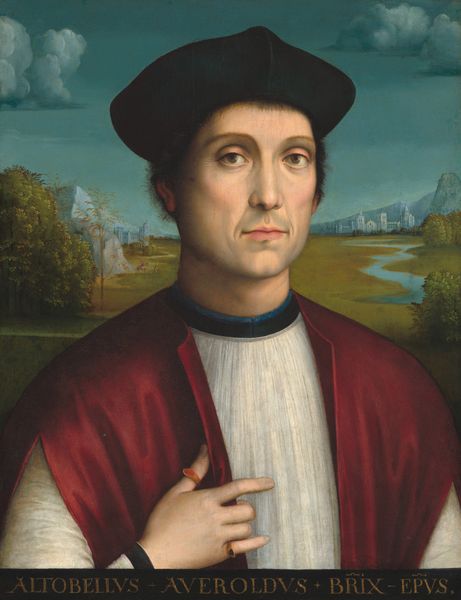
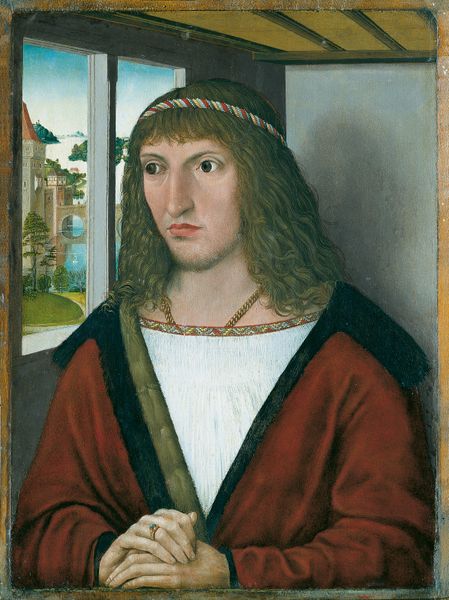
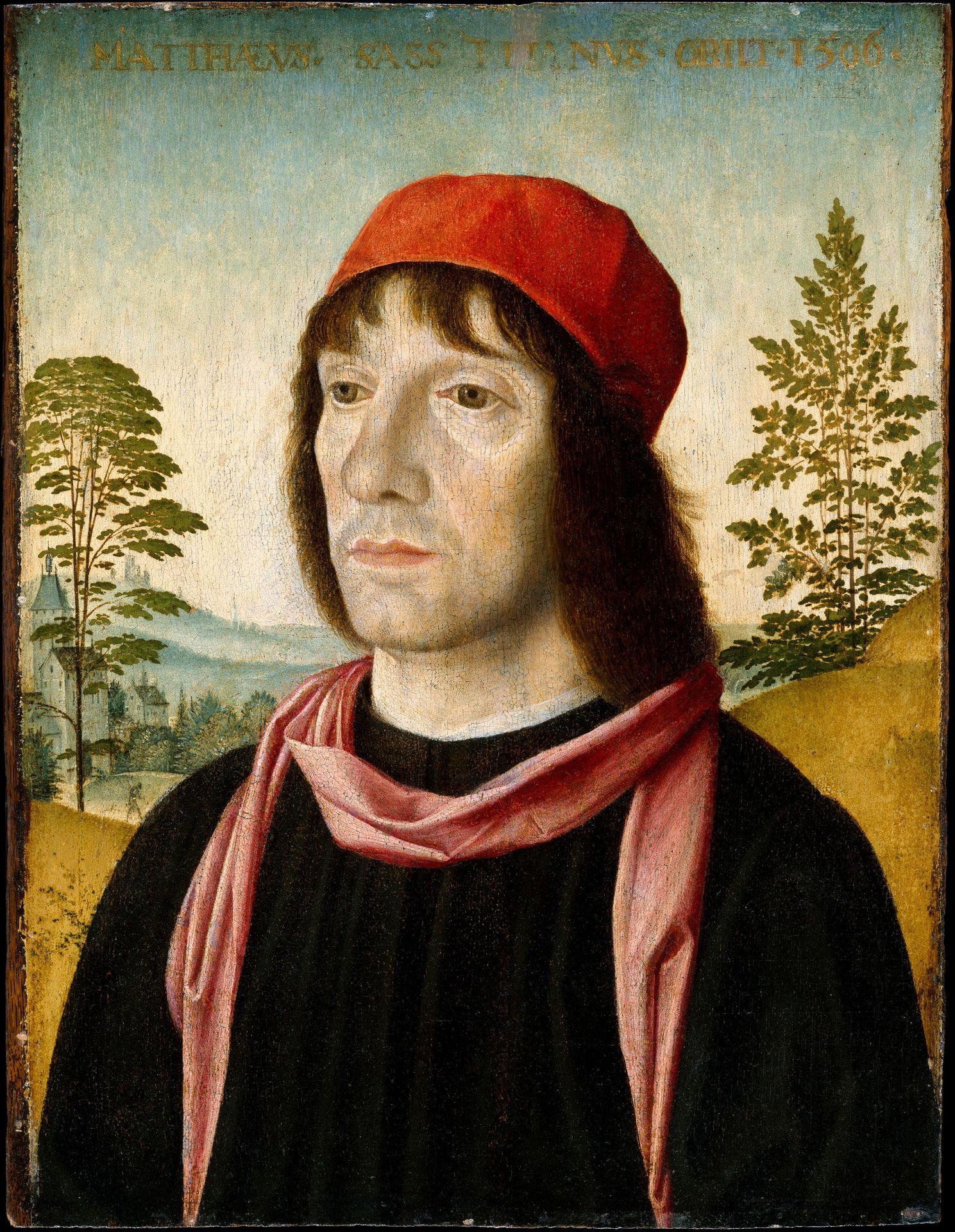
Fra Bartolomeo painted this panel portrait of a man in Florence around 1508, during the early years of the High Renaissance. Portraits in this era were more than just likenesses; they were carefully constructed displays of status. The sitter's refined features, expensive red cap, and scholarly garb speak to his position in Florentine society. The landscape in the background, a hazy vista of hills and buildings, subtly reinforces the man's connection to the city. Bartolomeo himself experienced a shift in social role. He joined a Dominican monastery in 1500, and his art took on a more explicitly religious character. His portraits, however, continued to reflect the values of his patrons and the social structures of Florence. Understanding this painting requires us to look at the economic and political forces shaping Florence at the time. Archival documents, inventories, and studies of costume can shed light on the identity of the sitter and the meaning of his portrait. Art, after all, is always embedded in its social and institutional context.
Portrait of a Man 1497 - 1517


Artwork details
- Medium
- painting, oil-paint
- Dimensions
- Overall 15 5/8 x 12 1/8 in. (39.7 x 30.8 cm); painted surface 15 1/2 x 11 3/4 in. (39.4 x 29.8 cm)
- Location
- Metropolitan Museum of Art, New York, NY
- Copyright
- Public Domain
Tags
portrait
painting
oil-paint
landscape
oil painting
academic-art
italian-renaissance
realism
Comments
No comments
About this artwork
Fra Bartolomeo painted this panel portrait of a man in Florence around 1508, during the early years of the High Renaissance. Portraits in this era were more than just likenesses; they were carefully constructed displays of status. The sitter's refined features, expensive red cap, and scholarly garb speak to his position in Florentine society. The landscape in the background, a hazy vista of hills and buildings, subtly reinforces the man's connection to the city. Bartolomeo himself experienced a shift in social role. He joined a Dominican monastery in 1500, and his art took on a more explicitly religious character. His portraits, however, continued to reflect the values of his patrons and the social structures of Florence. Understanding this painting requires us to look at the economic and political forces shaping Florence at the time. Archival documents, inventories, and studies of costume can shed light on the identity of the sitter and the meaning of his portrait. Art, after all, is always embedded in its social and institutional context.
Comments
No comments