About this artwork
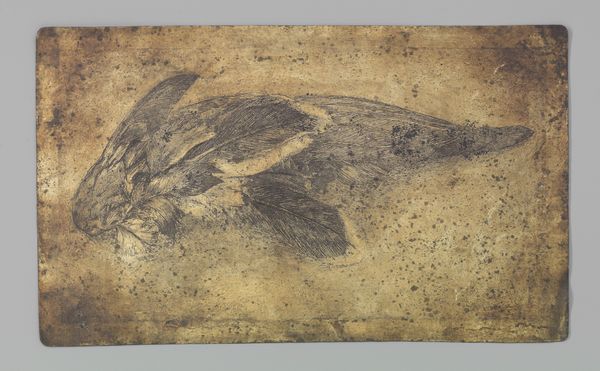
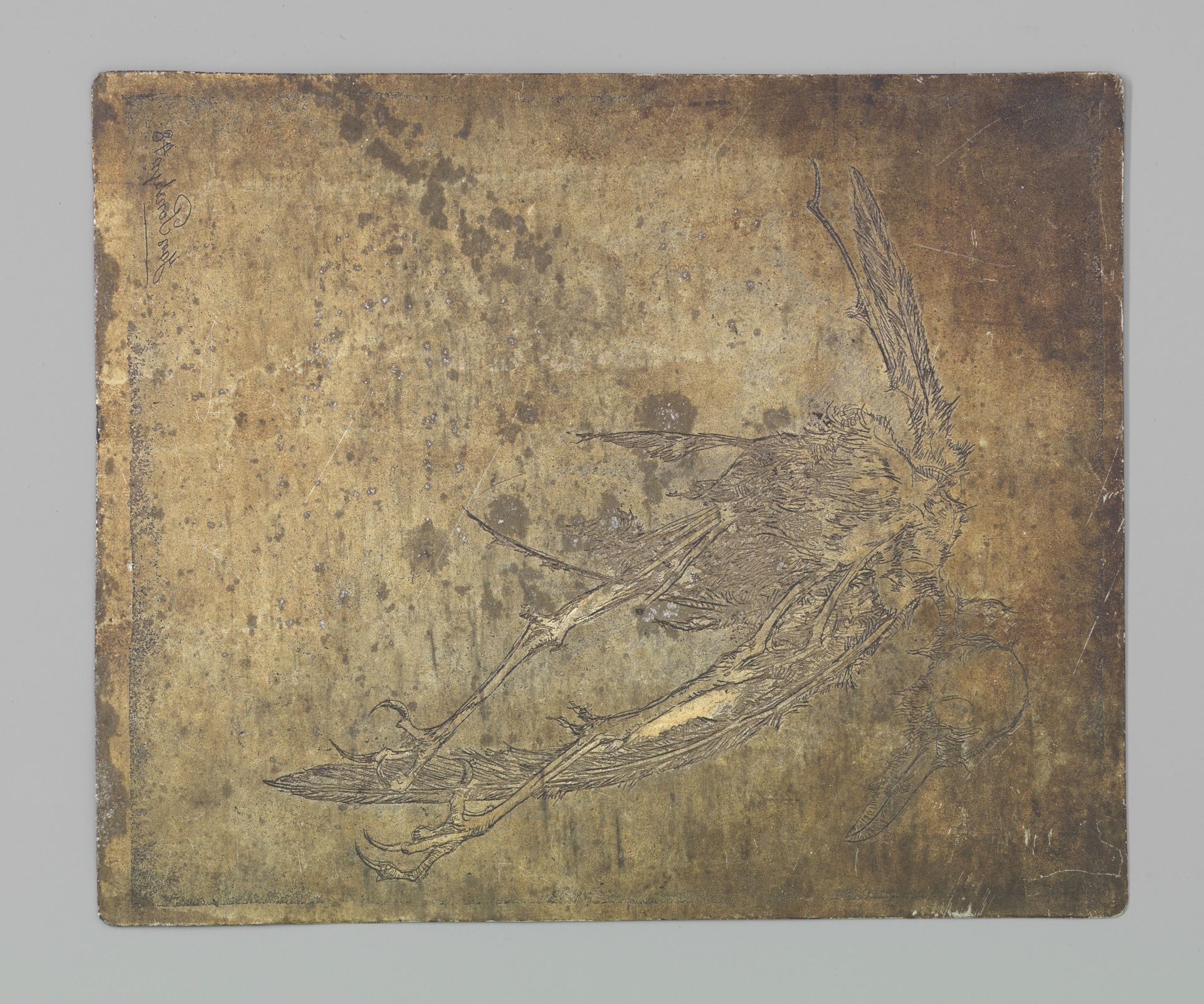
Editor: So, here we have "Dead bird with bald head" by Jan Petrus Ponstijn, created in 1948, a mix of drawing, monotype, intaglio, and other print techniques using ink on paper. It’s… stark. The lifeless form and faded colors create a somber mood. What do you see in this piece? Curator: Immediately, the starkness you mention calls to mind vanitas imagery, that longstanding artistic tradition using symbols of mortality to prompt reflection on life's brevity. A bird often signifies the soul – consider its potential for flight and freedom. Yet here, we see that freedom extinguished. Notice how the artist focuses our attention on the vulnerability of the bird's form. Editor: So, it's not just about death, but about reflecting on life? The bald head seems to emphasize its defenselessness. Curator: Precisely. The lack of feathers exposes its vulnerability, stripping away any illusion of power or beauty. Is this bird representative of a specific individual, perhaps referencing losses from the Second World War era during which this piece was created? Editor: The historical context definitely adds another layer of meaning. Maybe it's a more universal statement on loss and mortality during that tumultuous time. The war's impact. Curator: A compelling reading. Ponstijn is definitely making a commentary on the universal effect that violence and despair has on life and innocence, and chooses potent symbols. The dream of flight dashed, promise broken. This image offers a quiet yet visceral expression of the collective trauma. Editor: It's amazing how much an image of a dead bird can communicate. I now see layers of symbolism I hadn’t considered before, thinking about vanitas and trauma from war. Curator: Exactly. These kinds of powerful artistic works make symbols communicate both universally and deeply, with enduring cultural relevance.

Artwork details
- Medium
- drawing, monotype, print, intaglio, paper, ink
- Dimensions
- height 205 mm, width 169 mm
- Copyright
- Rijks Museum: Open Domain
Tags
drawing
monotype
water colours
intaglio
paper
ink
mixed media
watercolor
Comments
Be the first to share your thoughts about this work.
About this artwork
Editor: So, here we have "Dead bird with bald head" by Jan Petrus Ponstijn, created in 1948, a mix of drawing, monotype, intaglio, and other print techniques using ink on paper. It’s… stark. The lifeless form and faded colors create a somber mood. What do you see in this piece? Curator: Immediately, the starkness you mention calls to mind vanitas imagery, that longstanding artistic tradition using symbols of mortality to prompt reflection on life's brevity. A bird often signifies the soul – consider its potential for flight and freedom. Yet here, we see that freedom extinguished. Notice how the artist focuses our attention on the vulnerability of the bird's form. Editor: So, it's not just about death, but about reflecting on life? The bald head seems to emphasize its defenselessness. Curator: Precisely. The lack of feathers exposes its vulnerability, stripping away any illusion of power or beauty. Is this bird representative of a specific individual, perhaps referencing losses from the Second World War era during which this piece was created? Editor: The historical context definitely adds another layer of meaning. Maybe it's a more universal statement on loss and mortality during that tumultuous time. The war's impact. Curator: A compelling reading. Ponstijn is definitely making a commentary on the universal effect that violence and despair has on life and innocence, and chooses potent symbols. The dream of flight dashed, promise broken. This image offers a quiet yet visceral expression of the collective trauma. Editor: It's amazing how much an image of a dead bird can communicate. I now see layers of symbolism I hadn’t considered before, thinking about vanitas and trauma from war. Curator: Exactly. These kinds of powerful artistic works make symbols communicate both universally and deeply, with enduring cultural relevance.
Comments
Be the first to share your thoughts about this work.