About this artwork
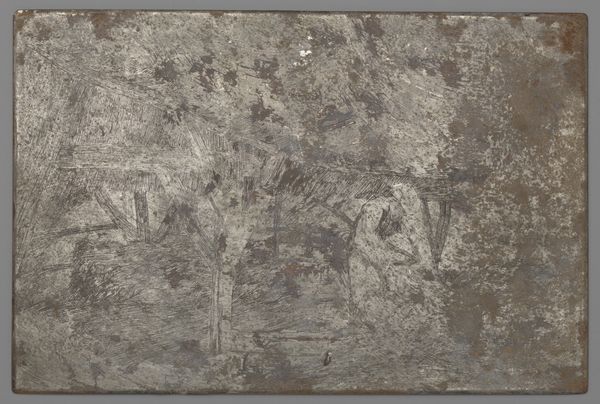
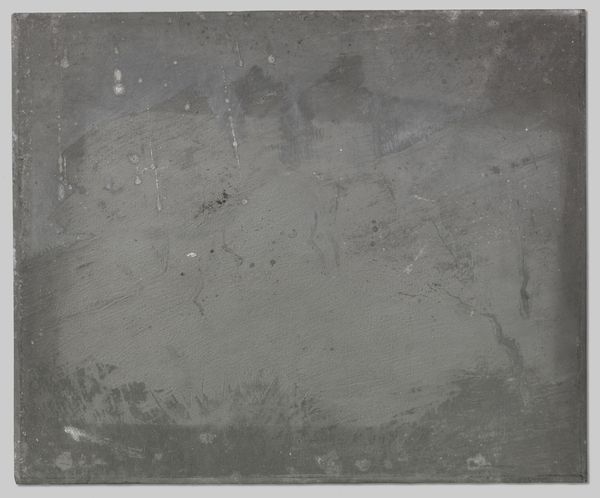
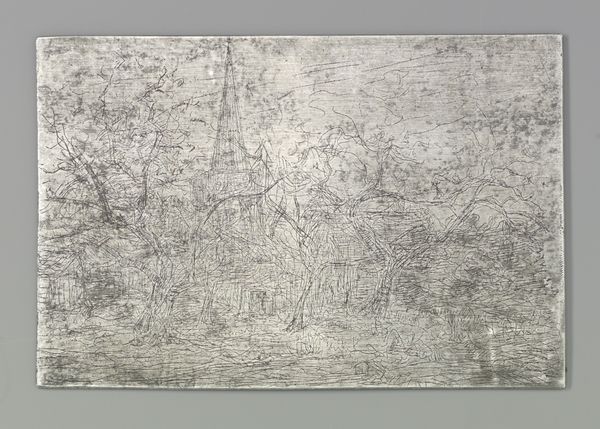
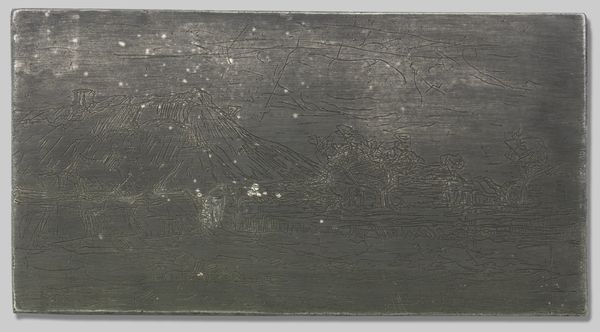
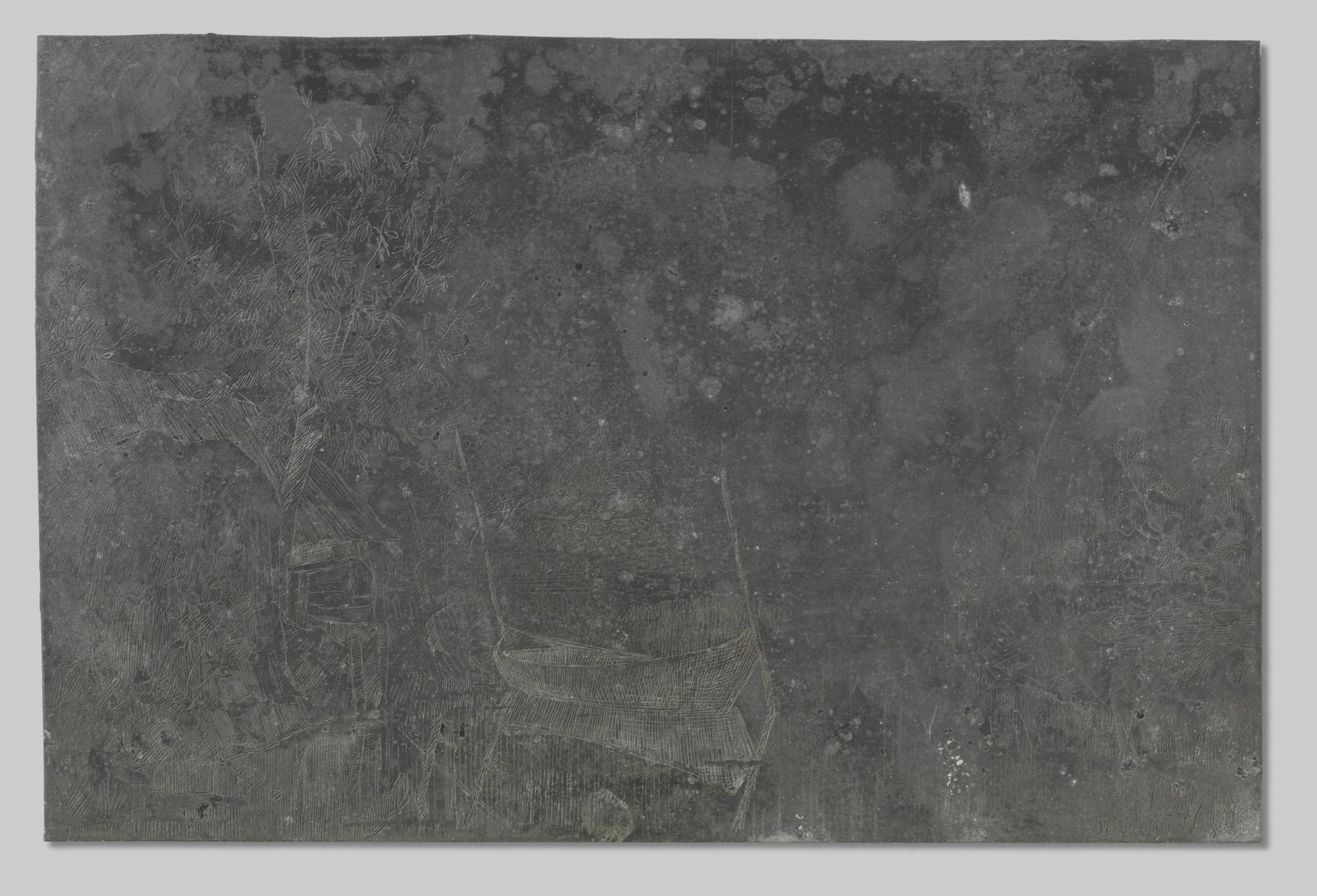
Curator: This haunting graphite drawing, created around 1885 by Willem Witsen, is titled *Boat between Two Poles near a Hut in Giethoorn.* It resides here at the Rijksmuseum. Editor: It feels like looking through a rain-streaked window. All shades of grey, barely there, as if about to vanish completely. Curator: Graphite allows for this atmospheric perspective, an erasure of detail and crisp form. Witsen creates not just a picture, but a feeling. Think of Giethoorn itself, then and now: a place of water, reflection, and seeming timelessness. The boat itself is a strong symbol, crossing boundaries between places, times, lives. Editor: I am struck by the labour that this would have required. So much graphite laid down to generate these almost imperceptible tonalities. The visible texture on the boat is particularly compelling - did he use a special kind of graphite, a very soft pencil maybe? Curator: That texture is something many have pointed to as an influence of the Impressionists, even though Witsen came to resent being labeled as part of any one group. In it we find that capturing light and surface was vital to the cultural project, even in a medium that is not necessarily associated with capturing light, like a very grey graphite stick. Editor: Did he prepare the graphite himself, perhaps? Or where did he purchase it from? Curator: Knowing Witsen’s connections within artistic circles, these are things worth diving deeper into. And now I feel ready to explore some paintings by him; he's really captured Giethoorn’s spirit so succinctly using monochrome alone! Editor: Thinking about how we extract and process graphite to then render these rural waterways adds another layer of reflection for me. An unlikely relationship, between the industrial and pastoral.
Boot tussen twee palen bij een hut te Giethoorn c. 1885

Willem Witsen
1860 - 1923Location
RijksmuseumArtwork details
- Medium
- drawing, graphite
- Dimensions
- height 119 mm, width 181 mm
- Location
- Rijksmuseum
- Copyright
- Rijks Museum: Open Domain
Tags
drawing
dutch-golden-age
impressionism
landscape
graphite
Comments
No comments
About this artwork
Curator: This haunting graphite drawing, created around 1885 by Willem Witsen, is titled *Boat between Two Poles near a Hut in Giethoorn.* It resides here at the Rijksmuseum. Editor: It feels like looking through a rain-streaked window. All shades of grey, barely there, as if about to vanish completely. Curator: Graphite allows for this atmospheric perspective, an erasure of detail and crisp form. Witsen creates not just a picture, but a feeling. Think of Giethoorn itself, then and now: a place of water, reflection, and seeming timelessness. The boat itself is a strong symbol, crossing boundaries between places, times, lives. Editor: I am struck by the labour that this would have required. So much graphite laid down to generate these almost imperceptible tonalities. The visible texture on the boat is particularly compelling - did he use a special kind of graphite, a very soft pencil maybe? Curator: That texture is something many have pointed to as an influence of the Impressionists, even though Witsen came to resent being labeled as part of any one group. In it we find that capturing light and surface was vital to the cultural project, even in a medium that is not necessarily associated with capturing light, like a very grey graphite stick. Editor: Did he prepare the graphite himself, perhaps? Or where did he purchase it from? Curator: Knowing Witsen’s connections within artistic circles, these are things worth diving deeper into. And now I feel ready to explore some paintings by him; he's really captured Giethoorn’s spirit so succinctly using monochrome alone! Editor: Thinking about how we extract and process graphite to then render these rural waterways adds another layer of reflection for me. An unlikely relationship, between the industrial and pastoral.
Comments
No comments