1995
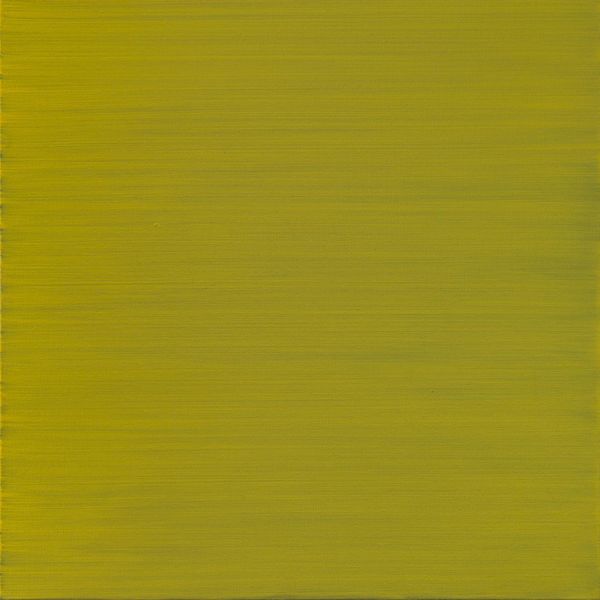
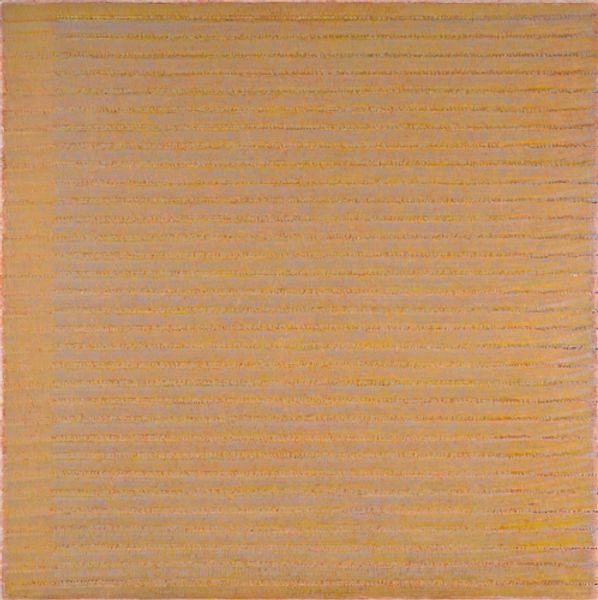
History Painting 8 Egyptian. Orpiment

Listen to curator's interpretation
Curatorial notes
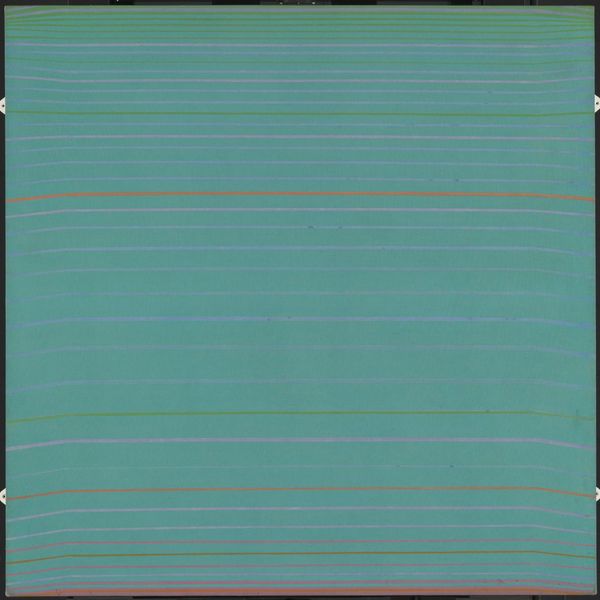
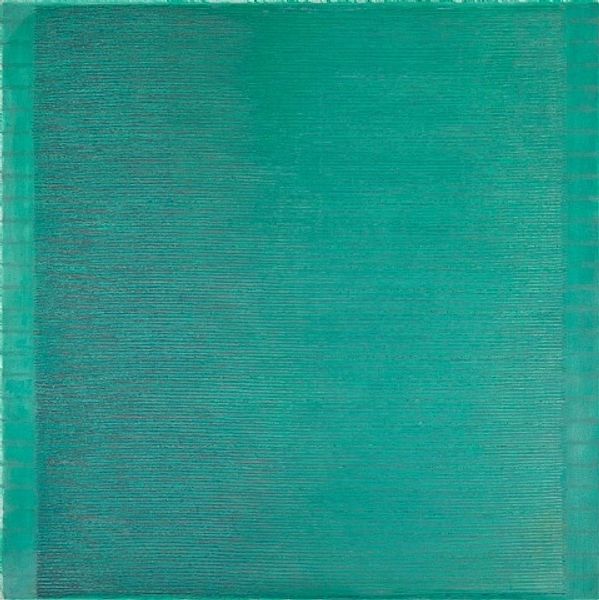
Curator: Maria Lalic's "History Painting 8 Egyptian. Orpiment" presents a fascinating case study in materiality, particularly considering orpiment's historical use. Editor: It’s strikingly serene, almost meditative, in its simplicity. The horizontal lines create a subtle visual rhythm that’s quite captivating. Curator: The use of orpiment, a pigment derived from arsenic sulfide, connects the work to ancient Egyptian practices—it was highly prized, yet toxic. Lalic’s choice comments on labor, risk, and the value we assign materials. Editor: Yes, that raw mineral quality creates such a unique experience. The texture and subtle shifts in hue really do activate the surface, don't they? Curator: Absolutely. The means of production are inherently tied to historical exploitation, making us question whose hands shaped its narrative. Editor: I see it as a contemplative work, drawing the eye across a field of carefully considered color. Curator: Indeed. Lalic forces us to confront the complex relationship between art, history, and social implications. Editor: It is a testament to the power of quiet observation and an engagement with art's intrinsic qualities.