About this artwork
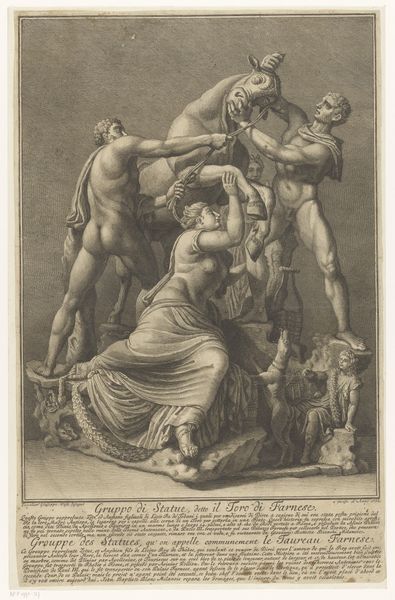
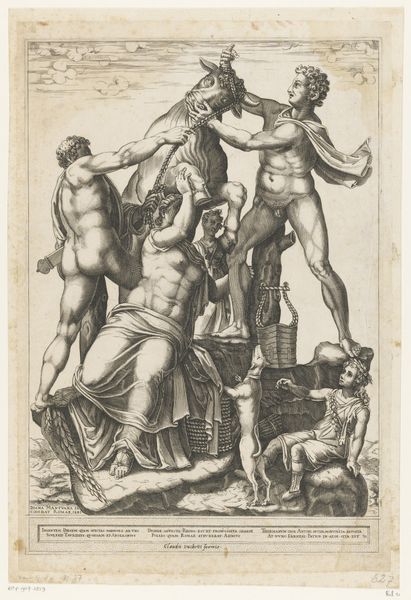
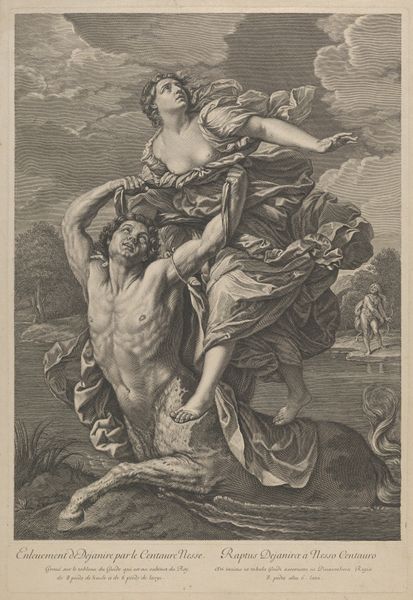
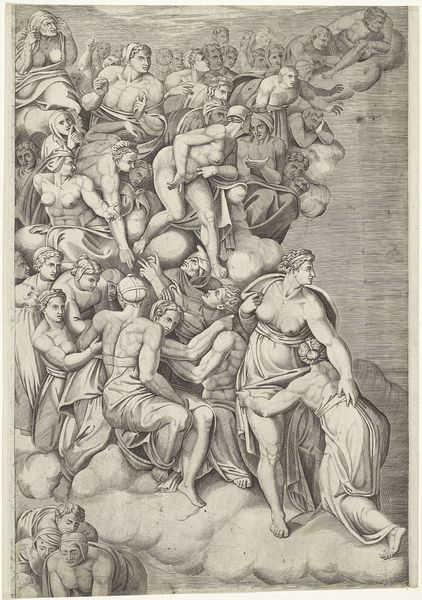
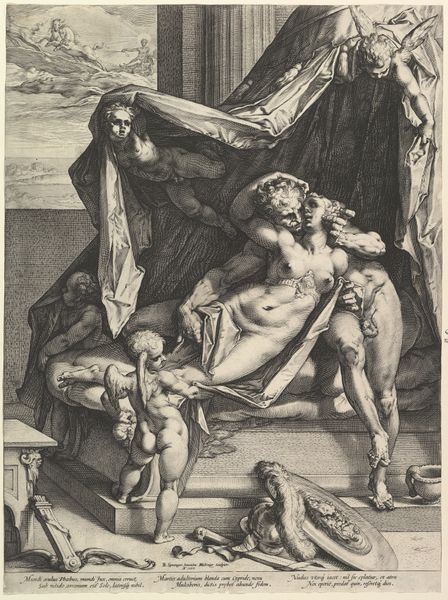
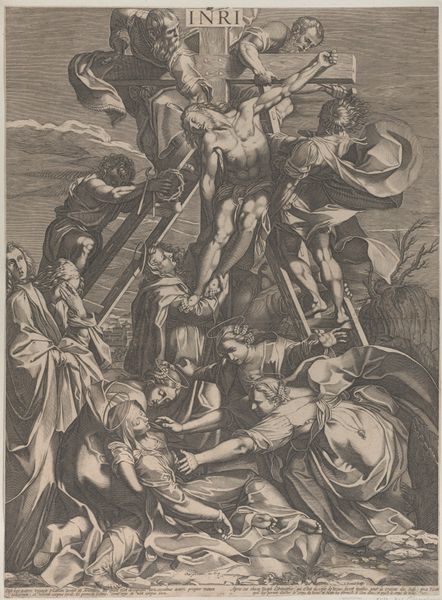
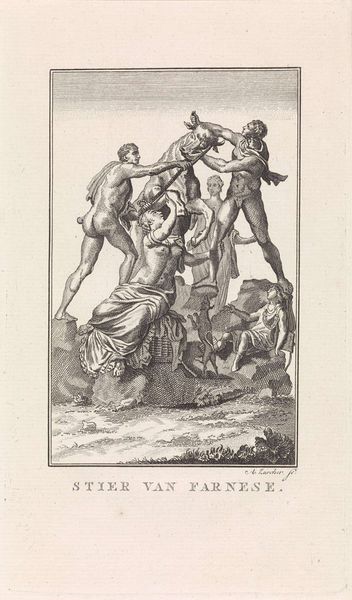
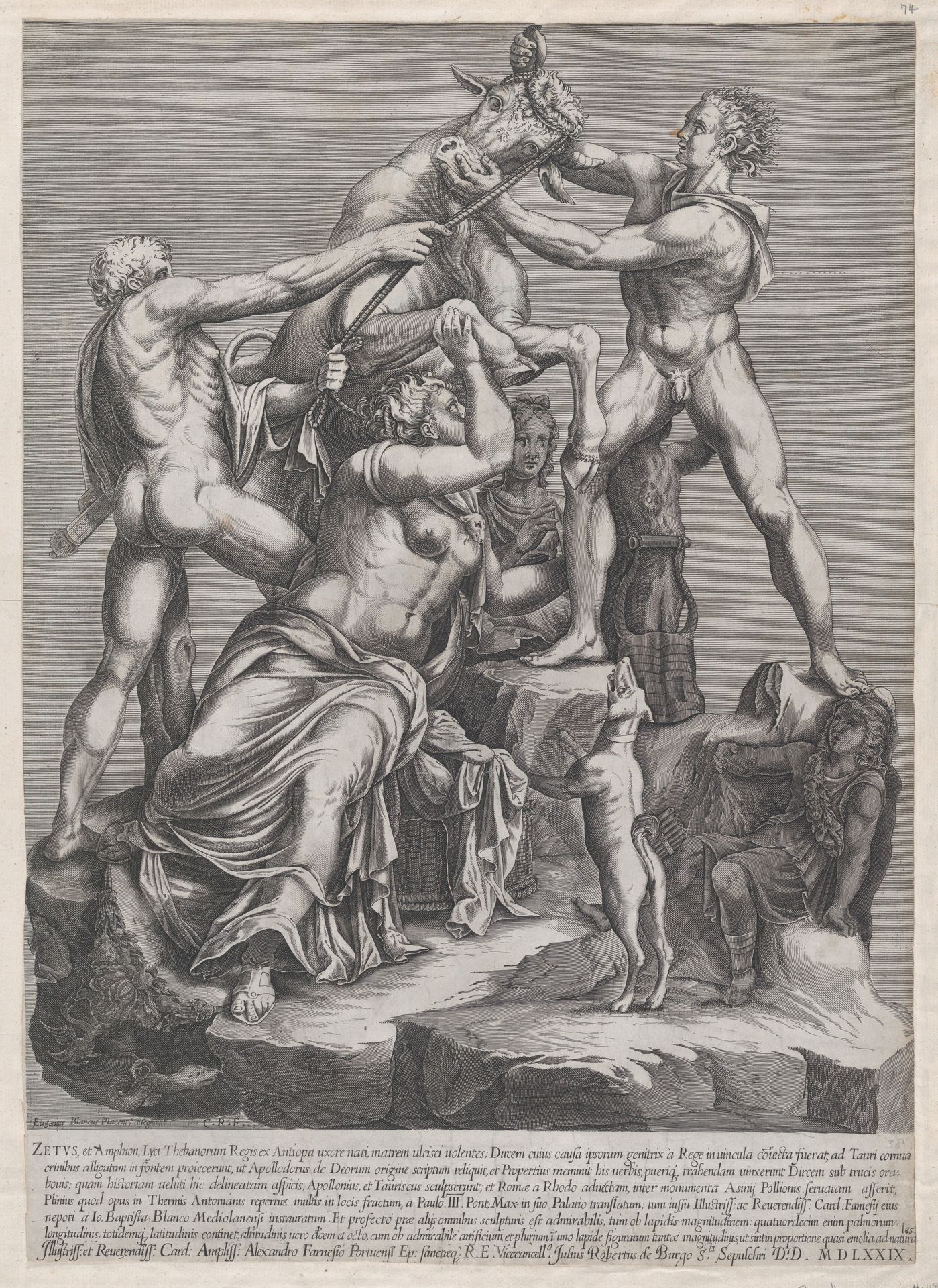
Georges Reverdy’s engraving, "The Fate of Dirce," likely produced sometime in the 16th century, captures a brutal scene from classical mythology. It reflects the period's fascination with ancient stories and their dramatic potential. This work depicts the gruesome punishment of Dirce, tied to a bull by the sons of Antiope, her supposed victim. It’s a narrative steeped in power, revenge, and the violation of the female body. Reverdy presents the male figures as active agents of retribution, while Dirce is reduced to a figure of suffering and objectification. The engraving invites questions about gender roles and the visualization of violence in the Renaissance. Was Reverdy celebrating a heroic act of justice, or offering a cautionary tale about the dangers of unchecked vengeance? The intense emotionality of the scene suggests a fascination with the darker aspects of human nature, rendered with a technical skill that heightens the drama. Ultimately, this print is a stark portrayal of the consequences of power imbalances and the enduring appeal, even today, of violent narratives.
Speculum Romanae Magnificentiae: The Fate of Dirce
1579


Artwork details
- Medium
- drawing, print, intaglio, engraving
- Dimensions
- sheet: 19 9/16 x 14 3/16 in. (49.7 x 36 cm) mount: 22 1/16 x 16 7/8 in. (56 x 42.8 cm)
- Location
- Metropolitan Museum of Art, New York, NY
- Copyright
- Public Domain
Tags
Comments
Share your thoughts
About this artwork
Georges Reverdy’s engraving, "The Fate of Dirce," likely produced sometime in the 16th century, captures a brutal scene from classical mythology. It reflects the period's fascination with ancient stories and their dramatic potential. This work depicts the gruesome punishment of Dirce, tied to a bull by the sons of Antiope, her supposed victim. It’s a narrative steeped in power, revenge, and the violation of the female body. Reverdy presents the male figures as active agents of retribution, while Dirce is reduced to a figure of suffering and objectification. The engraving invites questions about gender roles and the visualization of violence in the Renaissance. Was Reverdy celebrating a heroic act of justice, or offering a cautionary tale about the dangers of unchecked vengeance? The intense emotionality of the scene suggests a fascination with the darker aspects of human nature, rendered with a technical skill that heightens the drama. Ultimately, this print is a stark portrayal of the consequences of power imbalances and the enduring appeal, even today, of violent narratives.
Comments
Share your thoughts