About this artwork
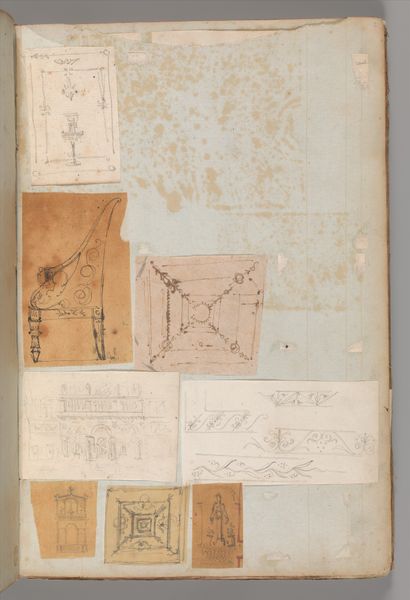
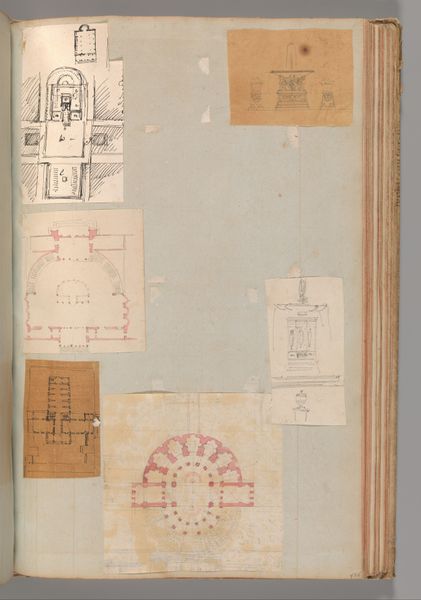
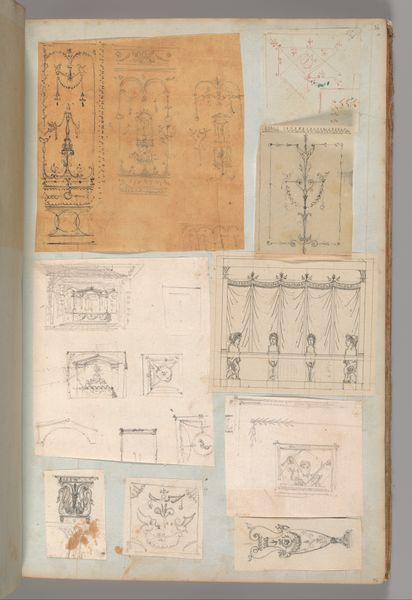
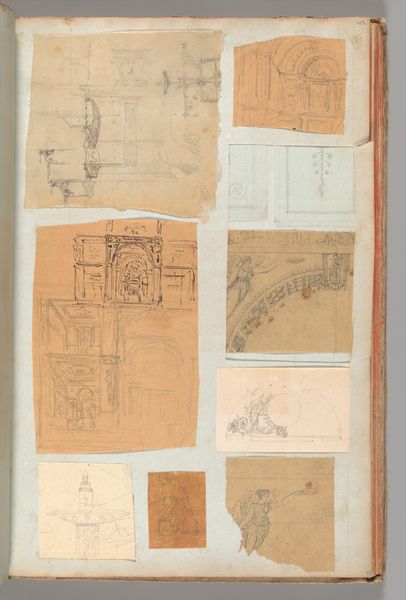
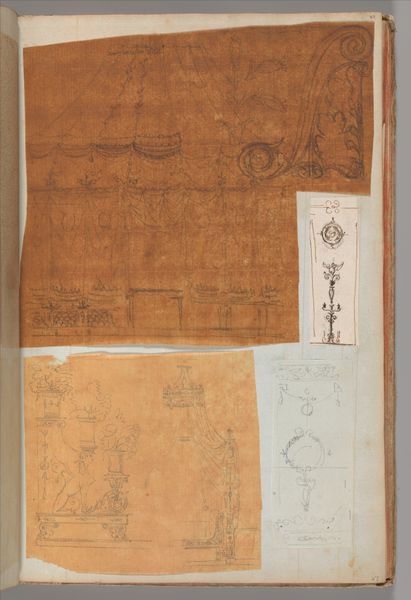
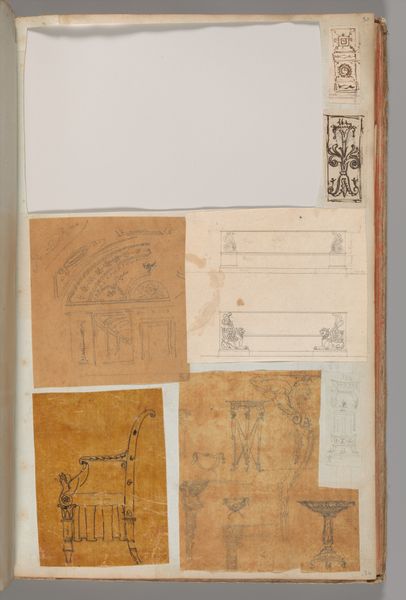
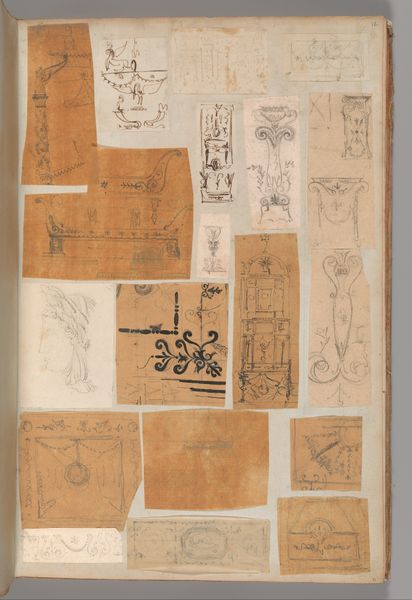
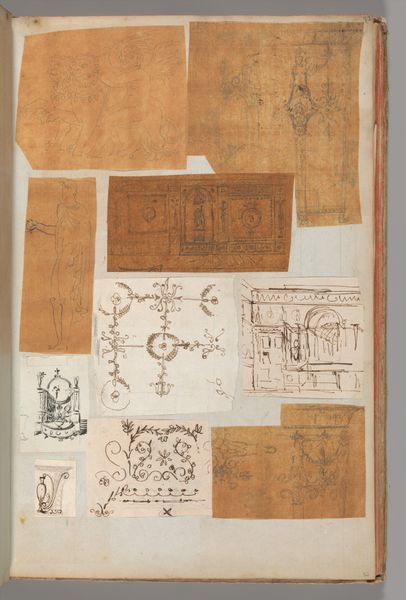
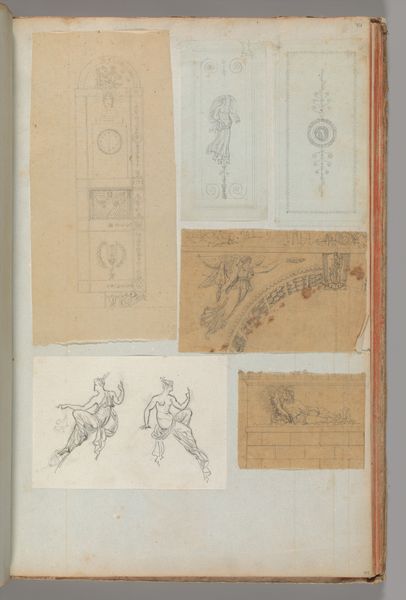
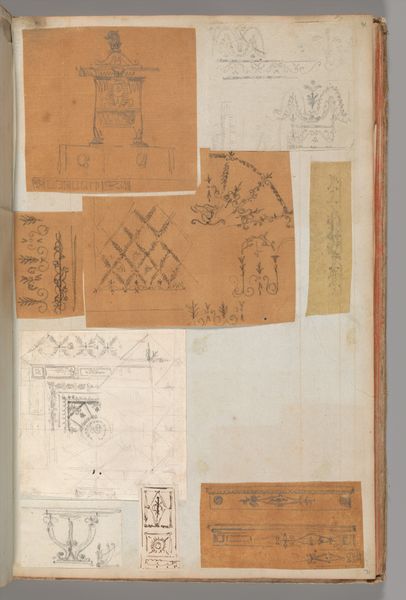
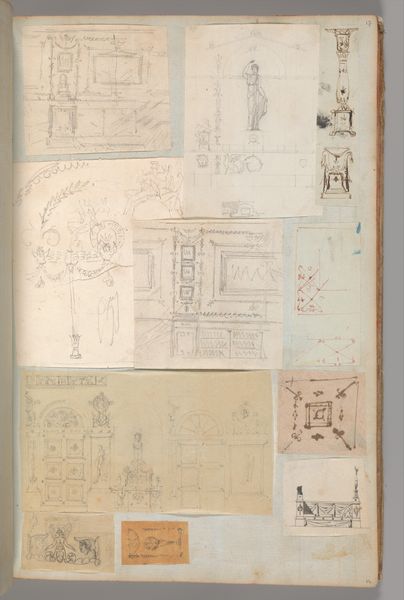
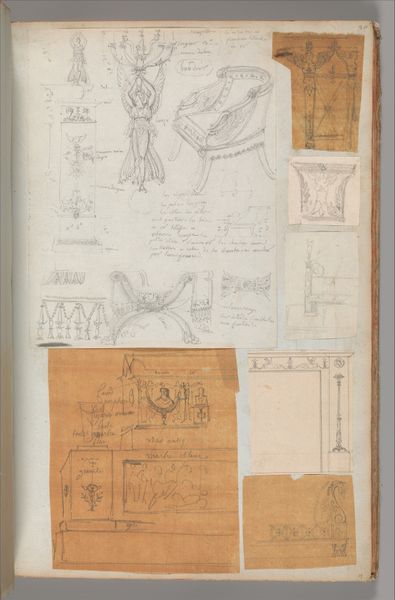
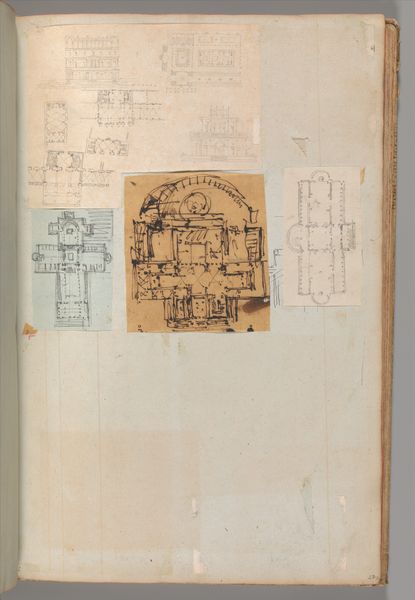
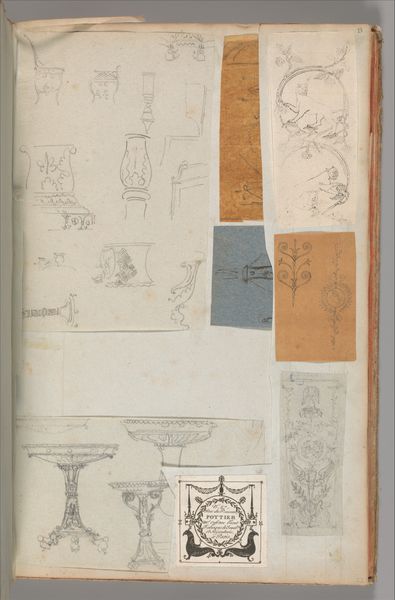
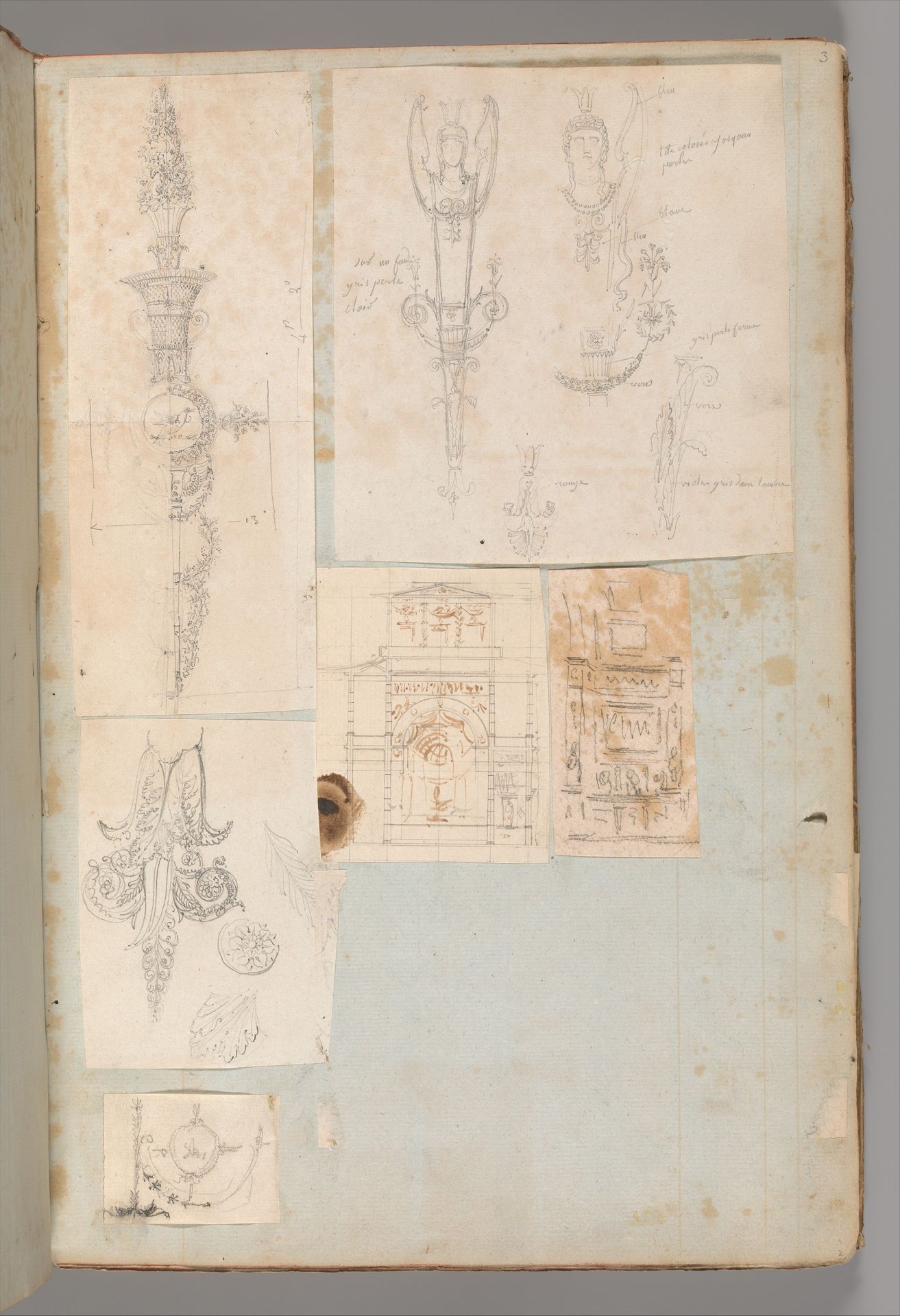
Charles Percier created this scrapbook page of drawings and prints in France in the late 18th or early 19th century. These sketches offer a glimpse into the world of design during a period of significant social and political change. Percier's drawings reflect the neoclassical style, which drew inspiration from ancient Greek and Roman art and architecture. This aesthetic was closely associated with the French elite. The architecture shown here represented a desire for order and reason, values that came to the fore during the Enlightenment. We can think of the institutional history of this work as being bound up with that of the decorative arts, which gained prestige in this period. By studying Percier's drawings alongside historical sources, we can better understand the cultural values and social structures that shaped the artistic production of his time. Art history is always contingent on its context.
Page from a Scrapbook containing Drawings and Several Prints of Architecture, Interiors, Furniture and Other Objects 1795 - 1805


Artwork details
- Medium
- drawing, print, architecture
- Dimensions
- 15 11/16 x 10 in. (39.8 x 25.4 cm)
- Location
- Metropolitan Museum of Art, New York, NY
- Copyright
- Public Domain
Tags
drawing
aged paper
toned paper
water colours
sketch book
personal sketchbook
coloured pencil
underpainting
arch
watercolour bleed
watercolour illustration
watercolor
architecture
Comments
No comments
About this artwork
Charles Percier created this scrapbook page of drawings and prints in France in the late 18th or early 19th century. These sketches offer a glimpse into the world of design during a period of significant social and political change. Percier's drawings reflect the neoclassical style, which drew inspiration from ancient Greek and Roman art and architecture. This aesthetic was closely associated with the French elite. The architecture shown here represented a desire for order and reason, values that came to the fore during the Enlightenment. We can think of the institutional history of this work as being bound up with that of the decorative arts, which gained prestige in this period. By studying Percier's drawings alongside historical sources, we can better understand the cultural values and social structures that shaped the artistic production of his time. Art history is always contingent on its context.
Comments
No comments