About this artwork
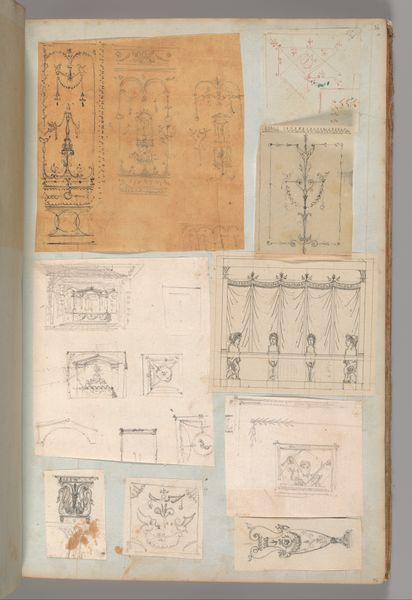
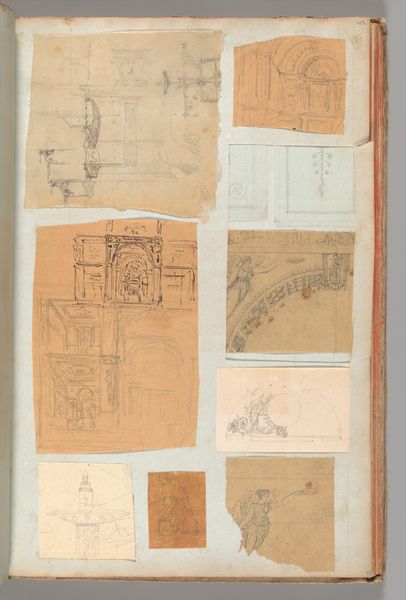
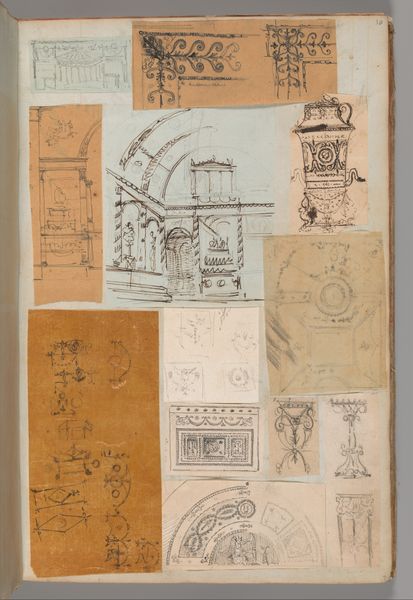
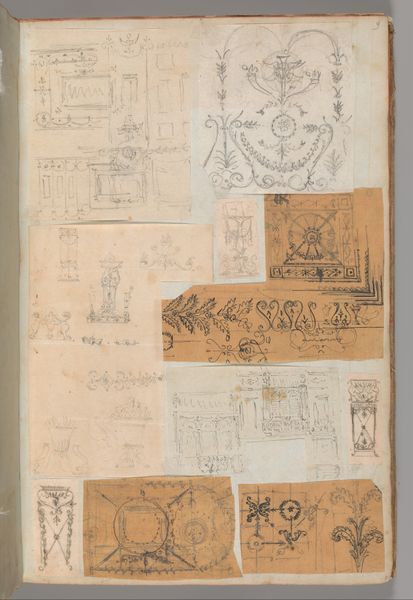
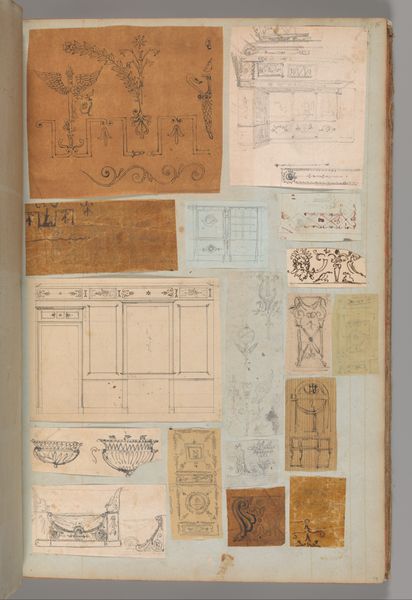
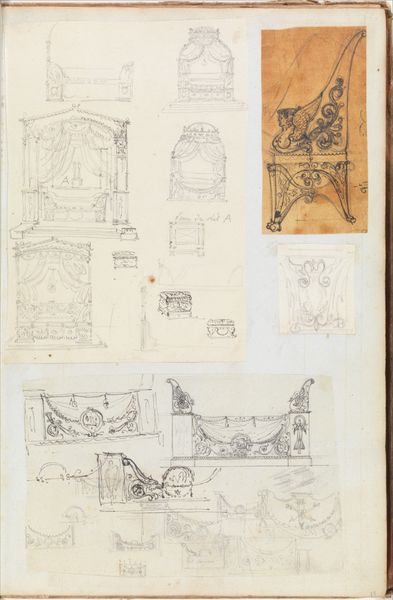
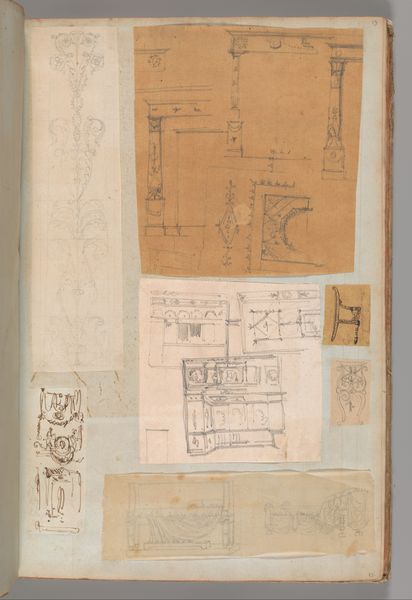
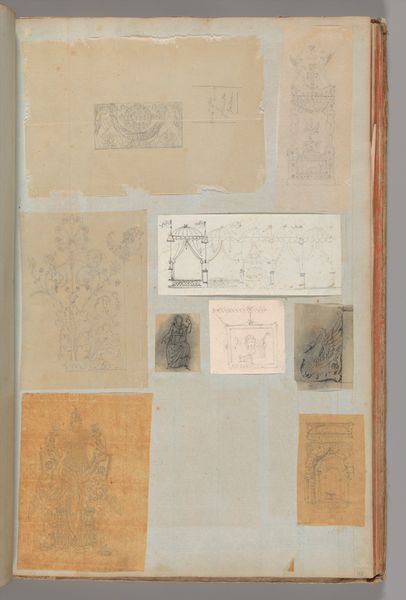
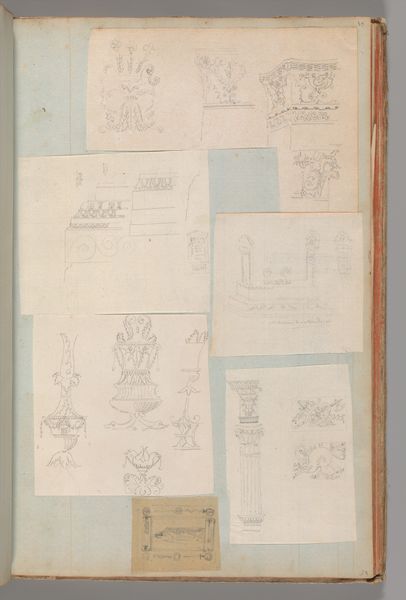
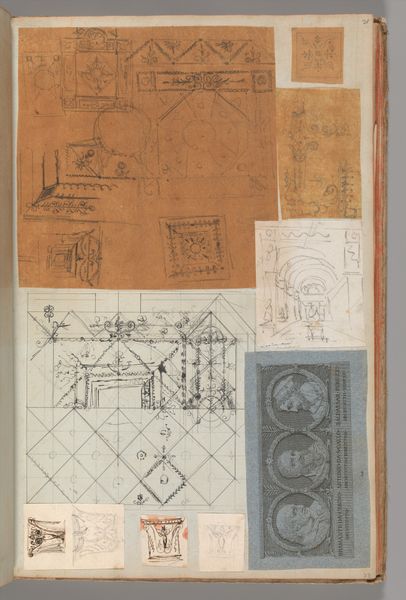
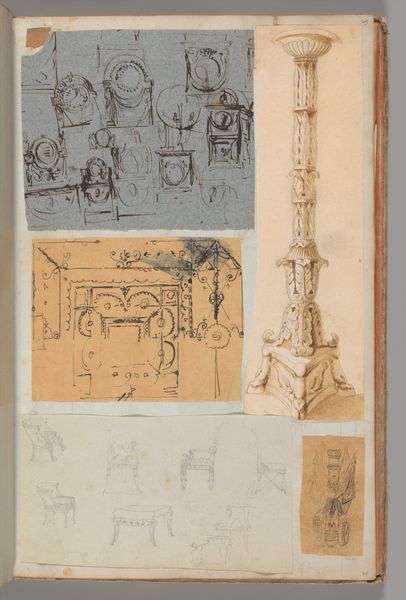
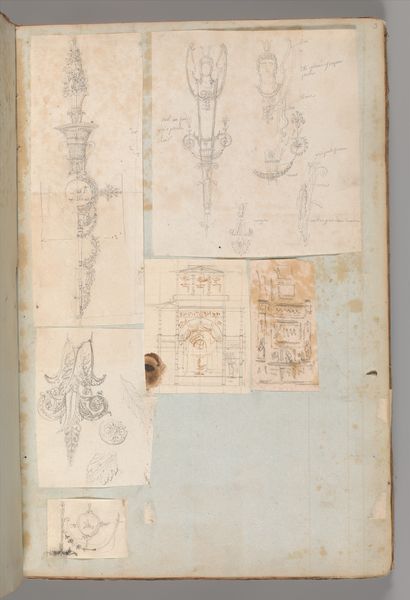
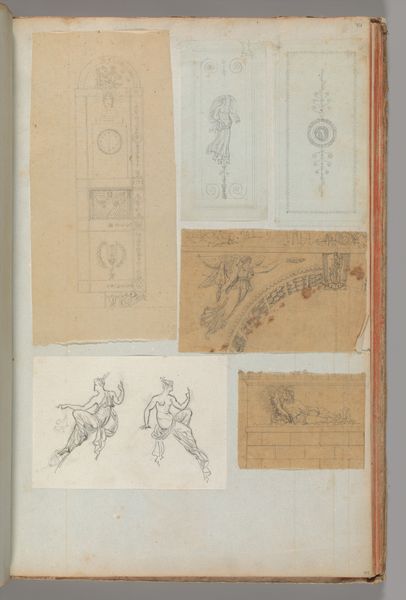
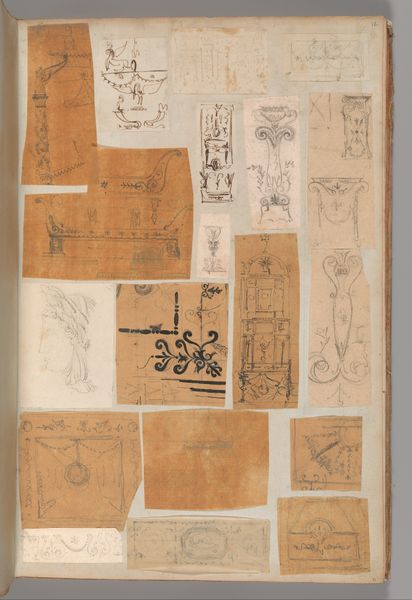
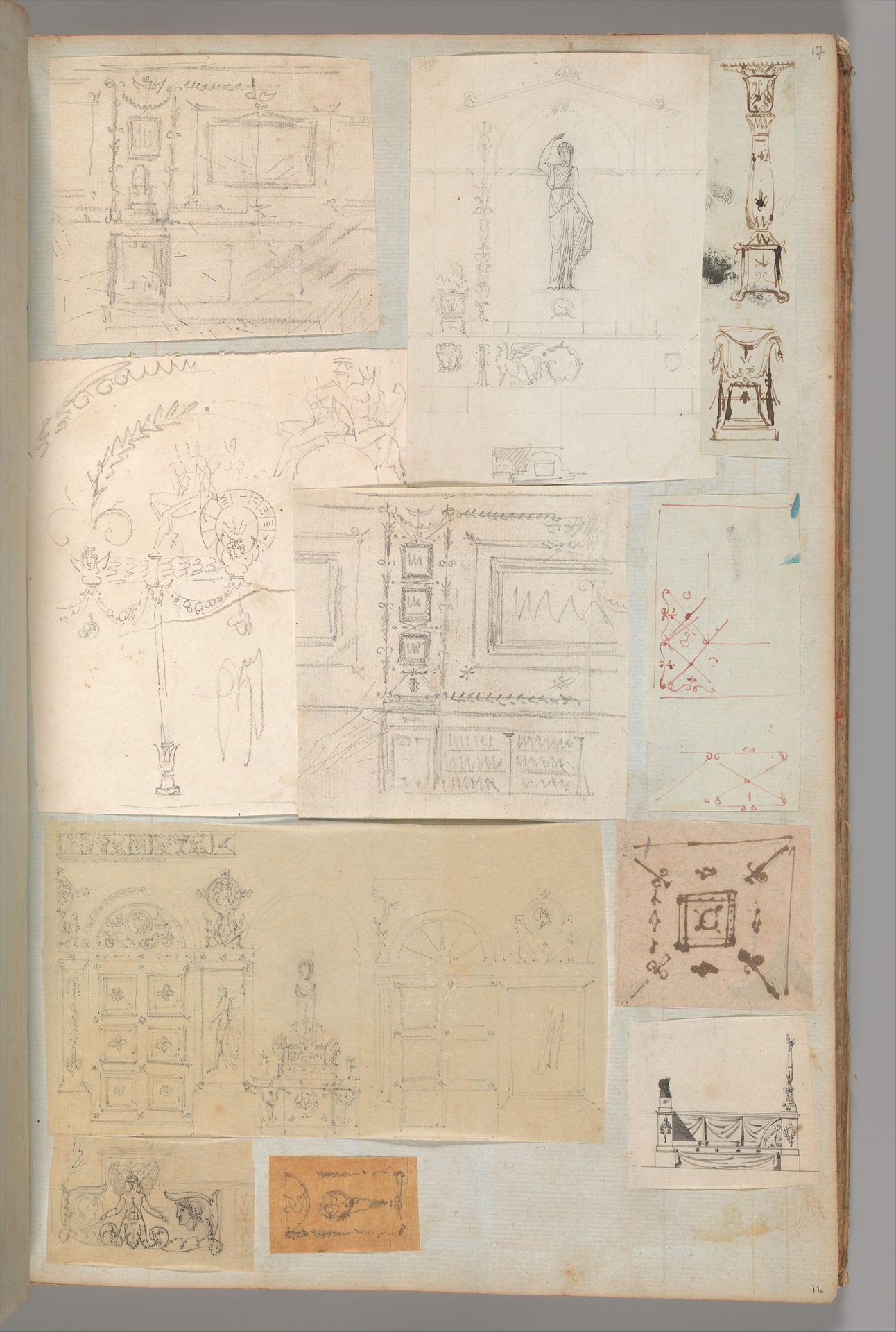
This page of drawings and prints was created by Charles Percier, a leading French architect and designer, most likely in the late 18th or early 19th century. The page combines original sketches in graphite or charcoal, with smaller printed images, all pasted onto a larger sheet. Percier's technique gives us insight into his design process. The architectural renderings and furniture designs are all about line – think of the crisp precision of an etching, versus the comparative softness of a drawing. By combining the two, Percier seems to be both exploring ideas freely, and also archiving existing designs for later use. It is interesting to consider the division of labor implied here too: Percier would have relied on skilled printmakers to realize his visions, and also on artisans to bring his furniture designs into being. This division reminds us that even the most creative ideas are always grounded in material realities and social relationships.
Page from a Scrapbook containing Drawings and Several Prints of Architecture, Interiors, Furniture and Other Objects 1795 - 1805


Artwork details
- Medium
- drawing, print, paper, ink, pencil, architecture
- Dimensions
- 15 11/16 x 10 in. (39.8 x 25.4 cm)
- Location
- Metropolitan Museum of Art, New York, NY
- Copyright
- Public Domain
Tags
drawing
neoclacissism
paper
ink
pencil
history-painting
architecture
Comments
No comments
About this artwork
This page of drawings and prints was created by Charles Percier, a leading French architect and designer, most likely in the late 18th or early 19th century. The page combines original sketches in graphite or charcoal, with smaller printed images, all pasted onto a larger sheet. Percier's technique gives us insight into his design process. The architectural renderings and furniture designs are all about line – think of the crisp precision of an etching, versus the comparative softness of a drawing. By combining the two, Percier seems to be both exploring ideas freely, and also archiving existing designs for later use. It is interesting to consider the division of labor implied here too: Percier would have relied on skilled printmakers to realize his visions, and also on artisans to bring his furniture designs into being. This division reminds us that even the most creative ideas are always grounded in material realities and social relationships.
Comments
No comments