About this artwork
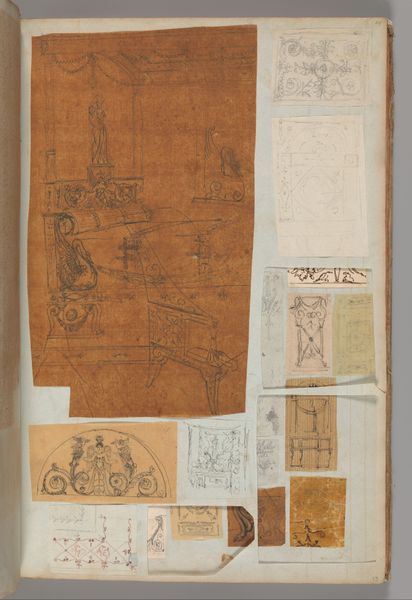
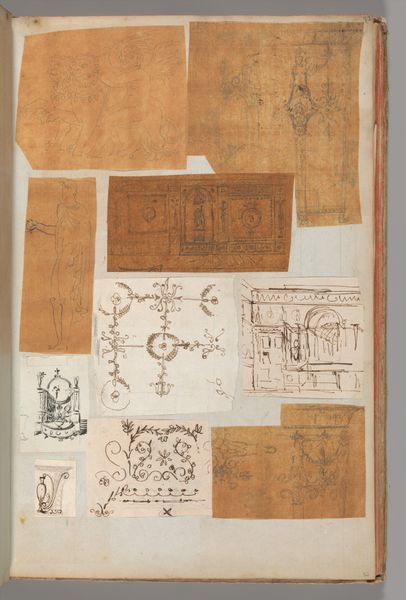
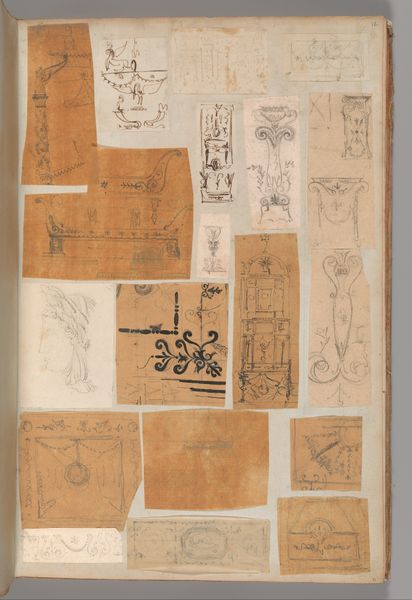
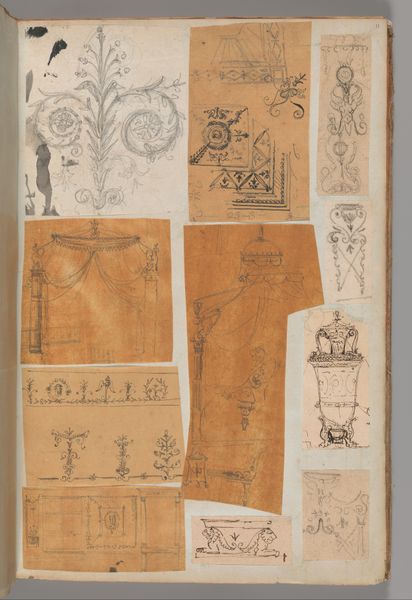
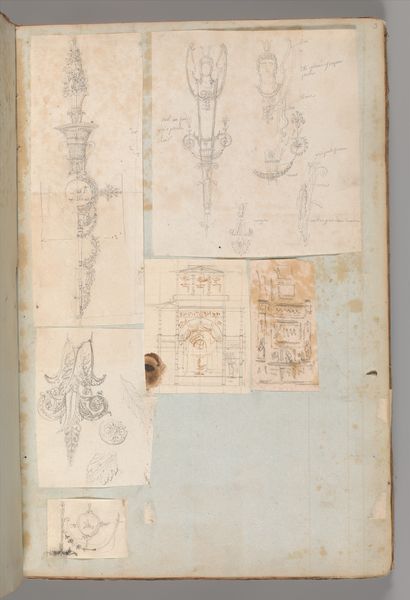
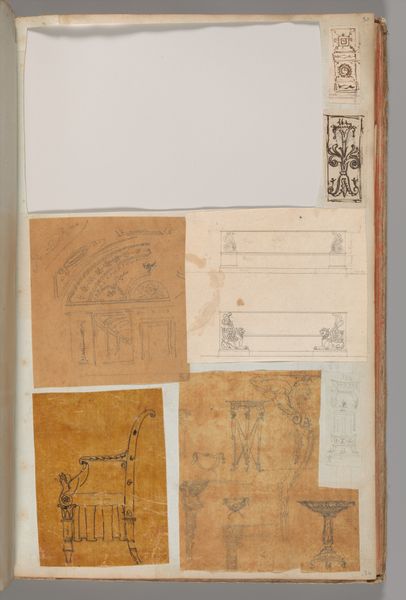
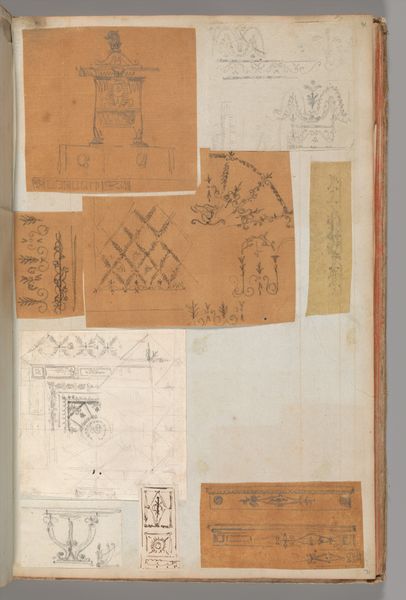
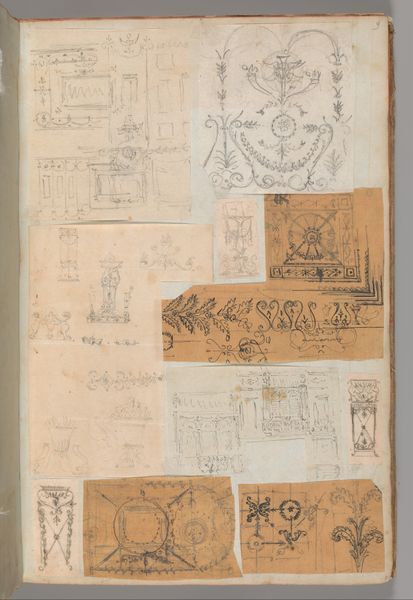
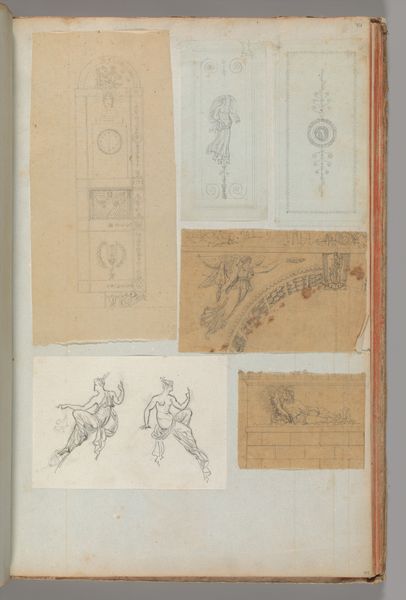
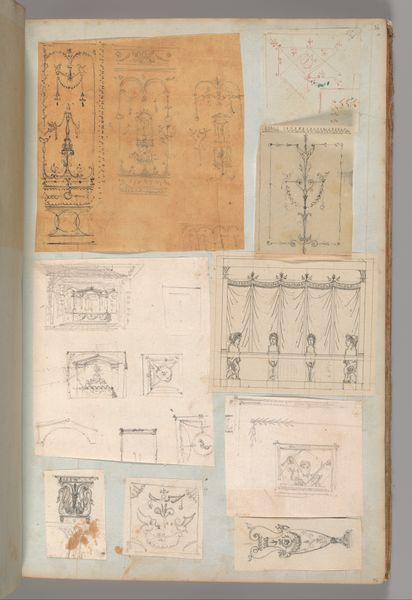
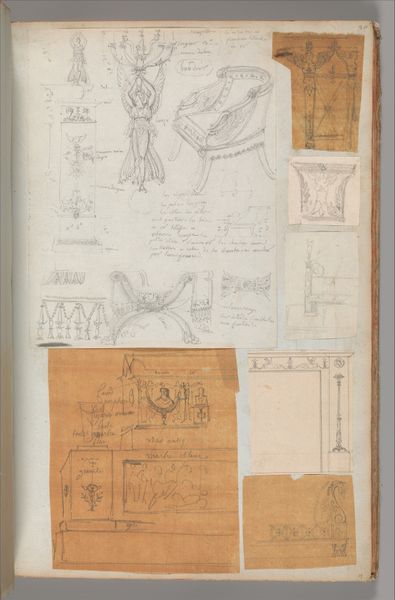
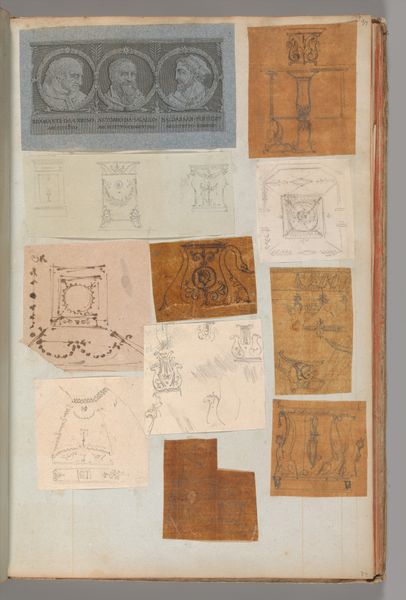
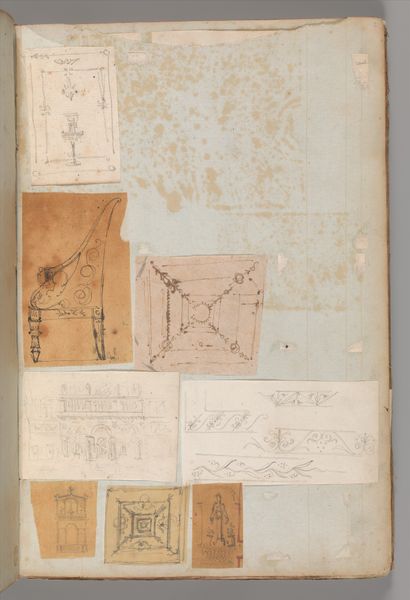
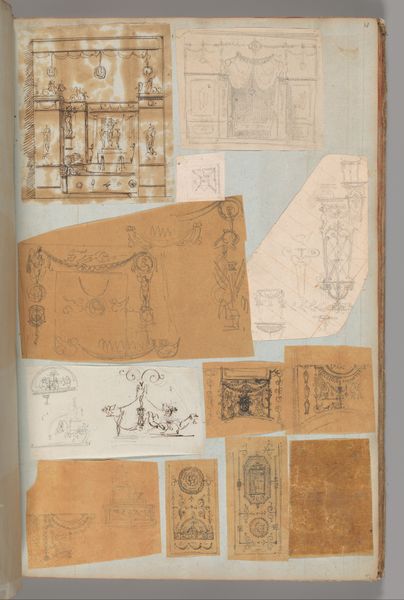
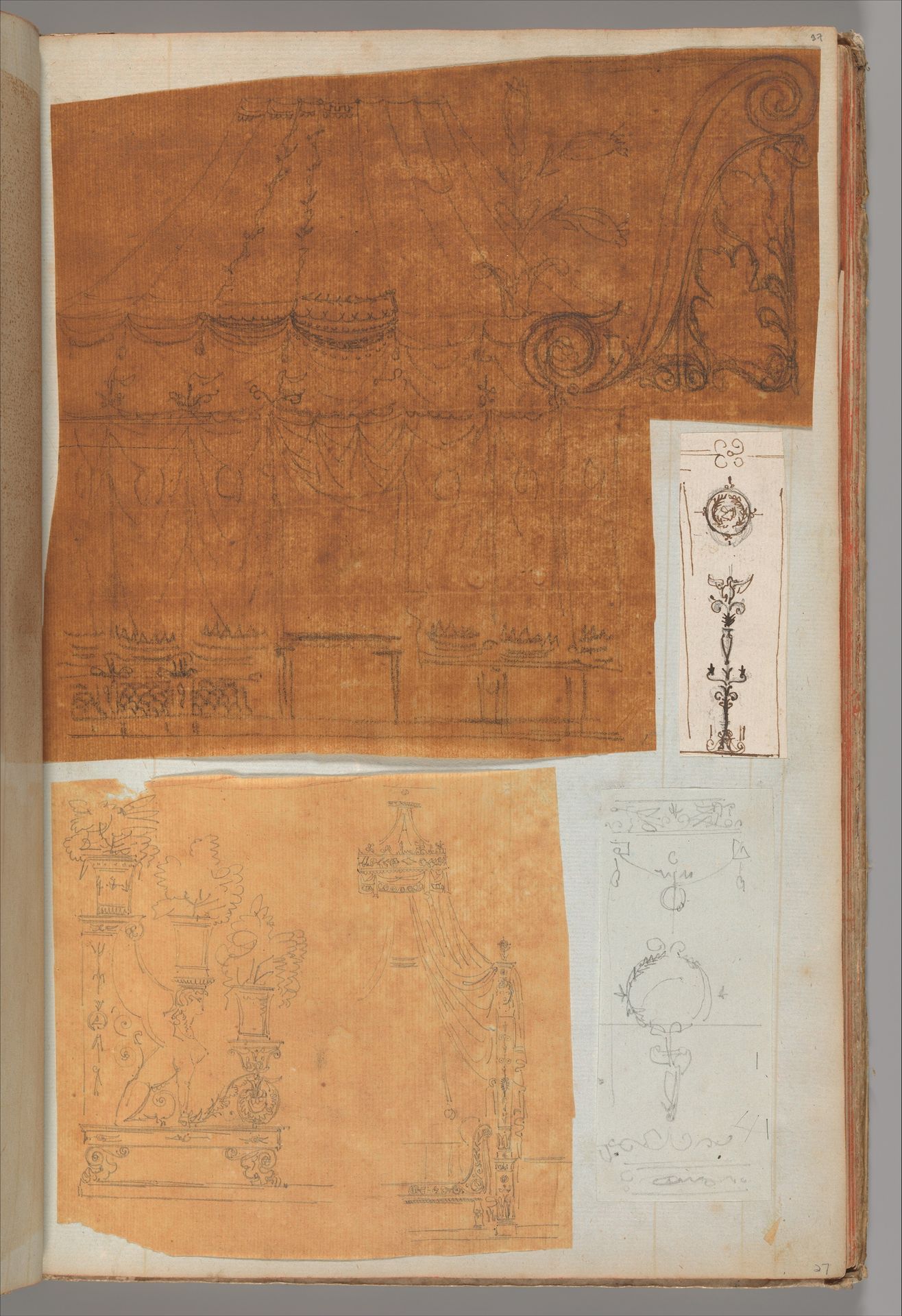
This page from a scrapbook, created by Charles Percier, presents drawings and prints of architectural and interior designs. Note the recurring motif of the festoon, a garland of flowers, foliage, and ribbons suspended in a curve. These decorative elements hearken back to ancient Roman triumphal arches and altars, symbolizing celebration and abundance. The festoon motif, however, is not confined to antiquity. It experienced a renaissance during the Italian Renaissance, adorning palaces and public spaces. Consider Botticelli’s *Primavera*, where festoons of flowers celebrate the rebirth of spring. Later, the motif found new expression in the Neoclassical period, as seen here. Observe how Percier's drawings capture a revival of classical forms, adapting ancient symbols to convey an aura of elegance and order. This motif carries echoes of the past, yet it's continually reshaped by the desires and aesthetics of new eras. It embodies our enduring quest for beauty, order, and a connection to bygone eras.
Page from a Scrapbook containing Drawings and Several Prints of Architecture, Interiors, Furniture and Other Objects 1795 - 1805


Artwork details
- Medium
- drawing, print, paper, pencil, architecture
- Dimensions
- 15 11/16 x 10 in. (39.8 x 25.4 cm)
- Location
- Metropolitan Museum of Art, New York, NY
- Copyright
- Public Domain
Tags
drawing
neoclacissism
aged paper
toned paper
furniture
sketch book
paper
personal sketchbook
pencil
architecture
Comments
No comments
About this artwork
This page from a scrapbook, created by Charles Percier, presents drawings and prints of architectural and interior designs. Note the recurring motif of the festoon, a garland of flowers, foliage, and ribbons suspended in a curve. These decorative elements hearken back to ancient Roman triumphal arches and altars, symbolizing celebration and abundance. The festoon motif, however, is not confined to antiquity. It experienced a renaissance during the Italian Renaissance, adorning palaces and public spaces. Consider Botticelli’s *Primavera*, where festoons of flowers celebrate the rebirth of spring. Later, the motif found new expression in the Neoclassical period, as seen here. Observe how Percier's drawings capture a revival of classical forms, adapting ancient symbols to convey an aura of elegance and order. This motif carries echoes of the past, yet it's continually reshaped by the desires and aesthetics of new eras. It embodies our enduring quest for beauty, order, and a connection to bygone eras.
Comments
No comments