c. 1700 - 1724
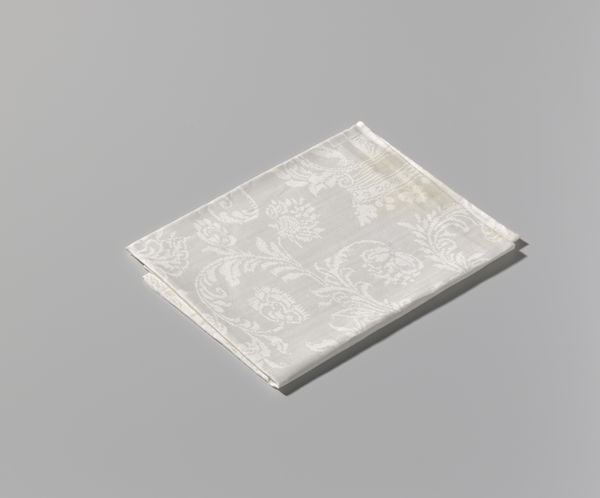
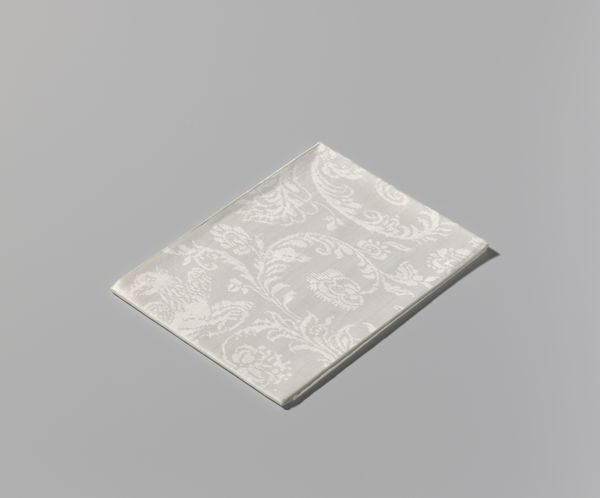
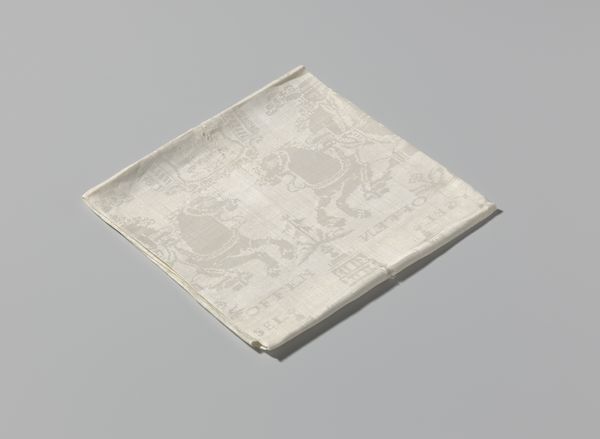
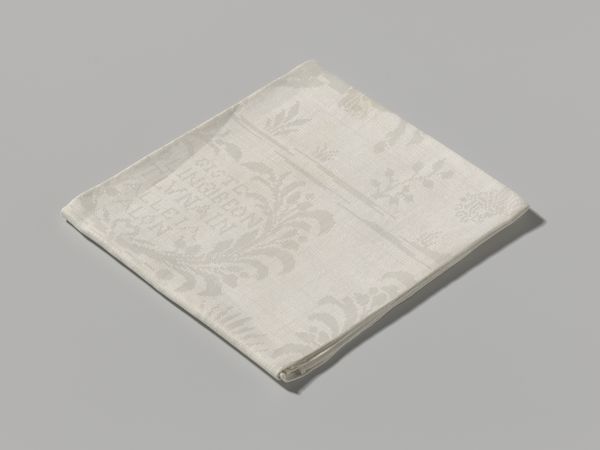
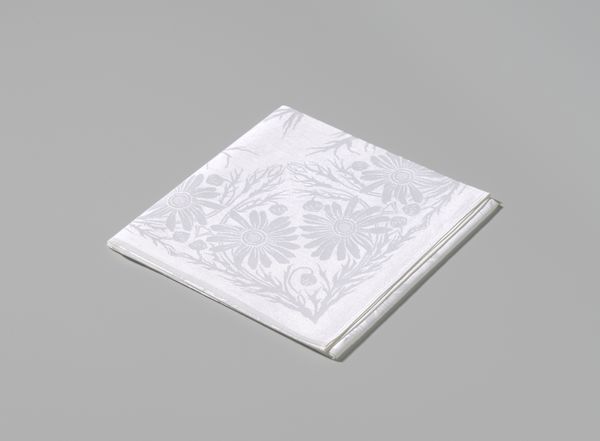
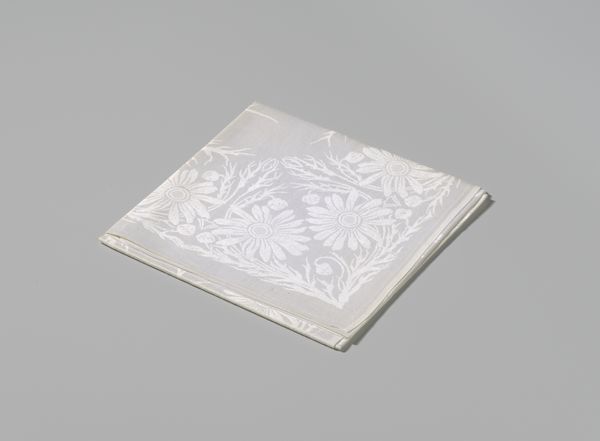
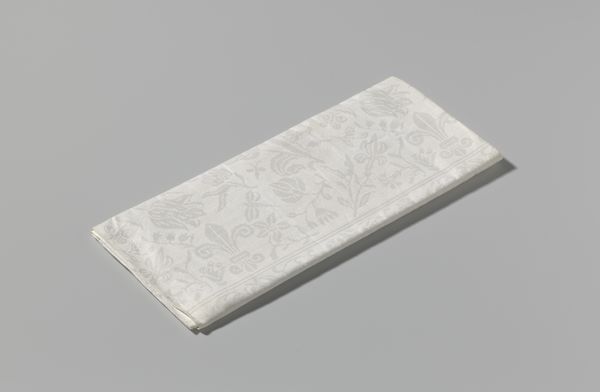
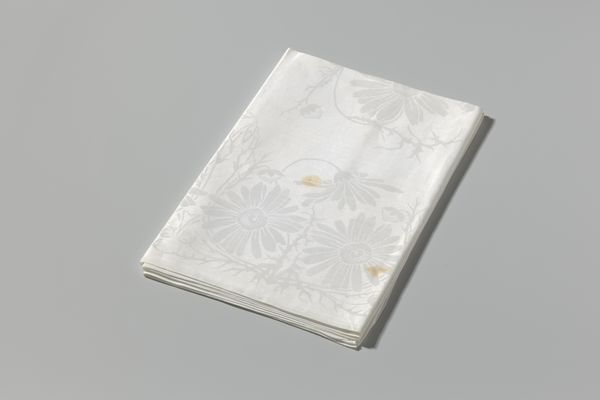
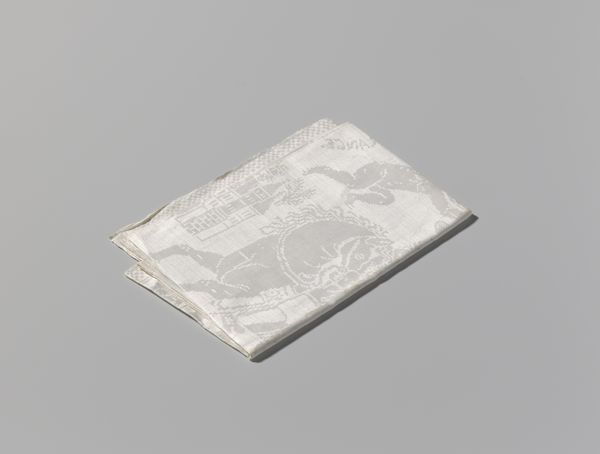
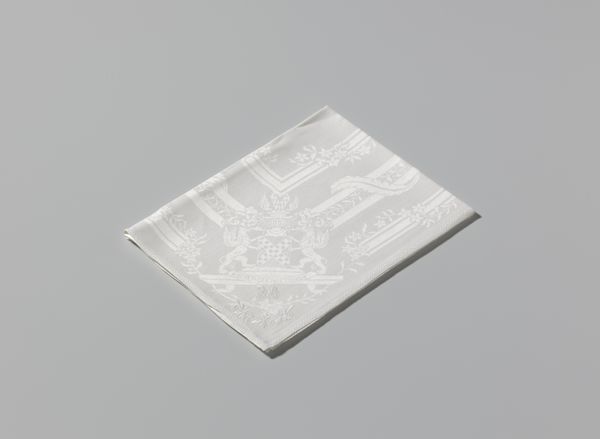
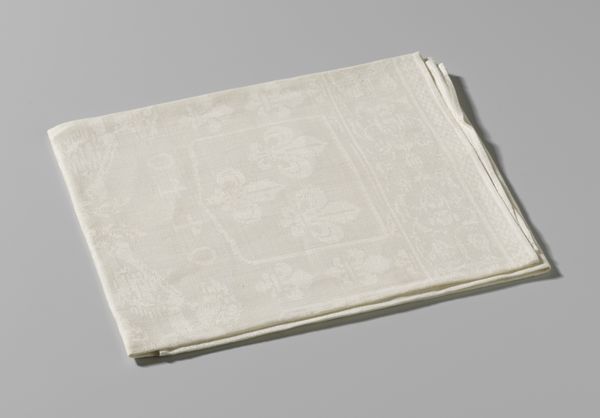
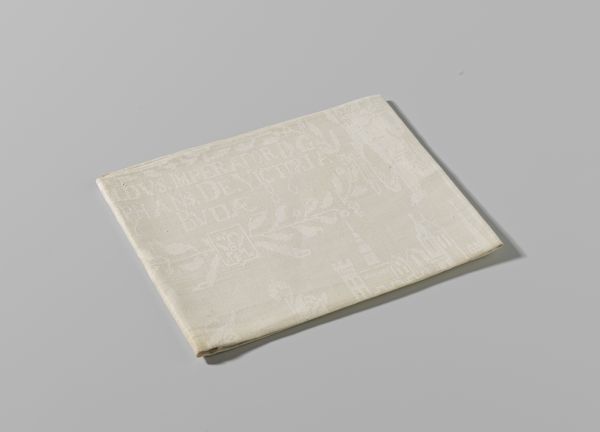
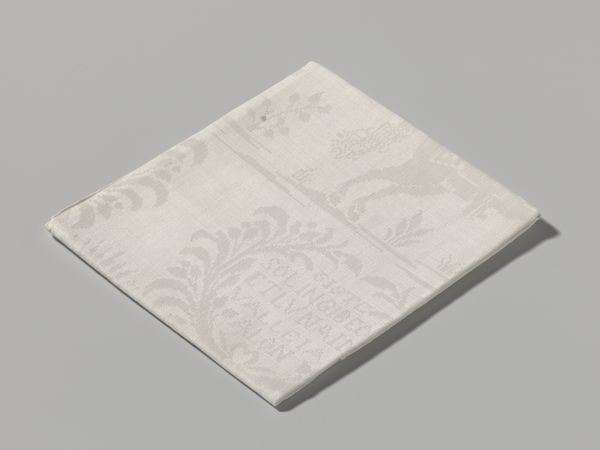
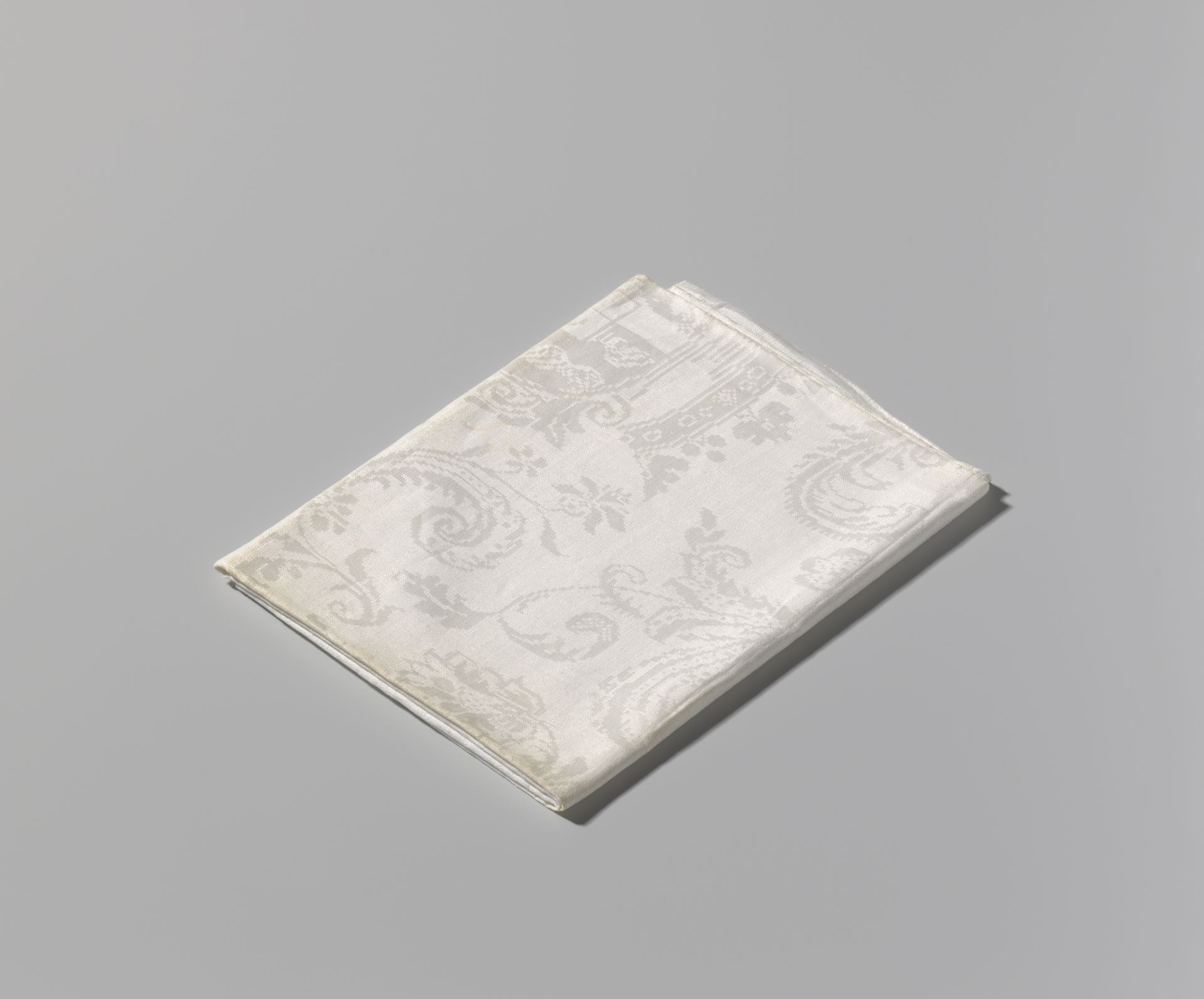
Servet met het wapen van Cornelis Hop

Anonymous
@anonymousLocation
RijksmuseumListen to curator's interpretation
Curatorial notes
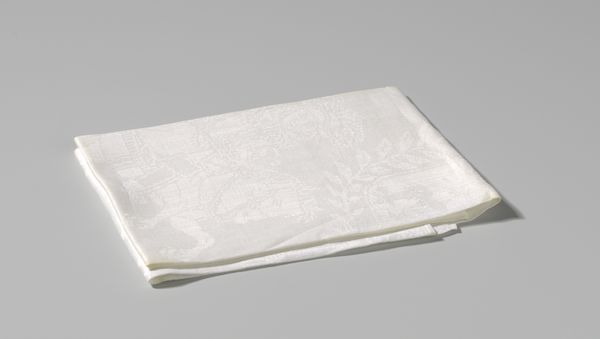
This damask napkin, emblazoned with the coat of arms of Cornelis Hop, was made by an anonymous maker. The fine linen speaks of wealth and status, a testament to the booming Dutch textile industry. Damask weaving is no simple matter; it requires a loom with a complex mechanism, a Jacquard head, which allows the creation of intricate patterns. These looms were often operated by skilled artisans, working long hours. While the finished product graced the tables of the elite, its creation was rooted in labor. The weight and texture, the crispness of the linen—these are all testaments to both the quality of the material and the skill of the weaver. The intricate patterns aren't merely decorative. They speak to the power and affluence of the owner, literally woven into the fabric of everyday life. Considering the napkin, we begin to see how intertwined aesthetics, economics, and social status really are.