
Curatorial notes
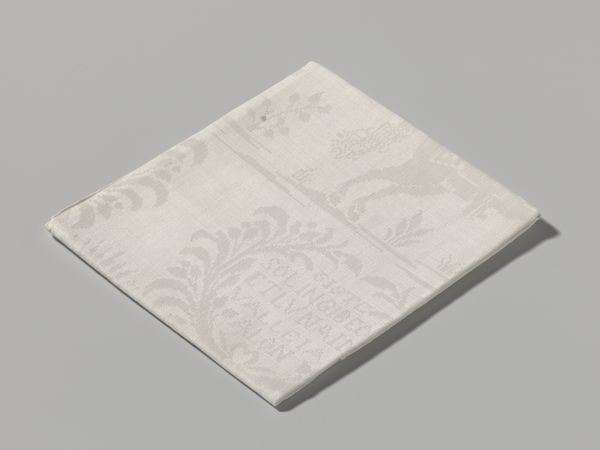
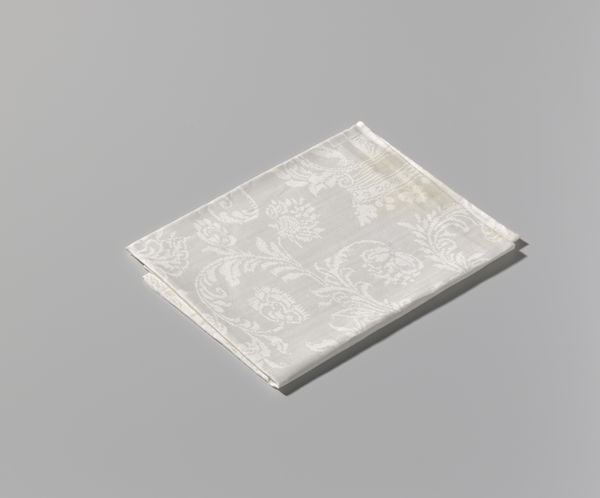
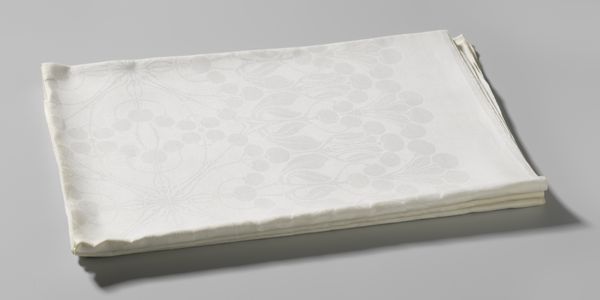
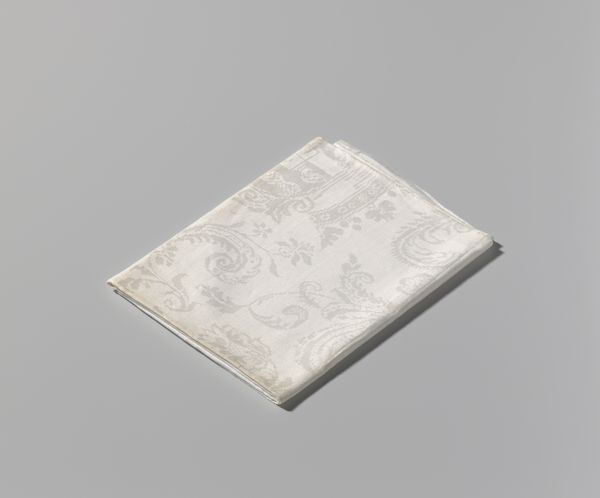
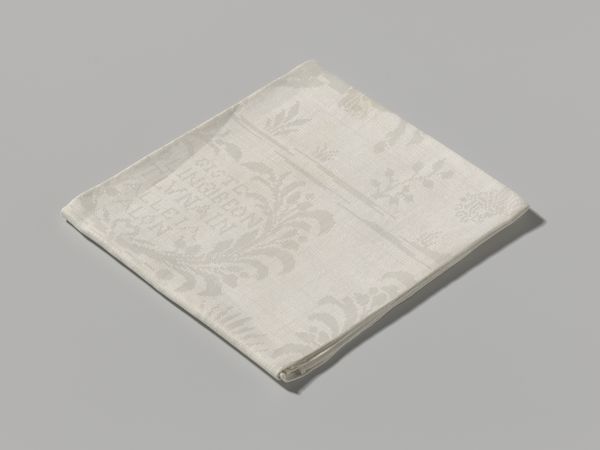
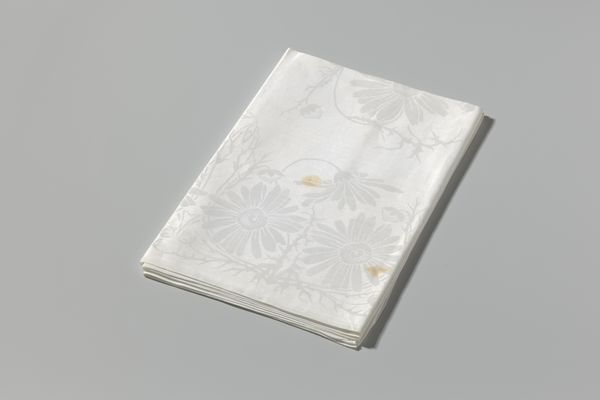
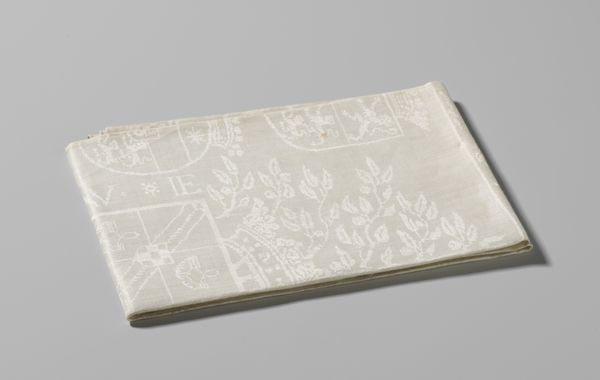
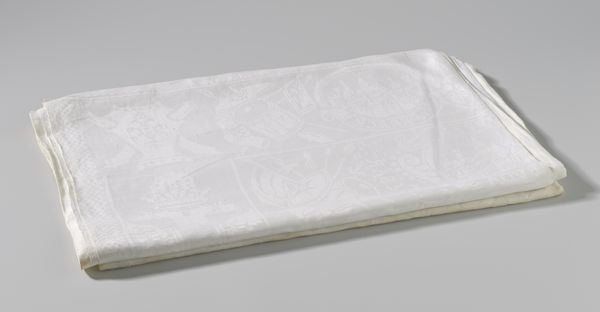
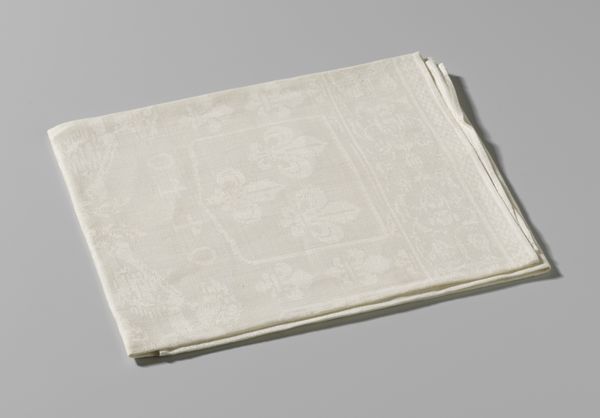
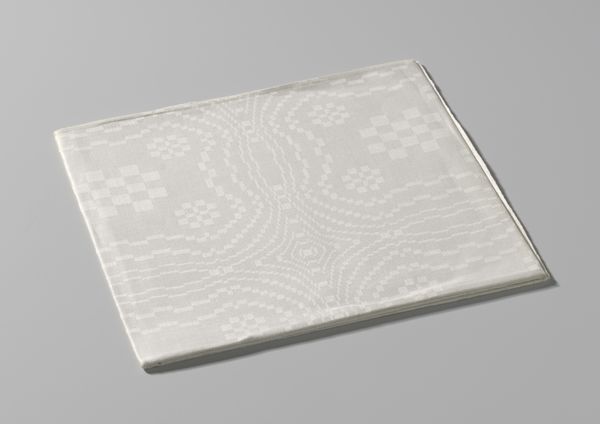
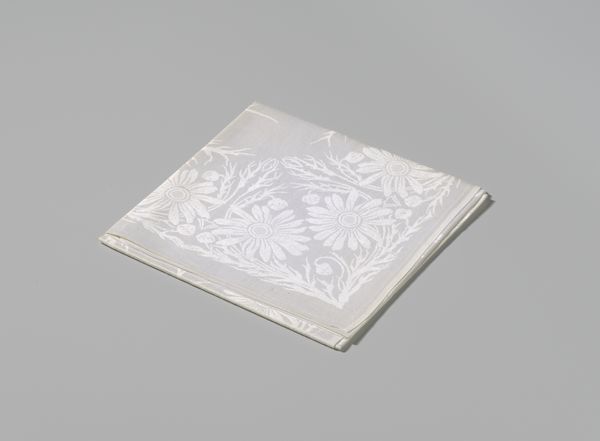
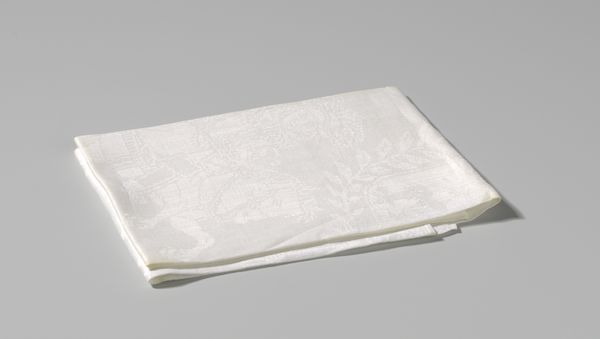
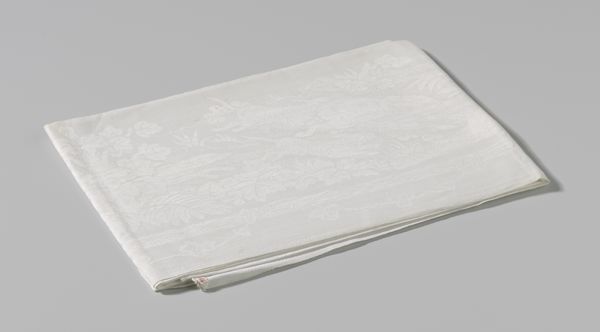
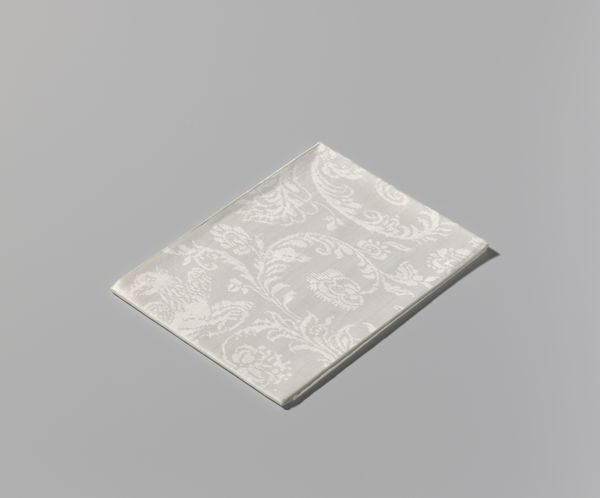
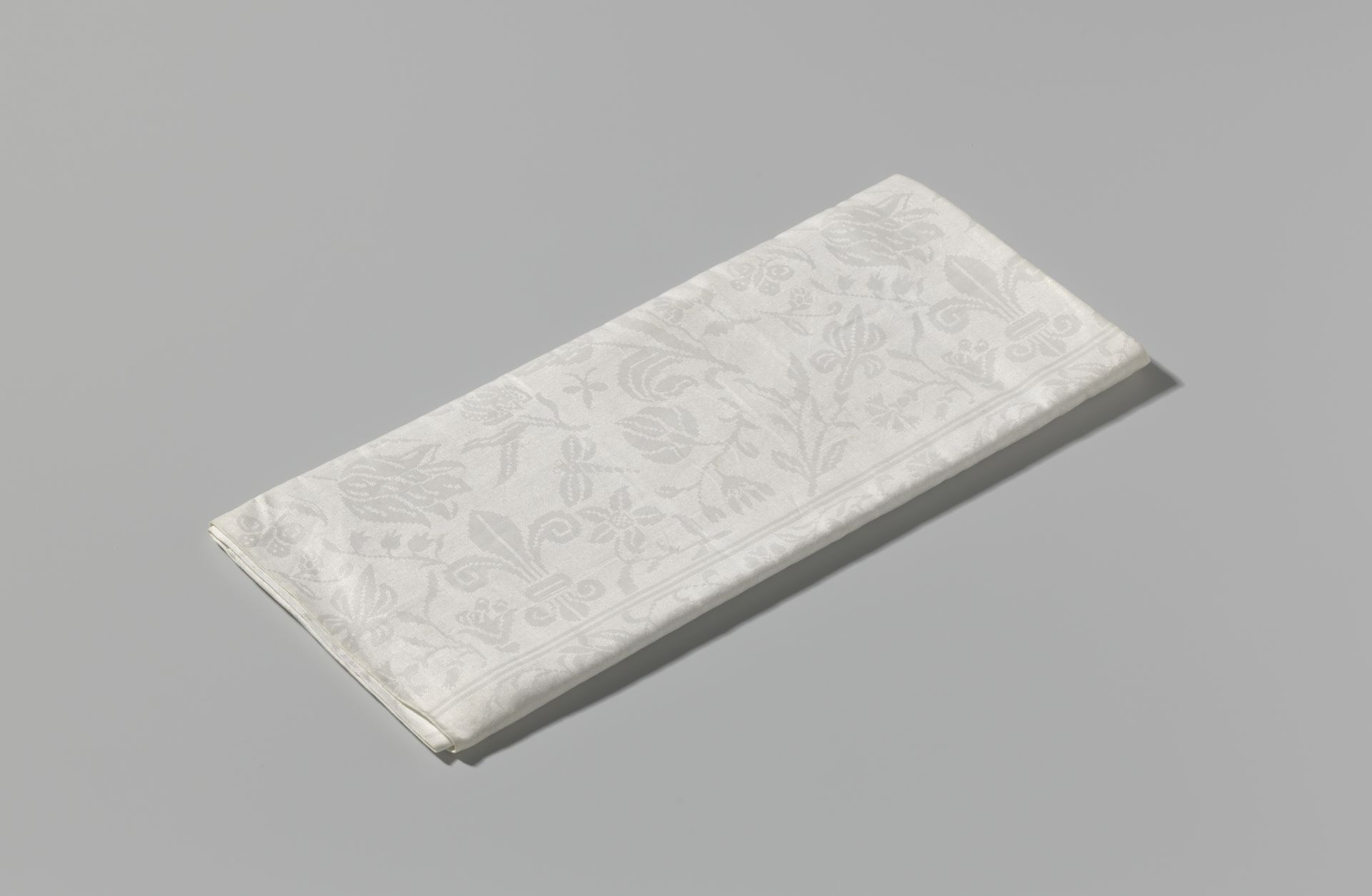
Curator: Here we have “Tafellaken,” a decorative textile produced sometime between 1850 and 1900 by the firm De Leeuw. Editor: It's deceptively simple at first glance, isn't it? Just an off-white cloth folded on a neutral surface. But the subtle floral damask elevates it. It gives off an air of restrained elegance and almost…ghostly domesticity. Curator: I agree. Objects such as this give insight into the rise of industry and manufacturing culture, showcasing textiles produced for bourgeois households. A table linen signifies order, cleanliness, and a specific form of social display, right? Editor: Precisely! A seemingly innocent piece like this table linen reveals much about class and social standing, think of its use as a stage for the performance of family life, gender roles and national identity. The very act of setting a table is a deeply symbolic act that has historically been regulated by custom, manuals and etiquette. Curator: You make an important point about performativity. And thinking about the materiality, the specific floral damask could point us toward aesthetic trends of the period. Editor: Definitely. Motifs can echo sociopolitical statements through pattern and surface design. These florals may reference then-popular symbols of prosperity or imperial power; it would be revealing to delve deeper into the meanings encoded within those specific flower types. Curator: This points toward a conversation around colonial expansion too. How objects like these were traded across regions, potentially at the expense of labor and resources in colonized lands. Editor: Indeed. It makes you ponder the ethics of displaying domestic items from that era outside that very context, the ghosts present or absent. A plain piece of cloth quickly morphs into a loaded object when you tease out such narratives! Curator: Thank you! By understanding these dynamics, we can re-evaluate and expand our appreciation for not just aesthetics but also cultural significance. Editor: Exactly. This piece, so simple on the surface, encourages us to unravel historical threads of empire, class, and design sensibilities.