About this artwork
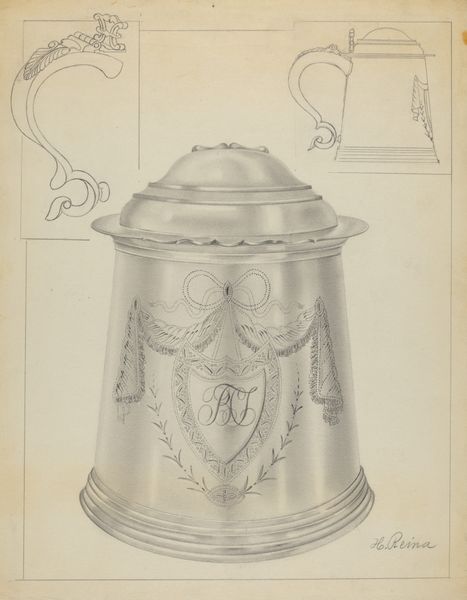
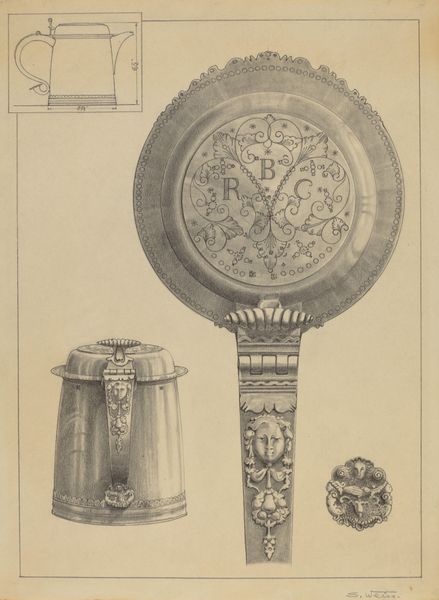
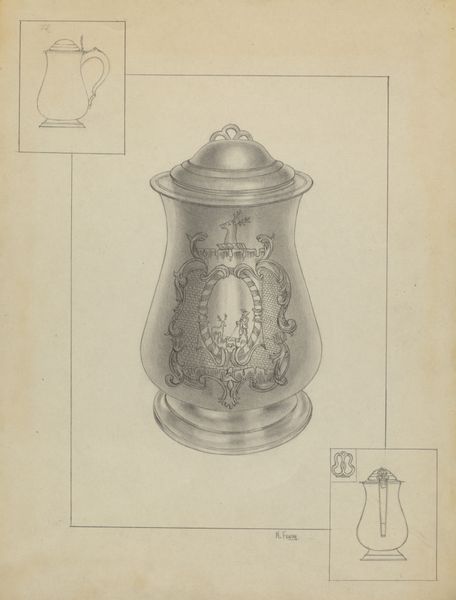
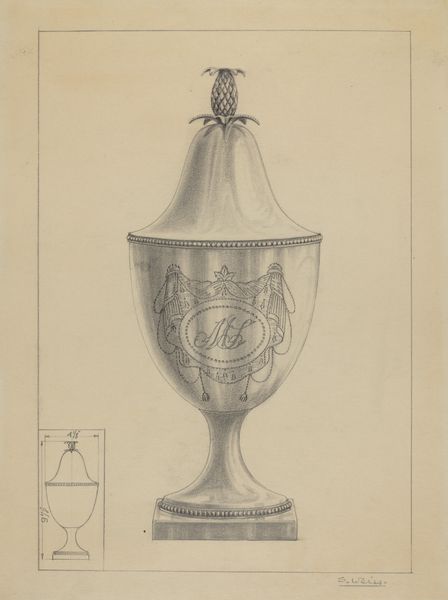
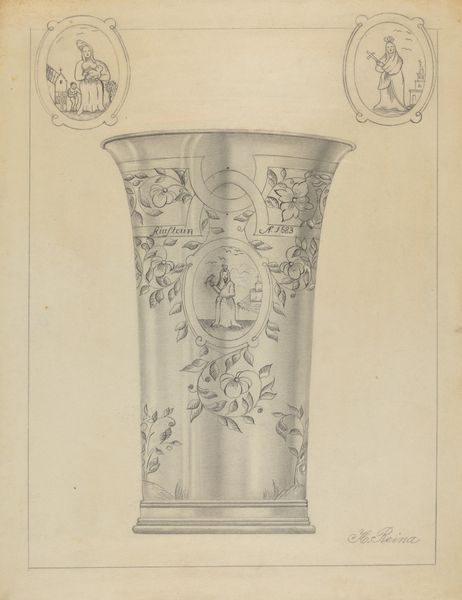
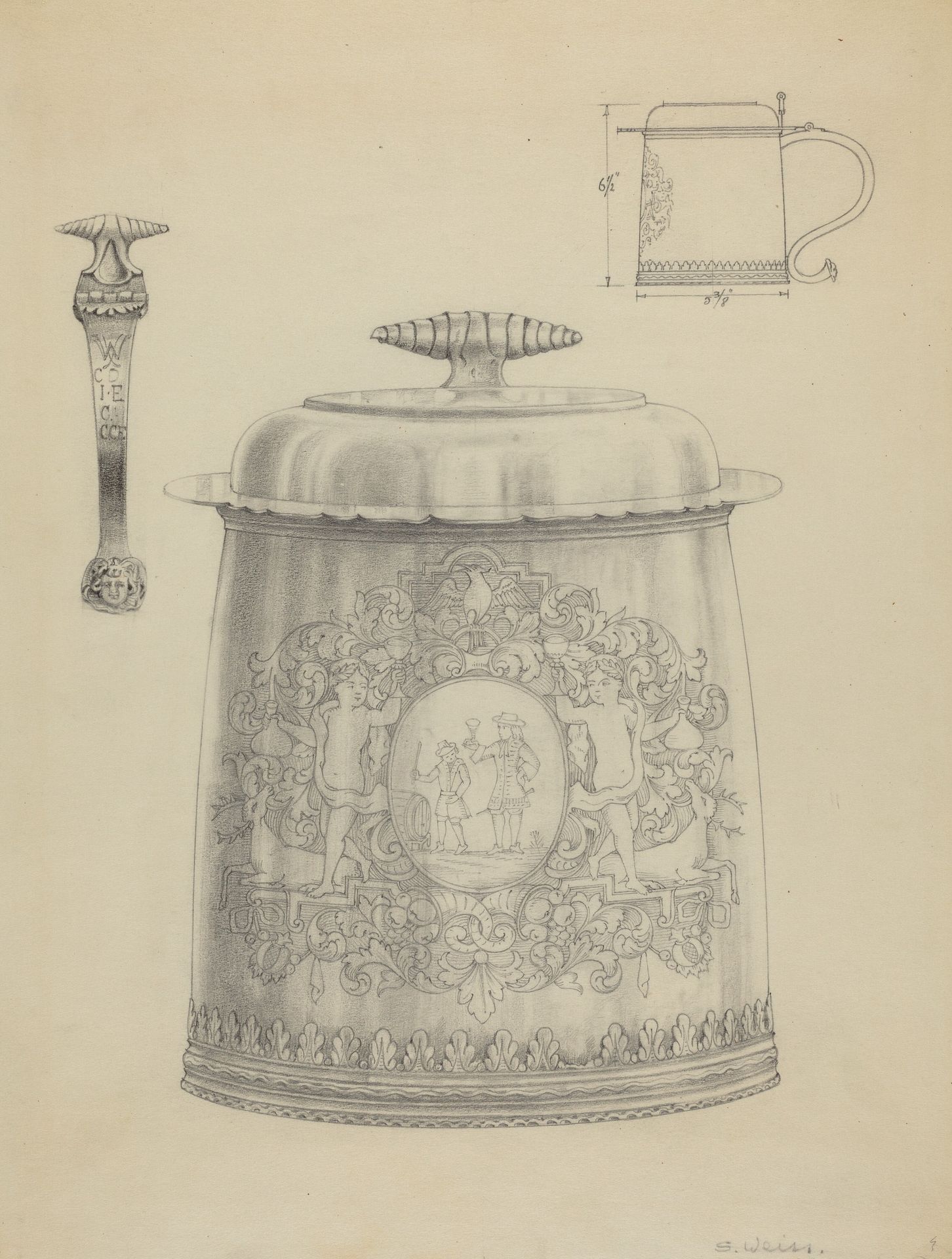
Simon Weiss made this drawing of a Silver Tankard with graphite on paper, sometime between 1855 and 1995. What immediately strikes the eye is the meticulous detail and symmetry of the composition, giving the object a monumental presence. The cylindrical body, crowned with a domed lid, invites the eye to travel along its contours. The design is intricately decorated, featuring classical motifs and figures, set within an oval cartouche framed by ornate flourishes. Weiss masterfully employs linear precision to delineate the object's form. The parallel hatching captures the play of light on the tankard's metallic surface. This drawing transcends mere representation. It is a study in form, balance, and the semiotics of design. The tankard becomes a signifier, encoding social status and refined taste through its elaborate ornamentation. Weiss challenges us to consider the tankard not just as a vessel, but as a cultural artifact rich with historical meaning.


Artwork details
- Medium
- drawing, pencil
- Dimensions
- overall: 29.9 x 22.9 cm (11 3/4 x 9 in.) Original IAD Object: 5 3/8" in diameter; 6 1/2" high
- Copyright
- National Gallery of Art: CC0 1.0
Tags
Comments
Share your thoughts
About this artwork
Simon Weiss made this drawing of a Silver Tankard with graphite on paper, sometime between 1855 and 1995. What immediately strikes the eye is the meticulous detail and symmetry of the composition, giving the object a monumental presence. The cylindrical body, crowned with a domed lid, invites the eye to travel along its contours. The design is intricately decorated, featuring classical motifs and figures, set within an oval cartouche framed by ornate flourishes. Weiss masterfully employs linear precision to delineate the object's form. The parallel hatching captures the play of light on the tankard's metallic surface. This drawing transcends mere representation. It is a study in form, balance, and the semiotics of design. The tankard becomes a signifier, encoding social status and refined taste through its elaborate ornamentation. Weiss challenges us to consider the tankard not just as a vessel, but as a cultural artifact rich with historical meaning.
Comments
Share your thoughts