About this artwork
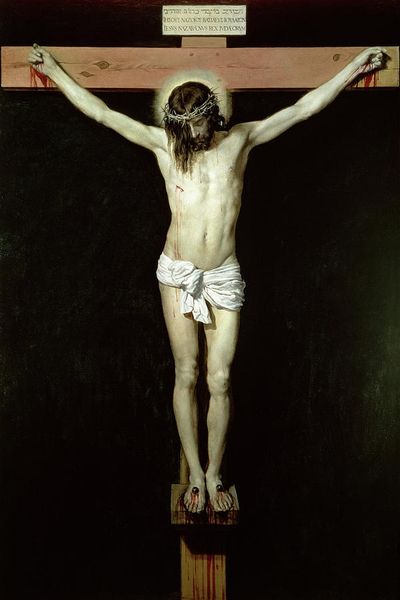
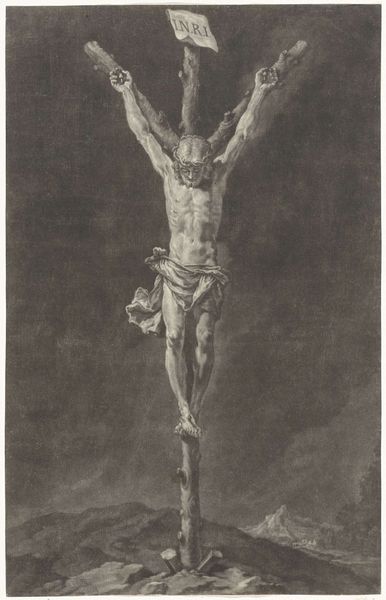
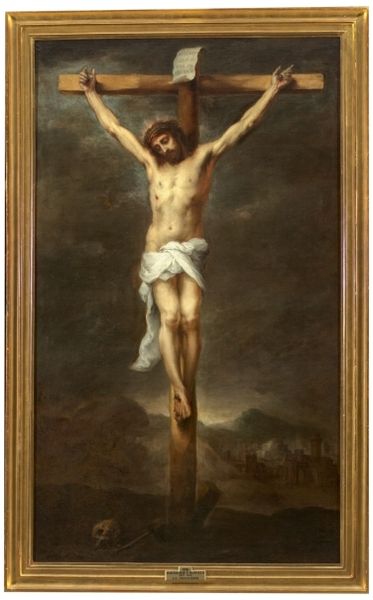
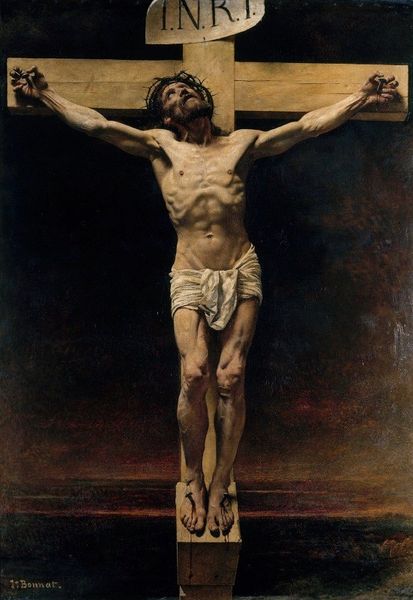
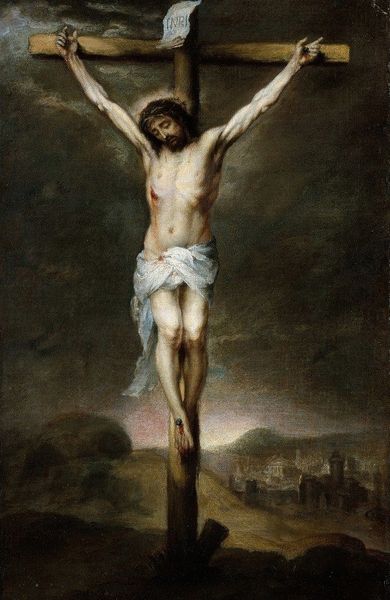
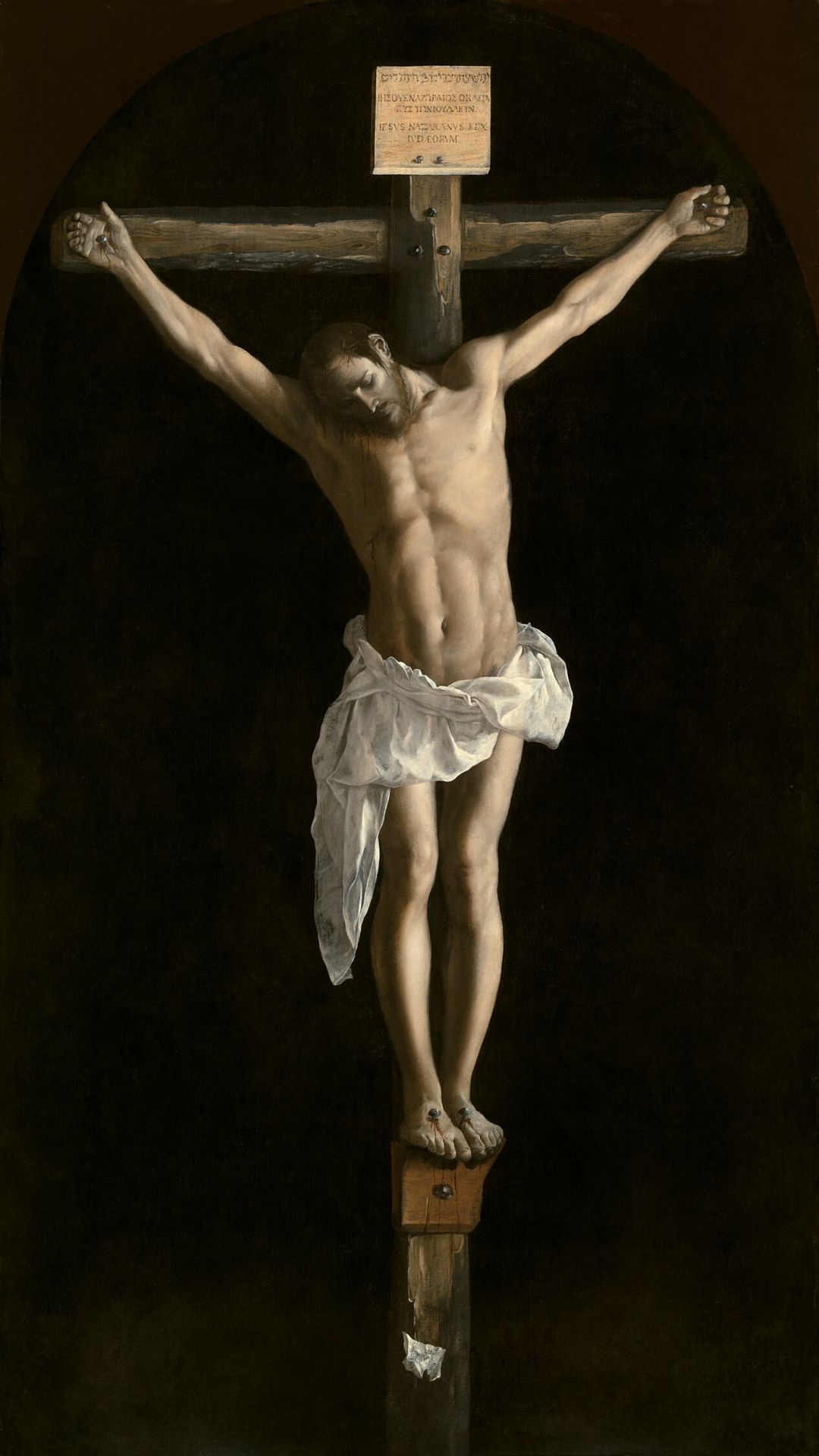
Francisco de Zurbarán created this oil painting of the Crucifixion, now at the Art Institute of Chicago. Immediately striking is the stark contrast, a spotlight effect illuminating Christ's body against an abyss of darkness. This dramatic use of light and shadow, or tenebrism, is integral to the painting's emotional power. Zurbarán directs our attention through the strategic placement of light, emphasizing not only the physical suffering but also the spiritual solemnity. The composition directs our gaze upwards, and the inscription above Christ serves as a textual anchor, inviting contemplation on the themes of sacrifice and redemption. Notice the formal qualities, such as the texture of the wood and the smoothness of Christ's skin, heightening the sensory impact. The entire image becomes a study in contrasts, challenging the viewer to reconcile the divine with the corporeal, the light with the dark. The meaning isn't fixed, but evolves, shaped by our encounter and interpretation.
The Crucifixion
1627


Artwork details
- Medium
- oil-paint, oil-on-canvas
- Dimensions
- 290.3 × 165.5 cm (114 5/16 × 65 3/16 in.)
- Location
- The Art Institute of Chicago
- Copyright
- Public Domain
Tags
Comments
Share your thoughts
About this artwork
Francisco de Zurbarán created this oil painting of the Crucifixion, now at the Art Institute of Chicago. Immediately striking is the stark contrast, a spotlight effect illuminating Christ's body against an abyss of darkness. This dramatic use of light and shadow, or tenebrism, is integral to the painting's emotional power. Zurbarán directs our attention through the strategic placement of light, emphasizing not only the physical suffering but also the spiritual solemnity. The composition directs our gaze upwards, and the inscription above Christ serves as a textual anchor, inviting contemplation on the themes of sacrifice and redemption. Notice the formal qualities, such as the texture of the wood and the smoothness of Christ's skin, heightening the sensory impact. The entire image becomes a study in contrasts, challenging the viewer to reconcile the divine with the corporeal, the light with the dark. The meaning isn't fixed, but evolves, shaped by our encounter and interpretation.
Comments
Share your thoughts