About this artwork
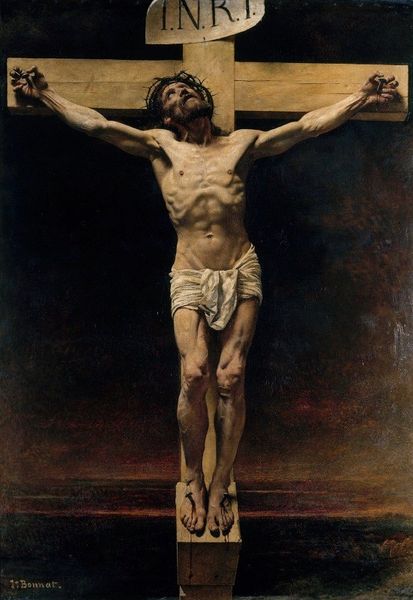
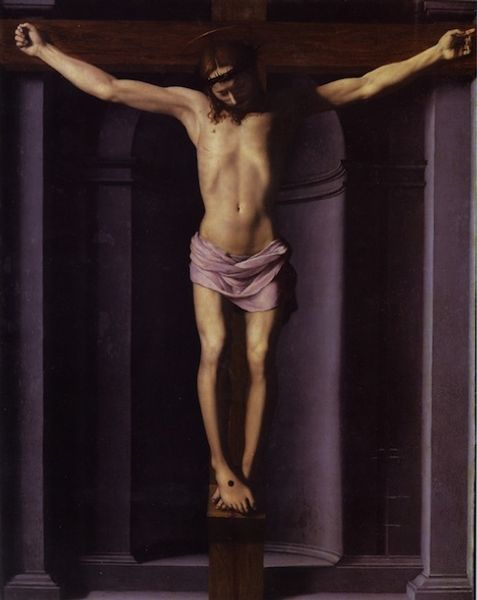
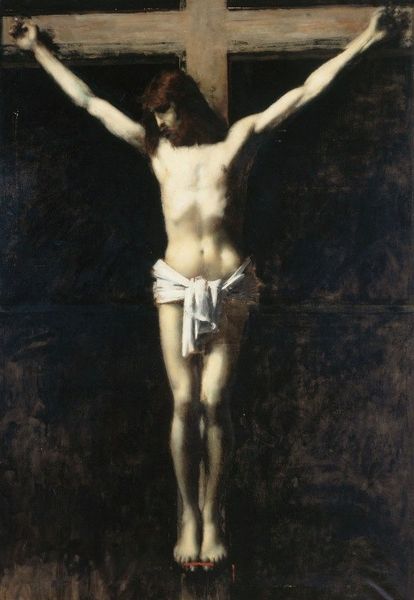
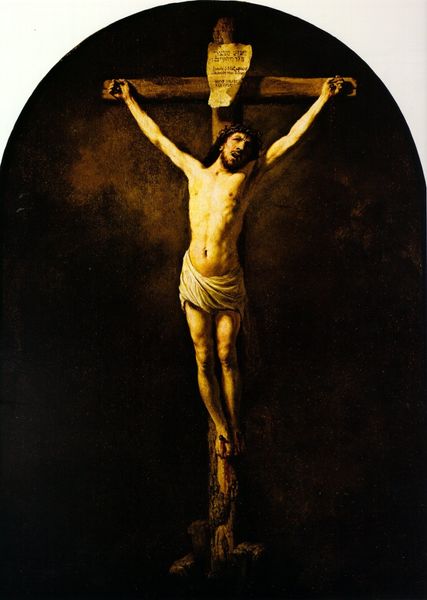
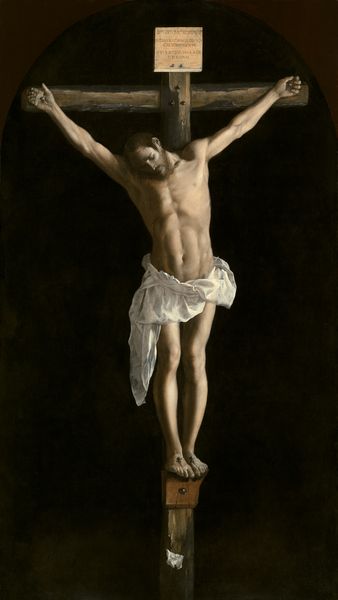
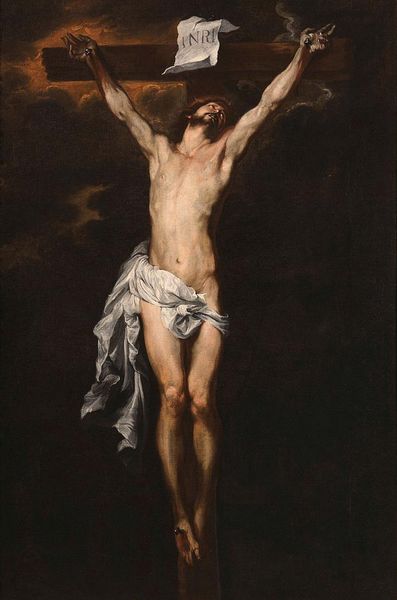
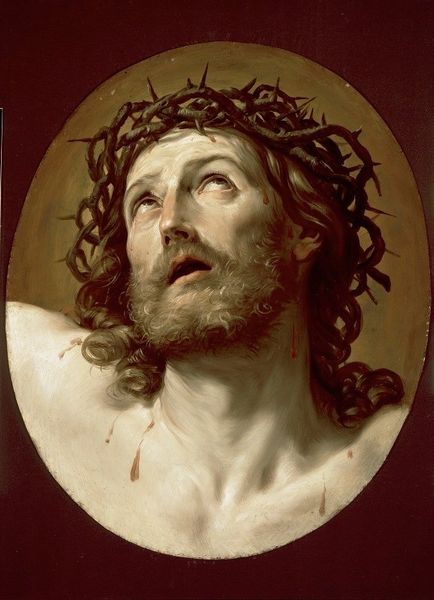
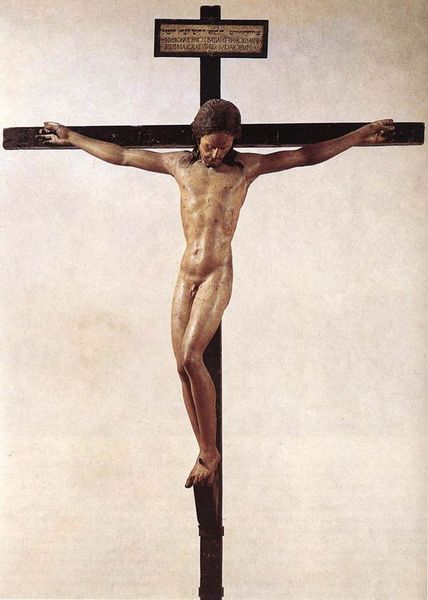
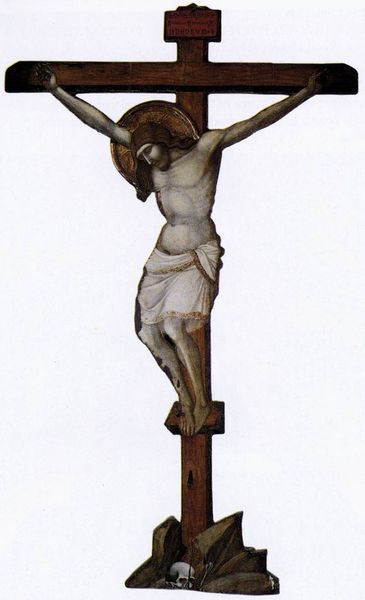
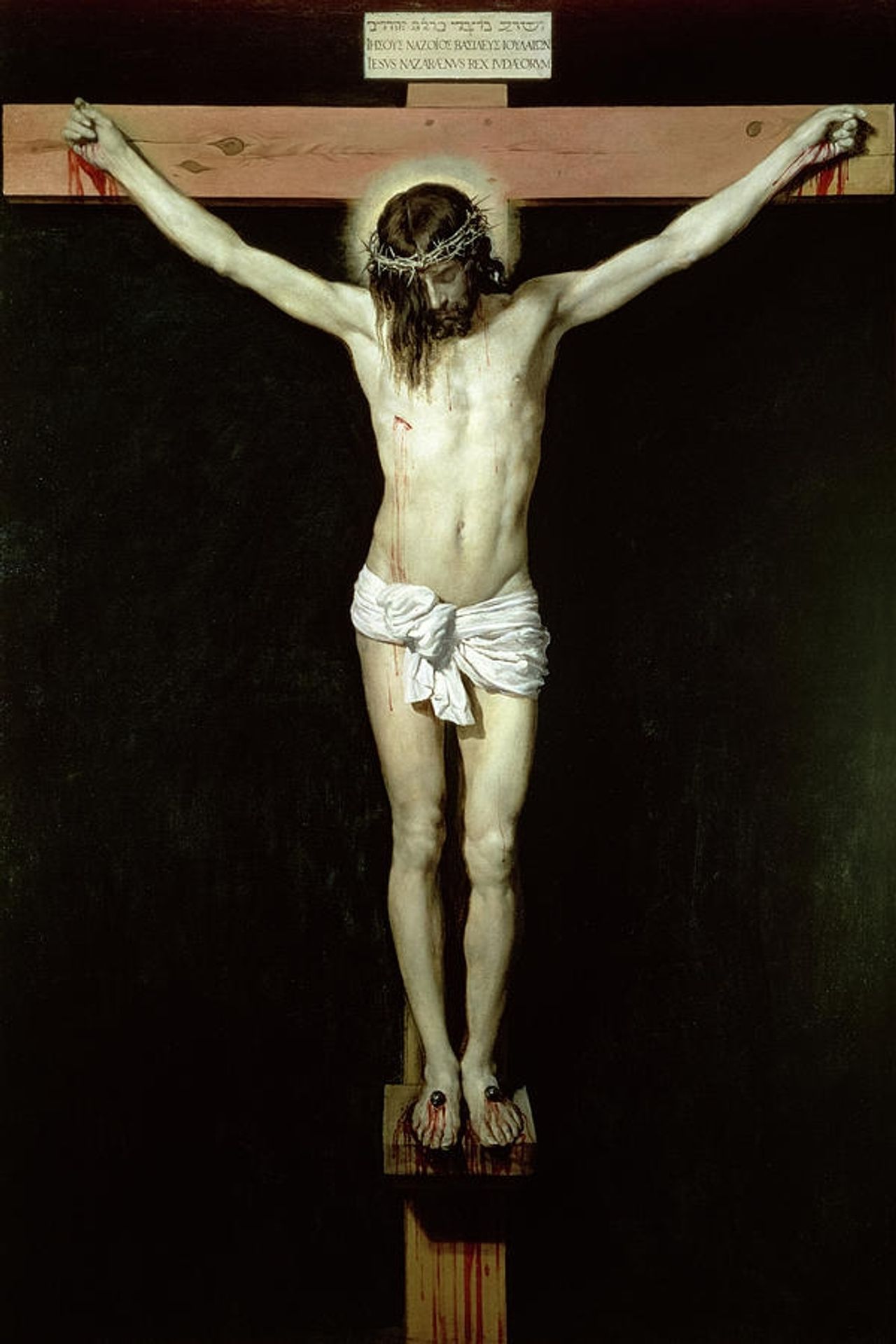
Diego Velázquez’s ‘Christ on the Cross’ at the Museo del Prado presents a powerful image, dominated by the figure of Christ against a stark black background. The cross, an ancient symbol of execution, is here transformed into a symbol of sacrifice and redemption. The image is both an act of devotion and a meditation on human suffering. Consider the crown of thorns, a cruel mockery turned into a symbol of Christ's suffering, a motif that echoes through centuries of religious art, from medieval icons to modern interpretations. The white cloth around Christ’s waist, while serving to cover his nudity, also evokes images of purity and innocence, an artistic device found in earlier Byzantine depictions of the crucifixion. The use of a dark background, reminiscent of tenebrism, heightens the emotional intensity, forcing the viewer to confront the stark reality of Christ's suffering. This is an image that engages with the viewer on a deep, subconscious level, tapping into our collective memory of suffering, sacrifice, and the eternal hope for redemption, a symbol constantly shifting in meaning as it reappears throughout history.

Artwork details
- Medium
- painting, oil-paint
- Dimensions
- 169 x 248 cm
- Location
- Museo del Prado, Madrid, Spain
- Copyright
- Public domain
Tags
Comments
Share your thoughts
About this artwork
Diego Velázquez’s ‘Christ on the Cross’ at the Museo del Prado presents a powerful image, dominated by the figure of Christ against a stark black background. The cross, an ancient symbol of execution, is here transformed into a symbol of sacrifice and redemption. The image is both an act of devotion and a meditation on human suffering. Consider the crown of thorns, a cruel mockery turned into a symbol of Christ's suffering, a motif that echoes through centuries of religious art, from medieval icons to modern interpretations. The white cloth around Christ’s waist, while serving to cover his nudity, also evokes images of purity and innocence, an artistic device found in earlier Byzantine depictions of the crucifixion. The use of a dark background, reminiscent of tenebrism, heightens the emotional intensity, forcing the viewer to confront the stark reality of Christ's suffering. This is an image that engages with the viewer on a deep, subconscious level, tapping into our collective memory of suffering, sacrifice, and the eternal hope for redemption, a symbol constantly shifting in meaning as it reappears throughout history.
Comments
Share your thoughts