About this artwork
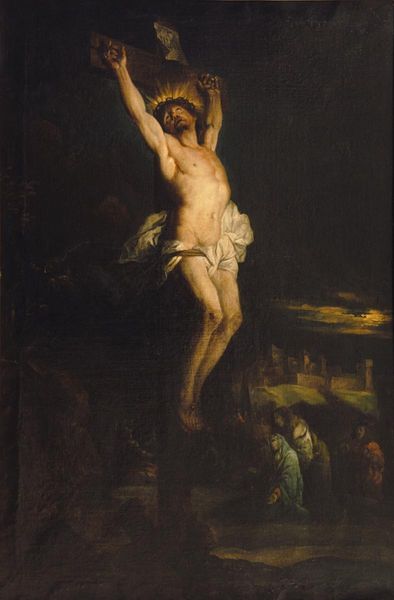
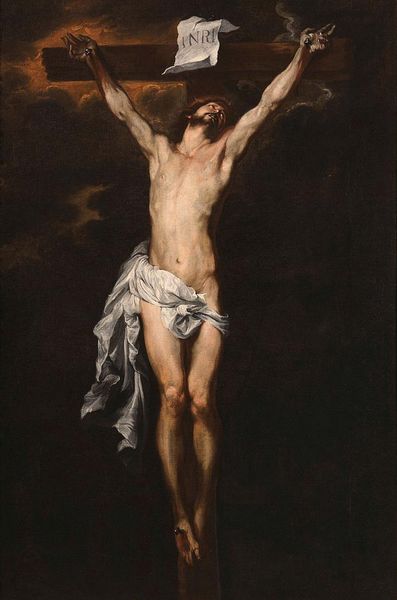
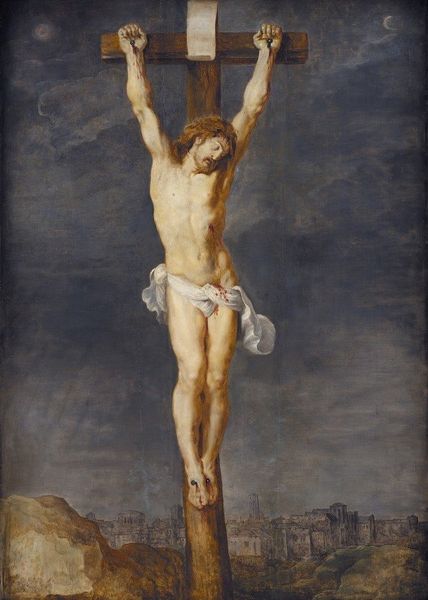
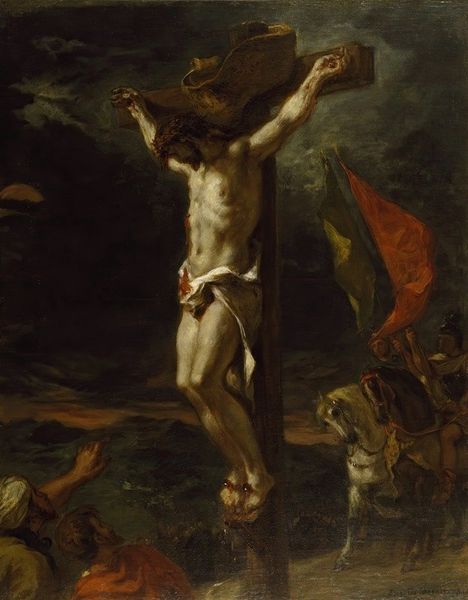
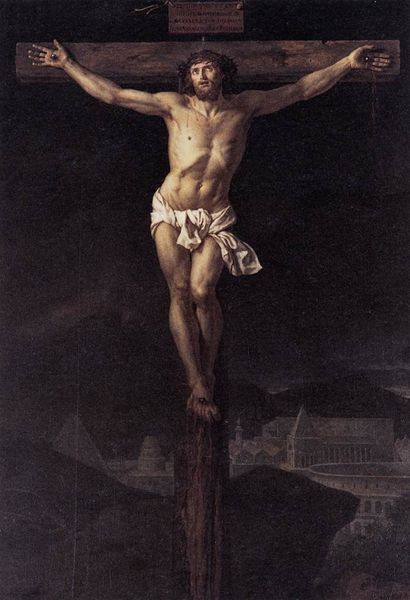
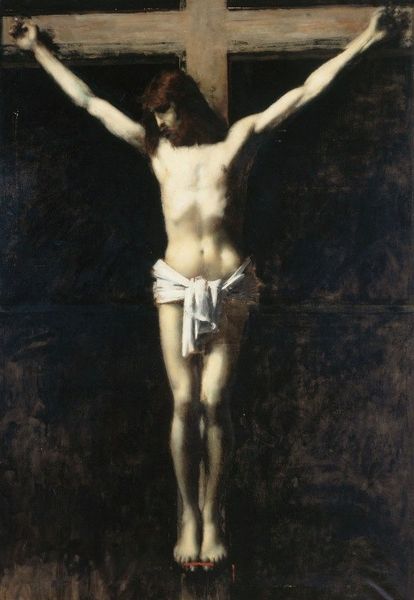
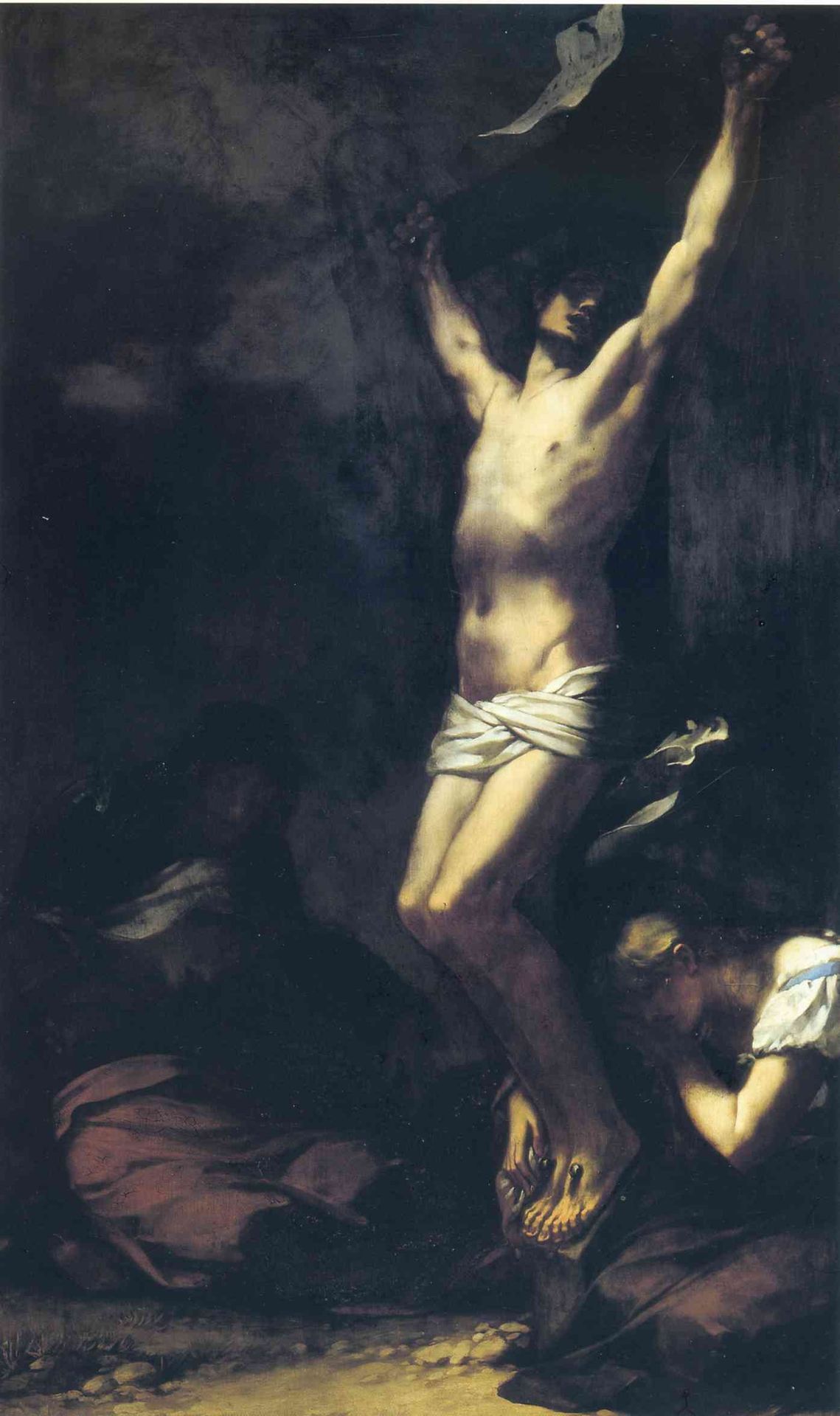
Pierre-Paul Prud'hon’s painting, *Crucifixion*, in the Louvre, is a dramatic play of light and shadow, painted with oils. The figures emerge from a deeply darkened background, heightening the emotional intensity of the scene. Consider how Prud'hon employs chiaroscuro, a technique where strong contrasts between light and dark are used to model three-dimensional forms, intensifying the emotional impact. The composition directs our gaze upward, emphasizing Christ's figure. The use of light acts almost as a signifier, illuminating specific elements, guiding the viewer's emotional response. The darkness can be viewed as a destabilization of traditional religious art. It engages with the viewer through a semiotic system of light and shadow, prompting deeper reflection on themes of sacrifice and suffering. Notice how Prud'hon's use of shadow doesn't just depict darkness, but serves as a crucial element that enhances the narrative and emotional resonance of the crucifixion. This is a space for continued interpretation and dialogue.


Artwork details
- Medium
- painting, oil-paint
- Dimensions
- 278 x 166 cm
- Location
- Louvre, Paris, France
- Copyright
- Public domain
Tags
Comments
Share your thoughts
About this artwork
Pierre-Paul Prud'hon’s painting, *Crucifixion*, in the Louvre, is a dramatic play of light and shadow, painted with oils. The figures emerge from a deeply darkened background, heightening the emotional intensity of the scene. Consider how Prud'hon employs chiaroscuro, a technique where strong contrasts between light and dark are used to model three-dimensional forms, intensifying the emotional impact. The composition directs our gaze upward, emphasizing Christ's figure. The use of light acts almost as a signifier, illuminating specific elements, guiding the viewer's emotional response. The darkness can be viewed as a destabilization of traditional religious art. It engages with the viewer through a semiotic system of light and shadow, prompting deeper reflection on themes of sacrifice and suffering. Notice how Prud'hon's use of shadow doesn't just depict darkness, but serves as a crucial element that enhances the narrative and emotional resonance of the crucifixion. This is a space for continued interpretation and dialogue.
Comments
Share your thoughts