1890
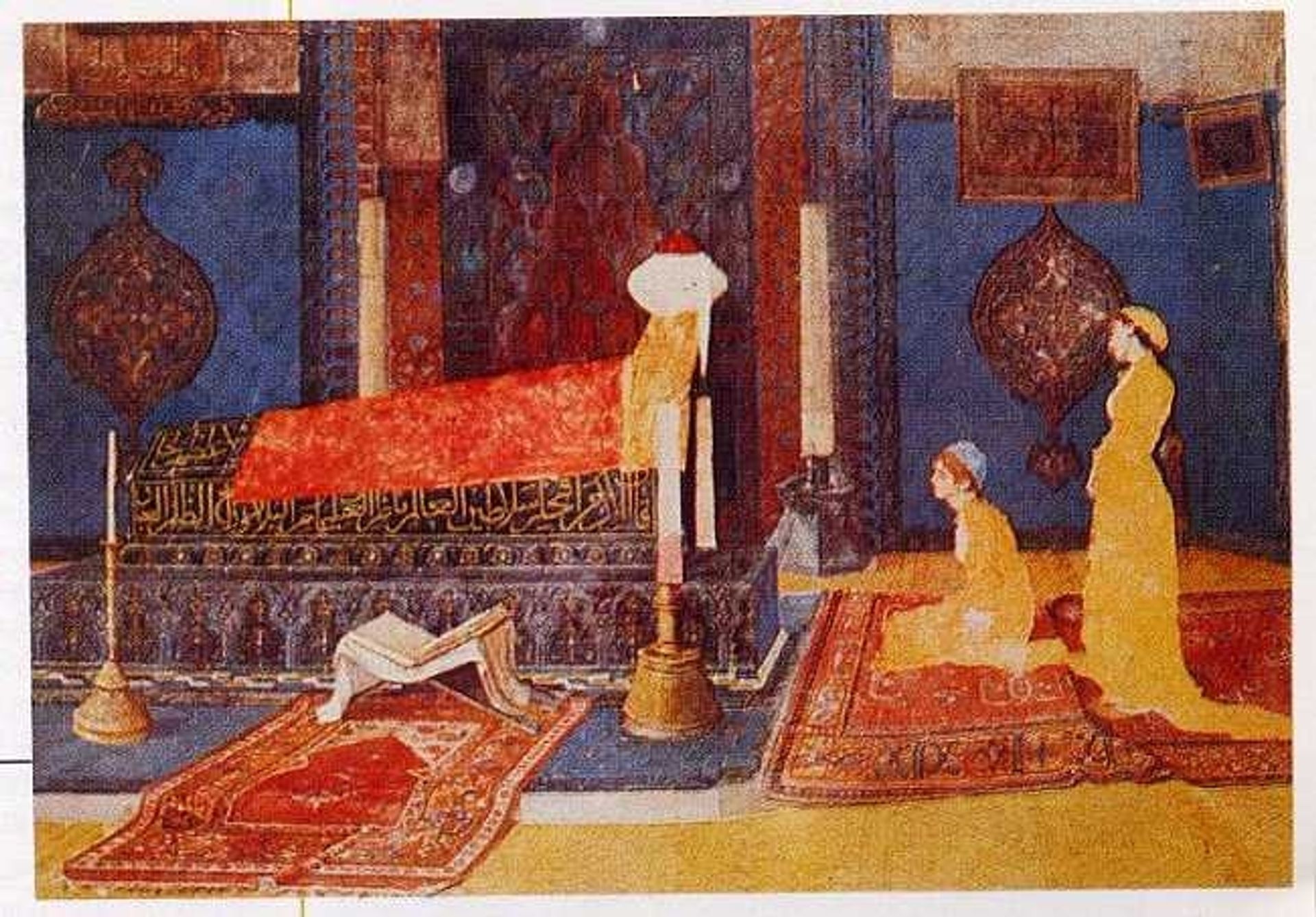
Two Young Girls Visiting a Shrine

Listen to curator's interpretation
Curatorial notes
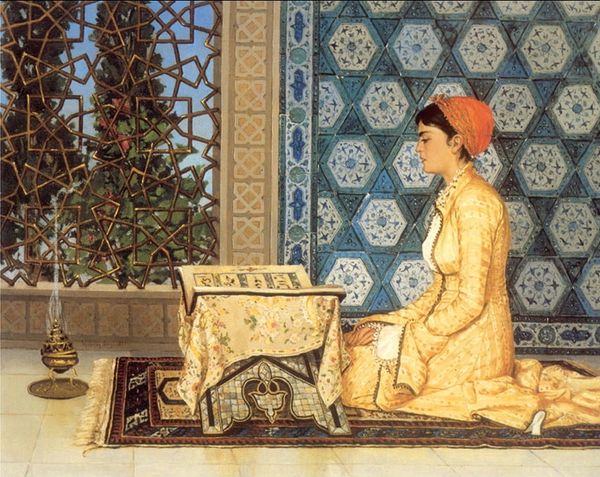
Editor: This is “Two Young Girls Visiting a Shrine,” painted in 1890 by Osman Hamdi using oil paints. What strikes me is the stillness – the hushed reverence of the scene. The colours feel muted, despite the richness of the carpets and textiles. What symbolic weight do you see in this image? Art Historian: A fascinating observation. The “stillness,” as you call it, permeates the scene. I’m intrigued by the presence of the two girls amidst all the ornately-rendered decorations, alluding to power and sanctity. Notice how Hamdi positions the figures on a low, almost worshipful plane in relation to the mausoleum. This compositional choice amplifies the mausoleum's presence while also highlighting their subordinate position as women in a specific cultural hierarchy. What feelings are invoked by this visual imbalance? Editor: I see what you mean; it creates a definite sense of otherness, and the contrast of the warm robes versus the colder stone emphasizes that divide. How might the architectural backdrop reinforce this dynamic? Art Historian: The backdrop isn't mere decoration; rather, it's a repository of cultural memory. The calligraphy inscribed on the tomb echoes a legacy, whilst the carpets themselves could represent access to higher knowledge for the kneeling girls. Note the Ottoman aesthetic tradition, prevalent here: it’s more than just design; it serves as visual reinforcement for the values underpinning their society, almost like a symbolic code of conduct in which the feminine form takes a knee, or takes stock, for purposes of personal or spiritual growth. Does the muted colour palette temper your feelings towards the figures at all? Editor: Yes, I think so. I appreciate now how the scene suggests deference, using a variety of symbols. It definitely makes me consider my initial reaction to the piece from a new perspective. Thank you! Art Historian: A powerful picture like this is a doorway to another culture; consider how images function, whether for devotion or cultural reinforcement, is to gain profound insight. This artwork prompts deeper investigation into Ottoman social structures through material symbolism.