About this artwork
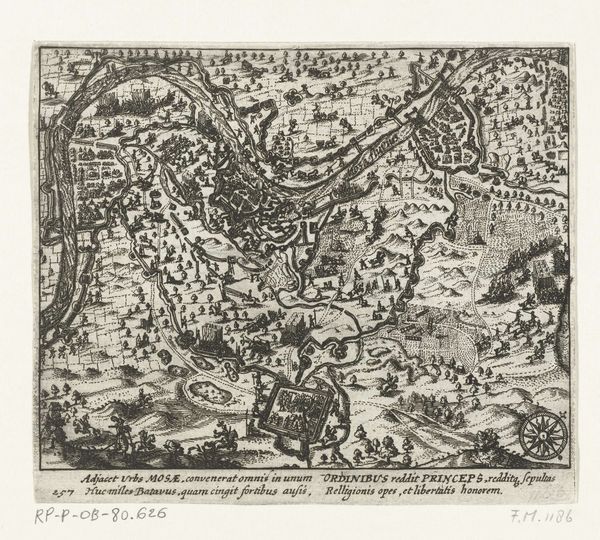
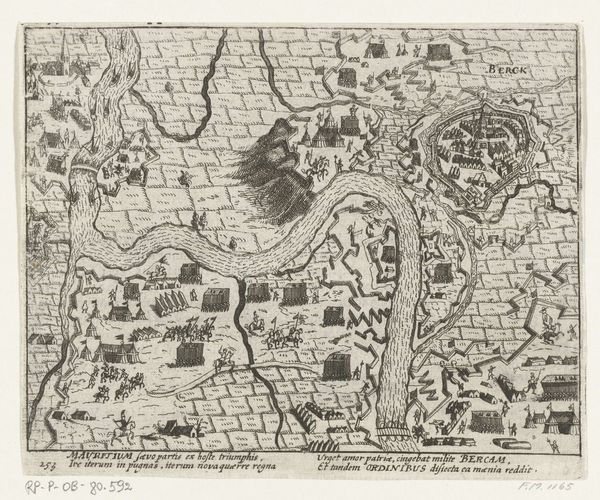
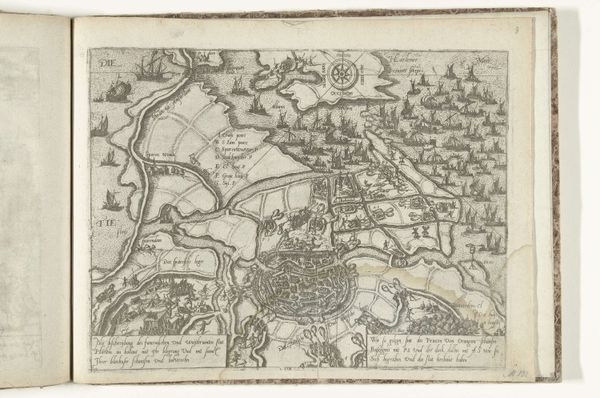
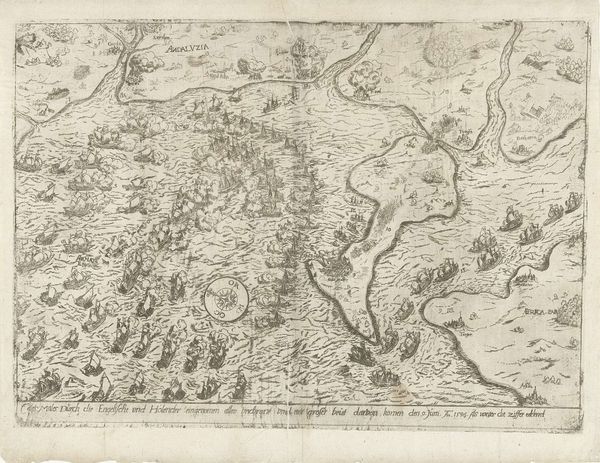
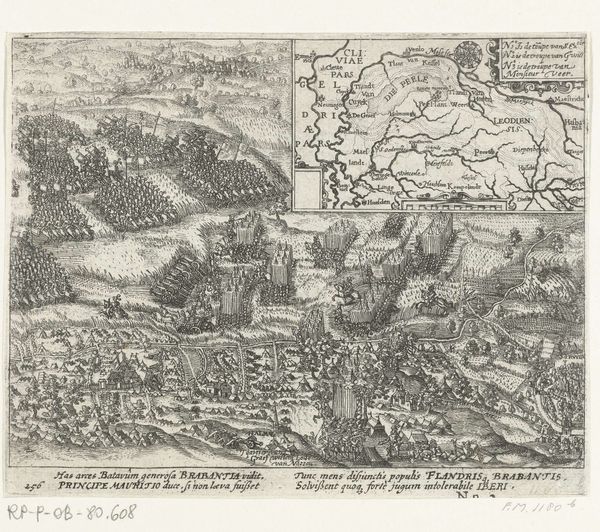
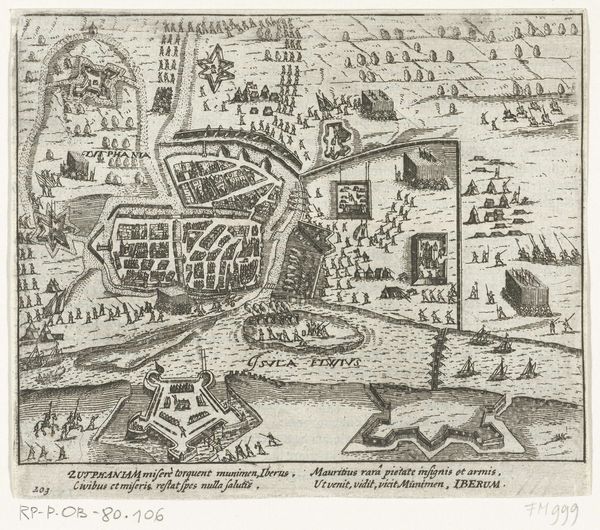
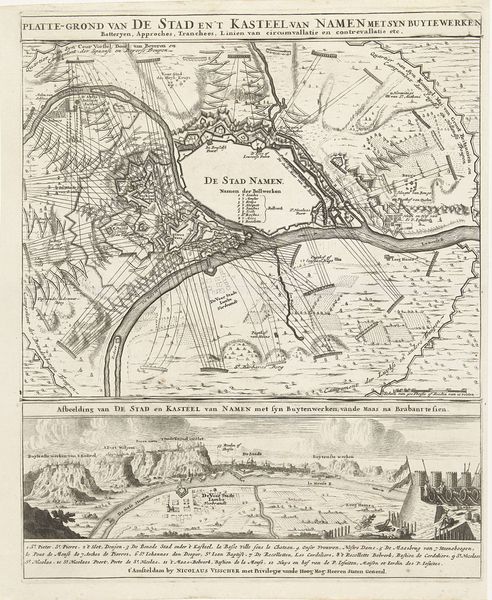
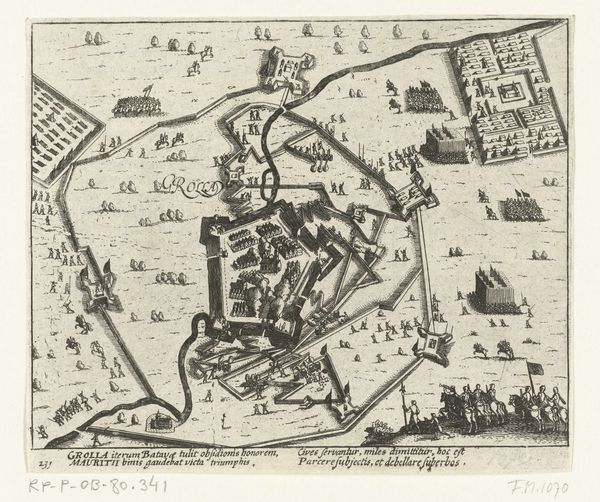
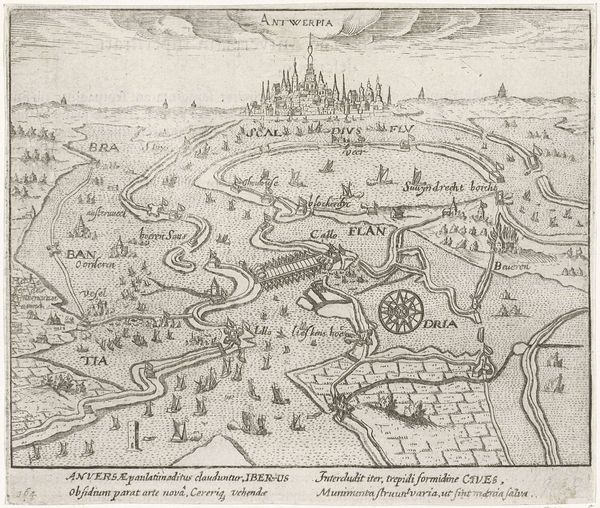
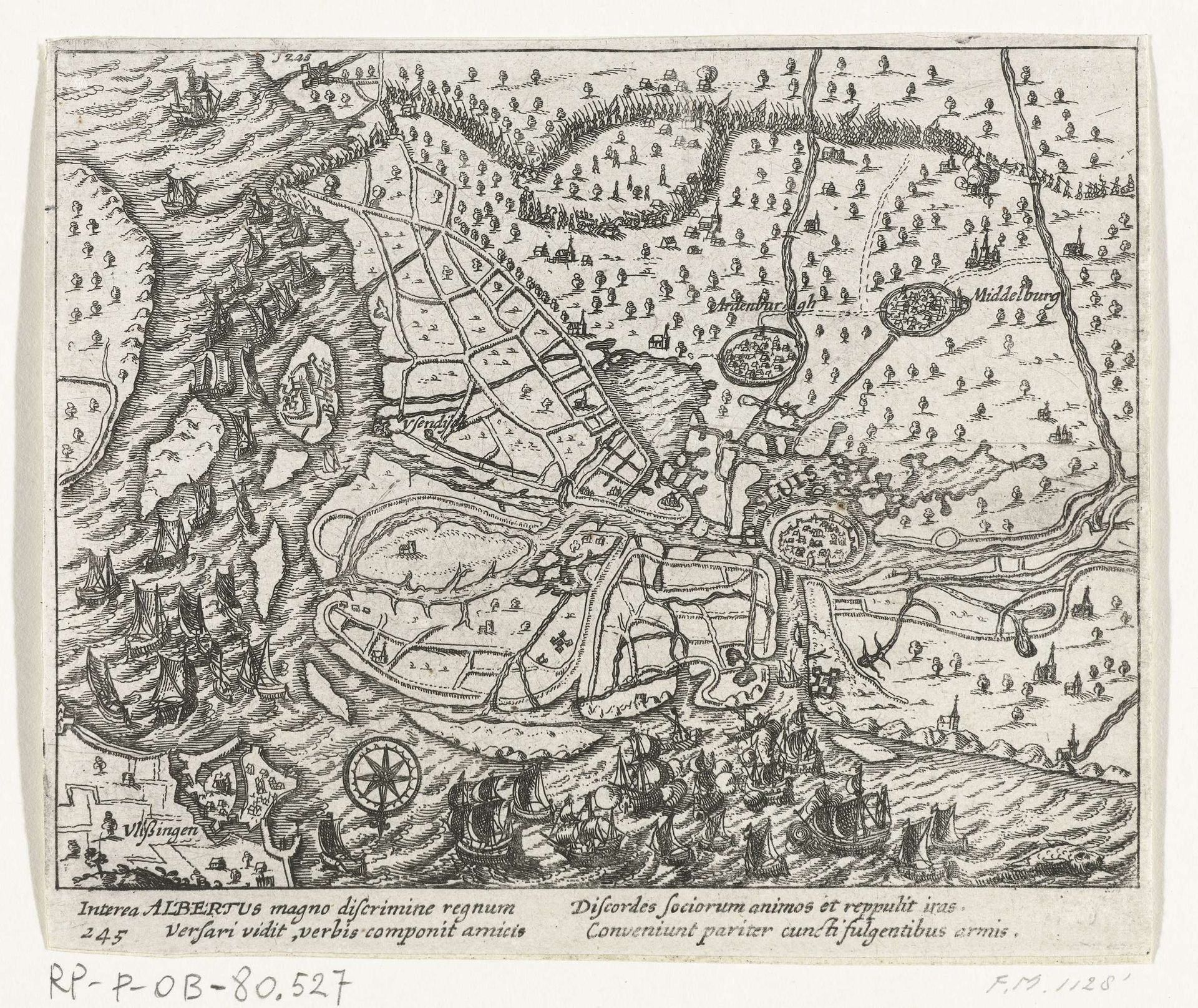
Editor: Here we have an engraving, “Troepen van Albrecht trekken op naar Oostende (linkerblad), 1600,” dating from 1613-1615, made by an anonymous artist. It depicts a military landscape, quite detailed despite its small scale. What do you make of this piece, given the historical context? Curator: It's fascinating to consider this image as more than just a historical record. Look closely at how the artist has rendered the landscape – the regimented towns juxtaposed with the wilder natural elements. This reflects the period’s tensions: burgeoning urbanisation colliding with the realities of war and colonial ambition. It's not just a map, it’s a power statement. Editor: Power statement? How so? Curator: This image celebrates Albrecht's military campaign. Consider the message being sent by depicting the landscape so clinically, almost as if to suggest total control. Whose perspective is privileged here, and whose is erased? Do we see any representation of the human cost of this military action? Editor: No, you’re right. It feels quite detached from the human experience of war, almost celebratory in its depiction of order. I hadn't considered whose story was being left out. Curator: Exactly. And how does that absence reinforce dominant narratives about conflict and conquest? What effect might that have on a contemporary audience grappling with similar issues of power and representation? Editor: It gives you a lot to think about, reflecting on the visual narratives we inherit and how they shape our understanding of history and current affairs. Curator: Indeed. Questioning those narratives is key to understanding art’s role in shaping and reflecting societal power dynamics. This piece certainly gives us pause to do just that.
Troepen van Albrecht trekken op naar Oostende (linkerblad), 1600
1613 - 1615

Anonymous
@anonymousLocation
RijksmuseumArtwork details
- Medium
- drawing, print, ink, engraving
- Dimensions
- height 134 mm, width 161 mm
- Location
- Rijksmuseum
- Copyright
- Rijks Museum: Open Domain
Tags
Comments
Share your thoughts
About this artwork
Editor: Here we have an engraving, “Troepen van Albrecht trekken op naar Oostende (linkerblad), 1600,” dating from 1613-1615, made by an anonymous artist. It depicts a military landscape, quite detailed despite its small scale. What do you make of this piece, given the historical context? Curator: It's fascinating to consider this image as more than just a historical record. Look closely at how the artist has rendered the landscape – the regimented towns juxtaposed with the wilder natural elements. This reflects the period’s tensions: burgeoning urbanisation colliding with the realities of war and colonial ambition. It's not just a map, it’s a power statement. Editor: Power statement? How so? Curator: This image celebrates Albrecht's military campaign. Consider the message being sent by depicting the landscape so clinically, almost as if to suggest total control. Whose perspective is privileged here, and whose is erased? Do we see any representation of the human cost of this military action? Editor: No, you’re right. It feels quite detached from the human experience of war, almost celebratory in its depiction of order. I hadn't considered whose story was being left out. Curator: Exactly. And how does that absence reinforce dominant narratives about conflict and conquest? What effect might that have on a contemporary audience grappling with similar issues of power and representation? Editor: It gives you a lot to think about, reflecting on the visual narratives we inherit and how they shape our understanding of history and current affairs. Curator: Indeed. Questioning those narratives is key to understanding art’s role in shaping and reflecting societal power dynamics. This piece certainly gives us pause to do just that.
Comments
Share your thoughts