About this artwork
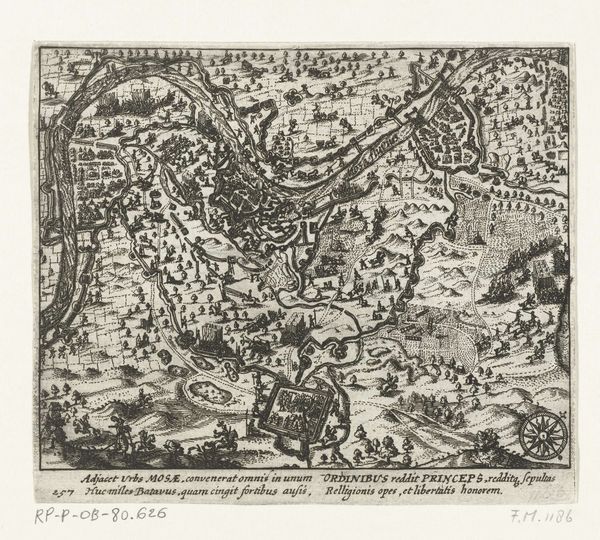
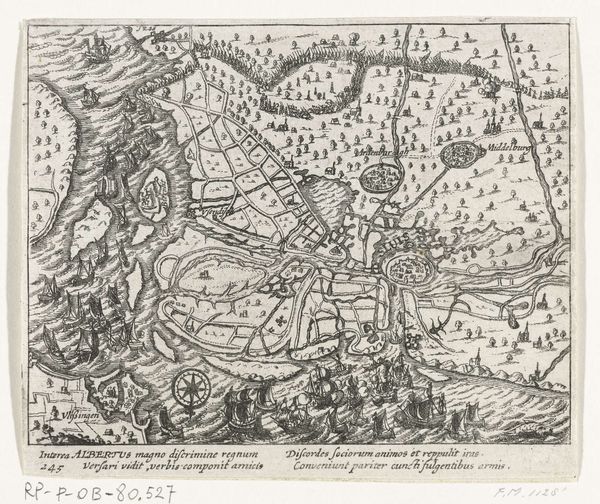
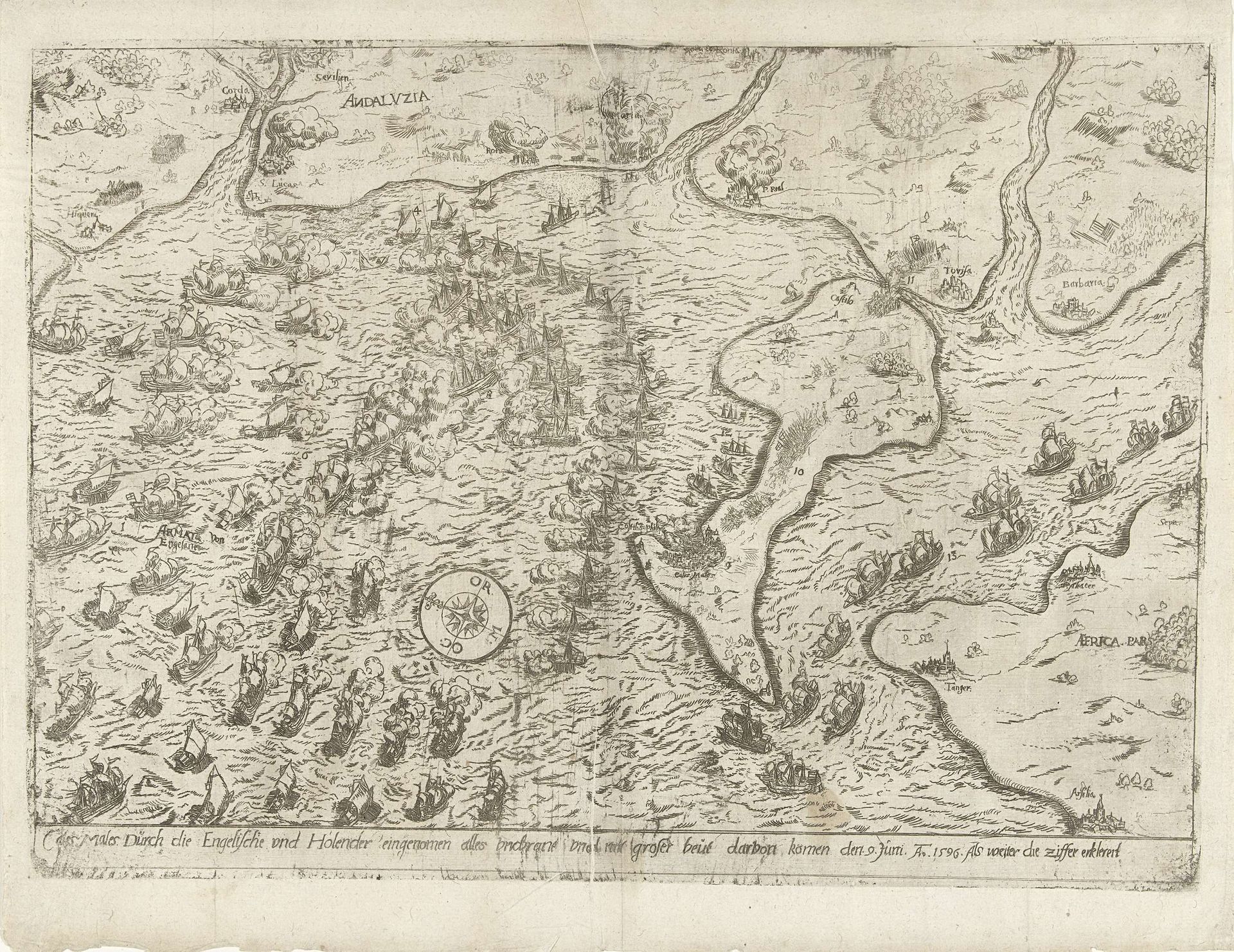
Here we see an anonymous engraving depicting the siege of Cádiz by English and Dutch forces in 1596. The visual field is dominated by a multitude of ships, yet one symbol, the compass rose, stands out, orienting us amidst this maritime chaos. This compass rose, a motif found across various cultures and eras, is not merely a navigational tool. The compass mirrors the ancient preoccupation with understanding our place in the cosmos, echoing earlier symbolic maps of the world. It represents a desire to impose order on the unknown, connecting the earthly and the celestial. Consider its appearance in medieval mappa mundi, where Jerusalem often stood at the center, reflecting a spiritual orientation. The compass rose in this print symbolizes ambition, in this case reflecting a desire to chart new territories, as well as the psychological impulse to control and dominate. It highlights the interplay between navigation, power, and the human psyche's quest for understanding.
Cales Males (Cadiz) door de Hollanders en Engelsen ingenomen, 9 Juni 1596 1596 - 1598

Anonymous
@anonymousLocation
RijksmuseumArtwork details
- Medium
- print, engraving
- Dimensions
- height 260 mm, width 366 mm
- Location
- Rijksmuseum
- Copyright
- Rijks Museum: Open Domain
Tags
dutch-golden-age
pen sketch
old engraving style
landscape
cityscape
history-painting
engraving
Comments
No comments
About this artwork
Here we see an anonymous engraving depicting the siege of Cádiz by English and Dutch forces in 1596. The visual field is dominated by a multitude of ships, yet one symbol, the compass rose, stands out, orienting us amidst this maritime chaos. This compass rose, a motif found across various cultures and eras, is not merely a navigational tool. The compass mirrors the ancient preoccupation with understanding our place in the cosmos, echoing earlier symbolic maps of the world. It represents a desire to impose order on the unknown, connecting the earthly and the celestial. Consider its appearance in medieval mappa mundi, where Jerusalem often stood at the center, reflecting a spiritual orientation. The compass rose in this print symbolizes ambition, in this case reflecting a desire to chart new territories, as well as the psychological impulse to control and dominate. It highlights the interplay between navigation, power, and the human psyche's quest for understanding.
Comments
No comments