1535
Modelbuch aller Art Nehens vn Stickens (Page 13v)


Listen to curator's interpretation
Curatorial notes
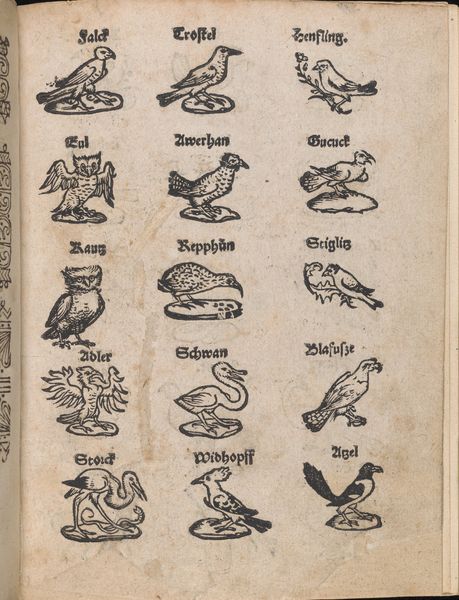
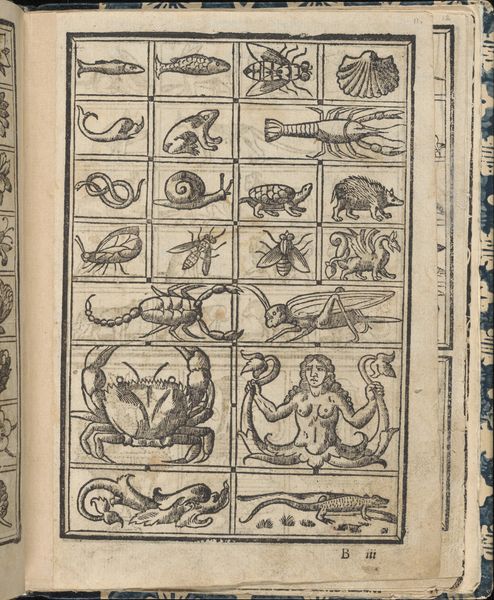
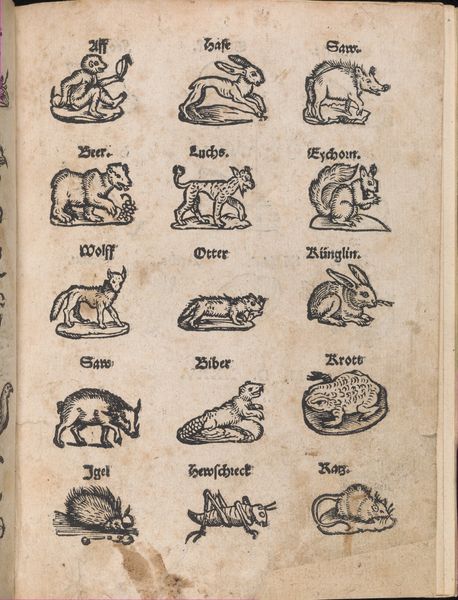
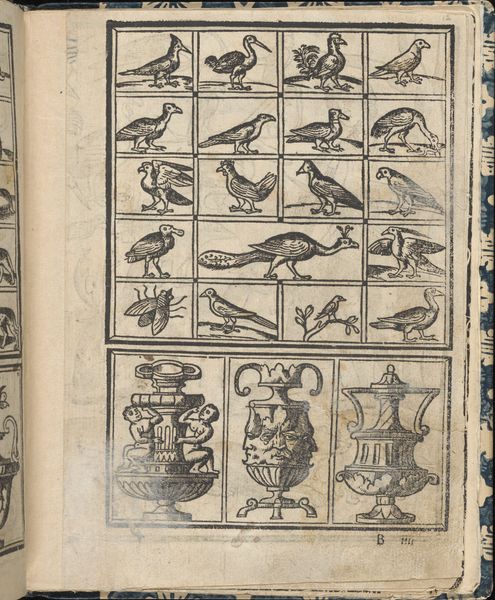
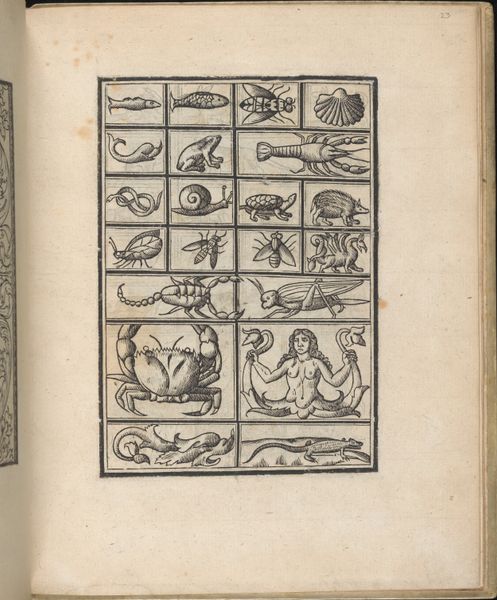
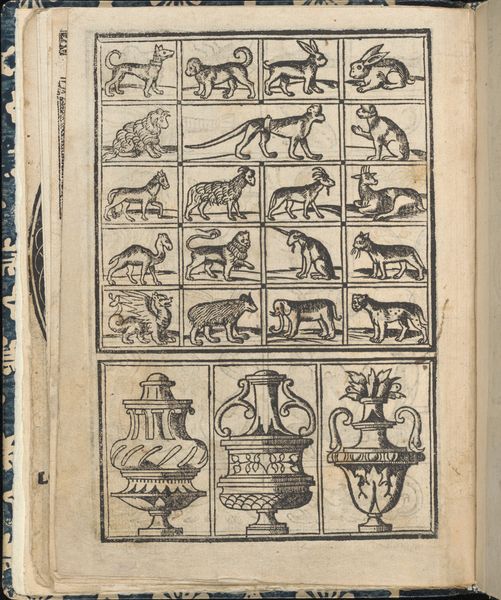
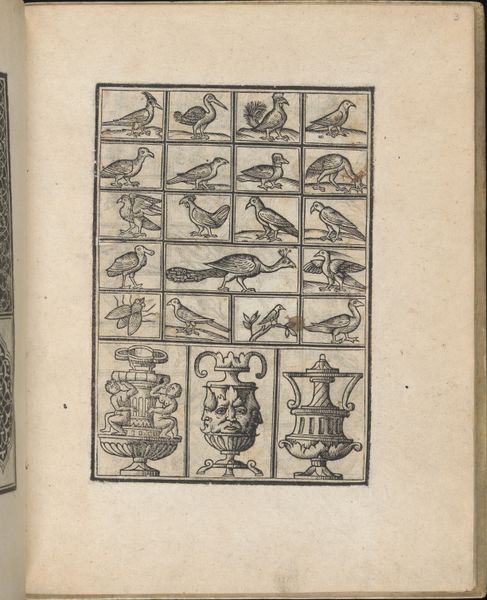
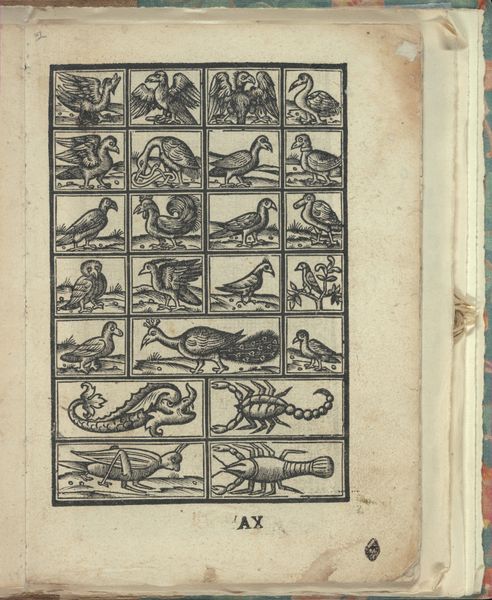
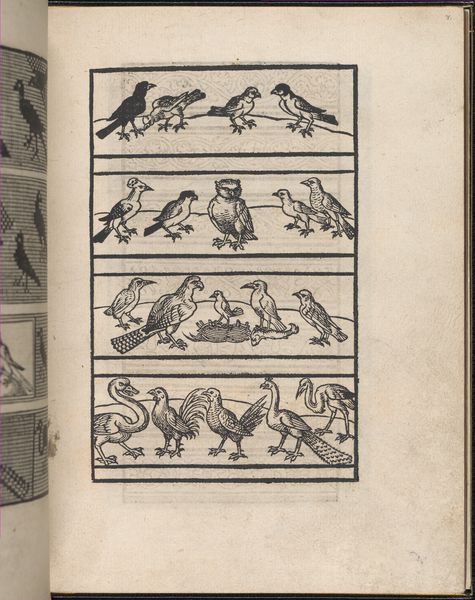
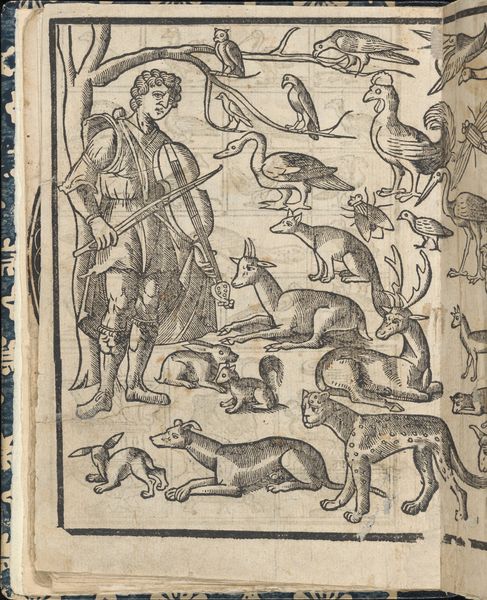
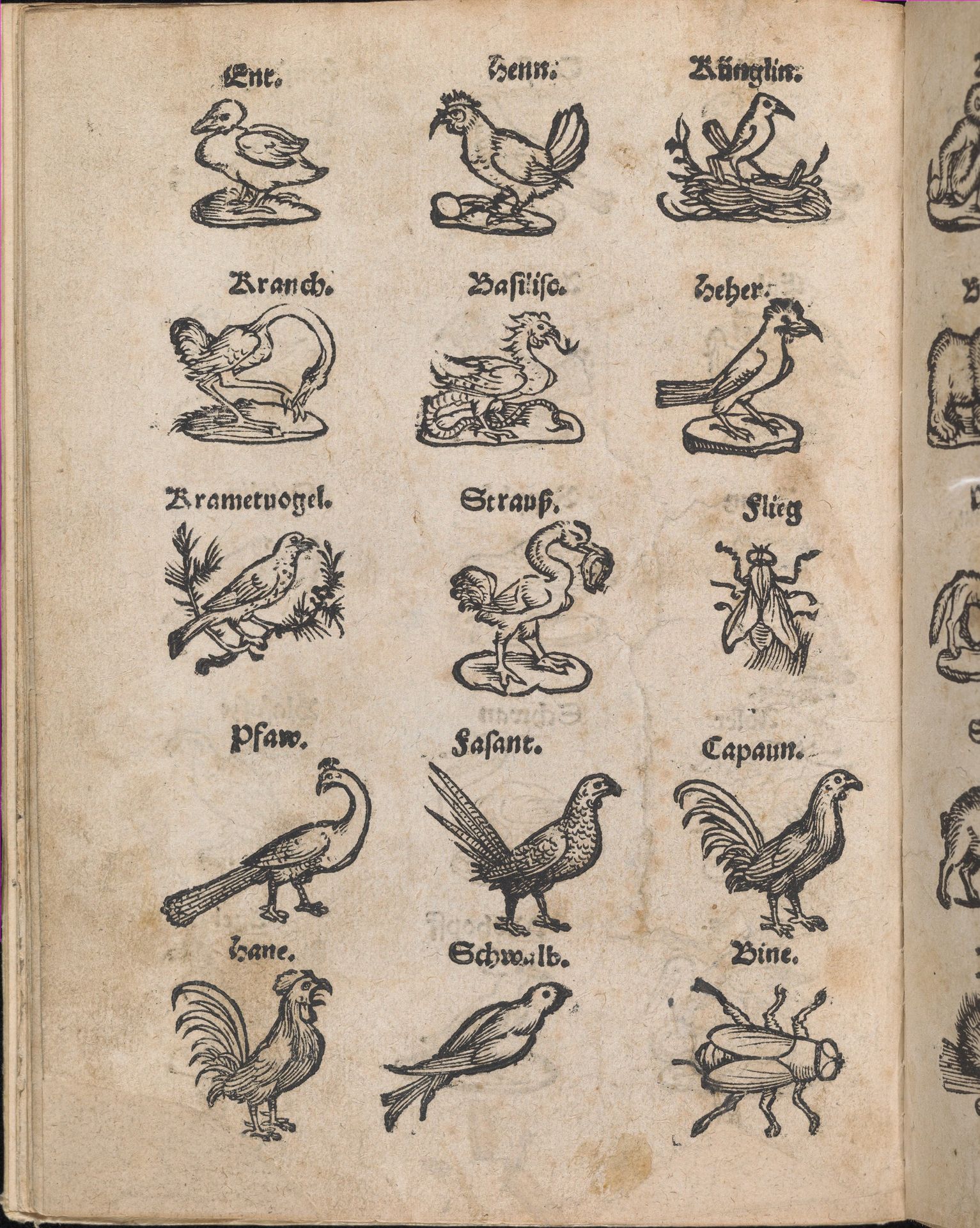
This woodcut, printed by Christian Egenolff, is a page from a 16th-century embroidery pattern book showing various animals. A basilisk, for example, with its serpentine body and rooster's head, embodies the fearsome power of myth, symbolizing death and evil. Consider the presence of birds – the hen, the swallow, the peacock – each carries symbolic weight. The peacock, often associated with vanity and pride, is a motif that transcends cultures, appearing in Roman mosaics and Renaissance paintings alike. This imagery, rich with association, has resonated through history, often linked to social status. These images are not merely decorative; they tap into our collective memory, stirring emotions and instincts passed down through generations. The repetition and adaptation of these animal motifs, across time and cultures, reveal the powerful, unconscious forces that shape our visual world. This illustrates the enduring legacy of symbols and their capacity to evoke profound psychological responses.