About this artwork
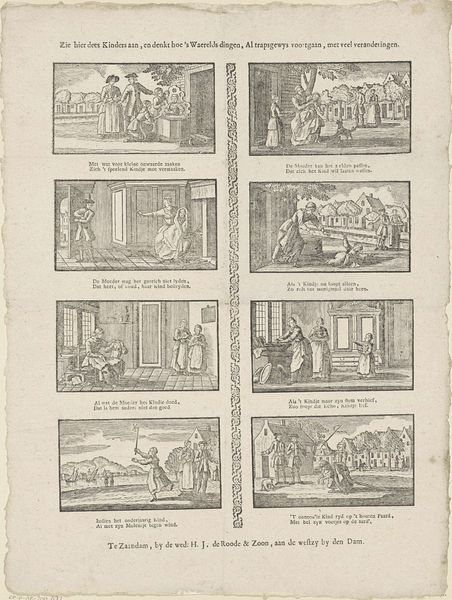
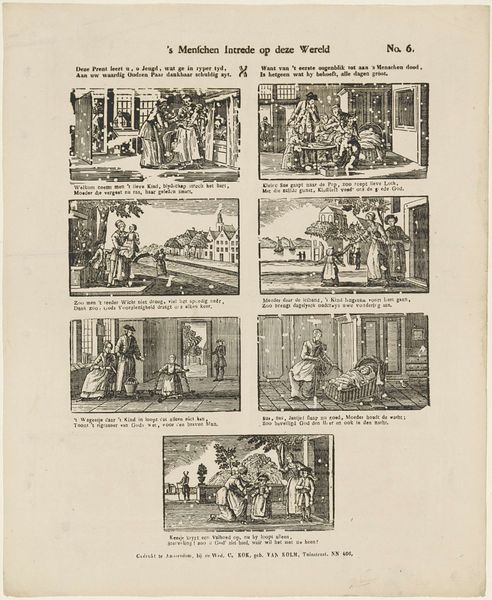
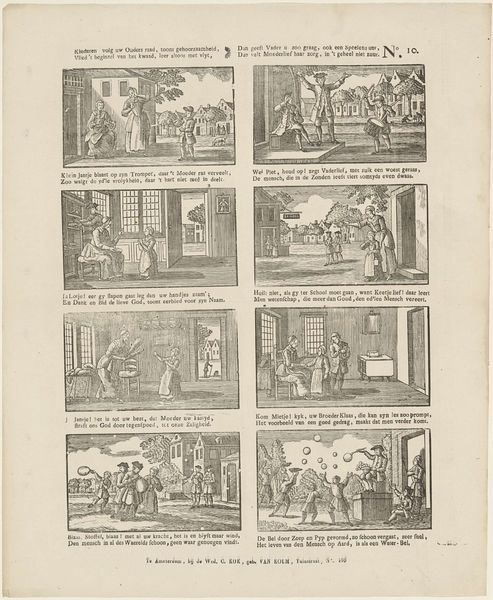
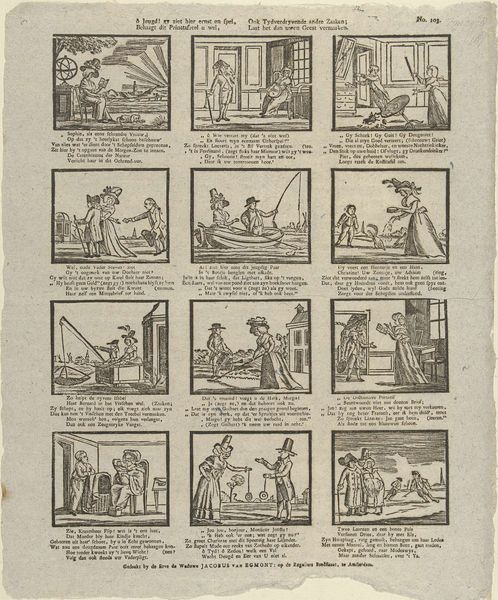
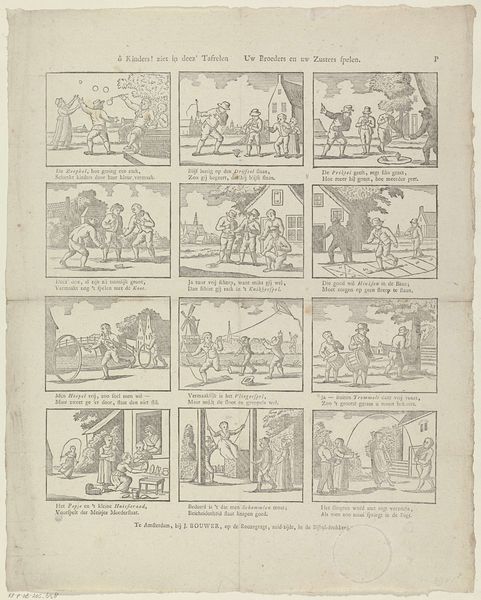
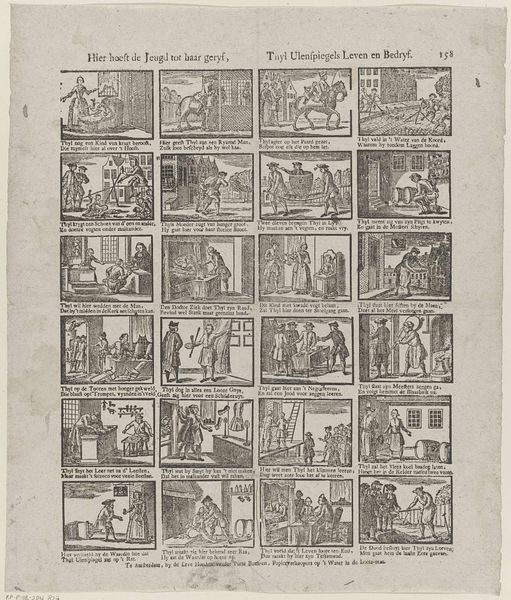
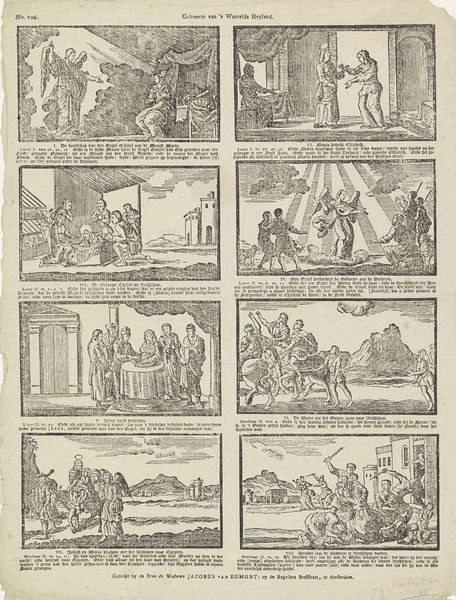
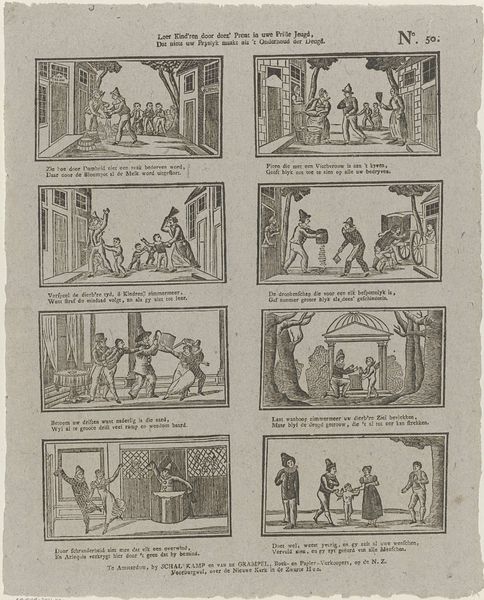
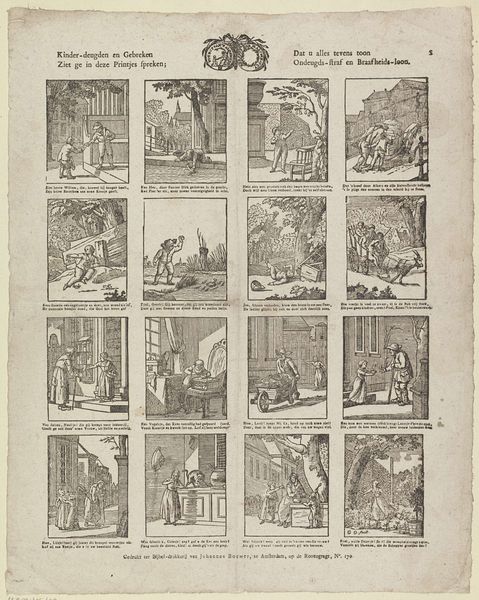
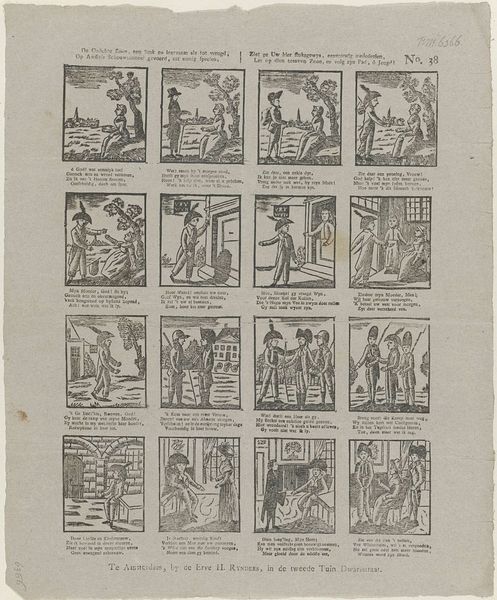
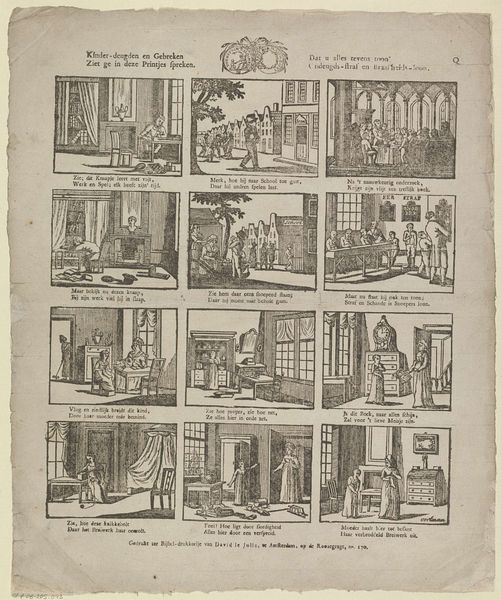
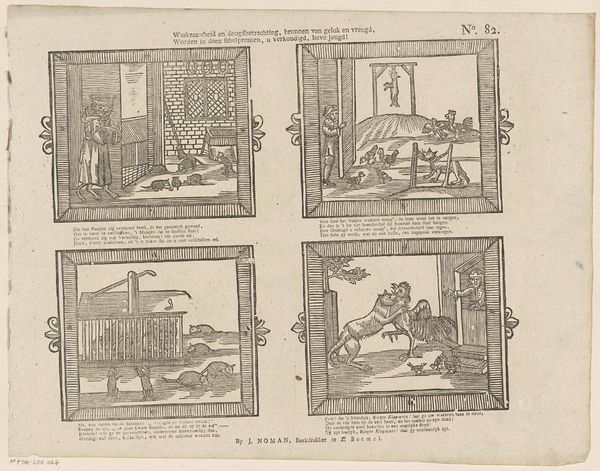
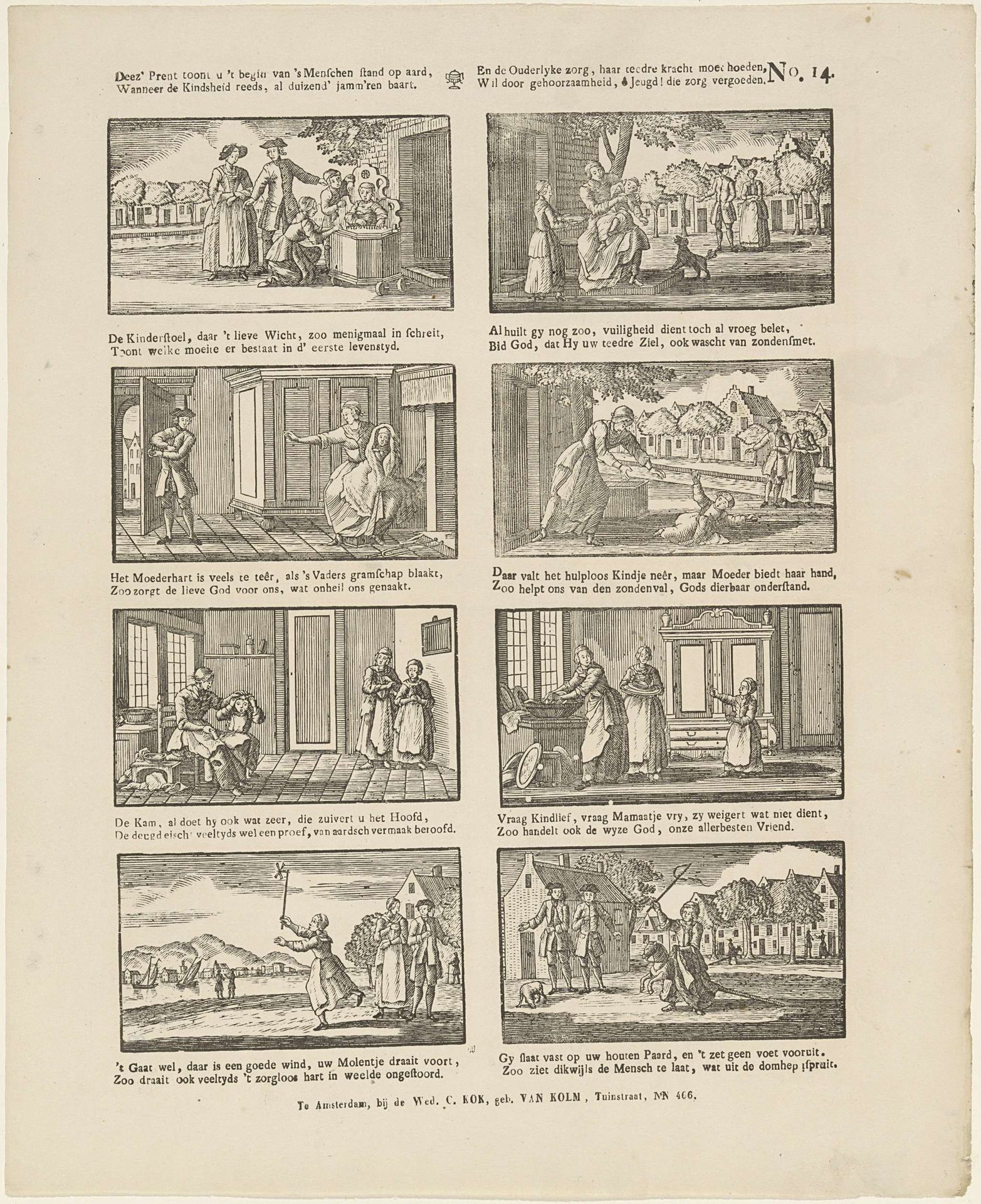
This undated print, made by weduwe C. Kok-van Kolm, visualizes the different stages of childhood. The work presents a series of vignettes, each accompanied by a descriptive verse. The images evoke a sentimental view of childhood, yet hints of the social and moral expectations placed upon children are also visible. Scenes range from parental care to religious instruction, revealing the complex roles children were expected to fulfill in 18th-century Dutch society. Consider the artist's position as a widow managing a printmaking business. Her personal experiences likely shaped her perspective on family and childhood, influencing the themes and emotions conveyed in the artwork. The verses accompanying each scene emphasize obedience, piety, and diligence, reinforcing the values that were crucial for children growing up in this era. Although seemingly simple, this print offers insight into the intertwined ideals, responsibilities, and emotional landscapes of childhood, subtly reflecting the societal norms of its time.
Deez' prent toont u 't begin van 's Menschen stand op aard, / Wanneer de kindsheid reeds, al duizend' jamm'ren baart. / En de ouderlyke zorg, haar teedere kracht moet hoeden, / Wil door gehoorzaamheid, ô jeugd! die zorg vergoeden 1842 - 1866

weduwe C. Kok-van Kolm
@weduweckokvankolmLocation
RijksmuseumArtwork details
- Medium
- print, engraving
- Dimensions
- height 390 mm, width 319 mm
- Location
- Rijksmuseum
- Copyright
- Rijks Museum: Open Domain
Tags
narrative-art
dutch-golden-age
genre-painting
engraving
Comments
No comments
About this artwork
This undated print, made by weduwe C. Kok-van Kolm, visualizes the different stages of childhood. The work presents a series of vignettes, each accompanied by a descriptive verse. The images evoke a sentimental view of childhood, yet hints of the social and moral expectations placed upon children are also visible. Scenes range from parental care to religious instruction, revealing the complex roles children were expected to fulfill in 18th-century Dutch society. Consider the artist's position as a widow managing a printmaking business. Her personal experiences likely shaped her perspective on family and childhood, influencing the themes and emotions conveyed in the artwork. The verses accompanying each scene emphasize obedience, piety, and diligence, reinforcing the values that were crucial for children growing up in this era. Although seemingly simple, this print offers insight into the intertwined ideals, responsibilities, and emotional landscapes of childhood, subtly reflecting the societal norms of its time.
Comments
No comments