silver, metal
#
silver
#
metal
#
united-states
#
decorative-art
Dimensions: 3 7/8 x 4 7/8 in. (9.84 x 12.38 cm)
Copyright: Public Domain
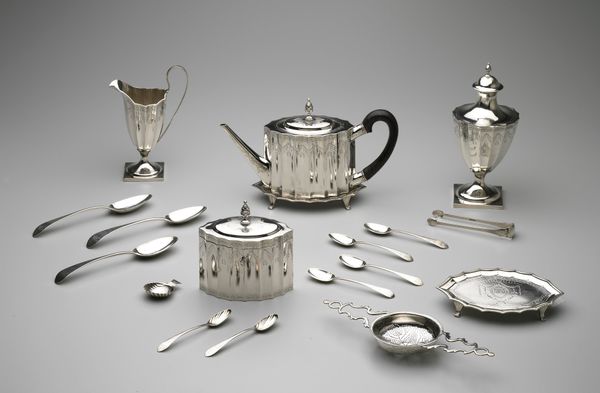
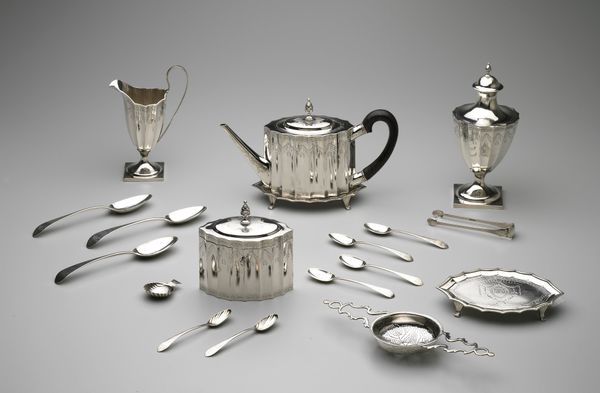
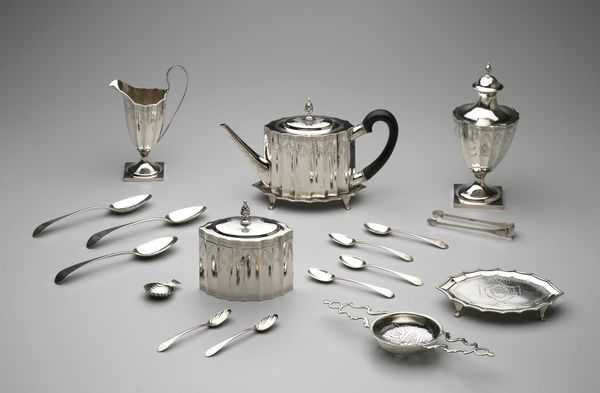
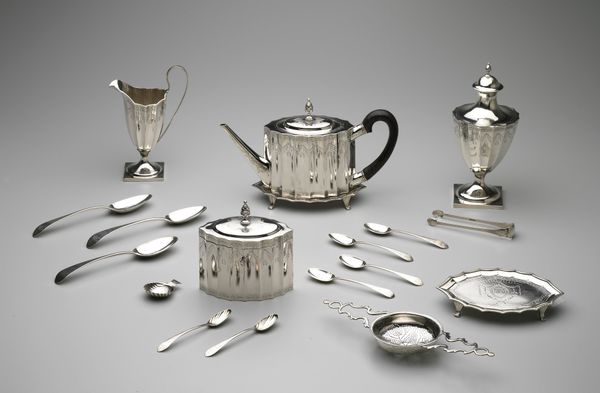
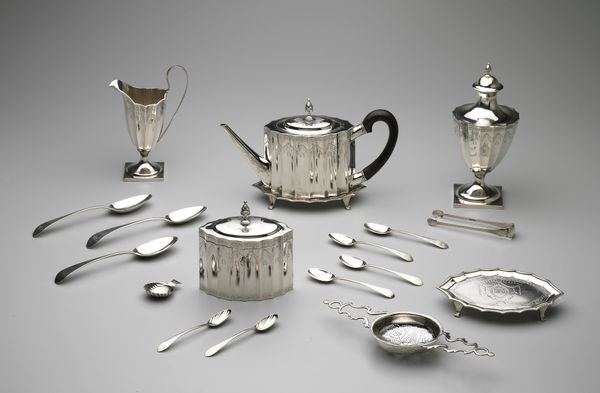
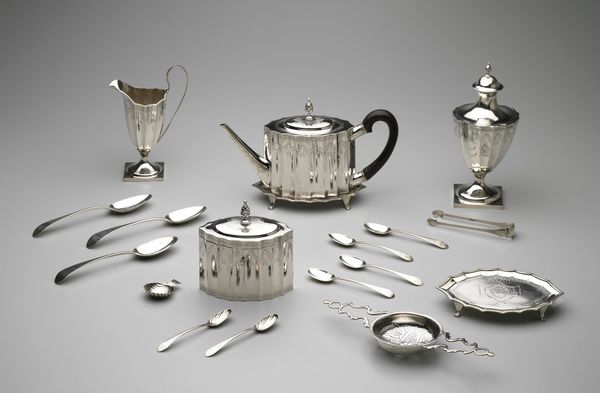
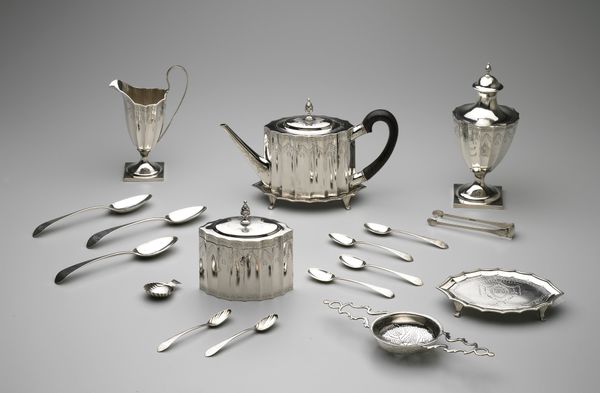
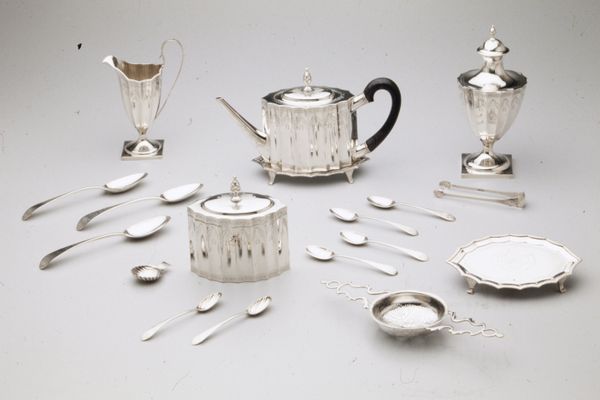
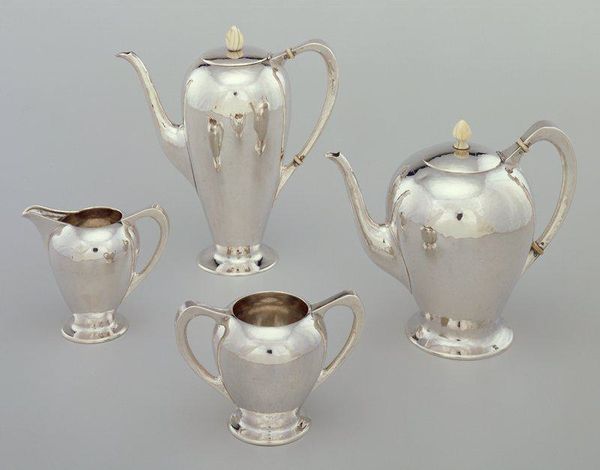
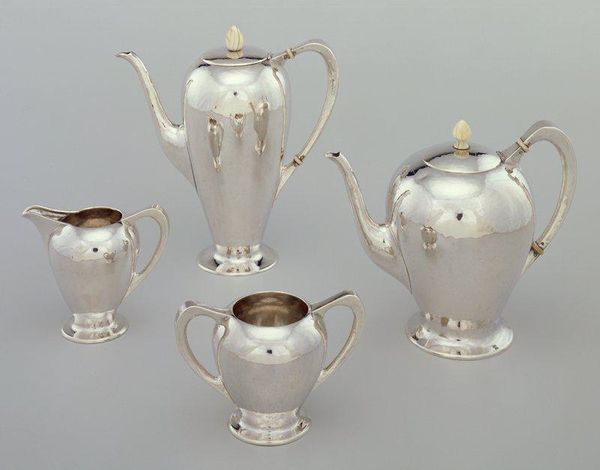
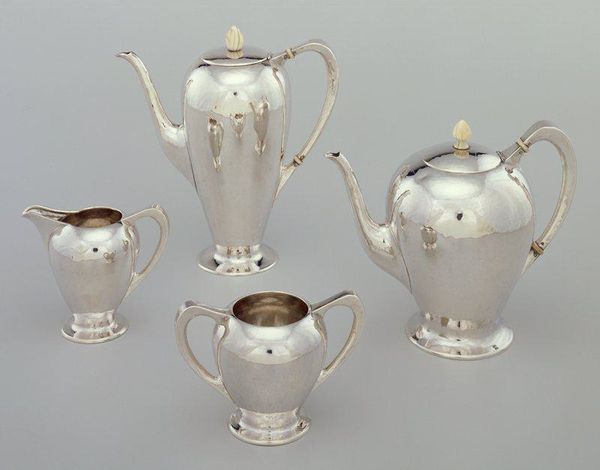
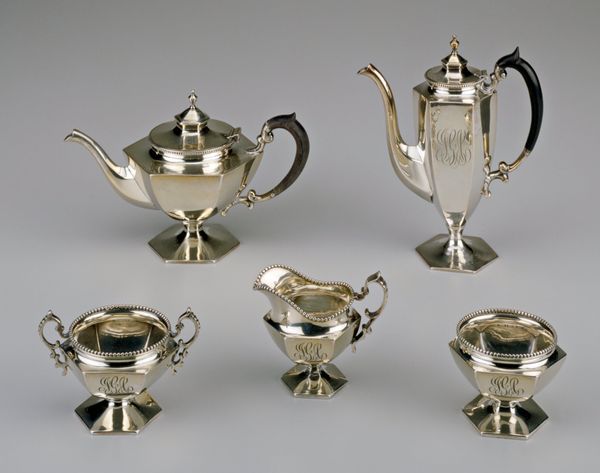
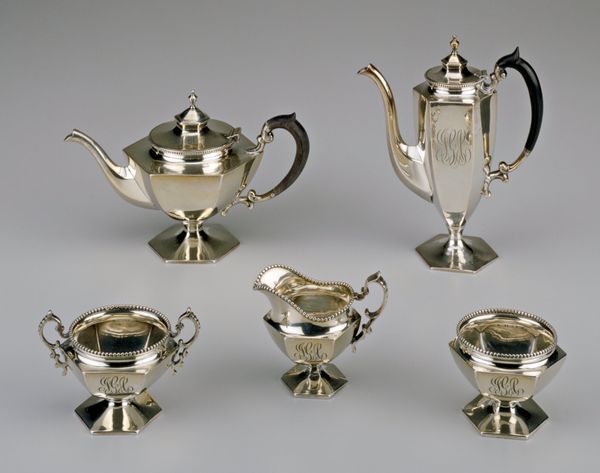
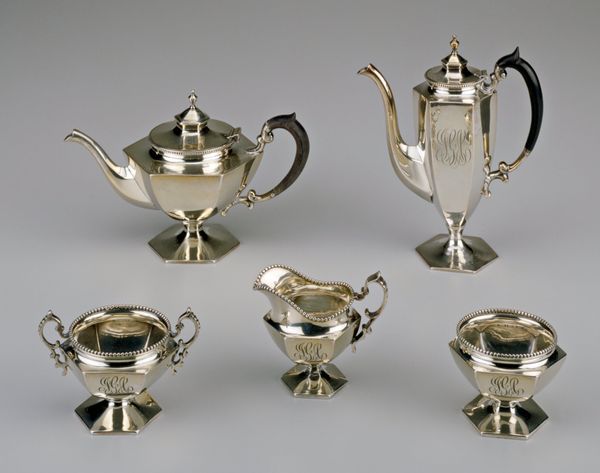
This teapot stand was created by Paul Revere, an American silversmith best known for his role in the Revolutionary War. The stand, along with the teapot, sugar pot, and other accoutrements, is made from sterling silver. Silver is a soft, workable metal, perfect for intricate designs, as you can see in the fluted surfaces and engraved details. It begins as a dull grey, but can be brought to a high shine with patient polishing. Revere would have used hammers, chisels, and engraving tools to give form to the metal. These techniques required immense skill and control, and silversmiths invested years of their lives to gain these abilities. Notably, the silver itself would have been sourced through complex trade networks. Once formed, the teapot service would have graced the tables of wealthy colonists, signalling their status and taste, acquired at the expense of many hands along the way. Examining objects like these helps us to understand the material culture of early America, along with the relationship between artistry, labor, and consumption.
Comments

minneapolisinstituteofart about 2 years ago
⋮
The most complete Revere service known, this set was made for a Boston merchant and his wife, John and Mehitable Templeman. It includes one of only two tea caddies made by Revere. The locked boxes held loose tea, an expensive and fashionable commodity. The shell-shaped spoon was used for measuring tea and the sieve was used for straining punch, a beverage often served along with tea. The second stand may have been used as a tray for spoons no longer in use. The accompanying teaspoons and tablespoons have only recently been reunited with this service.


Join the conversation
Join millions of artists and users on Artera today and experience the ultimate creative platform.
 Collect
More like this