About this artwork
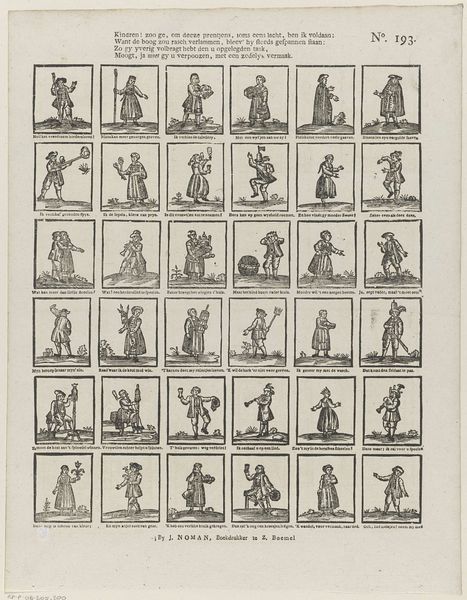
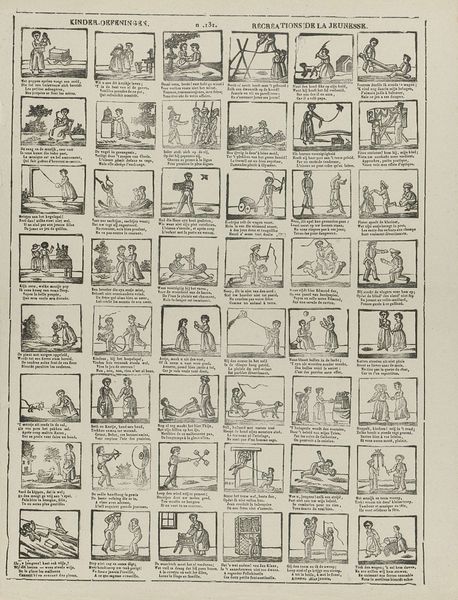
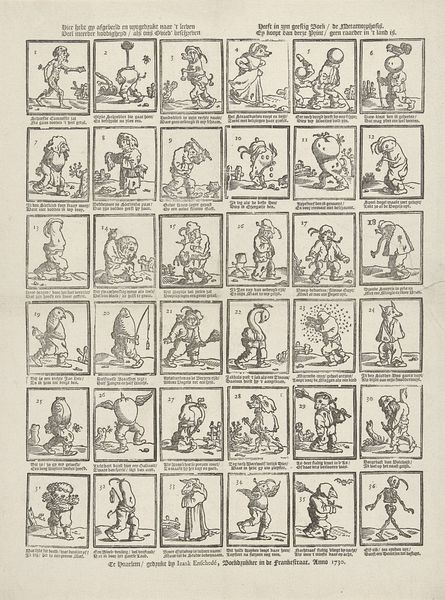
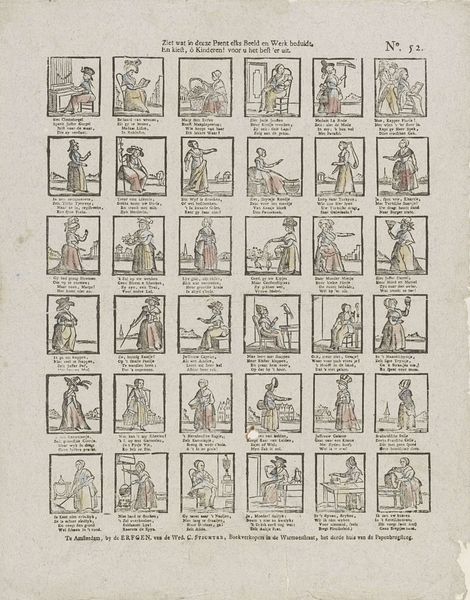
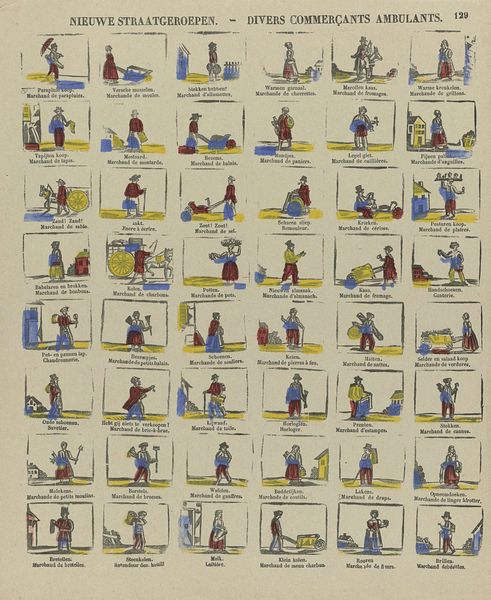
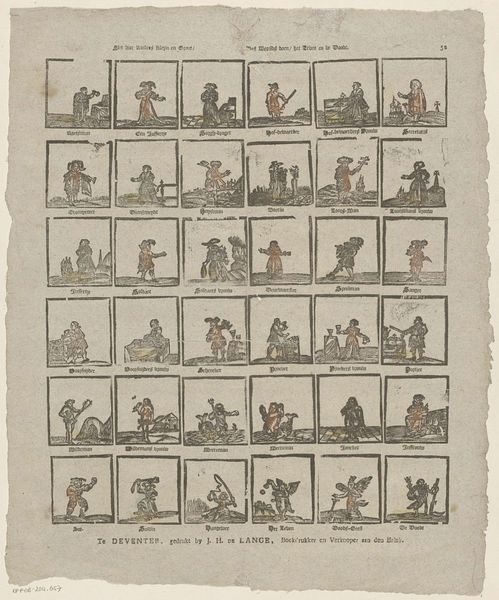
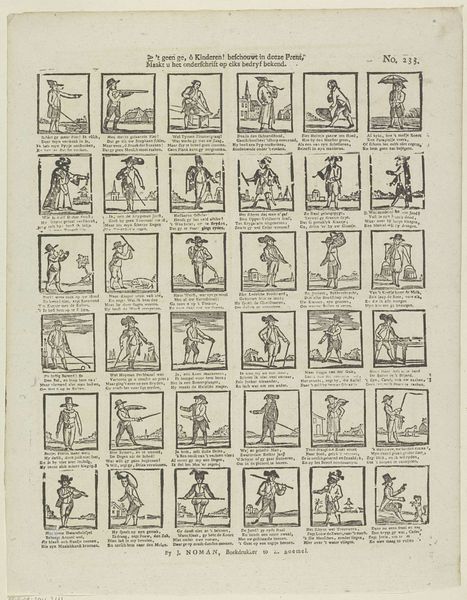
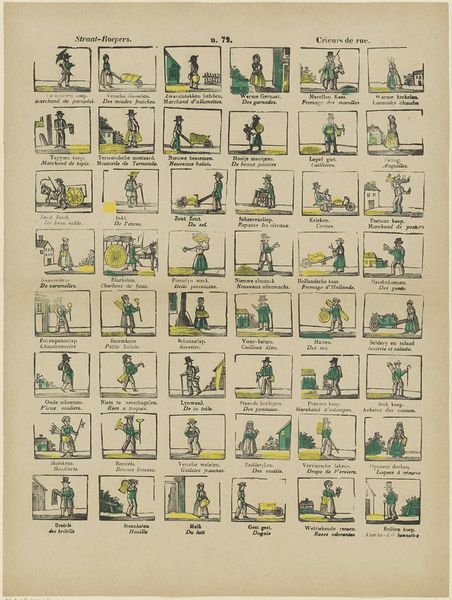
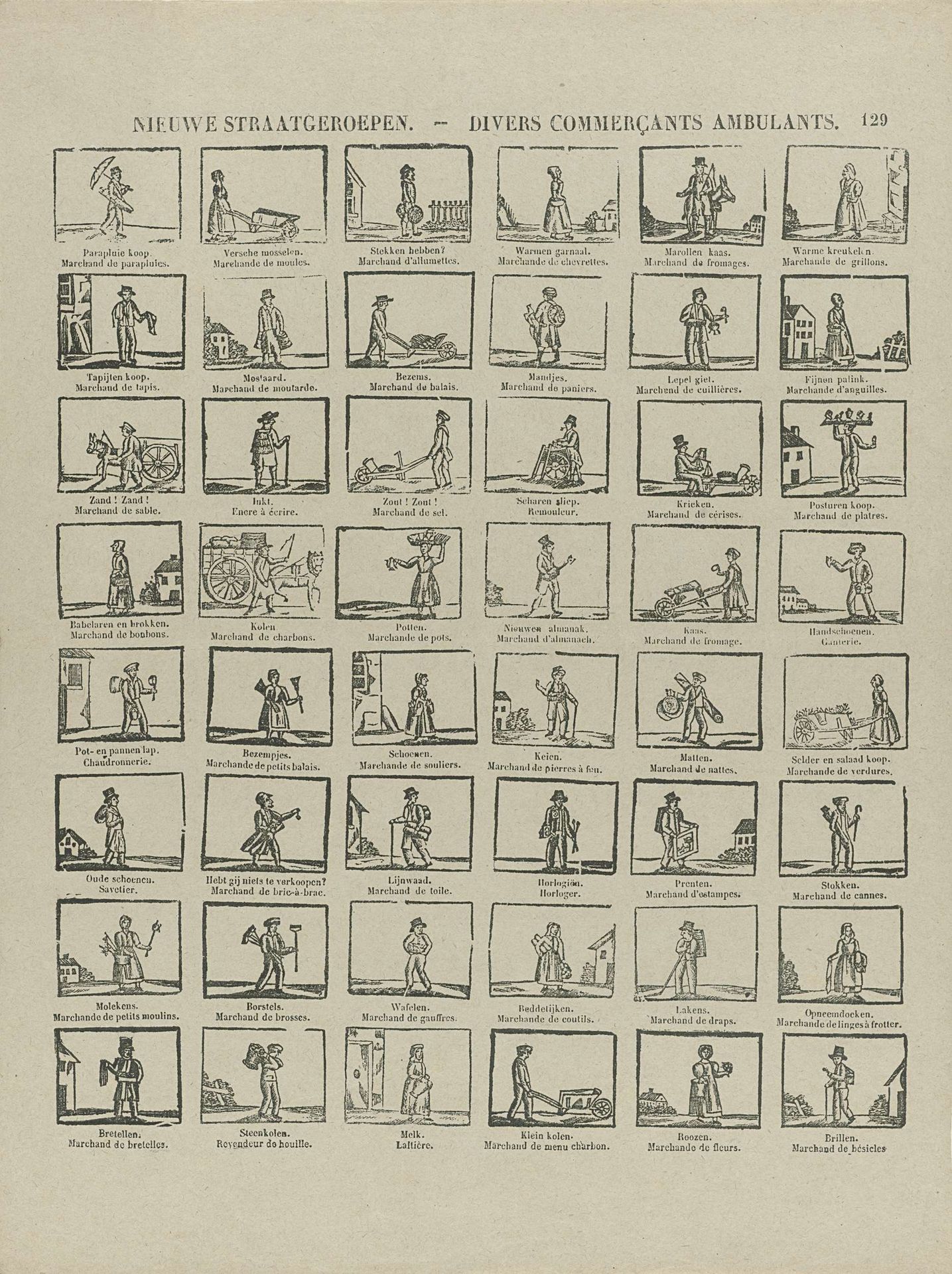
This print, made by Philippus Jacobus Brepols, depicts street vendors in the Netherlands. It gives us a glimpse into the sights and sounds of daily life during the late 18th and early 19th centuries. Arranged in a grid, each small scene shows a different vendor with their wares. We see knife sharpeners, chimney sweeps, booksellers, and sellers of old clothes all going about their trades. The print is titled “New Street Cries,” which are the calls vendors made to attract customers. These vendors weren’t just selling goods, they were a vital part of the social fabric, bringing news and connecting neighborhoods. Looking at this image, we can see how economic activity shaped public spaces. Prints like this circulated widely at the time, reflecting both an interest in the lives of ordinary people and a way of cataloging different social types. Understanding this print requires us to look beyond its surface. By researching historical records, such as guild regulations and city ordinances, we can learn more about the lives and labor of these street vendors and their role within the broader economy.
Nieuwe straatgeroepen / Divers commerçants ambulants
1800 - 1833

Philippus Jacobus Brepols
1778 - 1845Location
RijksmuseumArtwork details
- Medium
- drawing, print, pen, engraving
- Dimensions
- height 425 mm, width 319 mm
- Location
- Rijksmuseum
- Copyright
- Rijks Museum: Open Domain
Tags
Comments
Share your thoughts
About this artwork
This print, made by Philippus Jacobus Brepols, depicts street vendors in the Netherlands. It gives us a glimpse into the sights and sounds of daily life during the late 18th and early 19th centuries. Arranged in a grid, each small scene shows a different vendor with their wares. We see knife sharpeners, chimney sweeps, booksellers, and sellers of old clothes all going about their trades. The print is titled “New Street Cries,” which are the calls vendors made to attract customers. These vendors weren’t just selling goods, they were a vital part of the social fabric, bringing news and connecting neighborhoods. Looking at this image, we can see how economic activity shaped public spaces. Prints like this circulated widely at the time, reflecting both an interest in the lives of ordinary people and a way of cataloging different social types. Understanding this print requires us to look beyond its surface. By researching historical records, such as guild regulations and city ordinances, we can learn more about the lives and labor of these street vendors and their role within the broader economy.
Comments
Share your thoughts