About this artwork
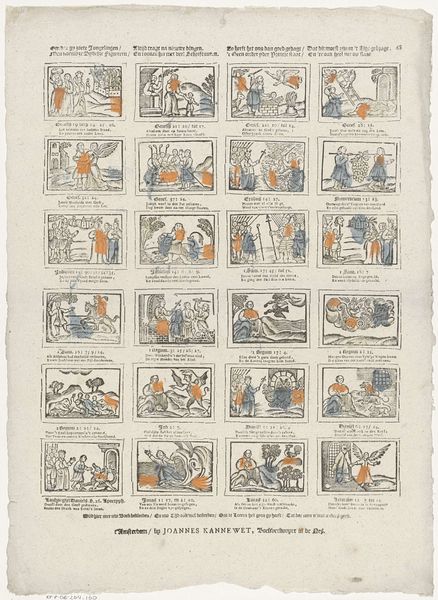
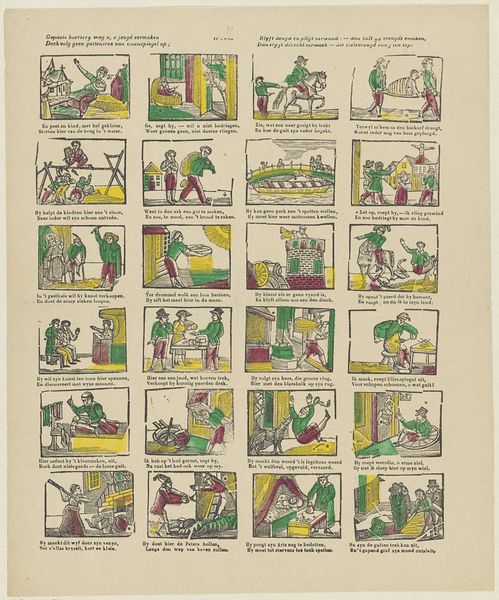
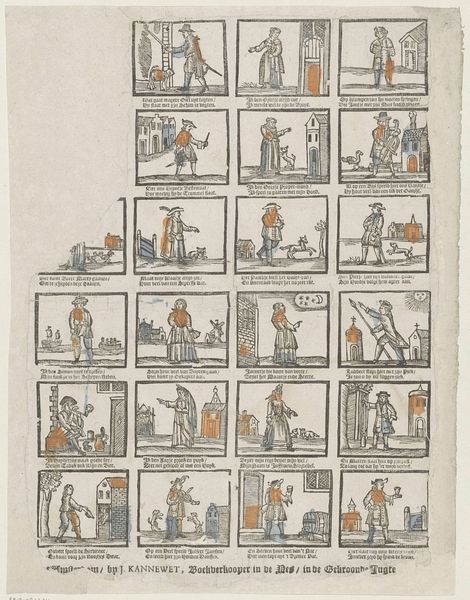
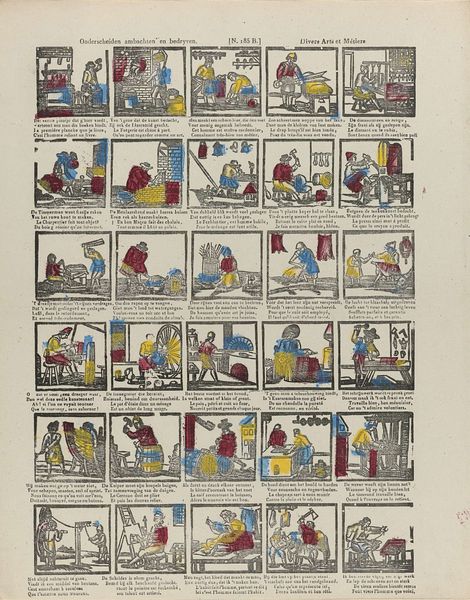
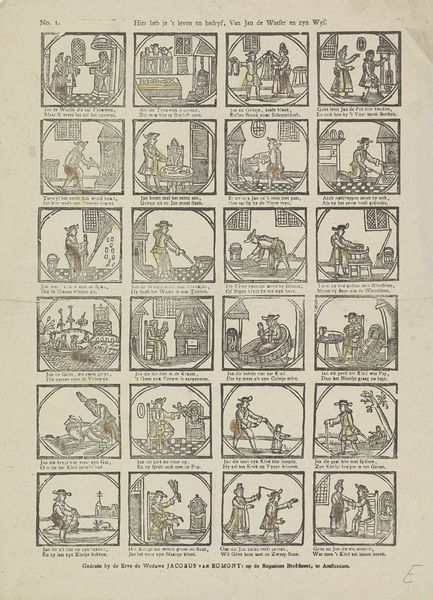
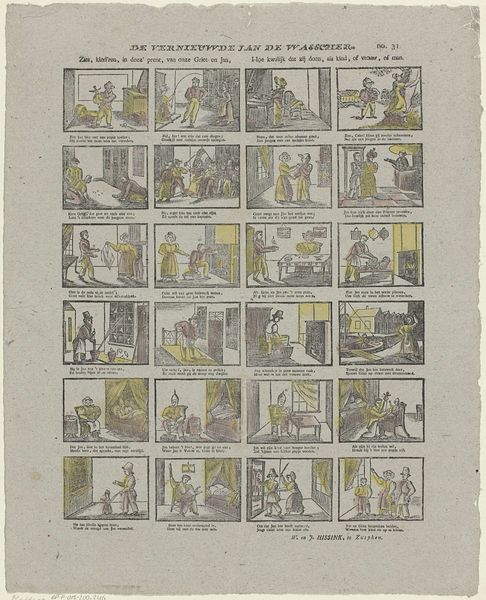
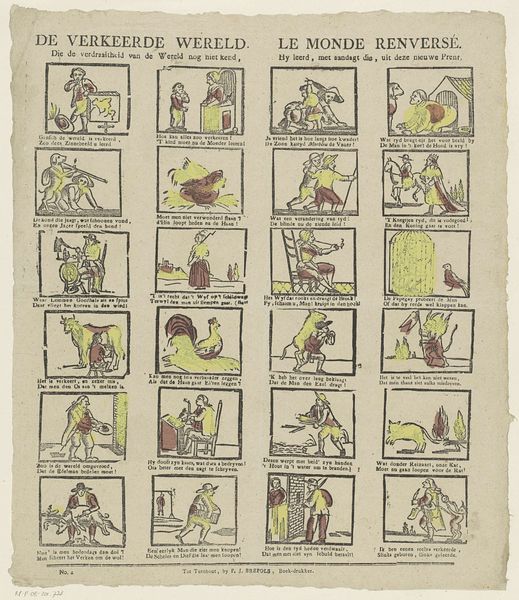
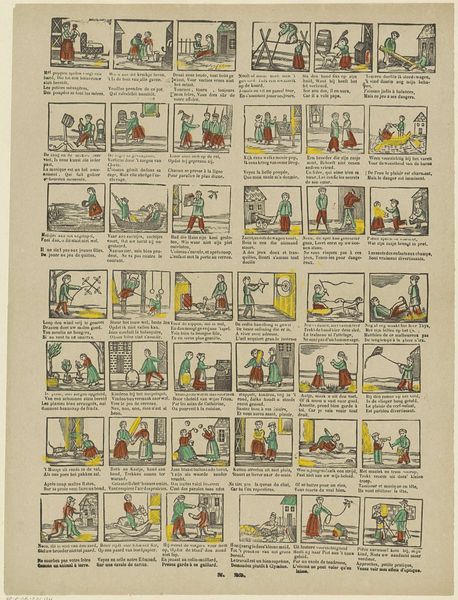
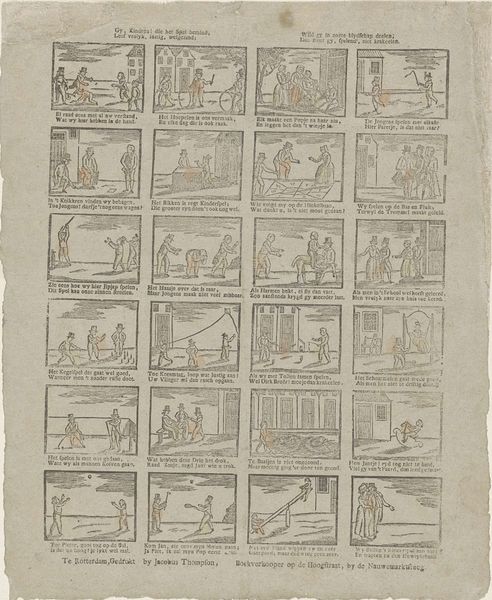
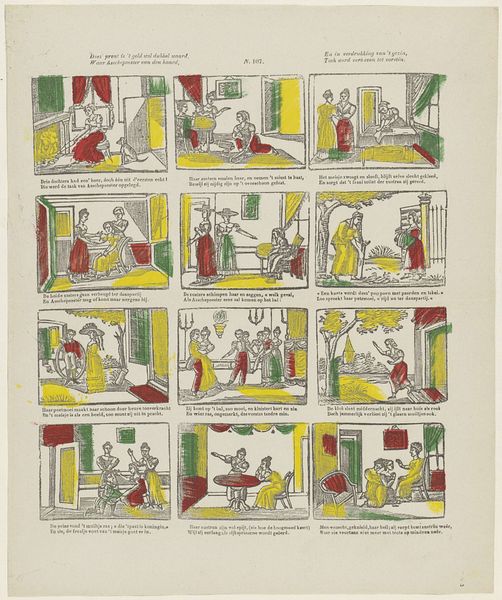
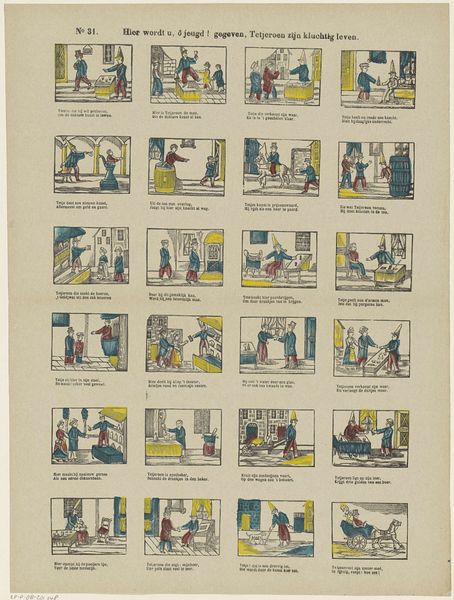
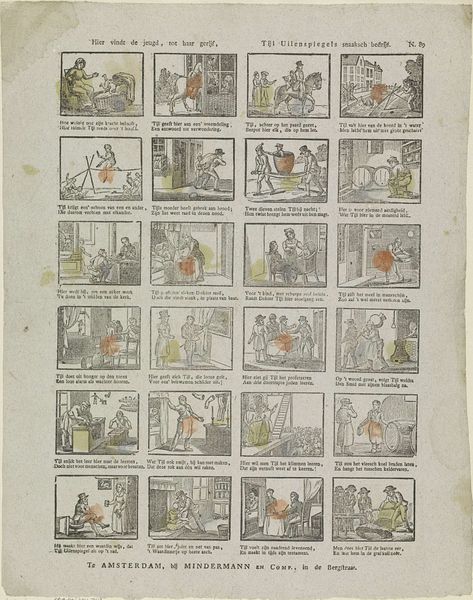
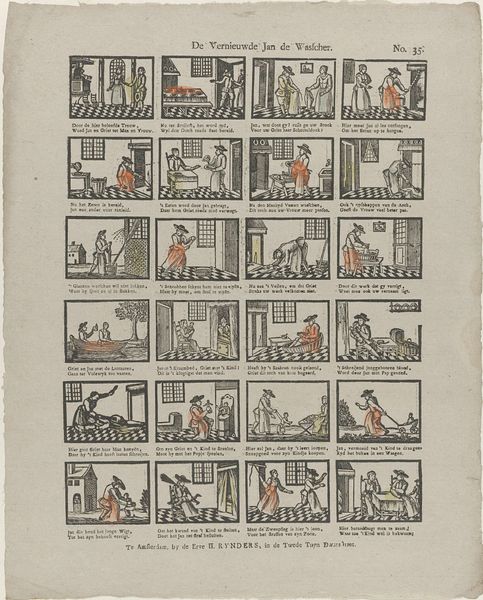
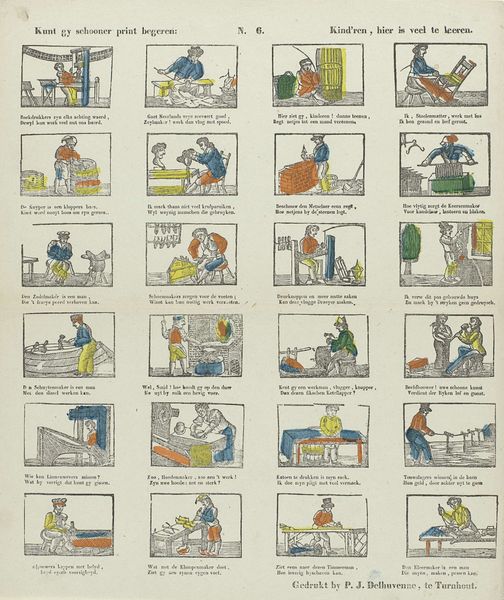
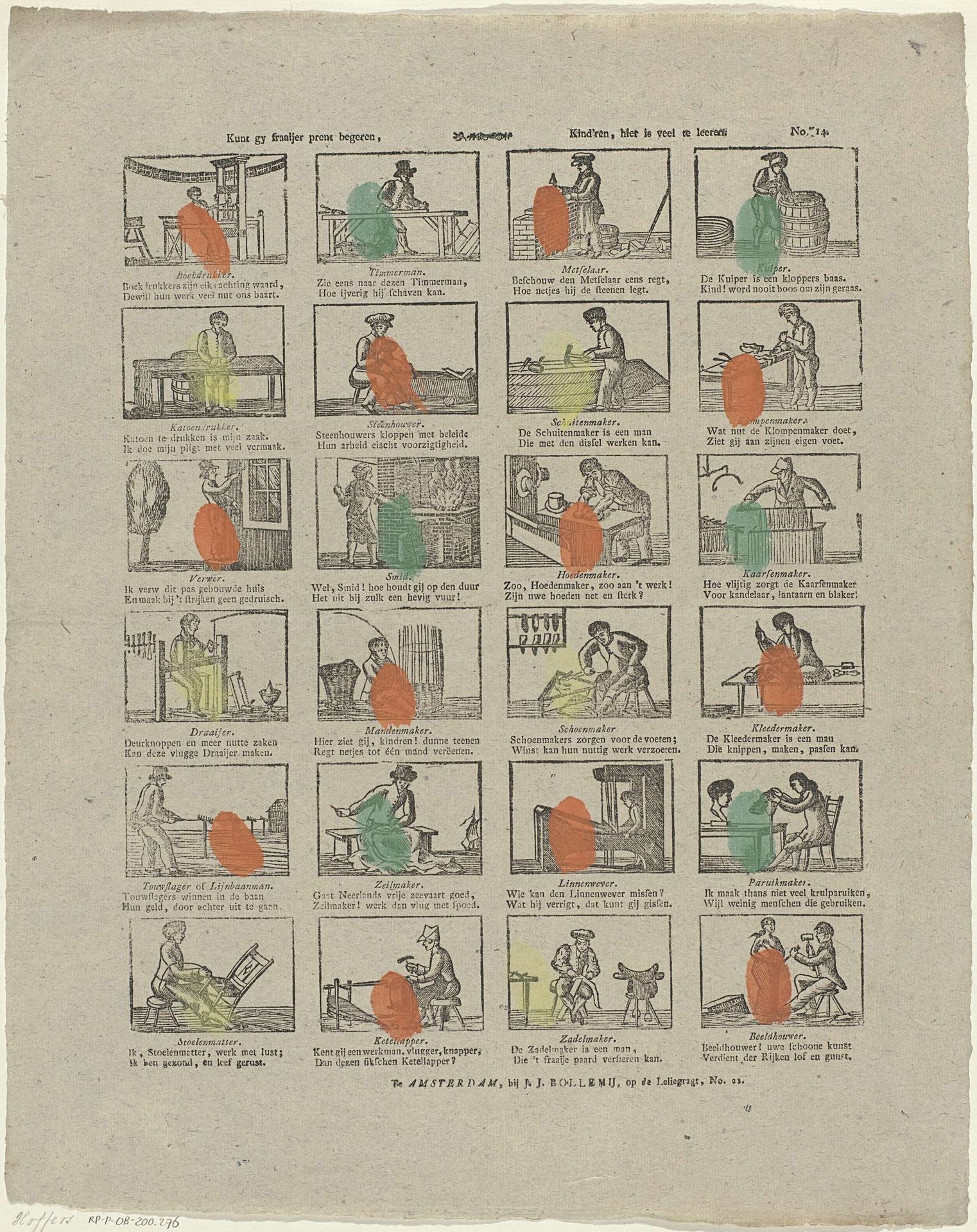
This hand-colored etching, whose title translates to ‘Can you desire a finer print? Children, here is much to learn!’, was made around the late 18th or early 19th century by Christiaan Jacob Schuyling. Each little tableau shows someone at work, and the image bears witness to the social landscape of the early industrial era. From the weaver at his loom to the shoemaker, nail-maker, and cooper, trades of all kinds are represented. The repetitive, linear nature of etching seems particularly appropriate to this subject matter, which emphasizes a social order built around labor, commerce, and civic duty. The artist’s technique reflects the period’s growing interest in mass production and the commodification of images, making art accessible to a wider audience. But despite these radical shifts, the image's emphasis on craft reminds us of the enduring human connection to the materials and processes that shape our world.
Kunt gij fraaijer prent begeeren? / Kindren, hier is veel te leeren?
1820 - 1848

Artwork details
- Medium
- graphic-art, print, etching, engraving
- Dimensions
- height 421 mm, width 339 mm
- Copyright
- Rijks Museum: Open Domain
Tags
Comments
Share your thoughts
About this artwork
This hand-colored etching, whose title translates to ‘Can you desire a finer print? Children, here is much to learn!’, was made around the late 18th or early 19th century by Christiaan Jacob Schuyling. Each little tableau shows someone at work, and the image bears witness to the social landscape of the early industrial era. From the weaver at his loom to the shoemaker, nail-maker, and cooper, trades of all kinds are represented. The repetitive, linear nature of etching seems particularly appropriate to this subject matter, which emphasizes a social order built around labor, commerce, and civic duty. The artist’s technique reflects the period’s growing interest in mass production and the commodification of images, making art accessible to a wider audience. But despite these radical shifts, the image's emphasis on craft reminds us of the enduring human connection to the materials and processes that shape our world.
Comments
Share your thoughts