drawing, paper, ink, pen
#
drawing
#
paper
#
ink
#
pen
#
calligraphy
Copyright: Rijks Museum: Open Domain
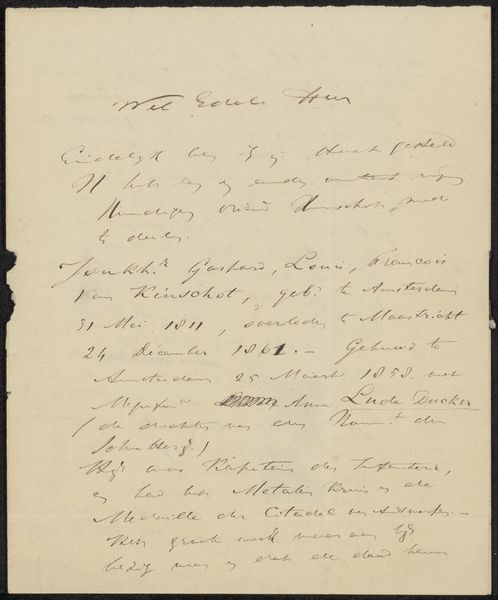
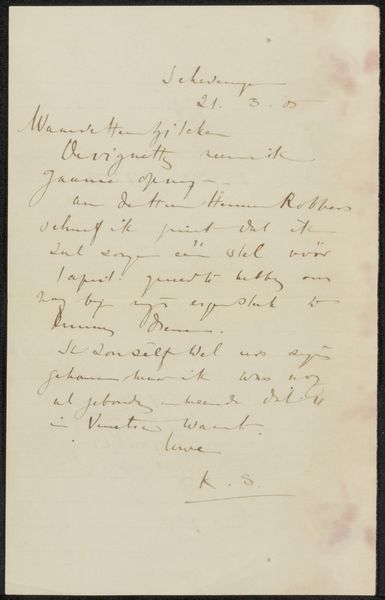
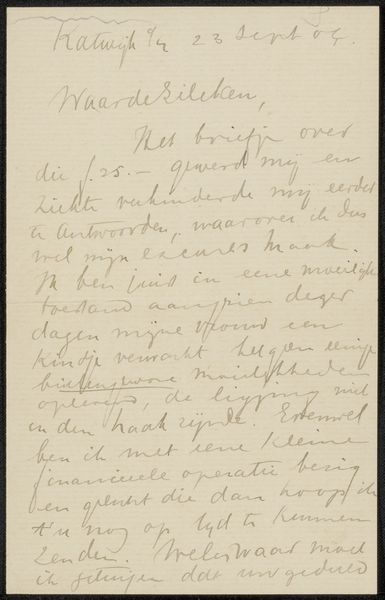
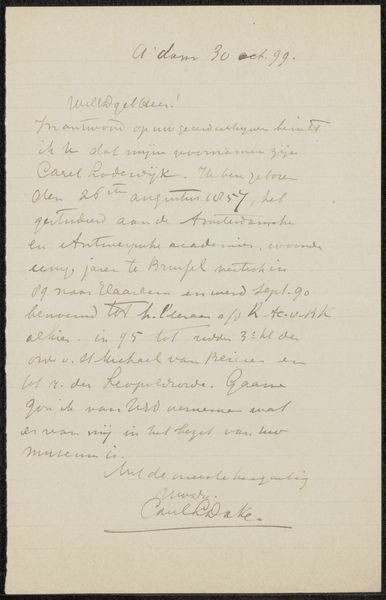
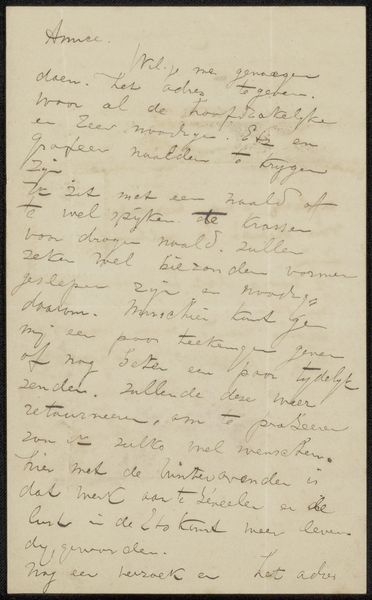
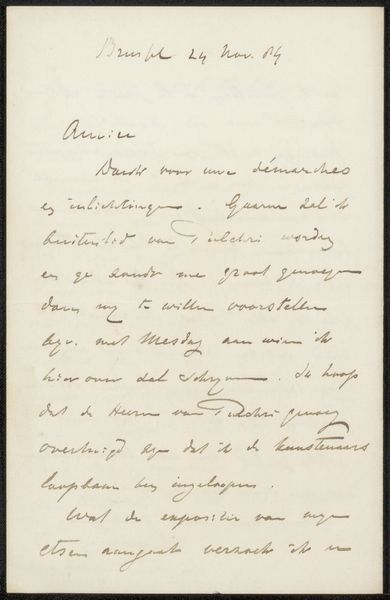
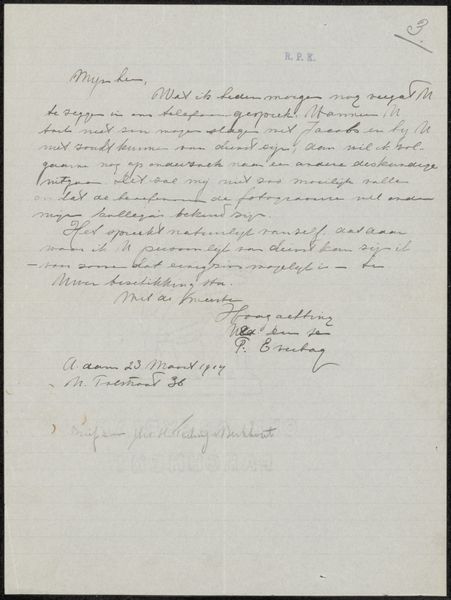
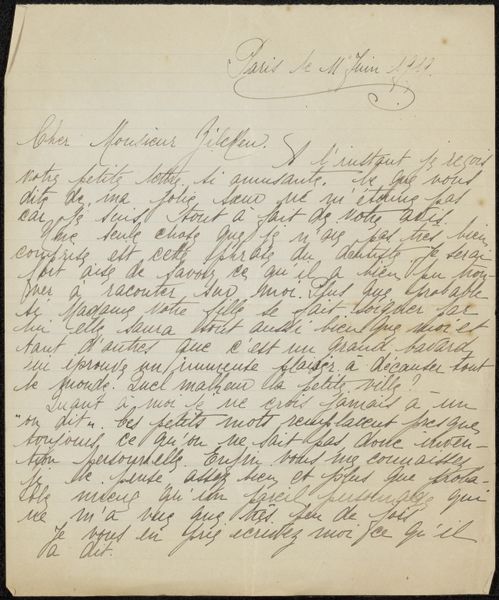
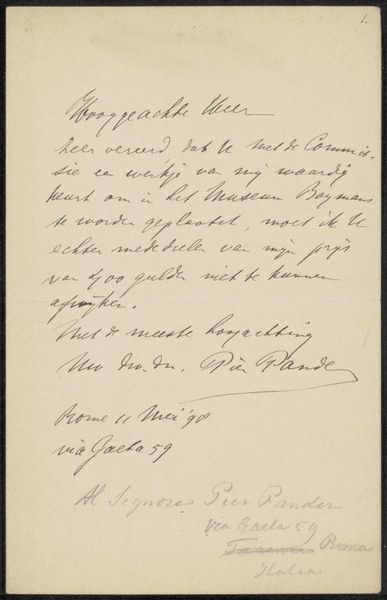
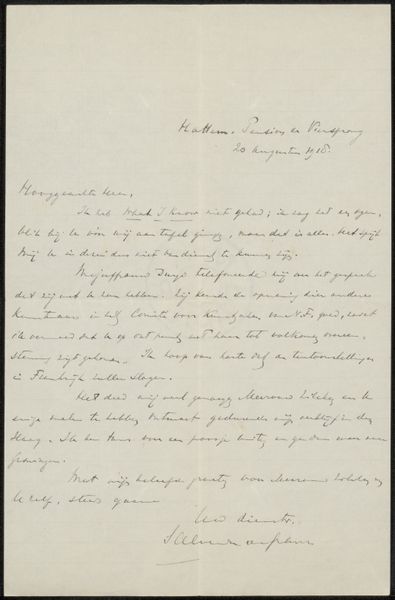
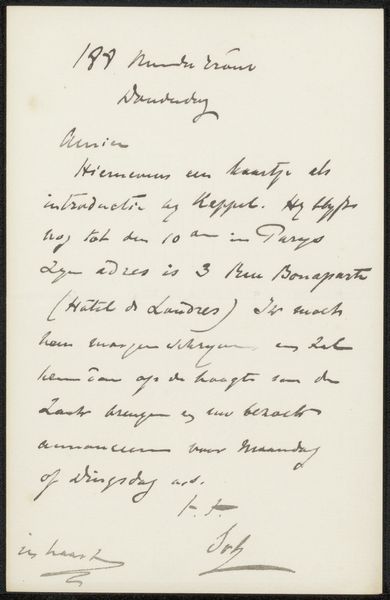
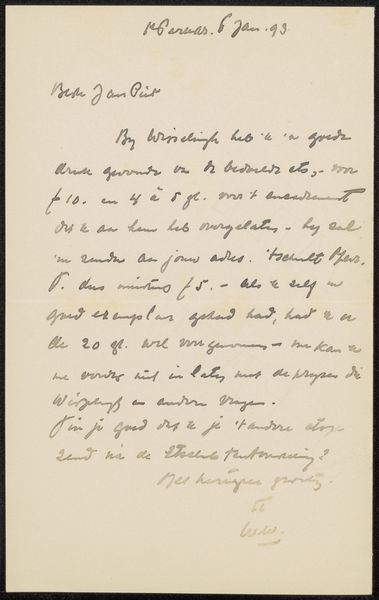
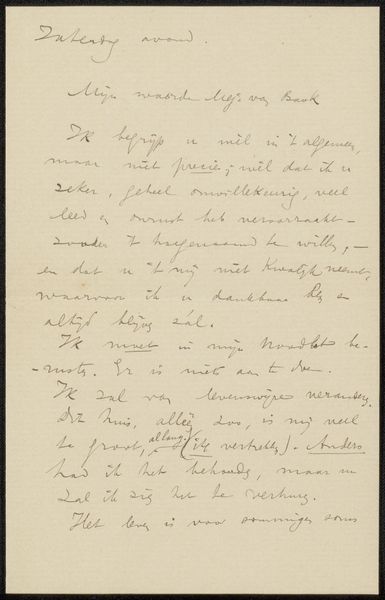
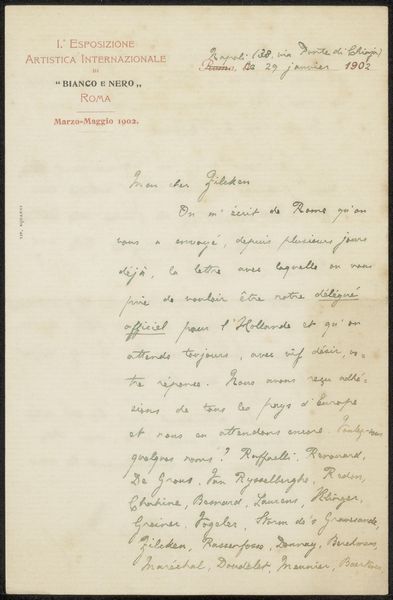
Curator: Immediately, I’m struck by the elegant simplicity of the calligraphy. There’s something inherently refined about handwritten correspondence. Editor: This is a letter, titled “Brief aan Philip Zilcken,” likely composed between 1892 and 1894, penned by Armand Heins. Crafted with pen and ink on paper, it’s a direct piece of history offering, perhaps, a glimpse into the artistic circles of its time. The heading, “Cercle Artistique & Littéraire de Gand,” suggests the letter’s origin within a literary and artistic society. Curator: Absolutely. The letterhead serves as a visual anchor, rooting the message in a specific time and place. Look at the flourishes; they seem to dance between formality and personal expression. The way the words are laid out visually suggests a unique sensibility—the hand betrays the personality of the artist even before we read the message itself. Editor: And reading it… or attempting to, provides another layer. Though not easily legible today, there are hints, with reference to “votre exposition d’eau-forte”— your exhibition of etchings, which is the context for the exchange. Perhaps this relates to some event within that society. Curator: "Exposition d'eau-forte". The recurring water, suggests fluidity and transformation, like the etching process itself. Maybe it alludes to something less literal: change, evolution in art… in taste... The price too has a psychological element – a declared $255 mark attached, signifying inherent value or future hope for the artworks being discussed in that exhibit. Editor: The "prix fixe", perhaps an offer was declined and they were discussing ways forward, from our current point of view it gives insights into commercial realities that affected all artists. In a letter, the handwriting itself can be a coded message of either openness or something veiled, and I sense the formal qualities. Curator: Indeed. As we look closer we begin to see each stroke, pause and imperfection revealing a story about social engagement from over a hundred years ago. This makes this letter more than simply communication on paper. Editor: It does feel this "Brief" communicates much more as a surviving document now rather than just its original intent; a potent symbol in this form of passing time itself and bearing history.
Comments
No comments
Be the first to comment and join the conversation on the ultimate creative platform.
 Collect
 React
React Comment
More like this