About this artwork
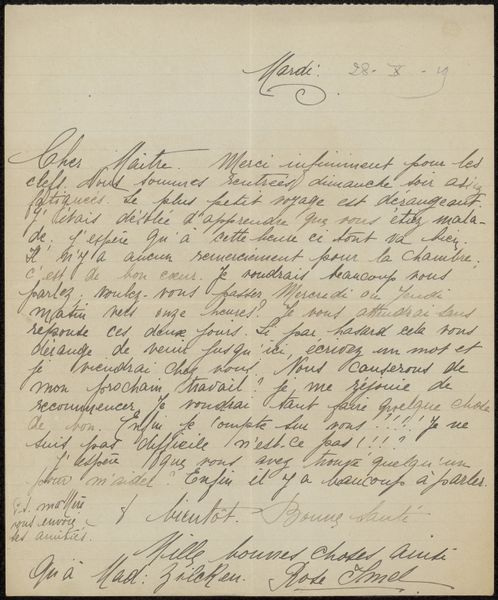
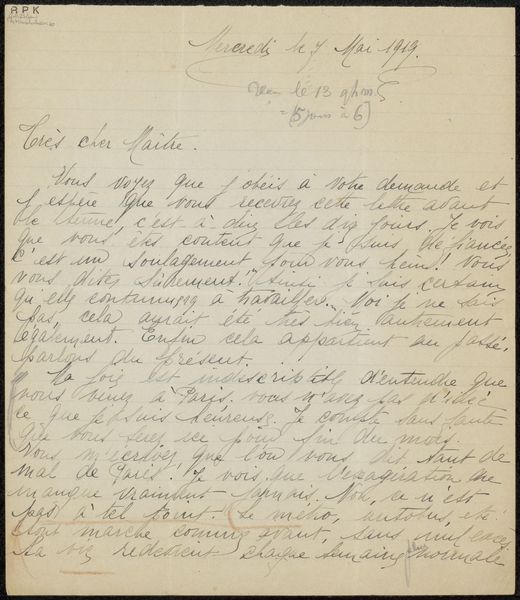
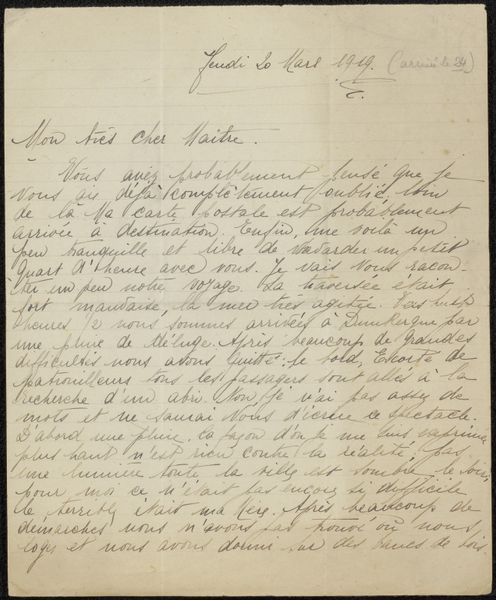
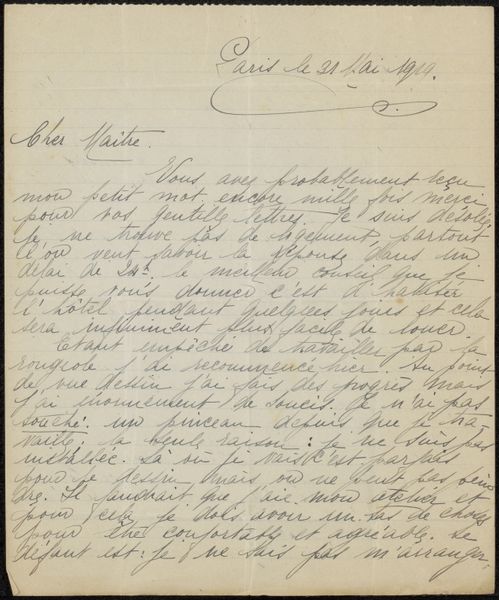
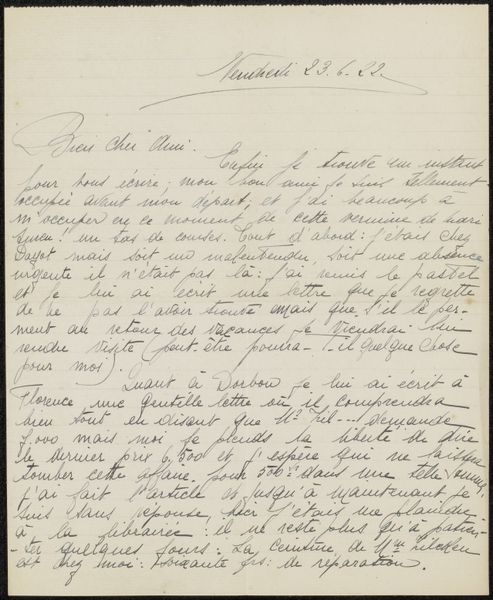
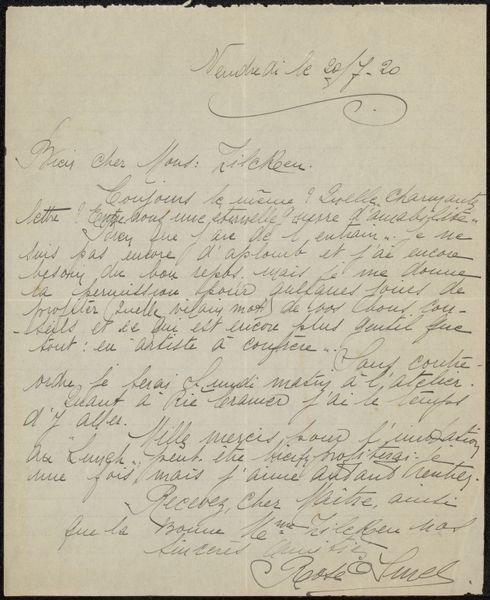
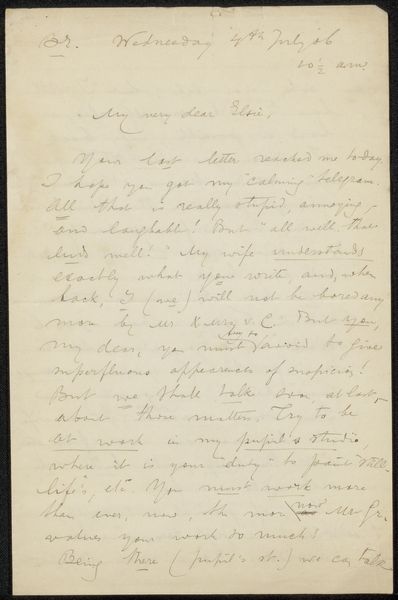
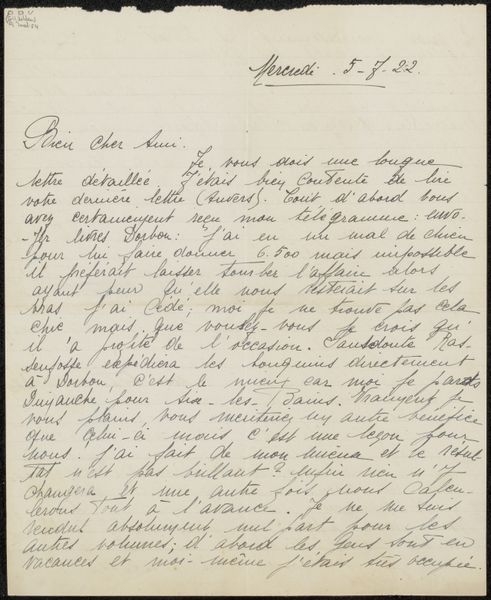
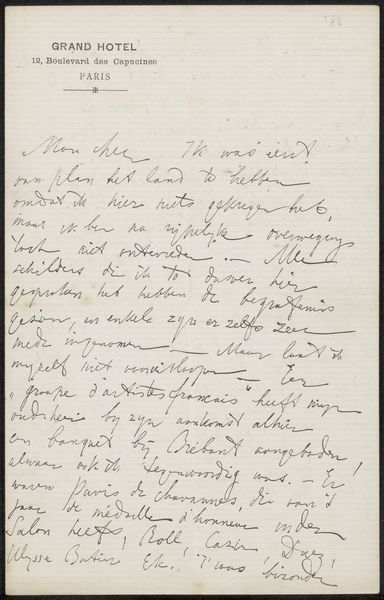
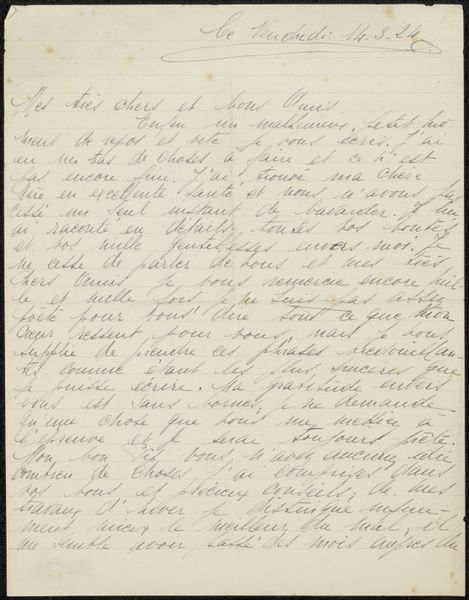
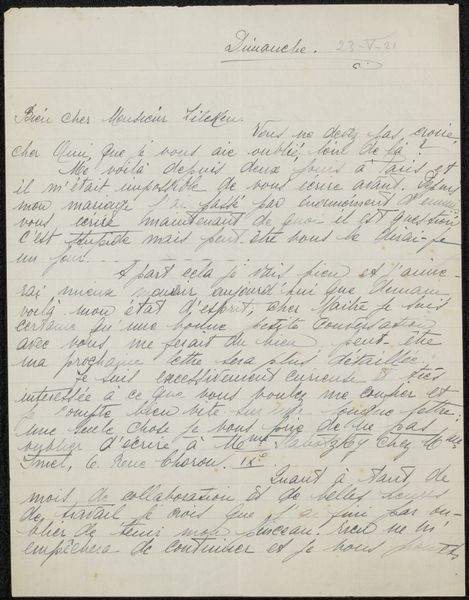
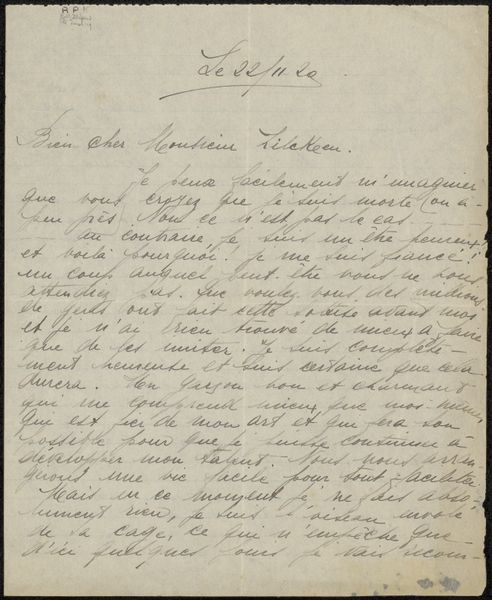
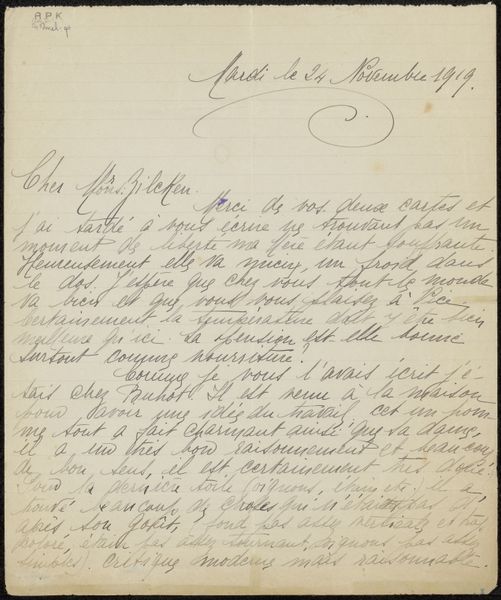
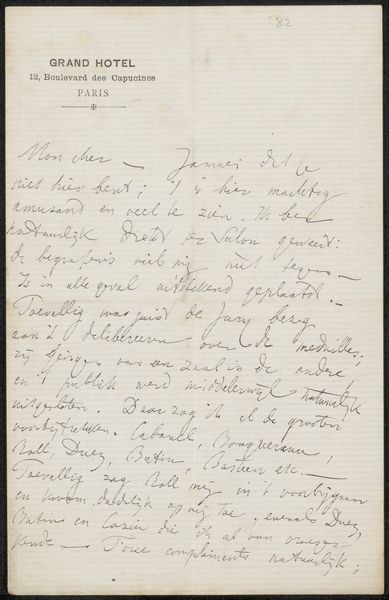
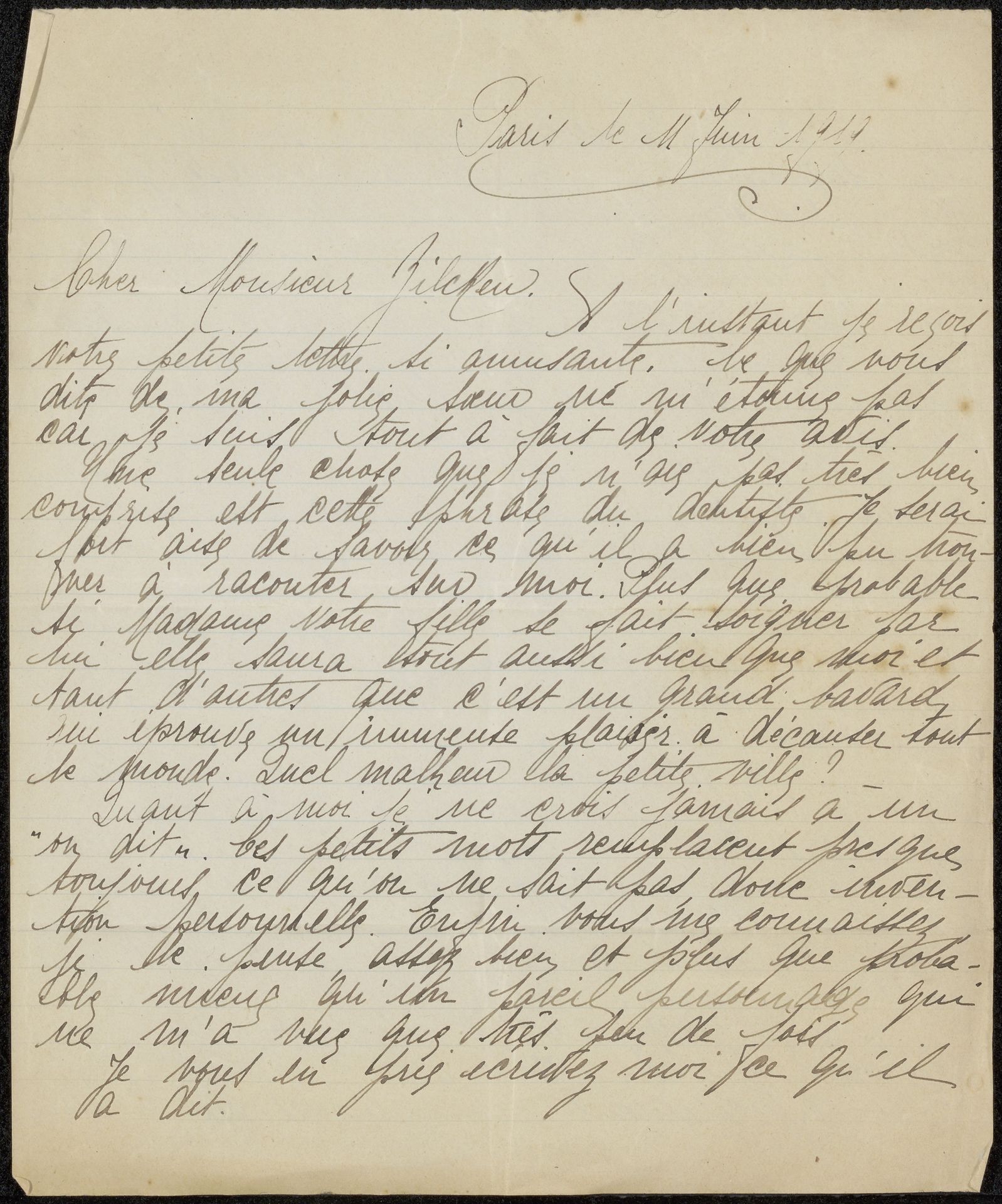
This is a letter from 1917, written in Paris, by Rose Imel. What strikes me right away is the handwriting itself. It’s so fluid and alive, full of quirks and idiosyncrasies. The ink meanders across the page like a restless line in a Cy Twombly painting. Each word is a little gesture, a dance of pressure and release. You can feel the artist's hand, the way they leaned into certain strokes and pulled back from others. Look at the loops on the ‘p’ and ‘j’ , how they swell and taper, creating a rhythm that's almost musical. This reminds me of how we often see art as a window into someone else’s mind and experience. Each letter, each word, is an act of translation, an attempt to bridge the gap between one consciousness and another. It’s never perfect, never complete, but that’s what makes it so compelling. Like all art, it’s about the conversation, not the conclusion.

Artwork details
- Medium
- drawing, paper, ink, pen
- Copyright
- Rijks Museum: Open Domain
Tags
Comments
Share your thoughts
About this artwork
This is a letter from 1917, written in Paris, by Rose Imel. What strikes me right away is the handwriting itself. It’s so fluid and alive, full of quirks and idiosyncrasies. The ink meanders across the page like a restless line in a Cy Twombly painting. Each word is a little gesture, a dance of pressure and release. You can feel the artist's hand, the way they leaned into certain strokes and pulled back from others. Look at the loops on the ‘p’ and ‘j’ , how they swell and taper, creating a rhythm that's almost musical. This reminds me of how we often see art as a window into someone else’s mind and experience. Each letter, each word, is an act of translation, an attempt to bridge the gap between one consciousness and another. It’s never perfect, never complete, but that’s what makes it so compelling. Like all art, it’s about the conversation, not the conclusion.
Comments
Share your thoughts