c. 1666 - 1695
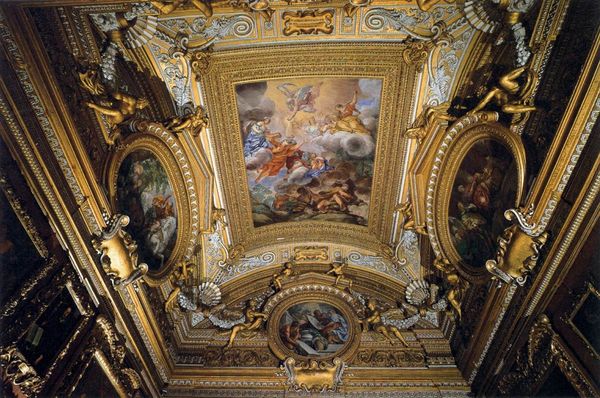
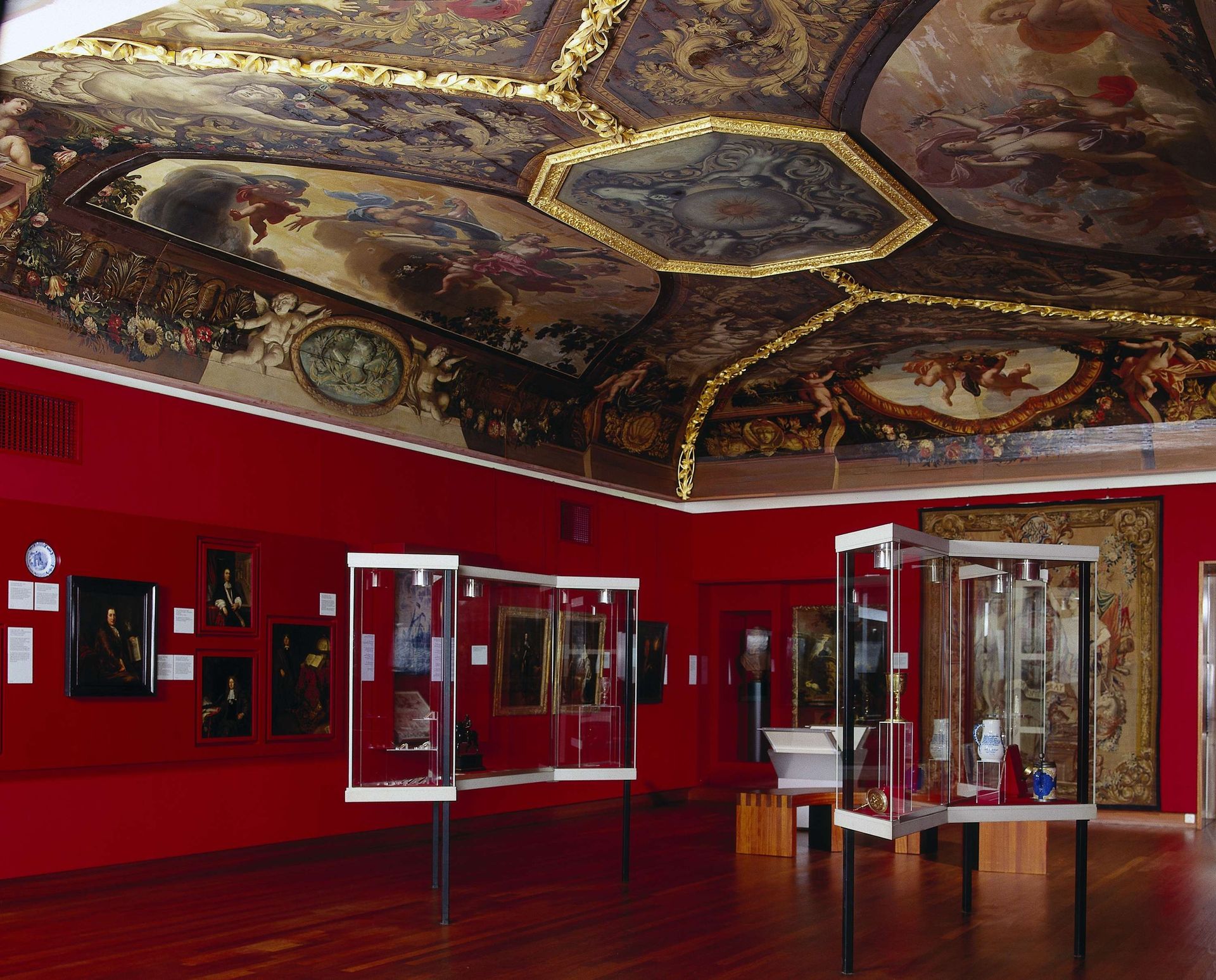
Ceiling with representations of Morning and Evening

Listen to curator's interpretation
Curatorial notes
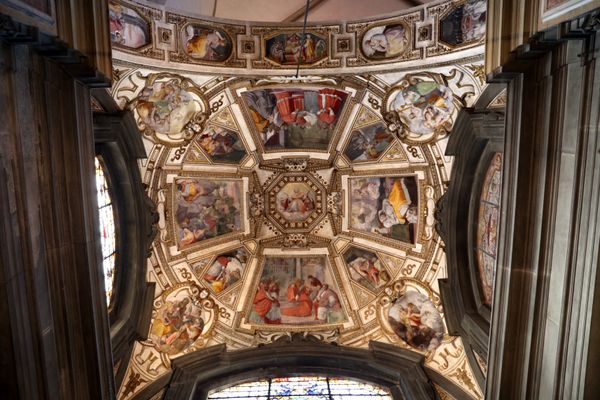
Theodoor van der Schuer painted this ceiling with representations of Morning and Evening in the late 17th or early 18th century. As a court painter in Düsseldorf, Van der Schuer would have been responsible for creating visually stunning environments that reinforced the power and prestige of his aristocratic patrons. Painted during a period defined by rigid social hierarchies, this ceiling exemplifies how art was used to convey messages about status, taste, and cultural values. The allegorical figures of Morning and Evening, rendered in a classical style, speak to the concerns of an elite class, who would have understood the symbolic language of such imagery. What did it mean to have leisure represented in this way? Did it speak to the gendered division of labor, where the women depicted in the ceiling frescoes were idealized and romanticized, while the labor of the working class remained invisible? As you gaze upward, consider how the painting invites you into a world of idealized beauty and aristocratic privilege. It is a world that both seduces and excludes.