1798 - 1837
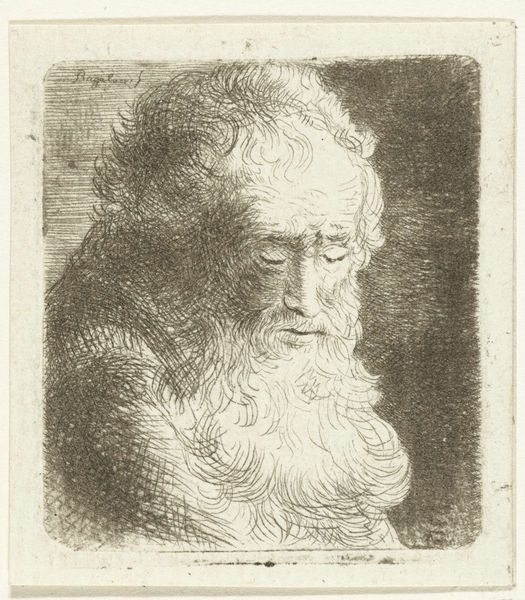
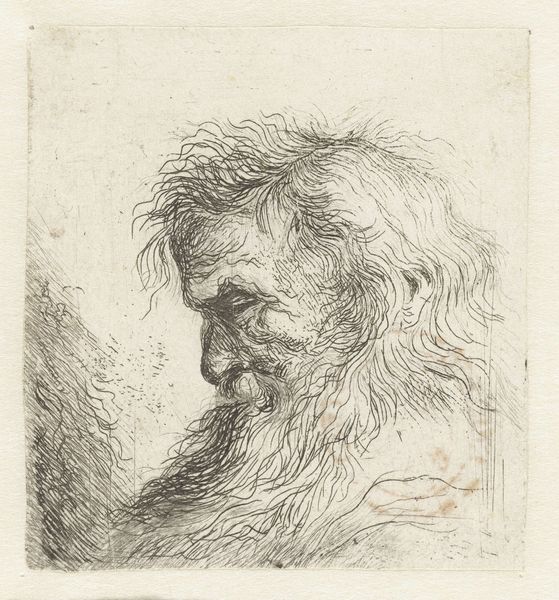
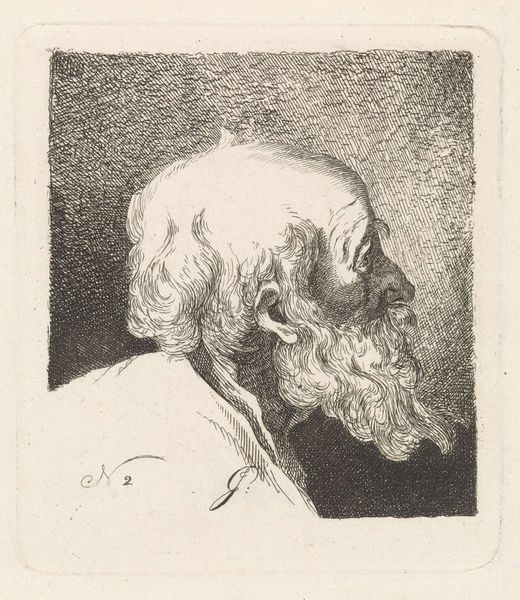
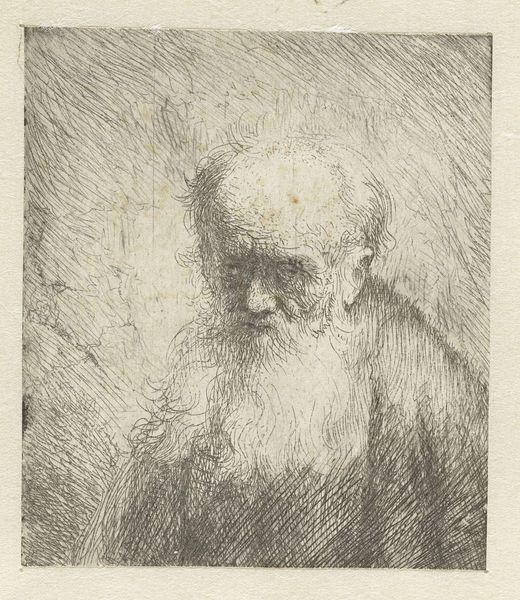
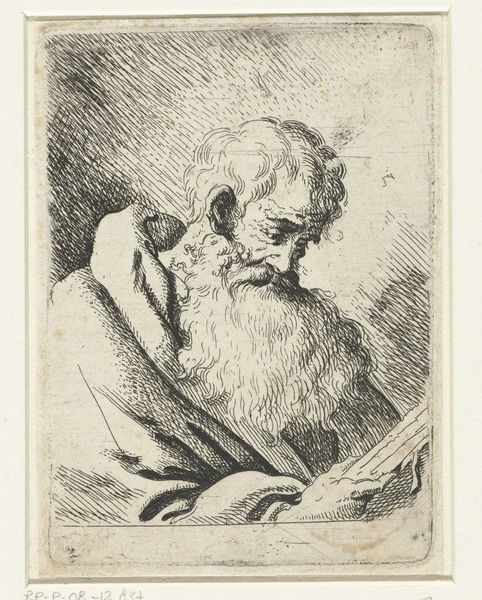
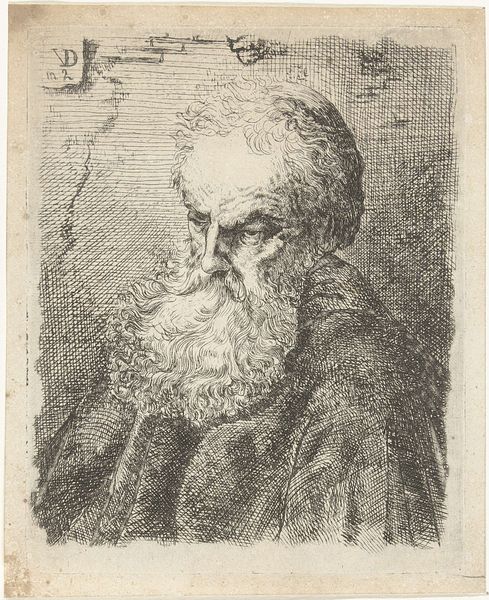
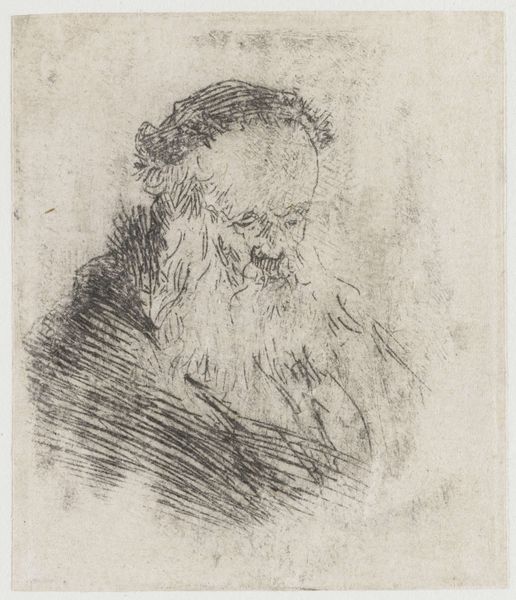
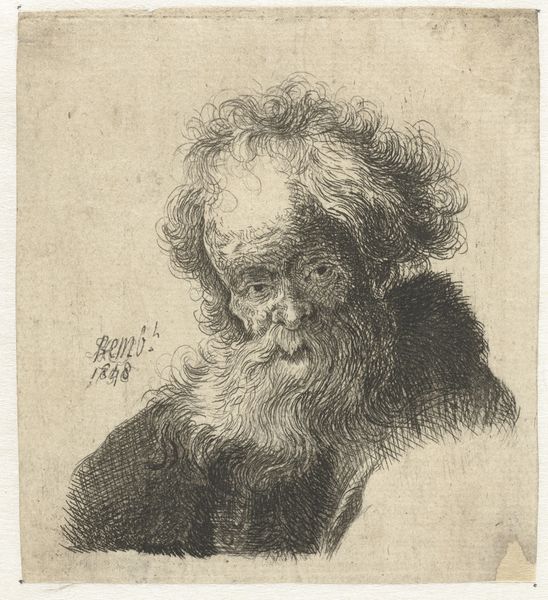
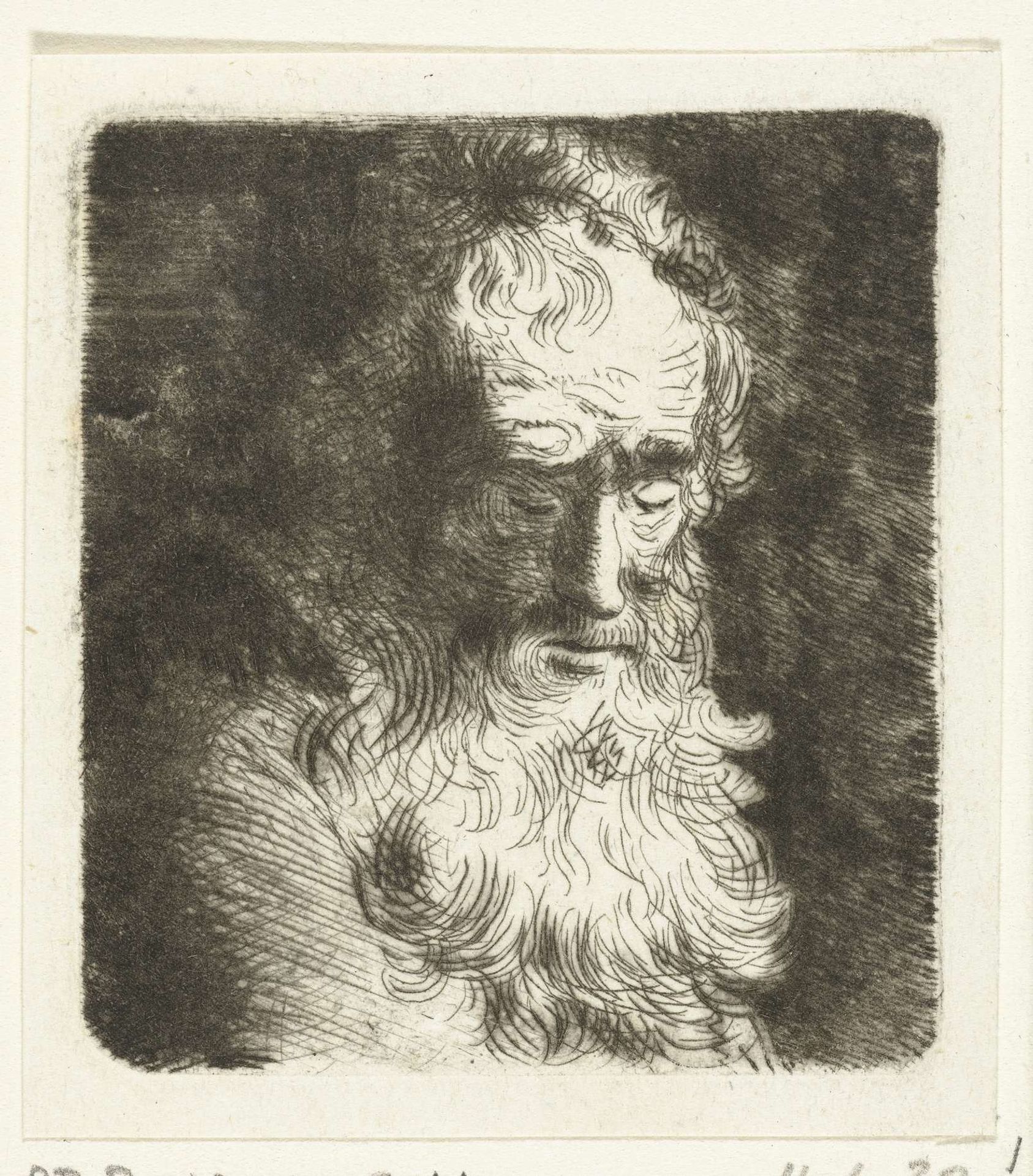
Oude man met baard met de blik naar beneden gericht: driekwart, naar rechts

Listen to curator's interpretation
Curatorial notes
Editor: So, this is Ernst Willem Jan Bagelaar's "Old Man with a Beard, Looking Down," made sometime between 1798 and 1837. It's an engraving, a print. There's a real sense of introspection to it; the man seems lost in thought. What do you make of this piece? Curator: It's interesting how Bagelaar situates this portrait within a longer tradition of representing age and wisdom, often within specific social and political contexts. Consider the rise of portraiture as a symbol of status, even power, particularly within the Dutch Golden Age, that perhaps lingers here. Do you think this image is simply a study of old age, or could it carry a message related to changing societal views of elderly men and their roles? Editor: I hadn’t thought about that. It could be seen as a commentary on the changing value placed on elders in a rapidly modernizing society? The averted gaze almost implies a sense of disenfranchisement. Curator: Exactly. Engravings, as reproducible images, also had a public function. They democratized art but also served as tools for disseminating specific ideas. Was this meant to elicit sympathy, perhaps, or to serve as a moral lesson? The ambiguity is powerful, as the old man could represent either virtue or regret. Who do you think would have seen this image, and in what context? Editor: Maybe this print was accessible to a broader audience, beyond the wealthy, sparking public discourse around age, wisdom, and social change. It feels like the artwork subtly critiques the institutions shaping those perceptions. I hadn't initially considered all of that. Curator: Thinking about art as connected to the social and institutional forces helps unpack the deeper meaning and implications of the work. It pushes us beyond mere aesthetics.