About this artwork
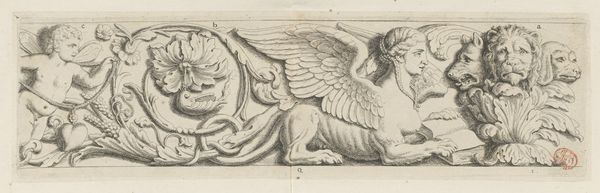
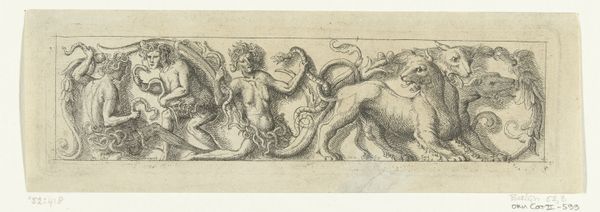
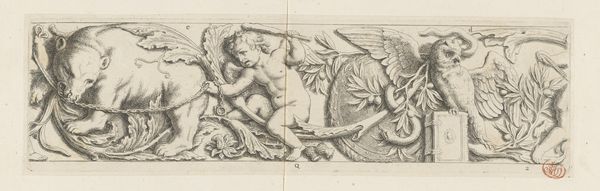
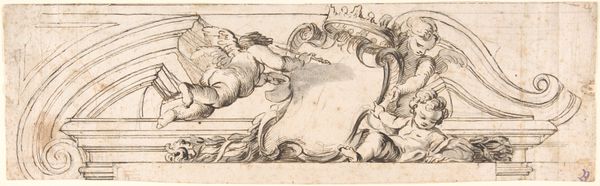
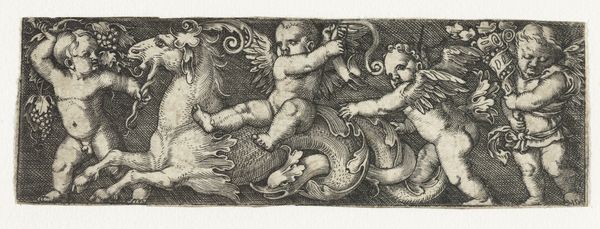
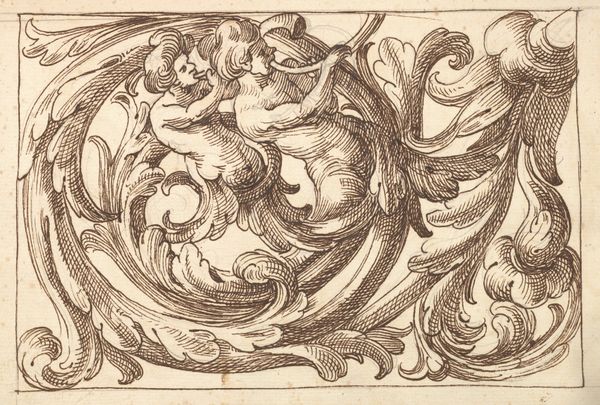
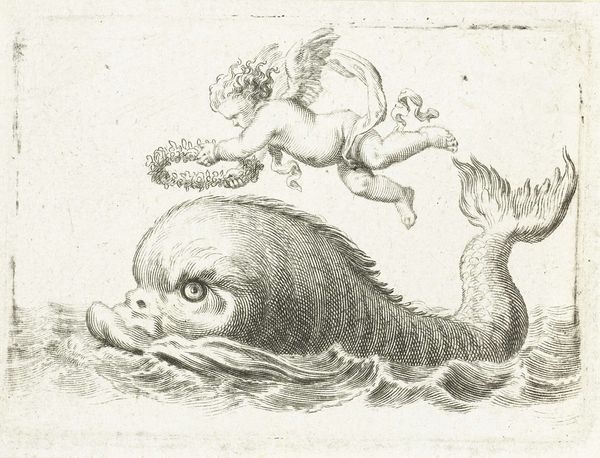
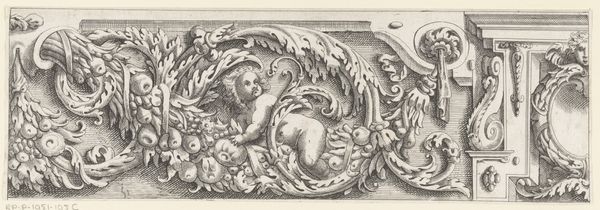
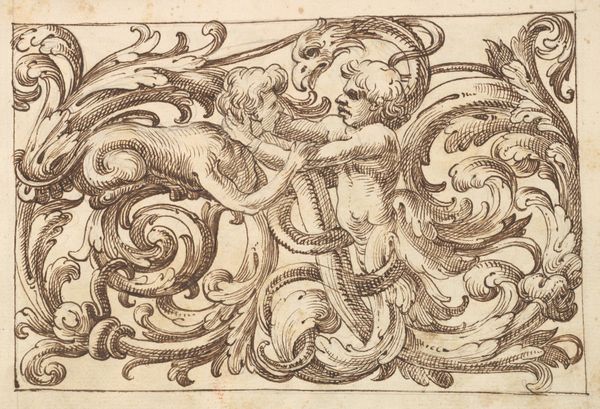
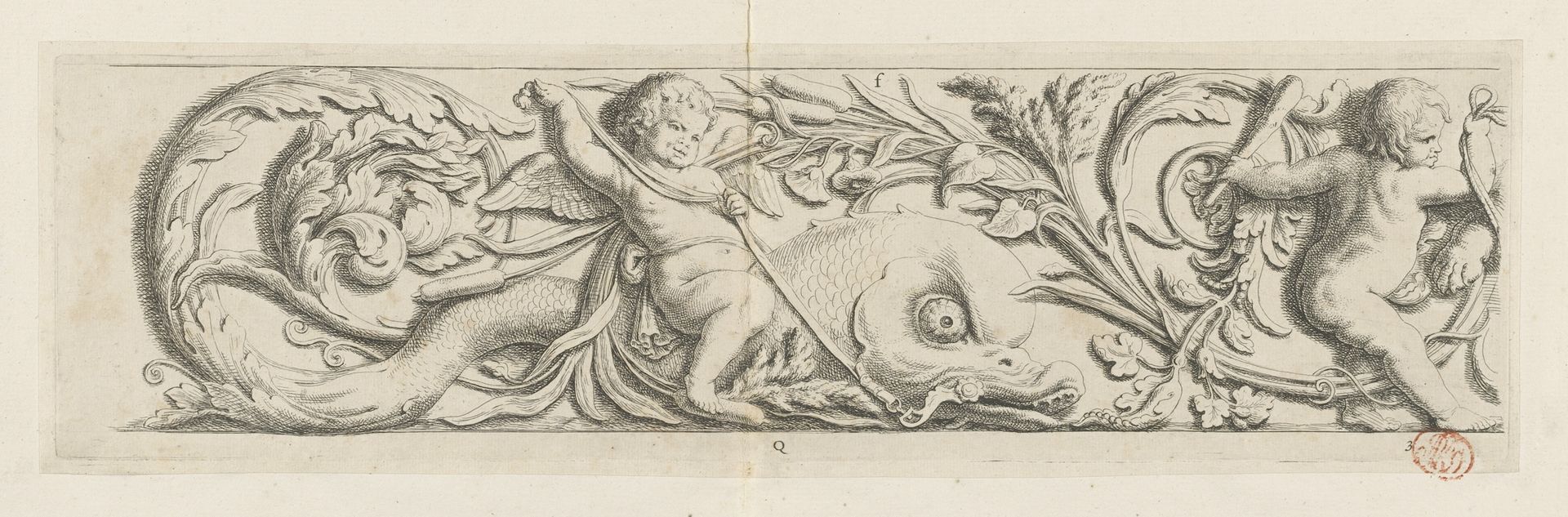
This is Hubert Quellinus's partial frieze in pen in ink, once adorning the Vroedschapskamer of the Stadhuis on the Dam. Here, aquatic motifs meet cherubic figures, capturing the Dutch Republic’s embrace of maritime power and classical ideals. Notice the putti—winged children, recalling Eros, the god of love. They are often seen as symbols of innocence and divine love. One rides a dolphin, a motif echoing ancient Greece, where the dolphin was sacred to Poseidon, the sea god. It symbolizes navigation, protection, and resurrection, guiding souls across the waters. Consider how these symbols speak to our collective psyche. The dolphin's protective nature may tap into our primal need for safety, while the putto embodies idealized innocence, a universal longing. These motifs are not static; they evolve through time. The dolphin, once a divine messenger, now graces children’s stories. The putto, from Cupid, now is a chubby symbol of Christmas. Thus, Quellinus’s frieze connects us to a stream of cultural memory, where symbols resurface, transformed, yet still potent, in our shared consciousness.
Deel van fries op schouw in Vroedschapskamer van het Stadhuis op de Dam
1663

Hubert Quellinus
1619 - 1687Location
RijksmuseumArtwork details
- Medium
- drawing, engraving
- Dimensions
- height 111 mm, width 394 mm
- Location
- Rijksmuseum
- Copyright
- Rijks Museum: Open Domain
Tags
Comments
Share your thoughts
About this artwork
This is Hubert Quellinus's partial frieze in pen in ink, once adorning the Vroedschapskamer of the Stadhuis on the Dam. Here, aquatic motifs meet cherubic figures, capturing the Dutch Republic’s embrace of maritime power and classical ideals. Notice the putti—winged children, recalling Eros, the god of love. They are often seen as symbols of innocence and divine love. One rides a dolphin, a motif echoing ancient Greece, where the dolphin was sacred to Poseidon, the sea god. It symbolizes navigation, protection, and resurrection, guiding souls across the waters. Consider how these symbols speak to our collective psyche. The dolphin's protective nature may tap into our primal need for safety, while the putto embodies idealized innocence, a universal longing. These motifs are not static; they evolve through time. The dolphin, once a divine messenger, now graces children’s stories. The putto, from Cupid, now is a chubby symbol of Christmas. Thus, Quellinus’s frieze connects us to a stream of cultural memory, where symbols resurface, transformed, yet still potent, in our shared consciousness.
Comments
Share your thoughts