About this artwork
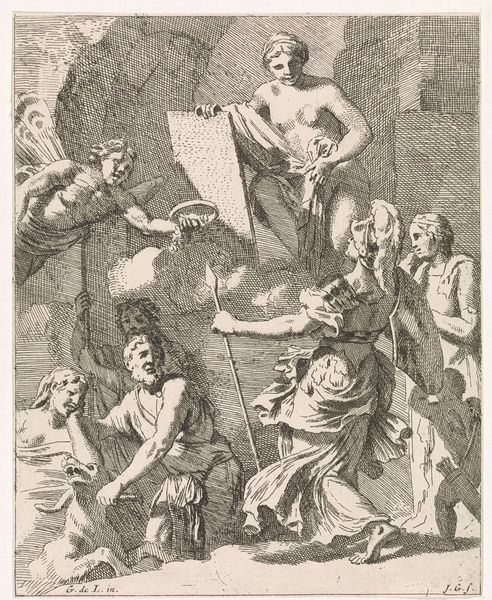
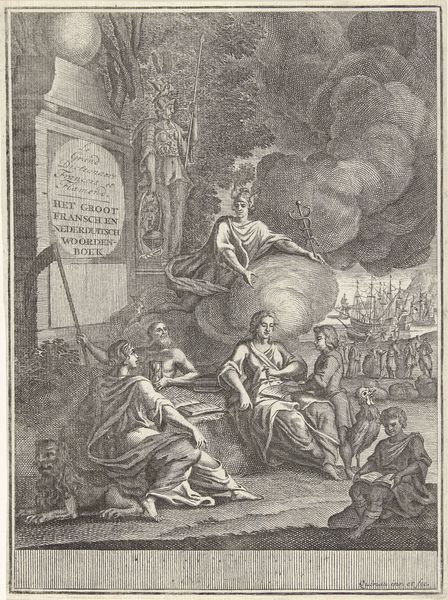
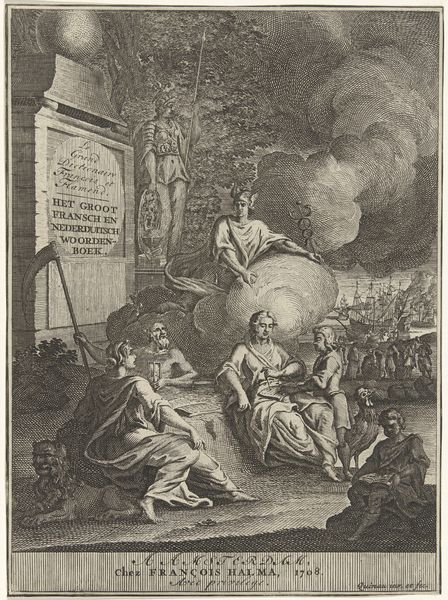
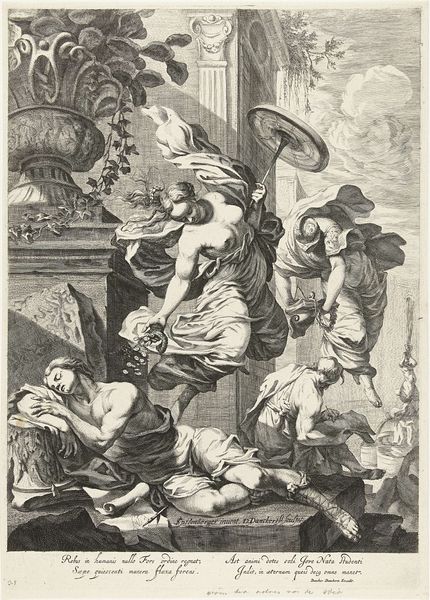
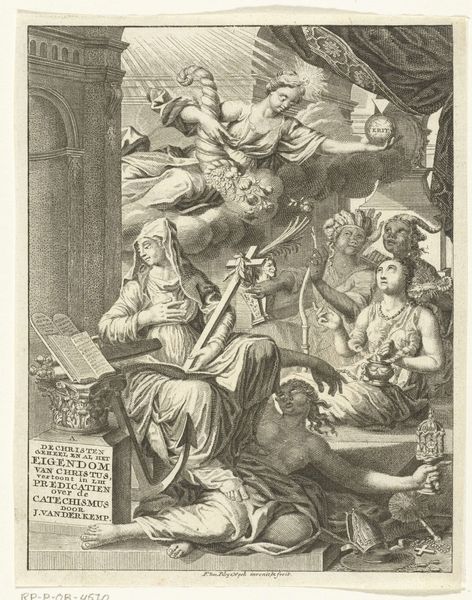
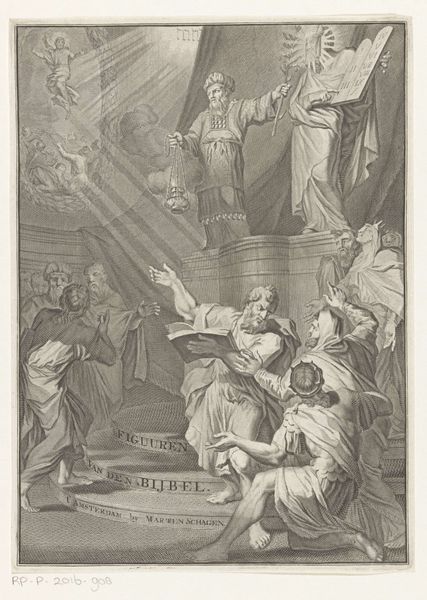
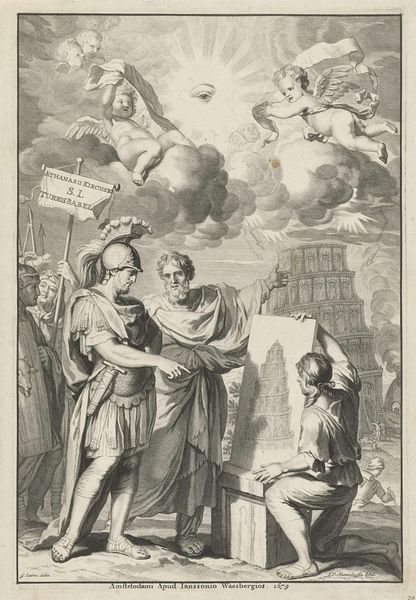
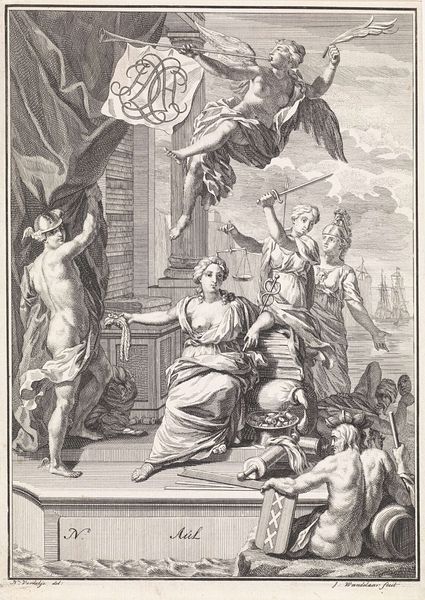
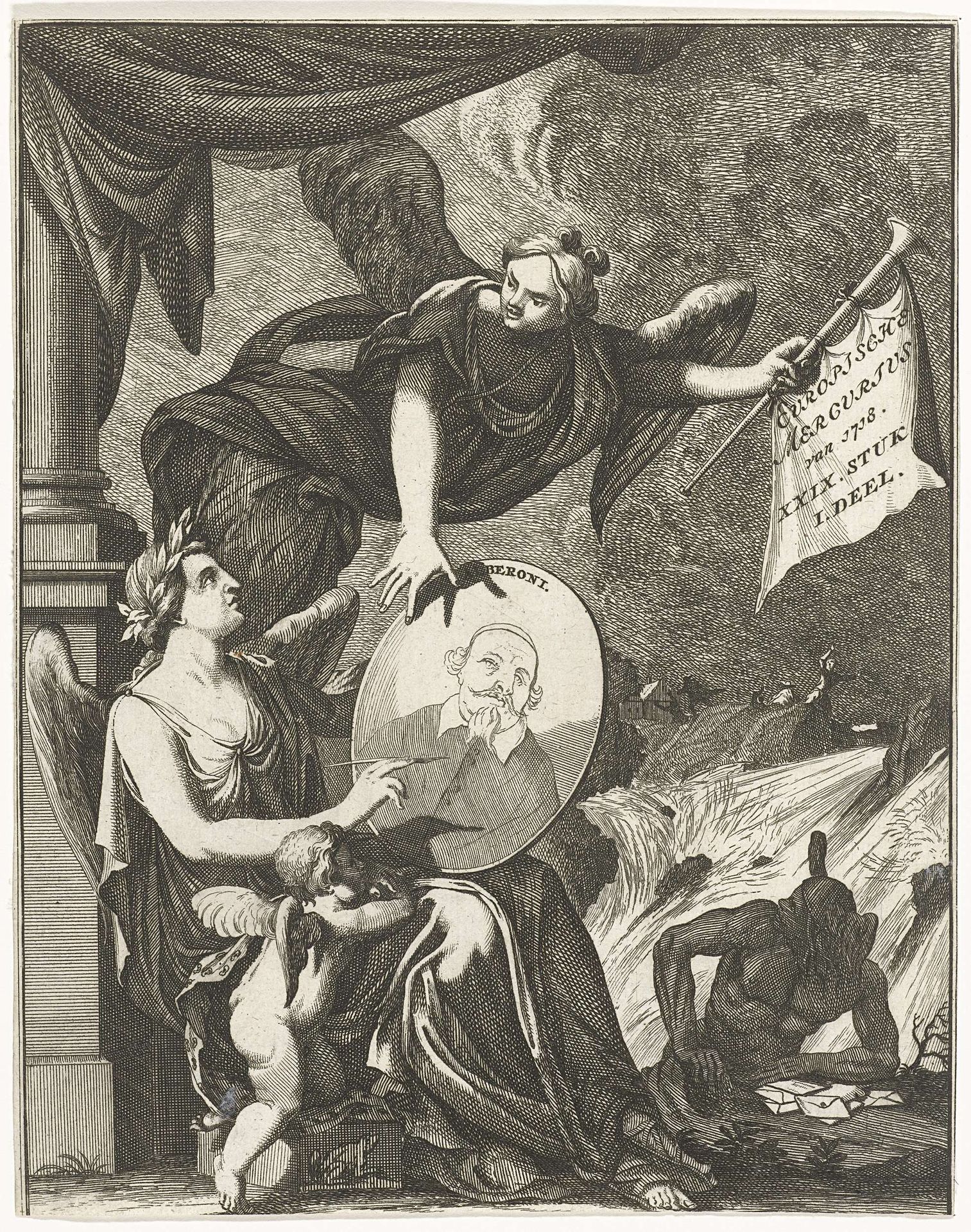
This title page for the Europische Mercurius of 1718 was made by an anonymous artist using engraving, a printmaking technique that dates back to the 15th century. The process involves using a tool called a burin to carve lines into a metal plate, which is then inked and pressed onto paper. The material properties of the copper plate allow for fine, precise lines, giving the image a crisp, detailed appearance, with the contrast between the dark ink and the light paper creating a striking visual effect. Engraving was a highly skilled and labor-intensive process, often associated with commercial printing. The widespread availability of printed material contributed to the growth of a public sphere, and helped to shape public opinion. The image itself combines allegorical figures with contemporary portraiture, reflecting the cultural values and social structures of the time, and blurring the boundaries between craft and fine art. By understanding the materials, tools, and techniques involved in the making of this print, we can gain insight into the broader social and cultural context in which it was produced.
Titelpagina voor de Europische Mercurius van 1718 1718

Anonymous
@anonymousLocation
RijksmuseumArtwork details
- Medium
- print, engraving
- Dimensions
- height 186 mm, width 147 mm
- Location
- Rijksmuseum
- Copyright
- Rijks Museum: Open Domain
Tags
portrait
allegory
baroque
old engraving style
caricature
history-painting
engraving
Comments
No comments
About this artwork
This title page for the Europische Mercurius of 1718 was made by an anonymous artist using engraving, a printmaking technique that dates back to the 15th century. The process involves using a tool called a burin to carve lines into a metal plate, which is then inked and pressed onto paper. The material properties of the copper plate allow for fine, precise lines, giving the image a crisp, detailed appearance, with the contrast between the dark ink and the light paper creating a striking visual effect. Engraving was a highly skilled and labor-intensive process, often associated with commercial printing. The widespread availability of printed material contributed to the growth of a public sphere, and helped to shape public opinion. The image itself combines allegorical figures with contemporary portraiture, reflecting the cultural values and social structures of the time, and blurring the boundaries between craft and fine art. By understanding the materials, tools, and techniques involved in the making of this print, we can gain insight into the broader social and cultural context in which it was produced.
Comments
No comments