About this artwork
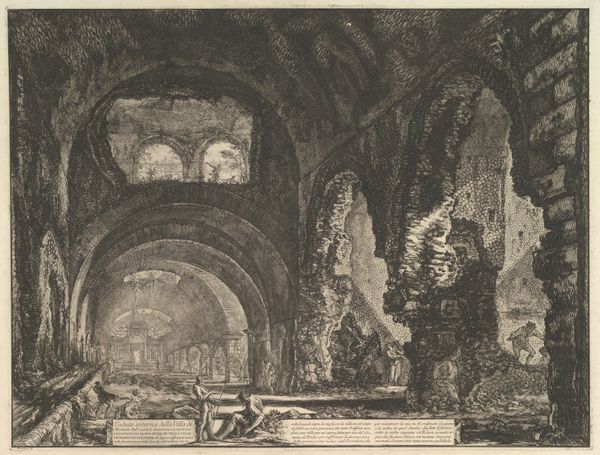
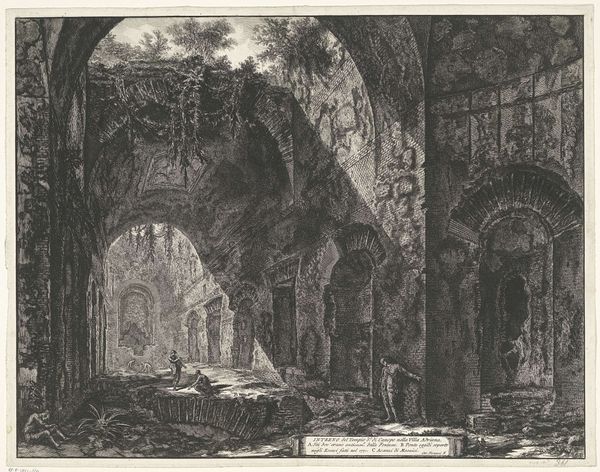
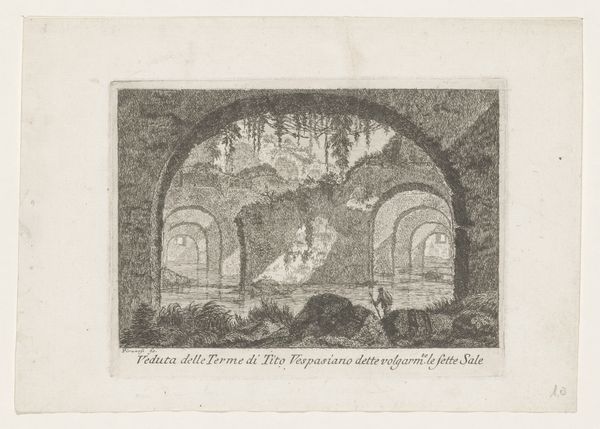
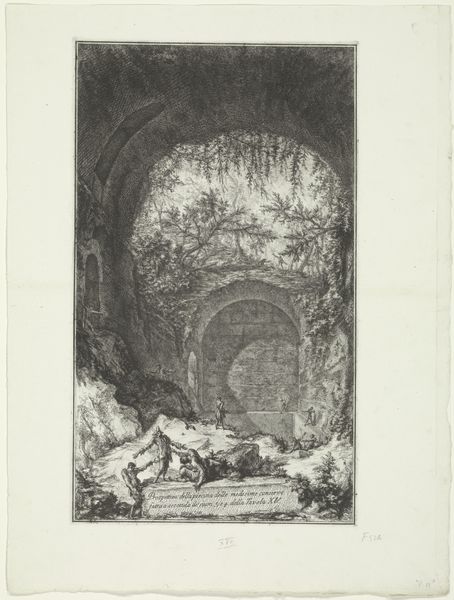
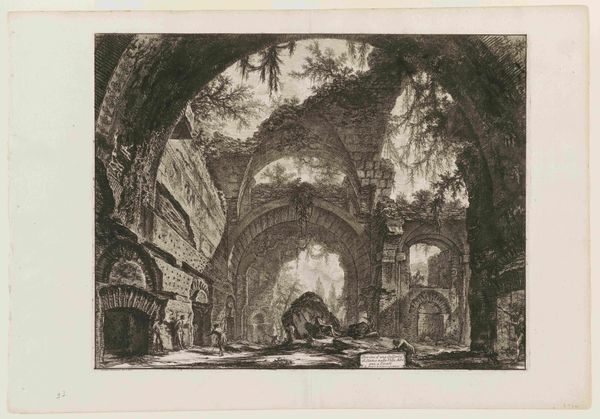
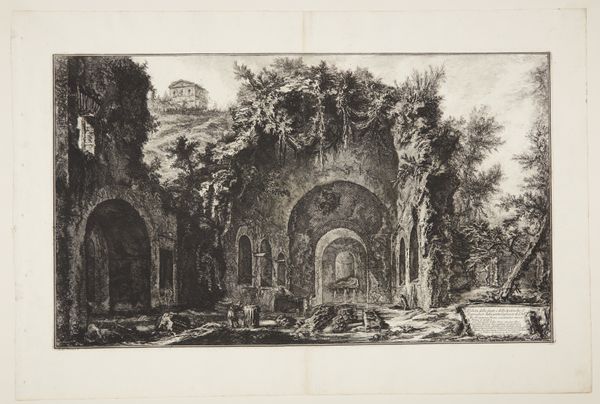
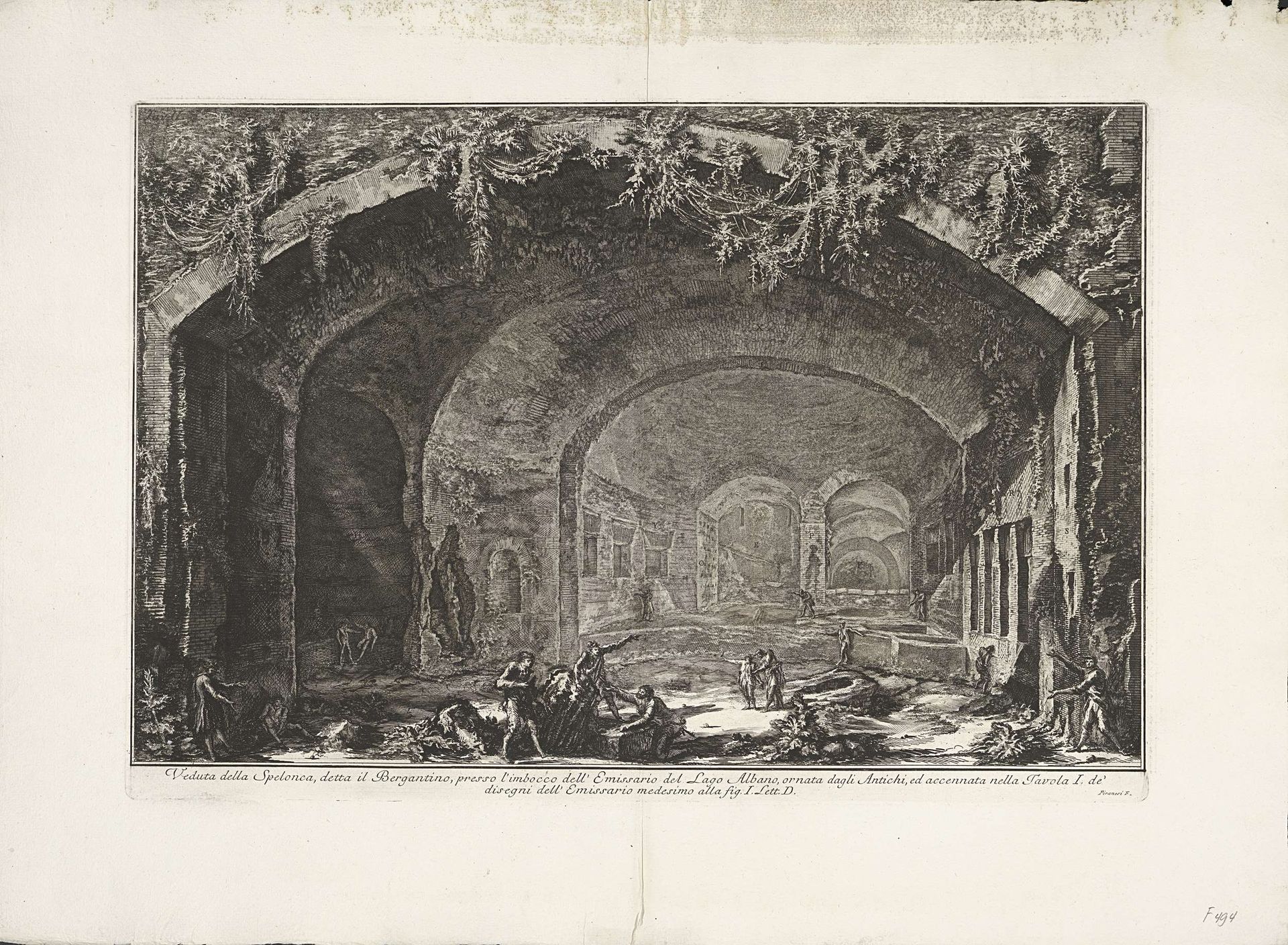
Giovanni Battista Piranesi made this print of a cave, called 'Il Bergantino' at Lake Albano. Piranesi was working during a time when the Grand Tour was popular, which meant wealthy Europeans, often men, traveled around Europe, especially Italy, to learn about art and culture. Here, Piranesi imagines the grotto as a sublime and awe-inspiring space. However, it's important to remember that these images often romanticized the reality of labor and life for the working class. Who were these figures inhabiting this space? What were their stories? Piranesi leaves them anonymous, part of the picturesque scene, but their presence reminds us of the complex social hierarchies that shaped 18th-century Europe. Piranesi encourages us to reflect on the layers of history, power, and representation that are embedded in our experience of the world.
Grot genaamd 'Il Bergantino' bij Meer van Albano 1762

Giovanni Battista Piranesi
1720 - 1778Location
RijksmuseumArtwork details
- Medium
- drawing, print, etching, engraving
- Dimensions
- height 430 mm, width 630 mm
- Location
- Rijksmuseum
- Copyright
- Rijks Museum: Open Domain
Tags
drawing
neoclacissism
etching
landscape
perspective
form
ancient-mediterranean
line
cityscape
history-painting
engraving
Comments
No comments
About this artwork
Giovanni Battista Piranesi made this print of a cave, called 'Il Bergantino' at Lake Albano. Piranesi was working during a time when the Grand Tour was popular, which meant wealthy Europeans, often men, traveled around Europe, especially Italy, to learn about art and culture. Here, Piranesi imagines the grotto as a sublime and awe-inspiring space. However, it's important to remember that these images often romanticized the reality of labor and life for the working class. Who were these figures inhabiting this space? What were their stories? Piranesi leaves them anonymous, part of the picturesque scene, but their presence reminds us of the complex social hierarchies that shaped 18th-century Europe. Piranesi encourages us to reflect on the layers of history, power, and representation that are embedded in our experience of the world.
Comments
No comments