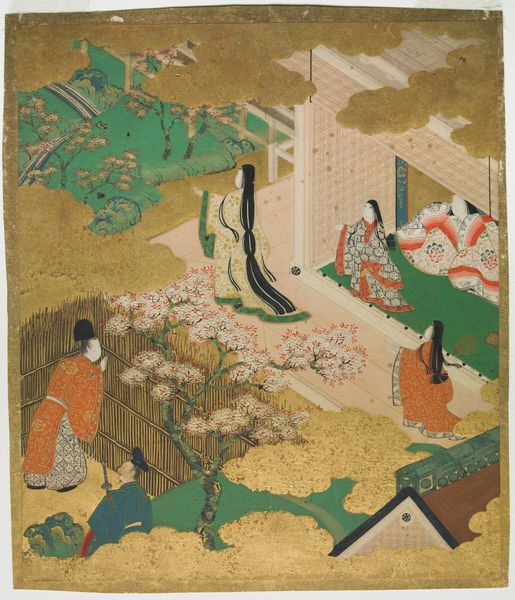
c. mid 17th century
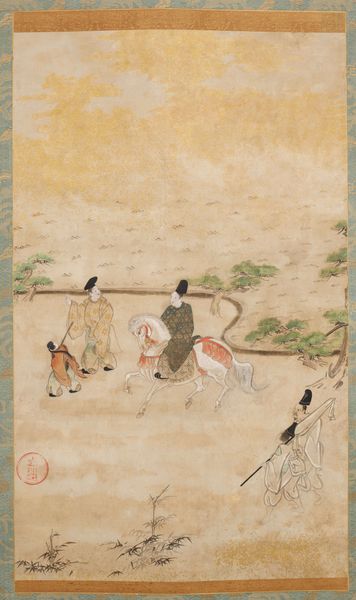
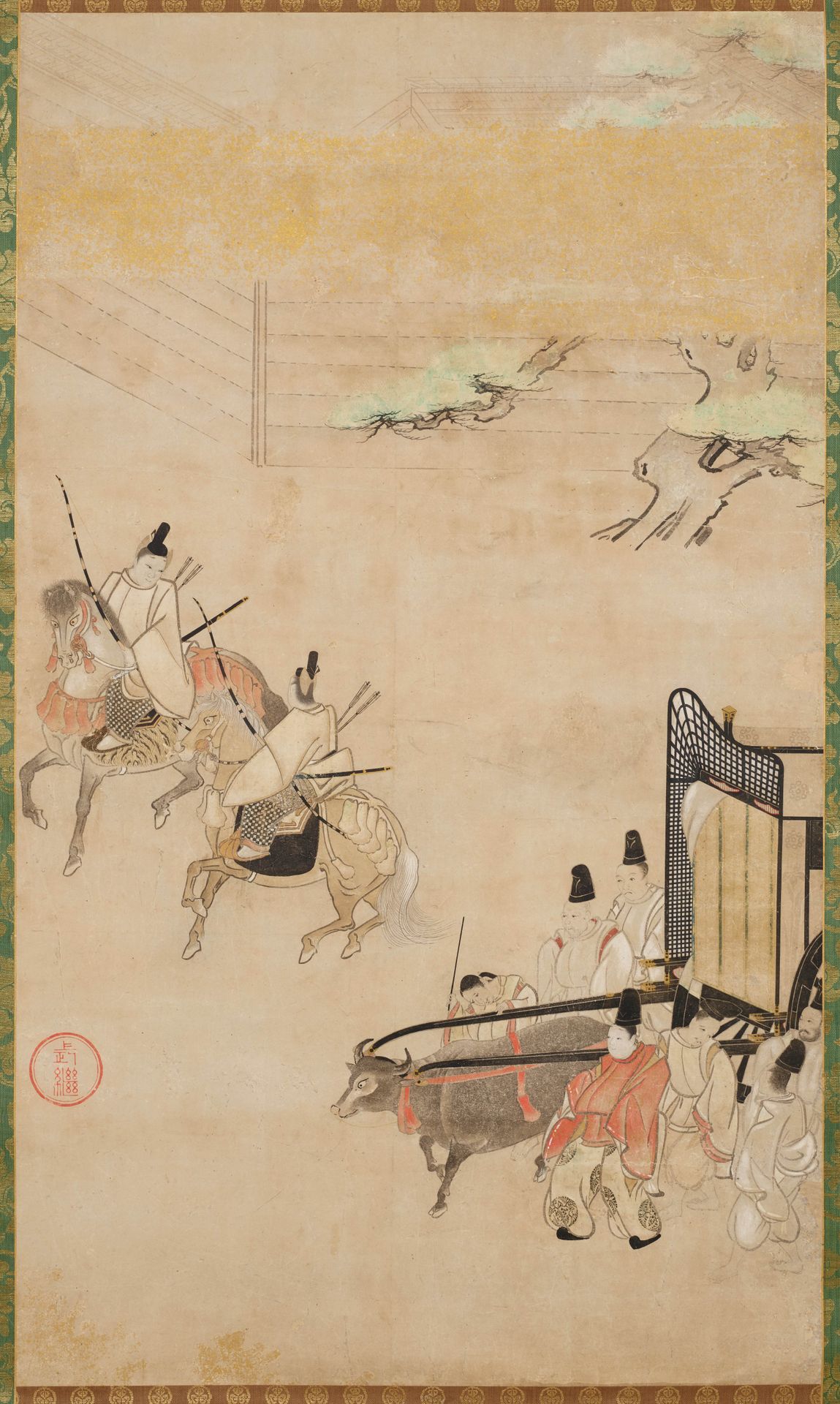
Scene from chapter 14


Listen to curator's interpretation
Curatorial notes
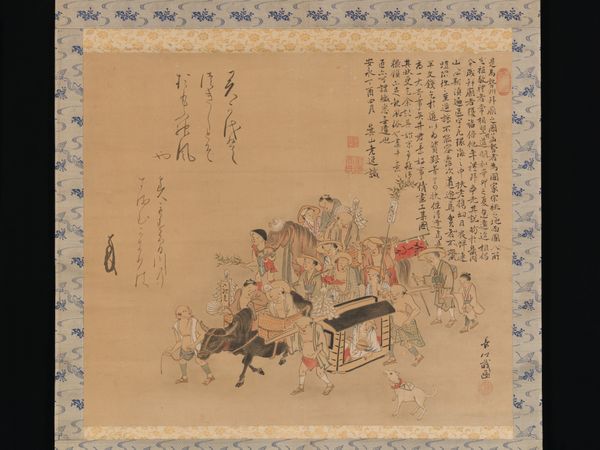
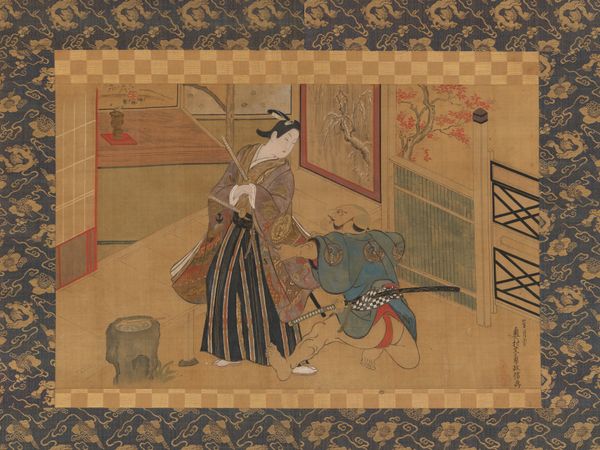
Editor: Here we have a beautiful hanging scroll titled "Scene from chapter 14," painted around the mid-17th century by Taketsugu. It’s created with ink and color on paper. The detail is exquisite. The whole composition feels quite restrained; what strikes you about this work? Curator: What I find compelling is thinking about the paper itself – its production, the labor involved. Consider the socio-economic implications of needing this specific type of paper, its accessibility. The work, at its base, hinges on physical elements subject to commerce, class, and geographic place. Editor: That's a perspective I hadn’t considered. So, rather than focusing on the narrative, we think about the materials that enable the story? Curator: Exactly. The choice of color is never innocent either. Who had access to these pigments? Were they locally sourced, or imported? The materiality steers us away from solely considering it as a form of representation and closer to the practical labor required for such commissions. Consider that this work may have taken years to complete; how does that information influence its reception? Editor: That does change things! Looking closer, you can really see the individual brushstrokes and the subtle variations in the paper texture. Were such artworks typically privately commissioned, or intended for wider display? Curator: Primarily, we can assume that works such as this are luxury commissions given the level of craftsmanship evident and the expense of the paper and pigments. Such work would reflect the wealth and prestige of those who employed the artist and artisans involved in production. This form emphasizes the cultural capital inherent in owning art – a visual marker of distinction. Editor: I’m learning a new approach to interpreting art! I’ll be sure to look closely at the medium in future works I encounter. Thanks. Curator: Remember, examining these elements situates the artwork within a network of human interactions, class structures, and industrial procedures that shape the artwork and ultimately influence our consumption. Thank you.