About this artwork
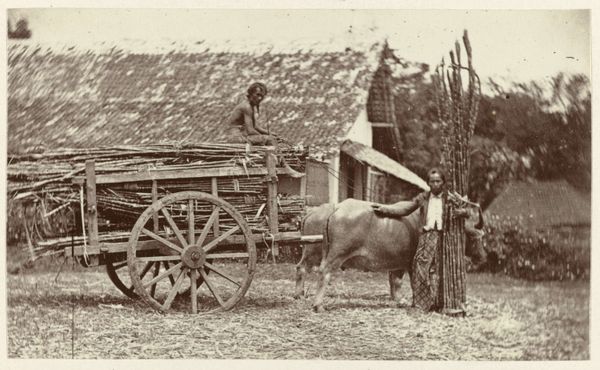
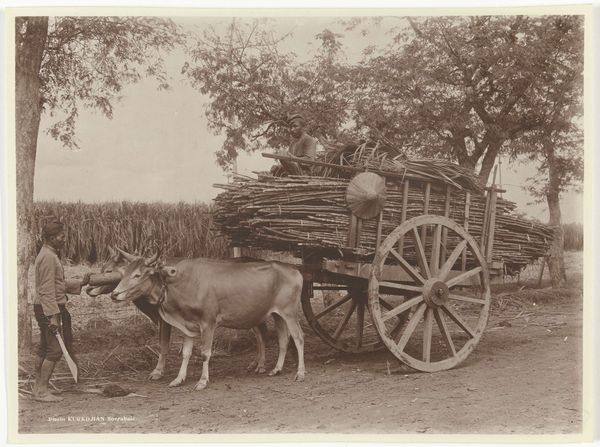
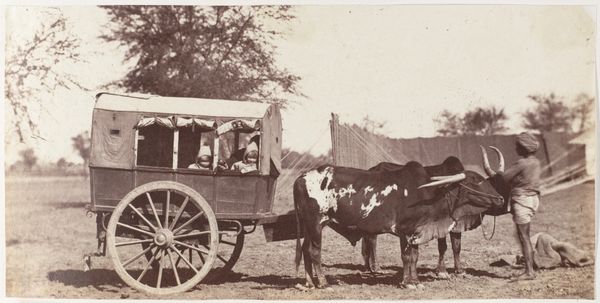
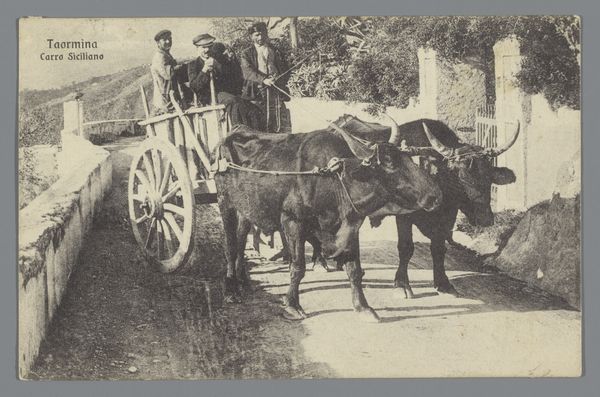
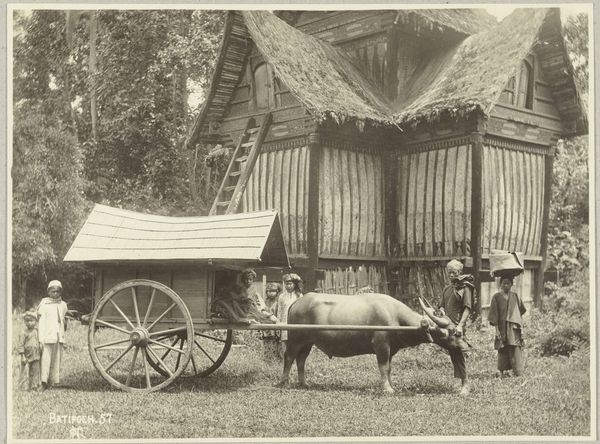
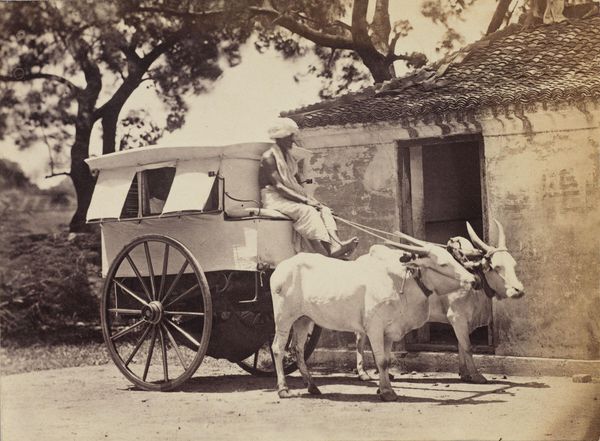
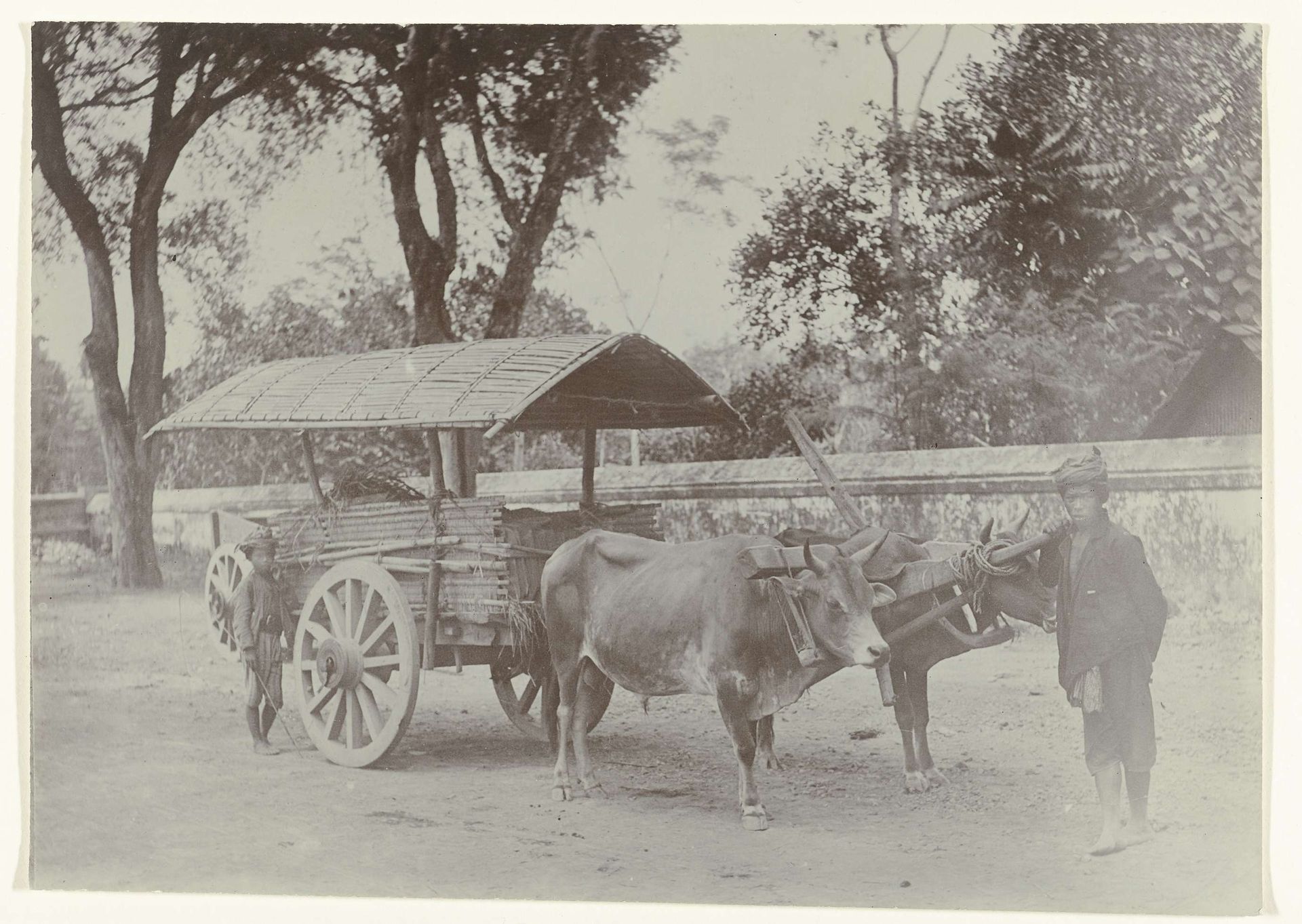
This photograph by Kassian Céphas captures two Javanese boys with an oxcart, a common sight transporting goods in Java. Look closely at the oxen, the beasts of burden central to this scene. The ox, or bull, has ancient roots as a symbol of strength and sustenance. Across cultures, from the sacred bulls of ancient Egypt to the Minoan bull-leaping rituals, the animal embodies power. One can think of the Greek myth of Europa and the Bull, or consider the veneration of the bull in Zoroastrianism. It is a universal veneration. Yet, the very harnessing of this power speaks to human ingenuity, representing our ability to cultivate and control nature's forces. The humble oxcart itself evokes the cyclical nature of labor and the enduring connection between humanity and the earth. It persists, evolving yet retaining its essential form, a testament to our collective memory and primal connection to the land.
Twee Javaanse jongens bij een ossenkar die goederen vervoert
c. 1867 - 1910

Kassian Céphas
1845 - 1912Location
RijksmuseumArtwork details
- Medium
- print, photography
- Dimensions
- height 160 mm, width 220 mm
- Location
- Rijksmuseum
- Copyright
- Rijks Museum: Open Domain
Tags
Comments
Share your thoughts
About this artwork
This photograph by Kassian Céphas captures two Javanese boys with an oxcart, a common sight transporting goods in Java. Look closely at the oxen, the beasts of burden central to this scene. The ox, or bull, has ancient roots as a symbol of strength and sustenance. Across cultures, from the sacred bulls of ancient Egypt to the Minoan bull-leaping rituals, the animal embodies power. One can think of the Greek myth of Europa and the Bull, or consider the veneration of the bull in Zoroastrianism. It is a universal veneration. Yet, the very harnessing of this power speaks to human ingenuity, representing our ability to cultivate and control nature's forces. The humble oxcart itself evokes the cyclical nature of labor and the enduring connection between humanity and the earth. It persists, evolving yet retaining its essential form, a testament to our collective memory and primal connection to the land.
Comments
Share your thoughts