About this artwork
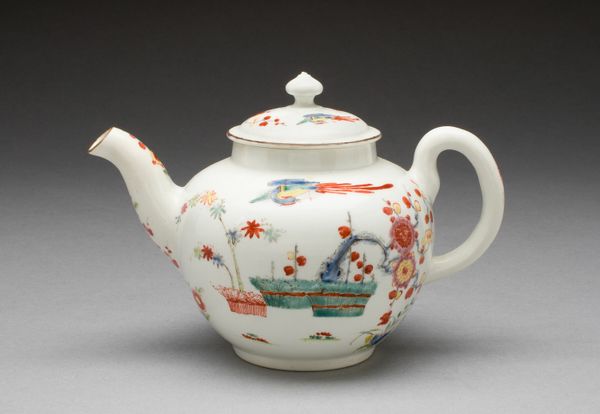
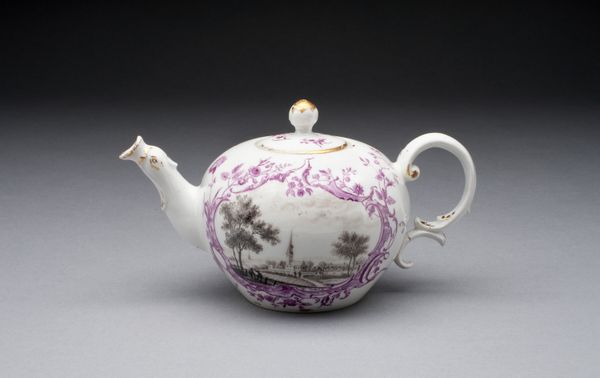
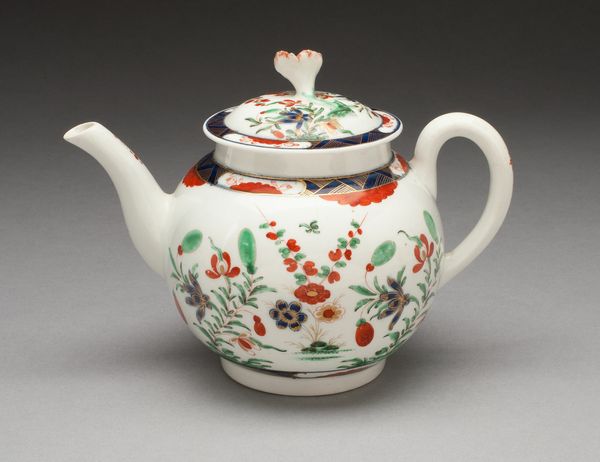
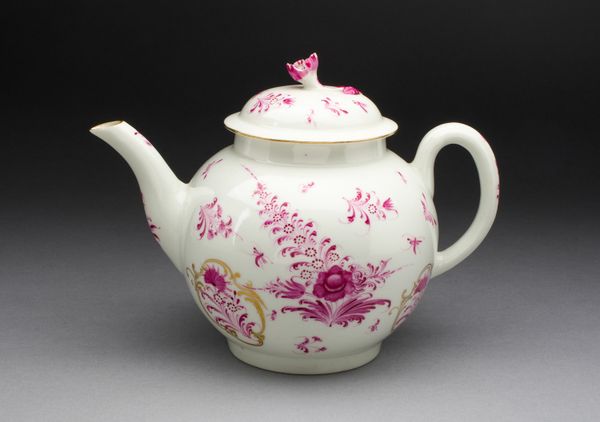
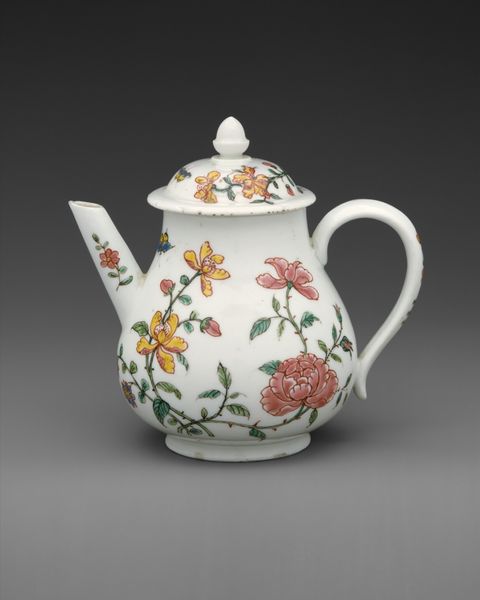
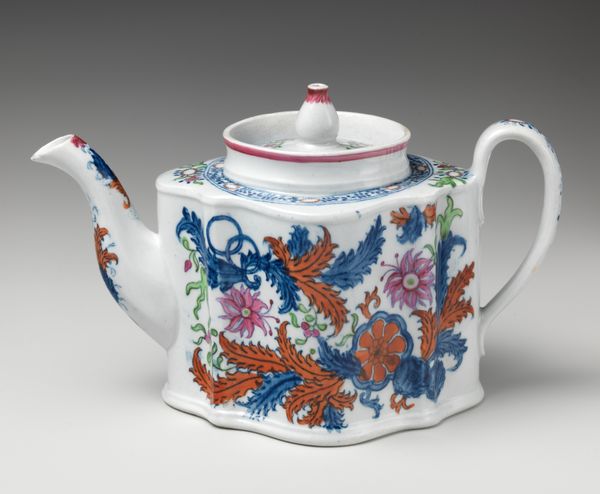
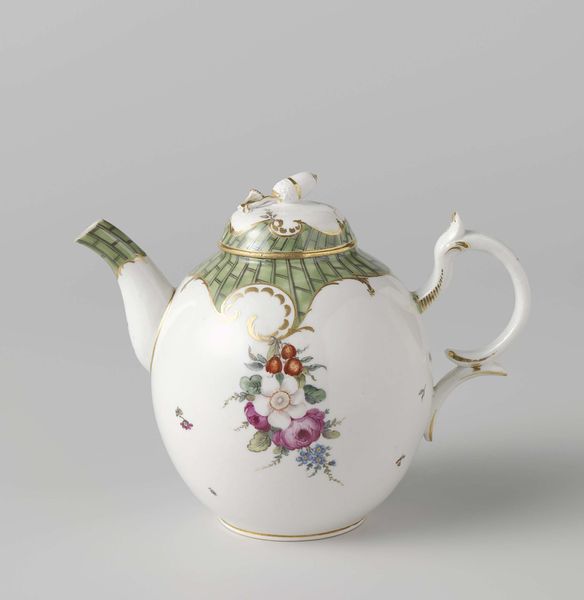
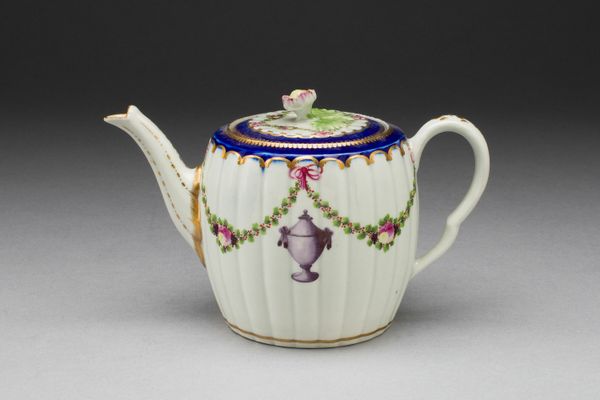
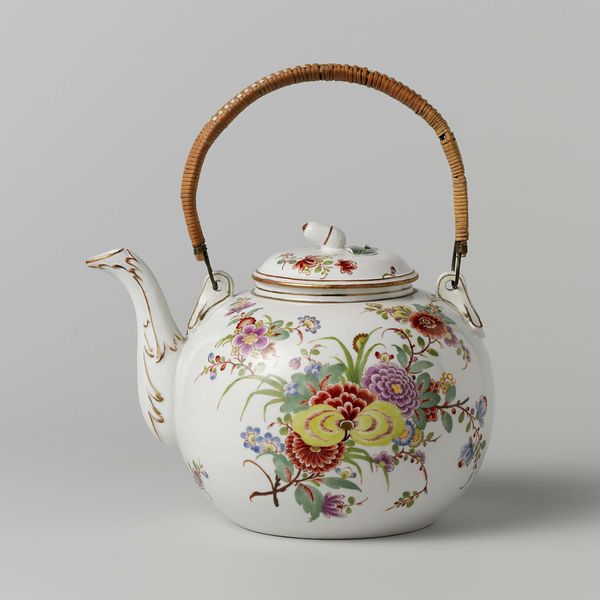
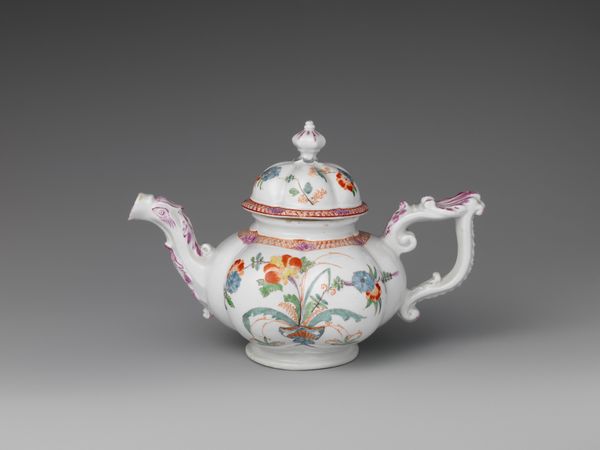
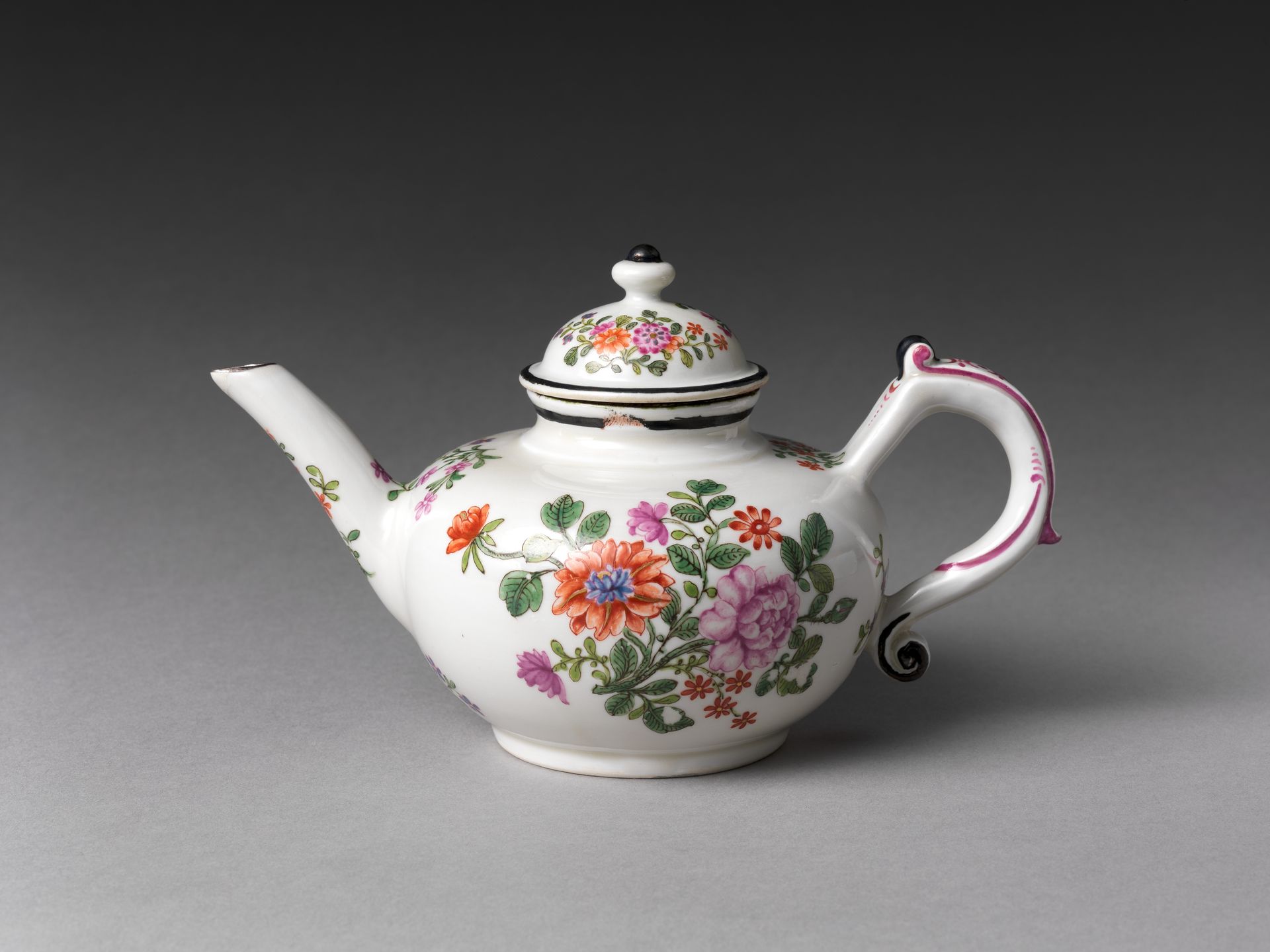
This teapot with peonies was made in Vienna using porcelain. The eye is immediately drawn to its round form, accentuated by a profusion of brightly coloured floral motifs. The organic shapes of the peonies contrast with the geometric precision of the teapot's structure. The arrangement of flowers across the surface isn't random; it follows the curvature of the teapot, enhancing its three-dimensionality. The artist employs colour to guide the eye, using bold reds and pinks against the stark white background to create a vibrant visual rhythm. The handle and spout, with their subtle curves, add a layer of complexity to the overall design. Consider how the visual elements intersect with the functional purpose of the object. Does the aesthetic design enhance or challenge our perception of this everyday item? Ultimately, the teapot becomes more than just a vessel; it's a space for artistic expression, inviting us to reconsider the intersection of art, utility, and cultural meaning.
Teapot with peonies
1730 - 1740


Artwork details
- Medium
- ceramic, porcelain, sculpture
- Dimensions
- Height: 4 in. (10.2 cm)
- Location
- Metropolitan Museum of Art, New York, NY
- Copyright
- Public Domain
Tags
Comments
Share your thoughts
About this artwork
This teapot with peonies was made in Vienna using porcelain. The eye is immediately drawn to its round form, accentuated by a profusion of brightly coloured floral motifs. The organic shapes of the peonies contrast with the geometric precision of the teapot's structure. The arrangement of flowers across the surface isn't random; it follows the curvature of the teapot, enhancing its three-dimensionality. The artist employs colour to guide the eye, using bold reds and pinks against the stark white background to create a vibrant visual rhythm. The handle and spout, with their subtle curves, add a layer of complexity to the overall design. Consider how the visual elements intersect with the functional purpose of the object. Does the aesthetic design enhance or challenge our perception of this everyday item? Ultimately, the teapot becomes more than just a vessel; it's a space for artistic expression, inviting us to reconsider the intersection of art, utility, and cultural meaning.
Comments
Share your thoughts