About this artwork
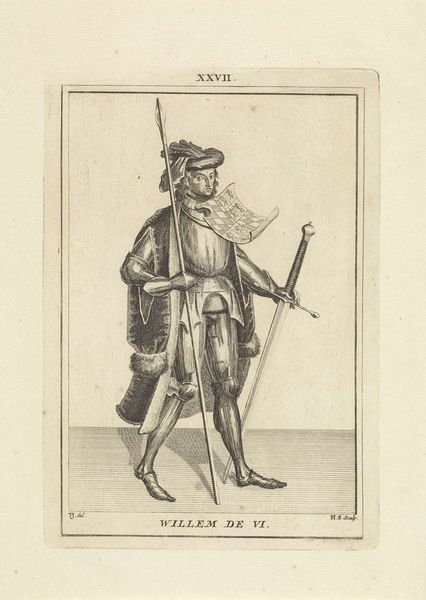
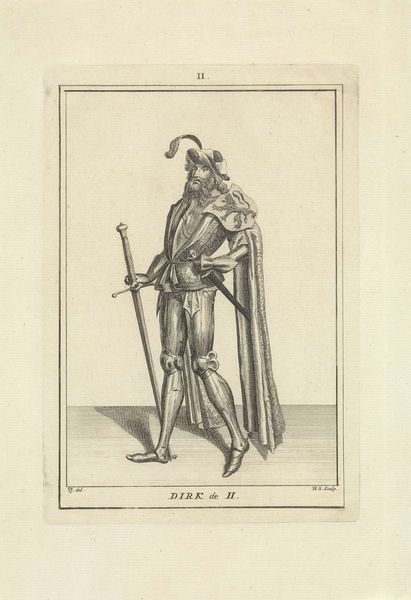
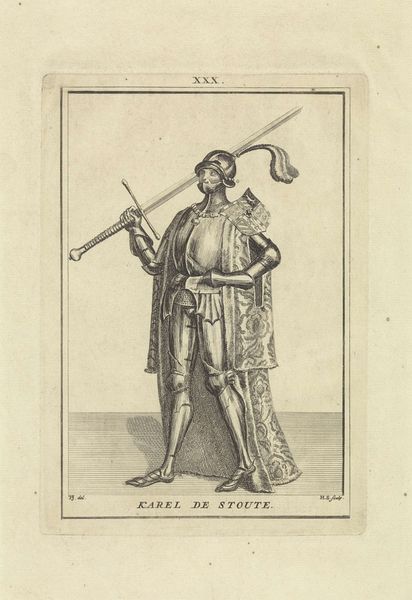
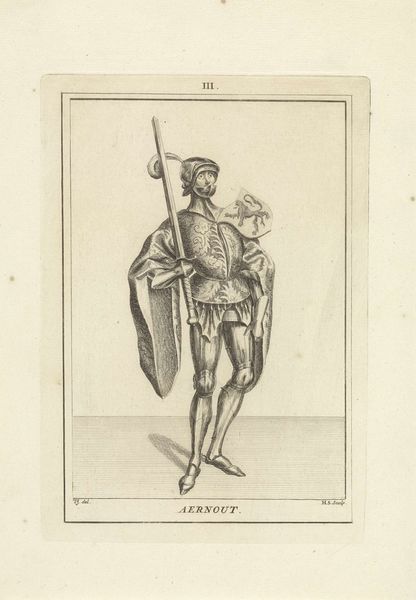
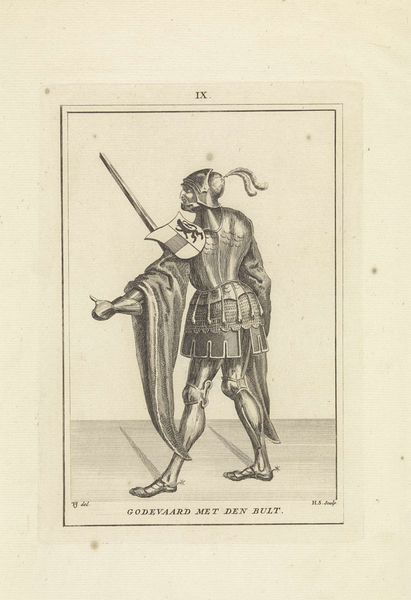
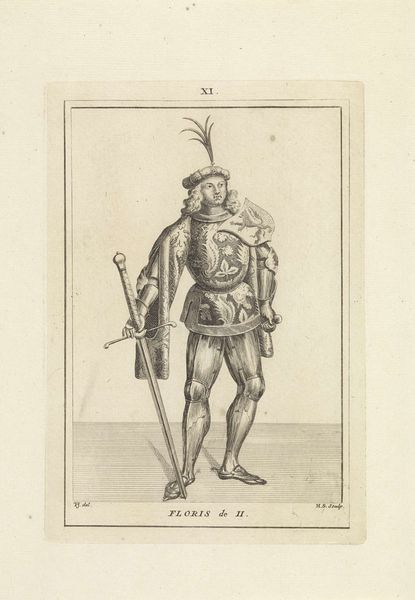
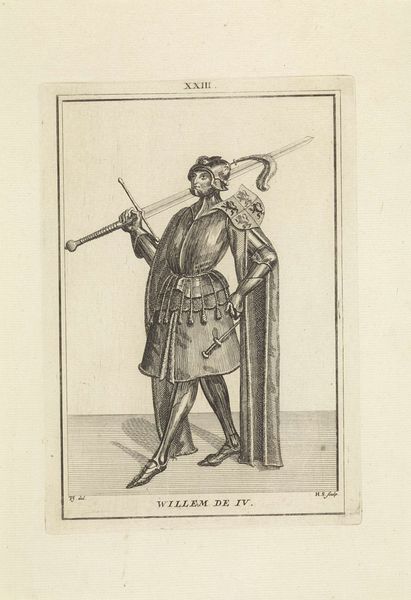
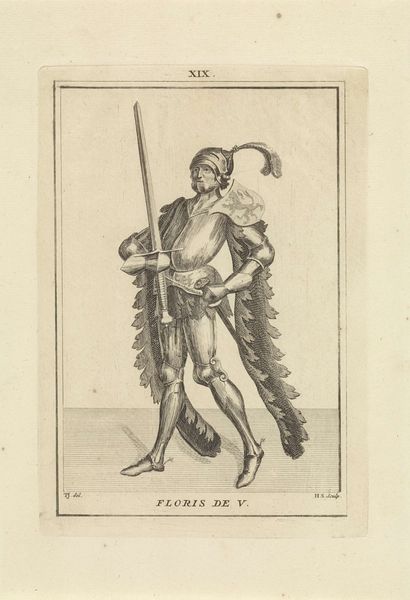
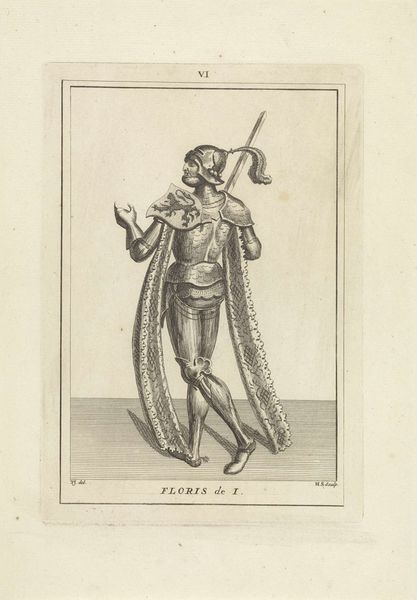
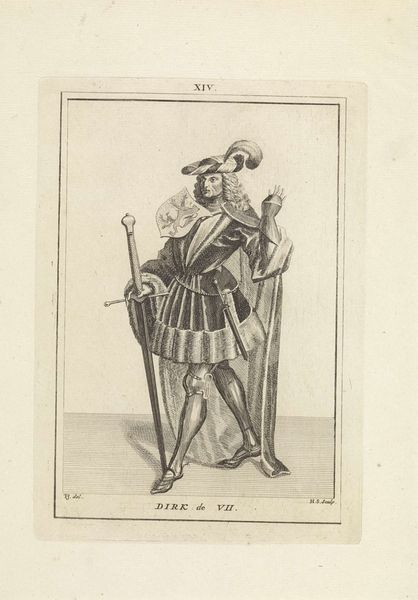
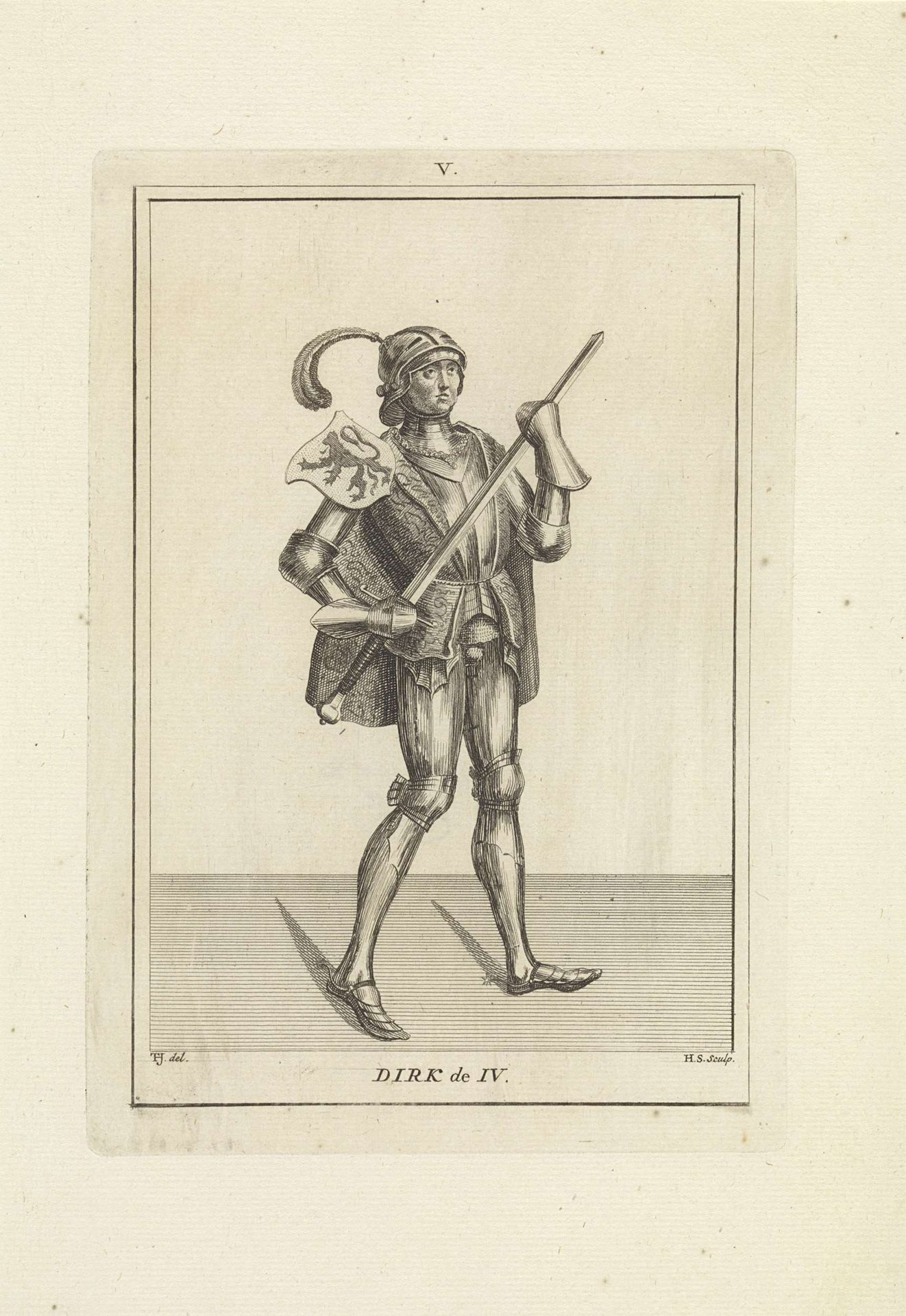
Editor: Here we have a piece entitled "Portret van Dirk IV, graaf van Holland" – or "Portrait of Dirk IV, Count of Holland" created around 1745 by Hendrik Spilman. It's an engraving, giving it this detailed, almost delicate feel. What strikes me most is the detailed armor. How can we interpret it? Curator: Let’s consider the means of production. Engraving, a labor-intensive process, democratized image reproduction. Think about who commissioned this: was it for widespread consumption or for a limited, elite audience reinforcing a particular narrative of Dutch history? Editor: So, you're saying the medium itself influences the message? How so? Curator: Precisely! Engraving allowed for the mass production of images, but also demanded skilled labor and access to specific materials - metal plates, inks. Was Spilman commenting on craftsmanship or merely exploiting a profitable method? Also, consider the subject, Dirk IV. How is his status as a count represented through the precise rendering of his armor? Is the focus really on *him*, or on the armor that signifies his power? Editor: The armor feels so central, now that you mention it. I initially just saw it as decoration, but now I understand how it is related to labor, materials, and status... Curator: Yes, and think about what that armor represents materially: the resources needed to forge it, the labor of the artisans, the military power it symbolizes. This isn't just a portrait; it's a material representation of power, status, and the means by which they were maintained. Editor: This makes me appreciate not only Spilman’s talent, but also the value society placed on these signifiers of power and privilege. Curator: And perhaps a commentary on the power itself – on who controls these resources. A print can be subversive if viewed through that lens.

Artwork details
- Medium
- print, engraving
- Dimensions
- height 192 mm, width 135 mm
- Location
- Rijksmuseum
- Copyright
- Rijks Museum: Open Domain
Tags
portrait
baroque
history-painting
engraving
Comments
No comments
About this artwork
Editor: Here we have a piece entitled "Portret van Dirk IV, graaf van Holland" – or "Portrait of Dirk IV, Count of Holland" created around 1745 by Hendrik Spilman. It's an engraving, giving it this detailed, almost delicate feel. What strikes me most is the detailed armor. How can we interpret it? Curator: Let’s consider the means of production. Engraving, a labor-intensive process, democratized image reproduction. Think about who commissioned this: was it for widespread consumption or for a limited, elite audience reinforcing a particular narrative of Dutch history? Editor: So, you're saying the medium itself influences the message? How so? Curator: Precisely! Engraving allowed for the mass production of images, but also demanded skilled labor and access to specific materials - metal plates, inks. Was Spilman commenting on craftsmanship or merely exploiting a profitable method? Also, consider the subject, Dirk IV. How is his status as a count represented through the precise rendering of his armor? Is the focus really on *him*, or on the armor that signifies his power? Editor: The armor feels so central, now that you mention it. I initially just saw it as decoration, but now I understand how it is related to labor, materials, and status... Curator: Yes, and think about what that armor represents materially: the resources needed to forge it, the labor of the artisans, the military power it symbolizes. This isn't just a portrait; it's a material representation of power, status, and the means by which they were maintained. Editor: This makes me appreciate not only Spilman’s talent, but also the value society placed on these signifiers of power and privilege. Curator: And perhaps a commentary on the power itself – on who controls these resources. A print can be subversive if viewed through that lens.
Comments
No comments