About this artwork
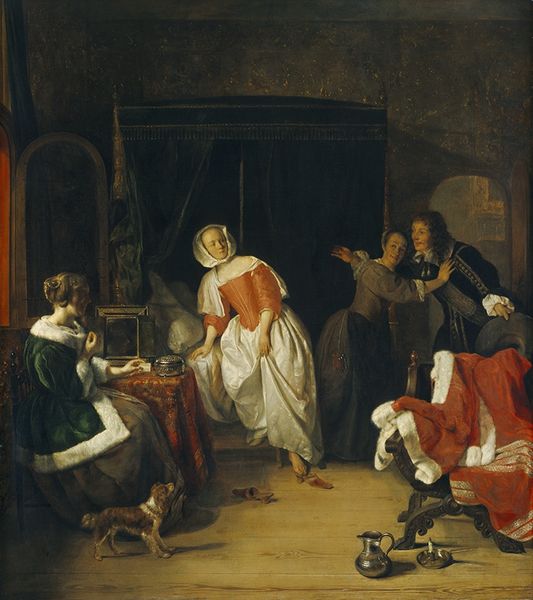
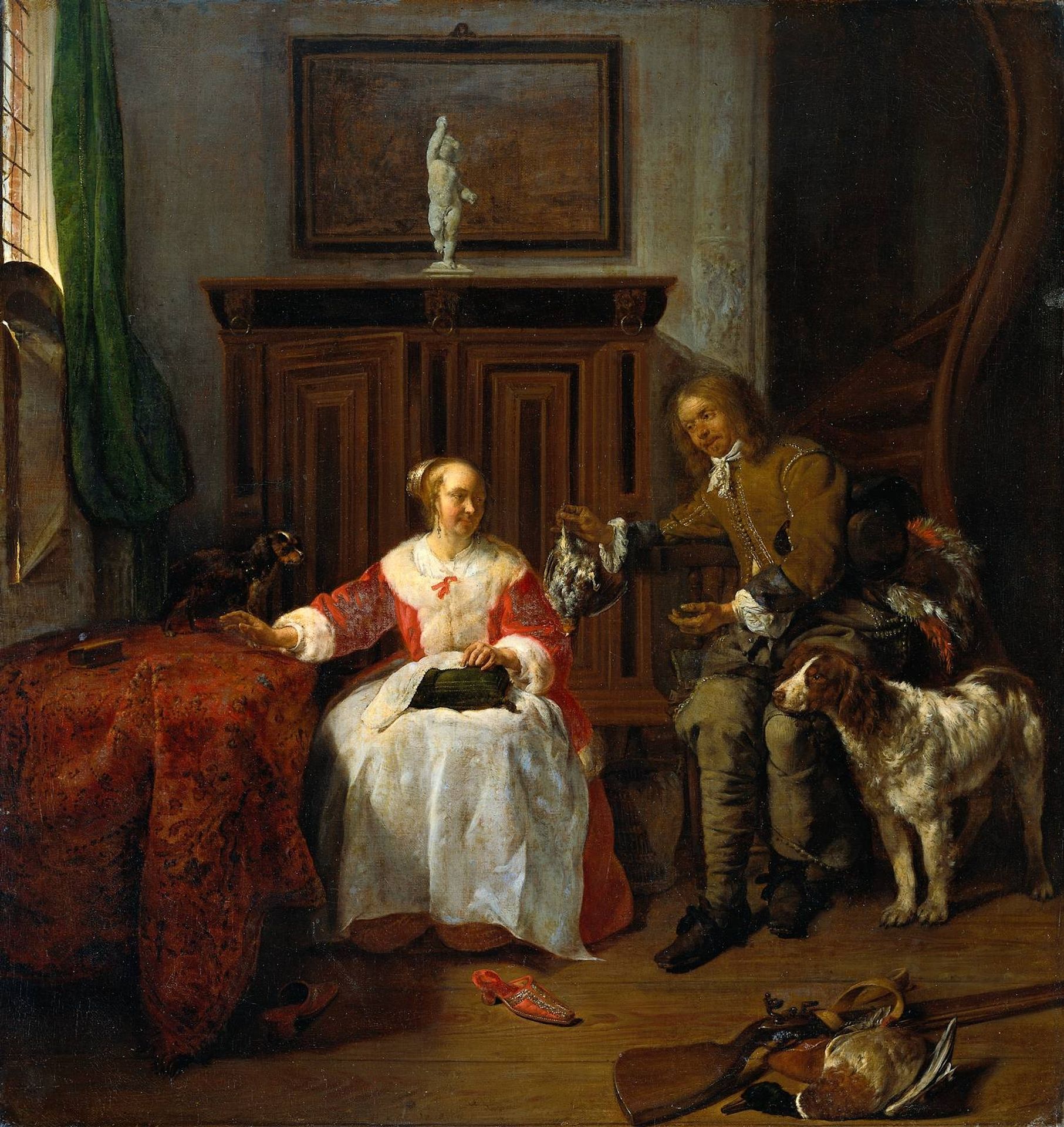
Gabriel Metsu painted ‘The Hunter’s Present,’ an oil on canvas, in the Dutch Republic during the Golden Age. Metsu often depicted scenes of everyday life, but these genre paintings were also subtle commentaries on social norms and gender roles. Here, a hunter presents his kill to a woman in a domestic setting, laden with symbolic meaning. The dead birds can be seen as a symbol of male virility and dominance, a gift offered to win the woman's favor. Yet, the woman’s passive reception and averted gaze can be seen as defiance, challenging the expected norms of female subservience. The presence of hunting dogs and weapons further emphasizes the man's active role, contrasting with the woman's stillness, seated with a book in her lap. The subtle tension between the figures suggests the complex negotiations of power and desire within marriage and courtship. Metsu’s painting captures a moment of quiet drama, inviting viewers to contemplate the unspoken dynamics of gender and status in 17th-century Dutch society.
The Hunter's Present 1660

Gabriel Metsu
1629 - 1667Location
Rijksmuseum, Amsterdam, NetherlandsArtwork details
- Medium
- oil-paint
- Dimensions
- 51 x 48 cm
- Location
- Rijksmuseum, Amsterdam, Netherlands
- Copyright
- Public domain
Tags
portrait
baroque
dutch-golden-age
oil-paint
figuration
oil painting
genre-painting
realism
Comments
No comments
About this artwork
Gabriel Metsu painted ‘The Hunter’s Present,’ an oil on canvas, in the Dutch Republic during the Golden Age. Metsu often depicted scenes of everyday life, but these genre paintings were also subtle commentaries on social norms and gender roles. Here, a hunter presents his kill to a woman in a domestic setting, laden with symbolic meaning. The dead birds can be seen as a symbol of male virility and dominance, a gift offered to win the woman's favor. Yet, the woman’s passive reception and averted gaze can be seen as defiance, challenging the expected norms of female subservience. The presence of hunting dogs and weapons further emphasizes the man's active role, contrasting with the woman's stillness, seated with a book in her lap. The subtle tension between the figures suggests the complex negotiations of power and desire within marriage and courtship. Metsu’s painting captures a moment of quiet drama, inviting viewers to contemplate the unspoken dynamics of gender and status in 17th-century Dutch society.
Comments
No comments