About this artwork
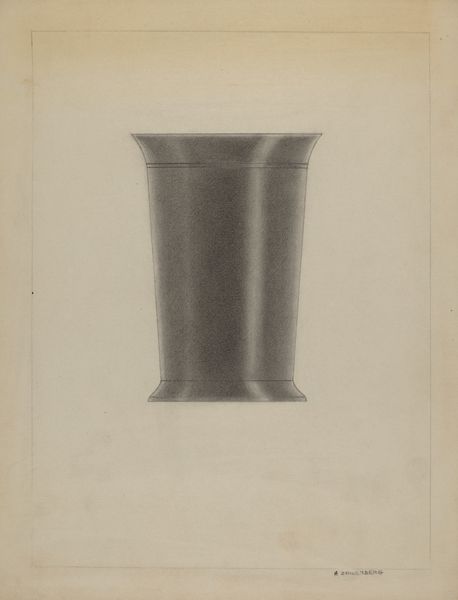
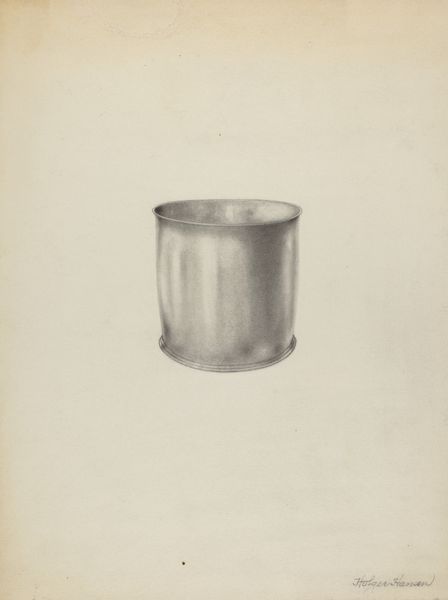
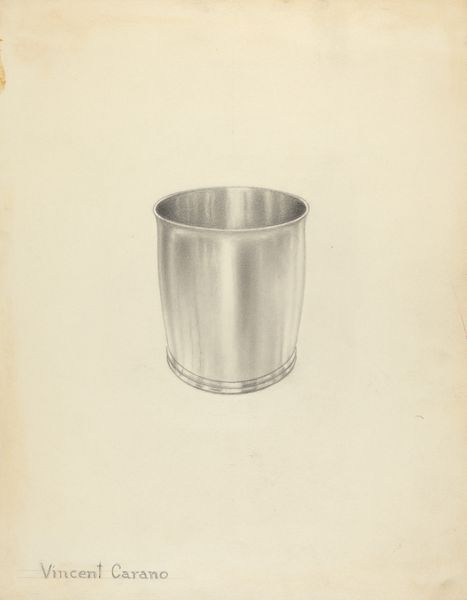
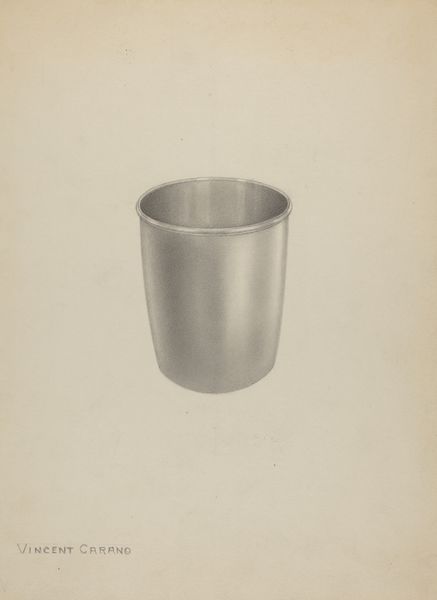
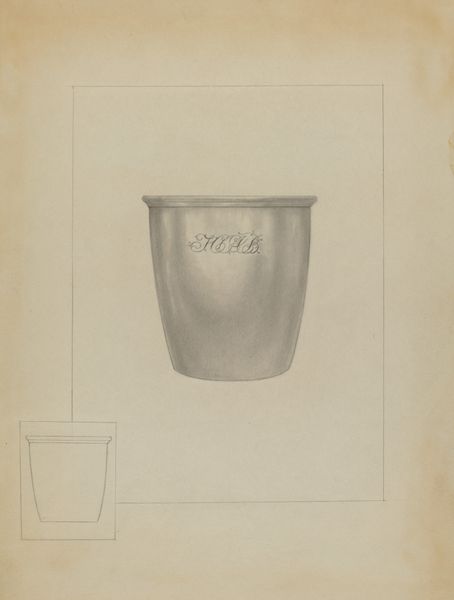
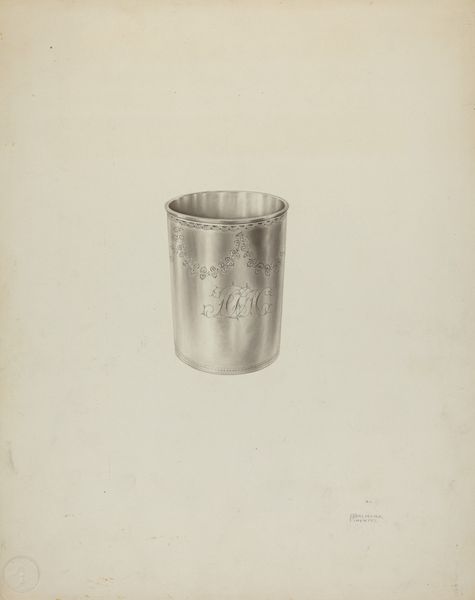
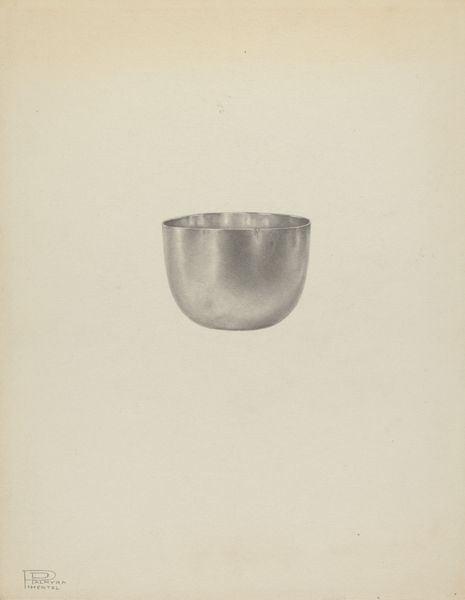
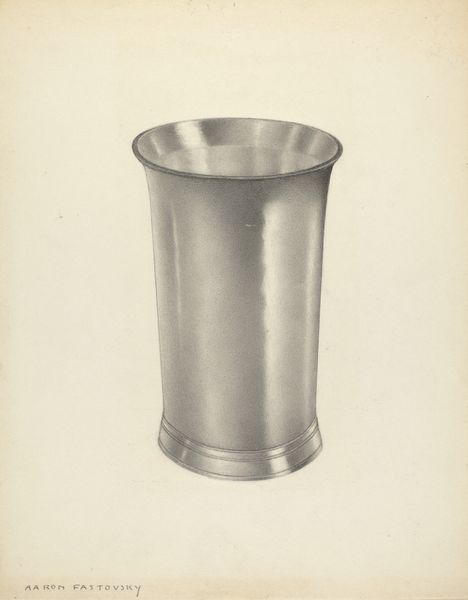
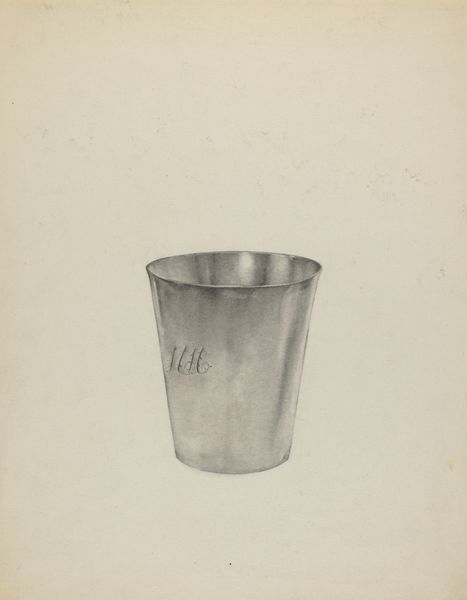
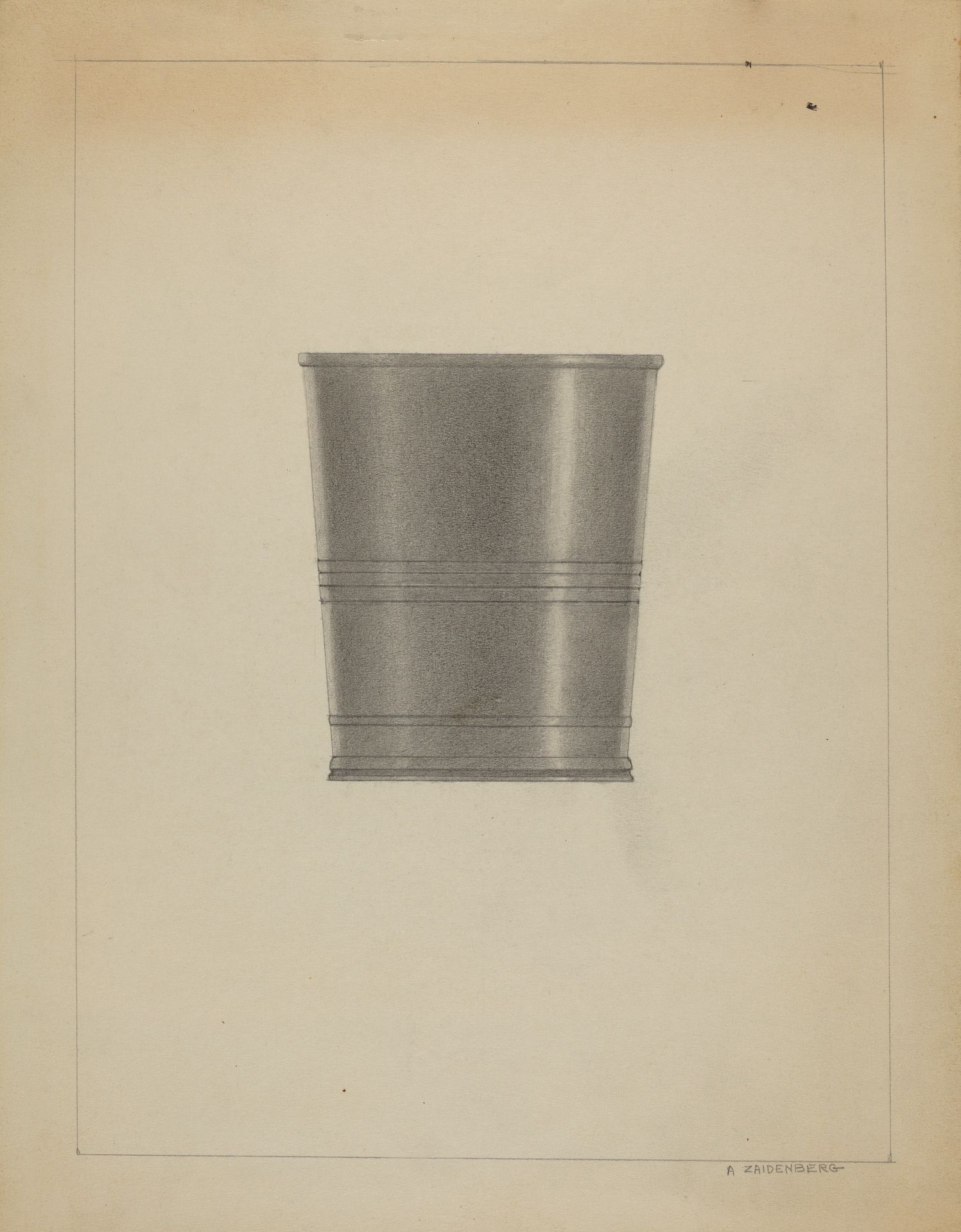
Editor: Here we have "Pewter Beaker", a pencil drawing dating from around 1936 by A. Zaidenberg. What strikes me first is its stillness – a study in pure form, almost like a geometrical exercise. What do you see when you look at it? Curator: The drawing presents a compelling arrangement of cylindrical shapes. Observe how the artist modulates light and shadow, creating a subtle but effective illusion of three-dimensionality. What sort of textures are at play here, and to what effect? Editor: It feels so smooth, which you wouldn't necessarily expect from pencil on paper. I guess that reflects how the metal looks, too. The lines around the beaker break up the smoothness. Does that play into the effect that it is still-life? Curator: The precise, almost clinical, rendering elevates the humble beaker to an object of formal contemplation. Note the artist's attention to the nuances of line and the modulation of tone, creating a visually satisfying composition. Does that change what you see as the drawing's purpose? Editor: I suppose I was drawn in by the stillness. But you are right; there is movement in the play of shadow and light and in the careful crafting. I came to realize that it's an invitation to appreciate form itself. Curator: Indeed. By isolating and meticulously rendering this everyday object, the artist invites us to contemplate the intrinsic beauty of form, line, and tonal gradation. Editor: I appreciate your insight; now I can see how focusing on those visual components really changes how one can look at even mundane subject matter.


Artwork details
- Medium
- drawing, pencil
- Dimensions
- overall: 26.9 x 23 cm (10 9/16 x 9 1/16 in.) Original IAD Object: 3 15/16" high; 3 3/8" in diameter
- Copyright
- National Gallery of Art: CC0 1.0
Tags
Comments
Share your thoughts
About this artwork
Editor: Here we have "Pewter Beaker", a pencil drawing dating from around 1936 by A. Zaidenberg. What strikes me first is its stillness – a study in pure form, almost like a geometrical exercise. What do you see when you look at it? Curator: The drawing presents a compelling arrangement of cylindrical shapes. Observe how the artist modulates light and shadow, creating a subtle but effective illusion of three-dimensionality. What sort of textures are at play here, and to what effect? Editor: It feels so smooth, which you wouldn't necessarily expect from pencil on paper. I guess that reflects how the metal looks, too. The lines around the beaker break up the smoothness. Does that play into the effect that it is still-life? Curator: The precise, almost clinical, rendering elevates the humble beaker to an object of formal contemplation. Note the artist's attention to the nuances of line and the modulation of tone, creating a visually satisfying composition. Does that change what you see as the drawing's purpose? Editor: I suppose I was drawn in by the stillness. But you are right; there is movement in the play of shadow and light and in the careful crafting. I came to realize that it's an invitation to appreciate form itself. Curator: Indeed. By isolating and meticulously rendering this everyday object, the artist invites us to contemplate the intrinsic beauty of form, line, and tonal gradation. Editor: I appreciate your insight; now I can see how focusing on those visual components really changes how one can look at even mundane subject matter.
Comments
Share your thoughts