About this artwork
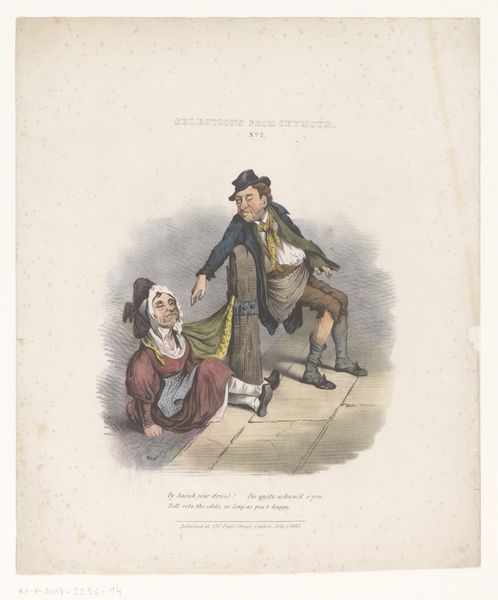
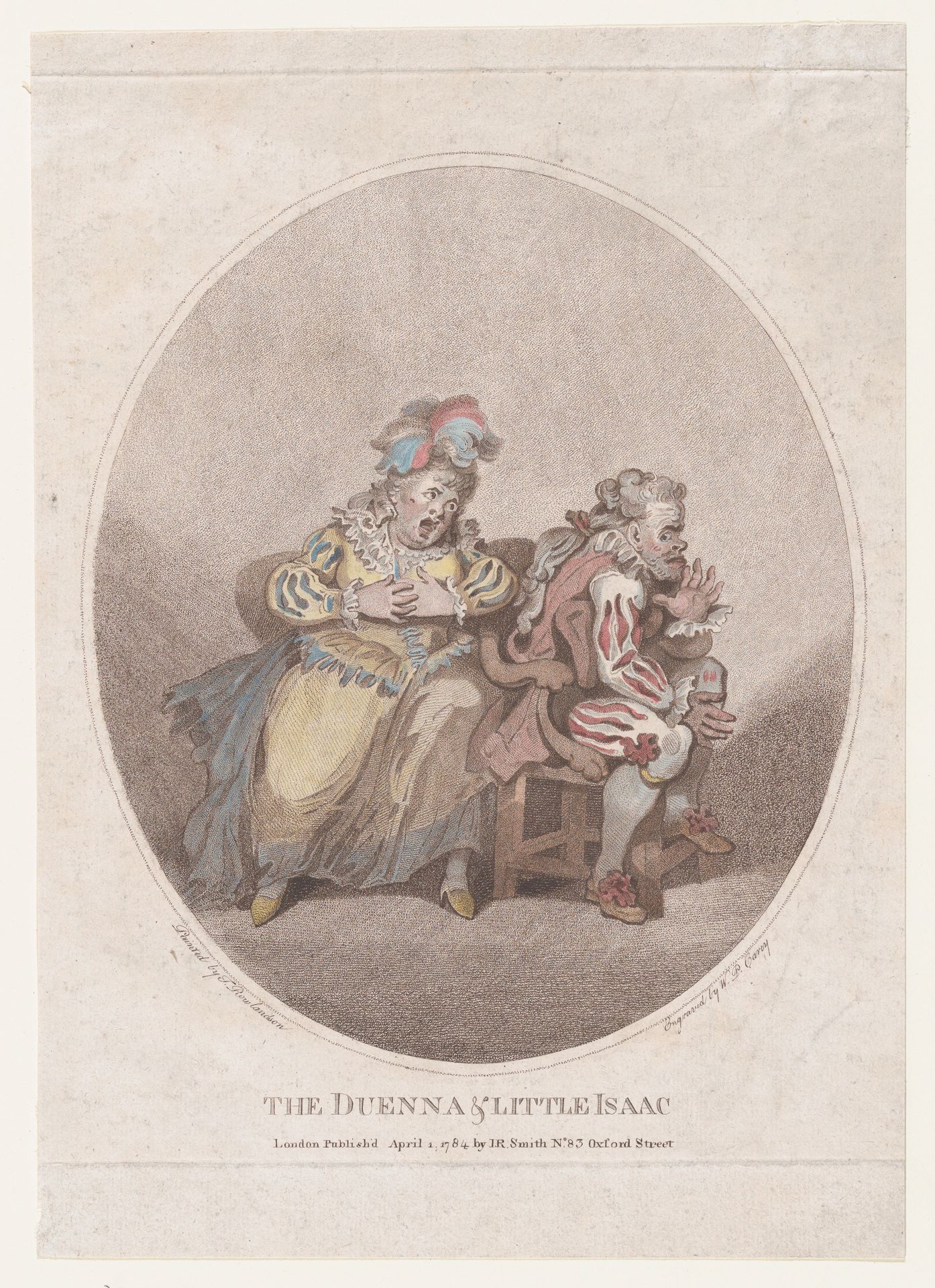
William Paulet Carey created this print, "The Duenna & Little Isaac," sometime in the late 18th or early 19th century. This hand-colored print presents a scene from Richard Brinsley Sheridan's popular comic opera, *The Duenna*, first performed in 1775. The characters are depicted in exaggerated poses and expressions, reflective of the era's interest in satire and social critique. Isaac, the Jewish merchant, is presented here with caricatured features and gestures, a reflection of the period's rampant antisemitism. In contrast, the Duenna is portrayed as an older woman of questionable virtue. The opera itself, while comedic, plays into stereotypes about class, gender, and religious identity. Carey's print captures this tension, inviting viewers to consider how these stereotypes were both perpetuated and challenged within the cultural landscape of the time. The emotional weight of the print lies in its ability to reflect the complex, and often contradictory, attitudes of 18th-century society.
The Duenna & Little Isaac
1784

William Paulet Carey
1759 - 1839
The Metropolitan Museum of Art
Metropolitan Museum of Art, New York, NYArtwork details
- Dimensions
- Sheet: 12 in. × 8 7/16 in. (30.5 × 21.5 cm)
- Location
- Metropolitan Museum of Art, New York, NY
- Copyright
- Public Domain
Comments
Share your thoughts
About this artwork
William Paulet Carey created this print, "The Duenna & Little Isaac," sometime in the late 18th or early 19th century. This hand-colored print presents a scene from Richard Brinsley Sheridan's popular comic opera, *The Duenna*, first performed in 1775. The characters are depicted in exaggerated poses and expressions, reflective of the era's interest in satire and social critique. Isaac, the Jewish merchant, is presented here with caricatured features and gestures, a reflection of the period's rampant antisemitism. In contrast, the Duenna is portrayed as an older woman of questionable virtue. The opera itself, while comedic, plays into stereotypes about class, gender, and religious identity. Carey's print captures this tension, inviting viewers to consider how these stereotypes were both perpetuated and challenged within the cultural landscape of the time. The emotional weight of the print lies in its ability to reflect the complex, and often contradictory, attitudes of 18th-century society.
Comments
Share your thoughts