About this artwork
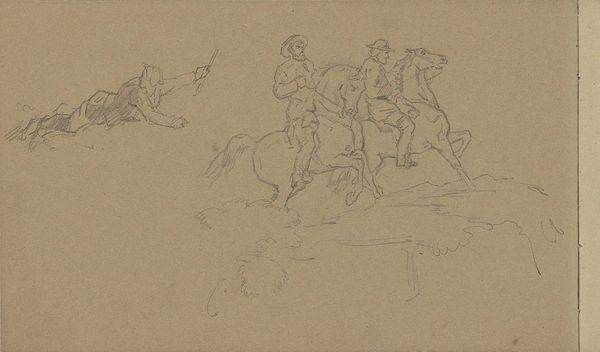
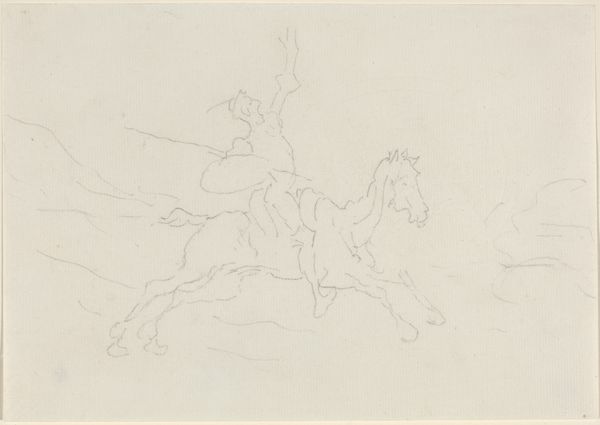
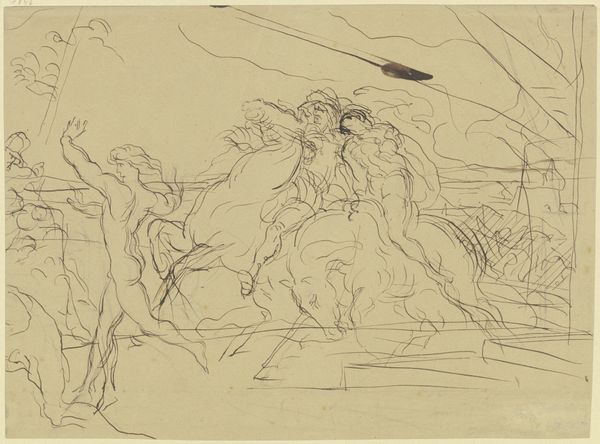
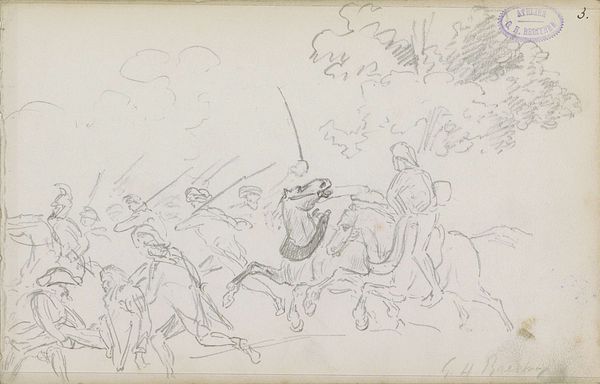
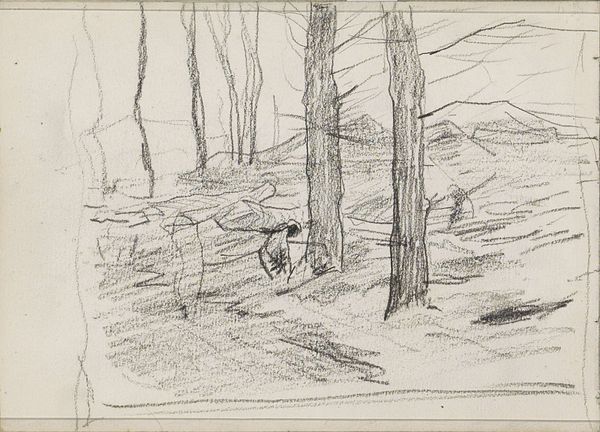
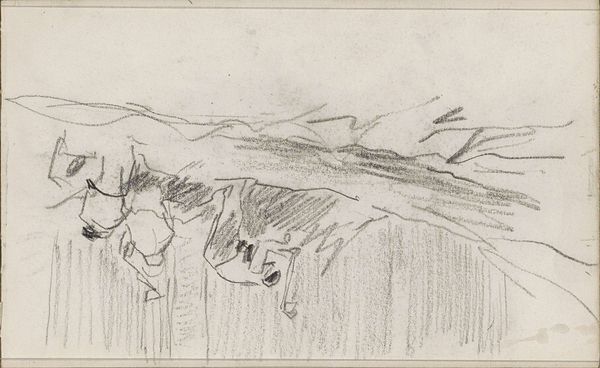
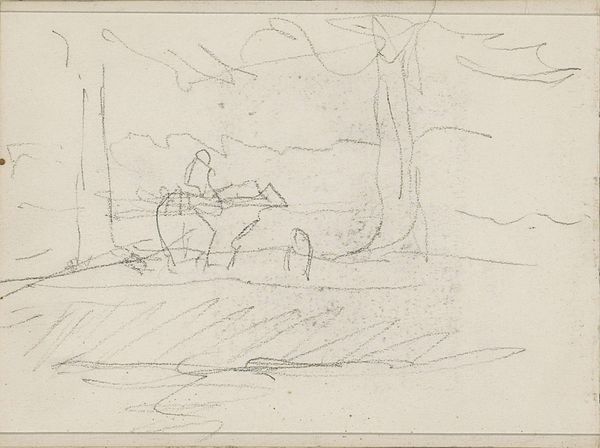
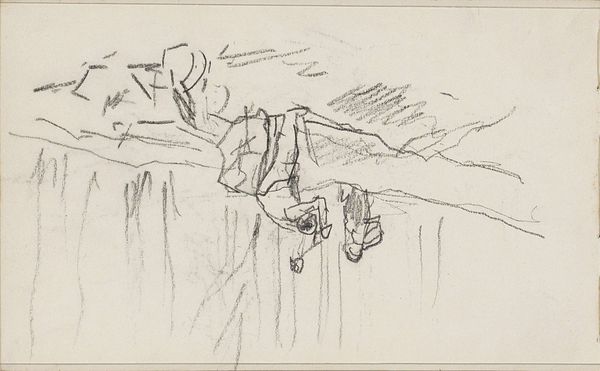
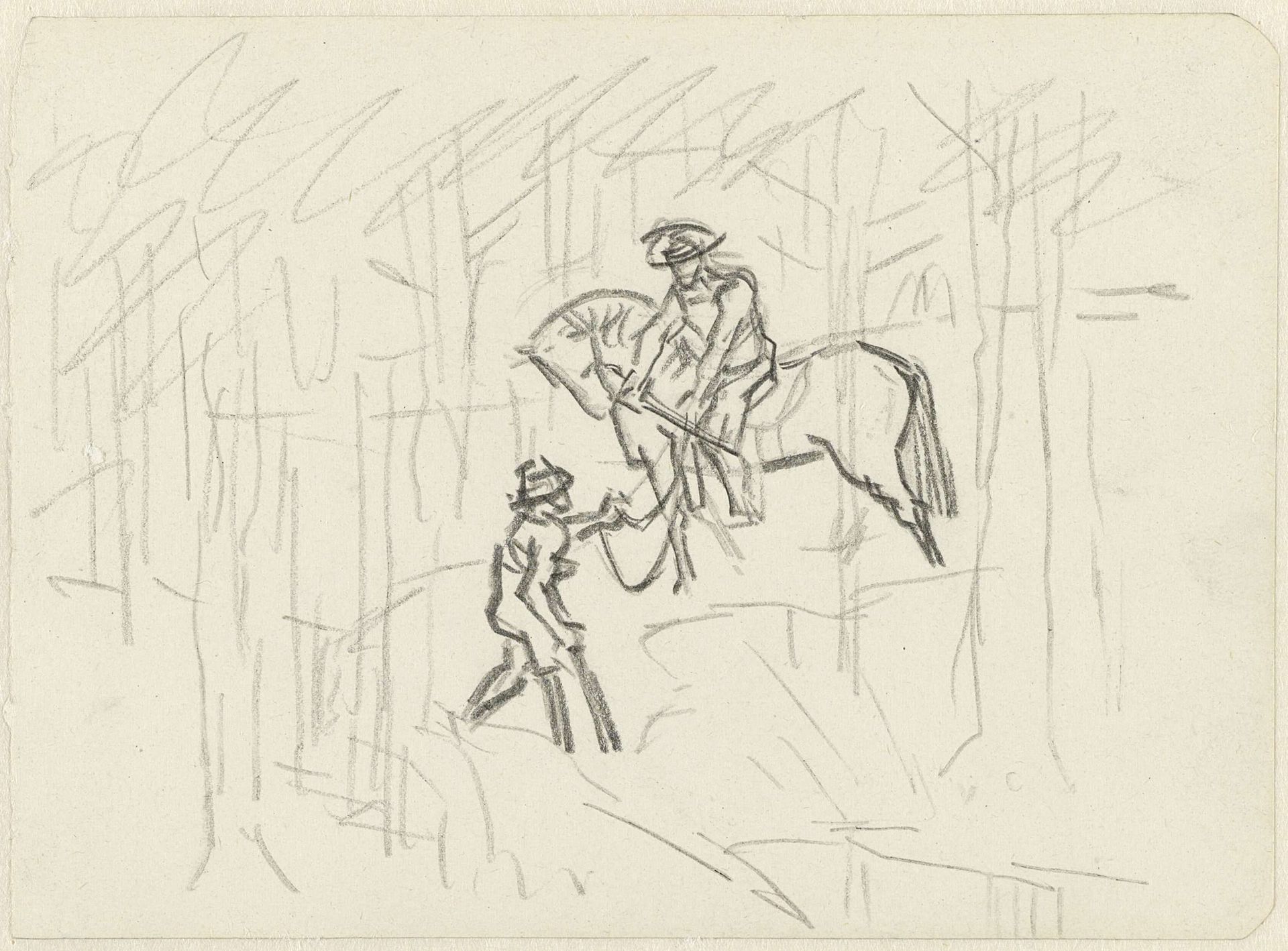
This is a study sheet with a horseman and a beggar, made by Jan Toorop using graphite on paper. The use of graphite as a medium gives this sketch its ephemeral, almost ghostly quality. See how Toorop uses the pencil to capture the stark contrast between the horseman and the beggar, emphasizing the social hierarchy through the medium itself. The rawness of the graphite lines conveys a sense of immediacy, inviting us to witness the artist's thought process as he captures this scene of social disparity. The very act of sketching – a quick, efficient method – can be seen as a reflection of the social dynamics at play: a fleeting encounter between two vastly different worlds. By focusing on the materials and the making of this study, we can appreciate how the work transcends traditional boundaries, merging fine art with the socio-political concerns of its time.
Studieblad met een ruiter te paard en een bedelaar
1868 - 1928

Jan Toorop
1858 - 1928Location
RijksmuseumArtwork details
- Dimensions
- height 115 mm, width 157 mm
- Location
- Rijksmuseum
- Copyright
- Rijks Museum: Open Domain
Comments
Be the first to share your thoughts about this work.
About this artwork
This is a study sheet with a horseman and a beggar, made by Jan Toorop using graphite on paper. The use of graphite as a medium gives this sketch its ephemeral, almost ghostly quality. See how Toorop uses the pencil to capture the stark contrast between the horseman and the beggar, emphasizing the social hierarchy through the medium itself. The rawness of the graphite lines conveys a sense of immediacy, inviting us to witness the artist's thought process as he captures this scene of social disparity. The very act of sketching – a quick, efficient method – can be seen as a reflection of the social dynamics at play: a fleeting encounter between two vastly different worlds. By focusing on the materials and the making of this study, we can appreciate how the work transcends traditional boundaries, merging fine art with the socio-political concerns of its time.
Comments
Be the first to share your thoughts about this work.